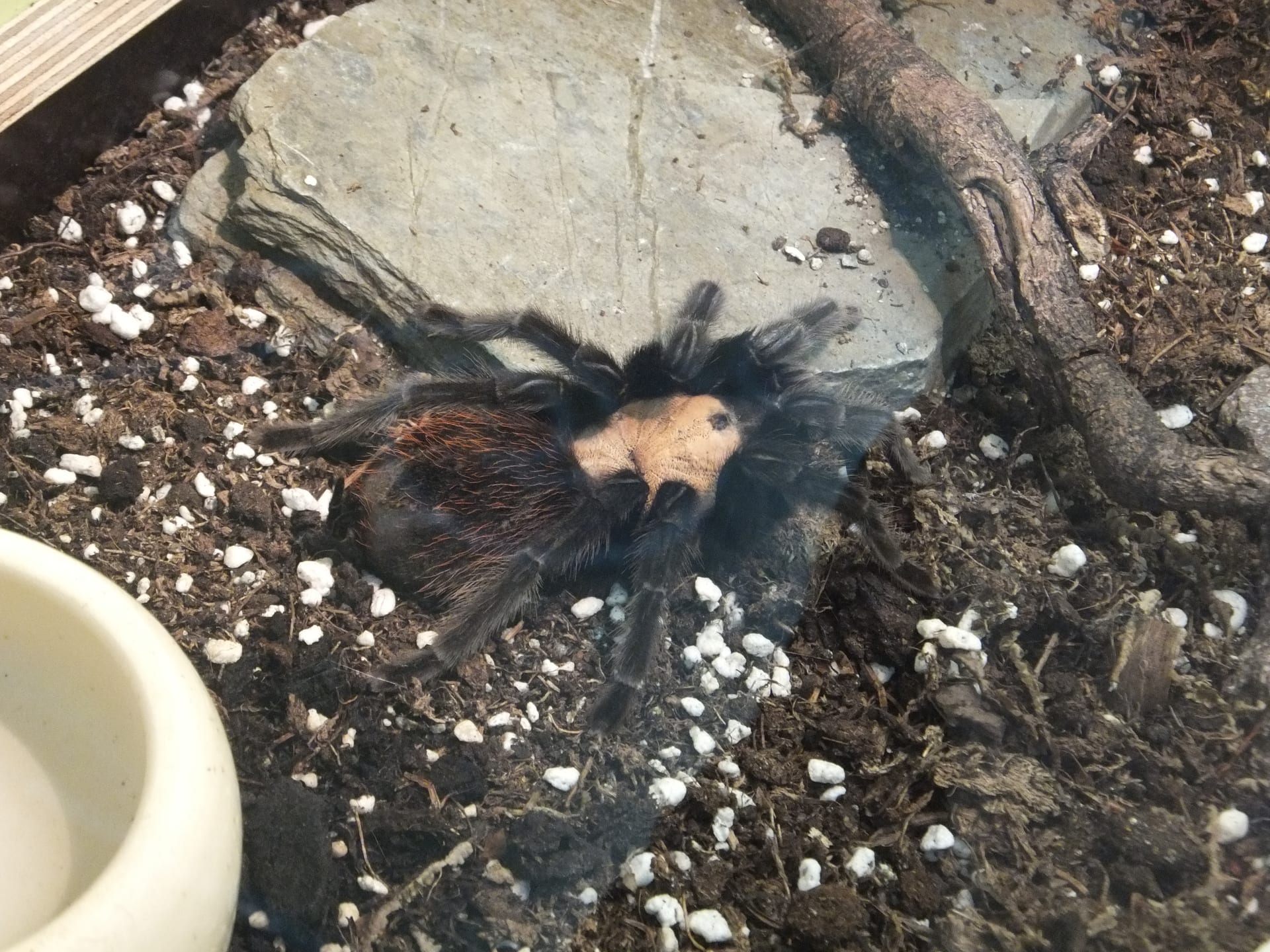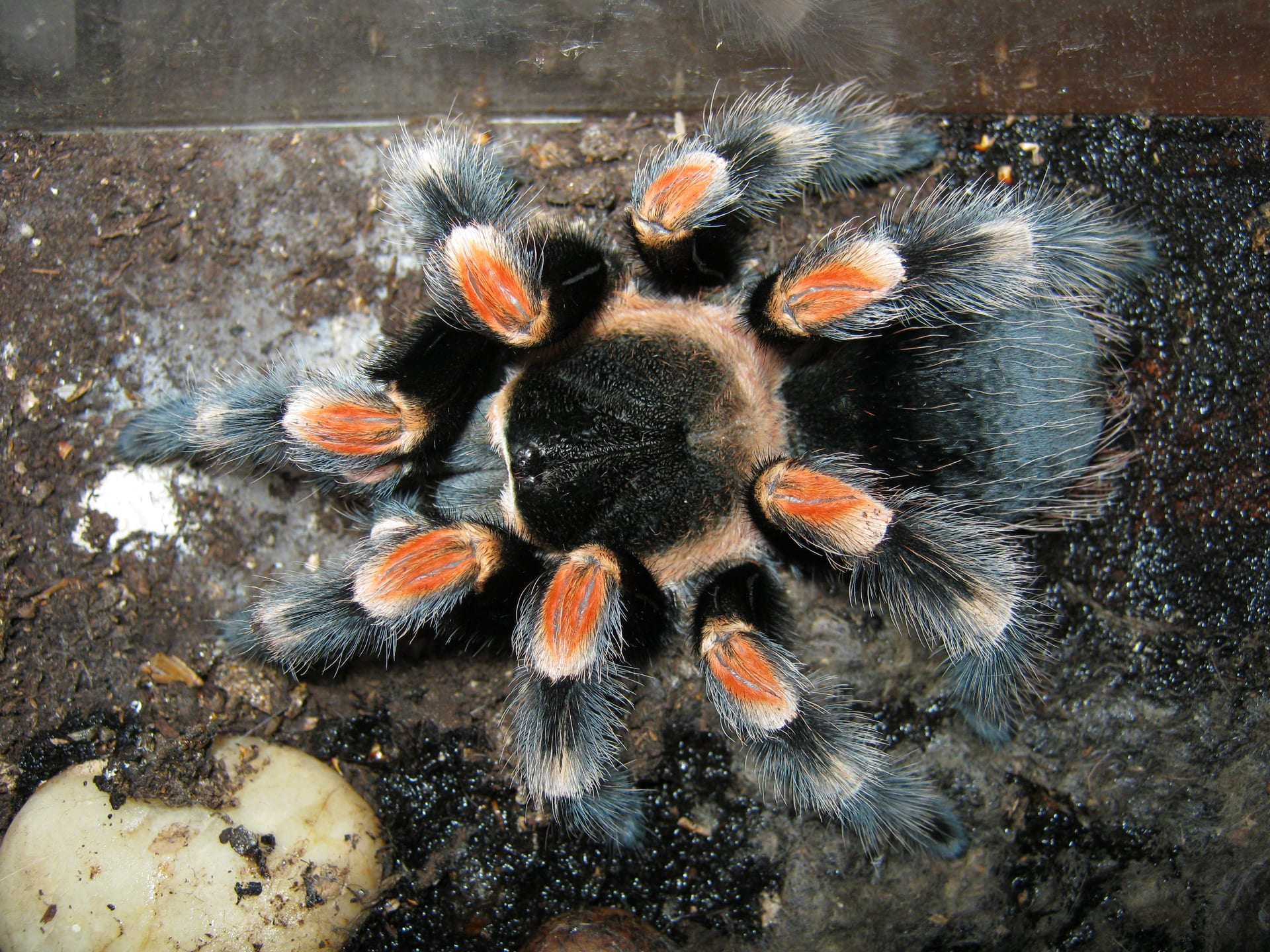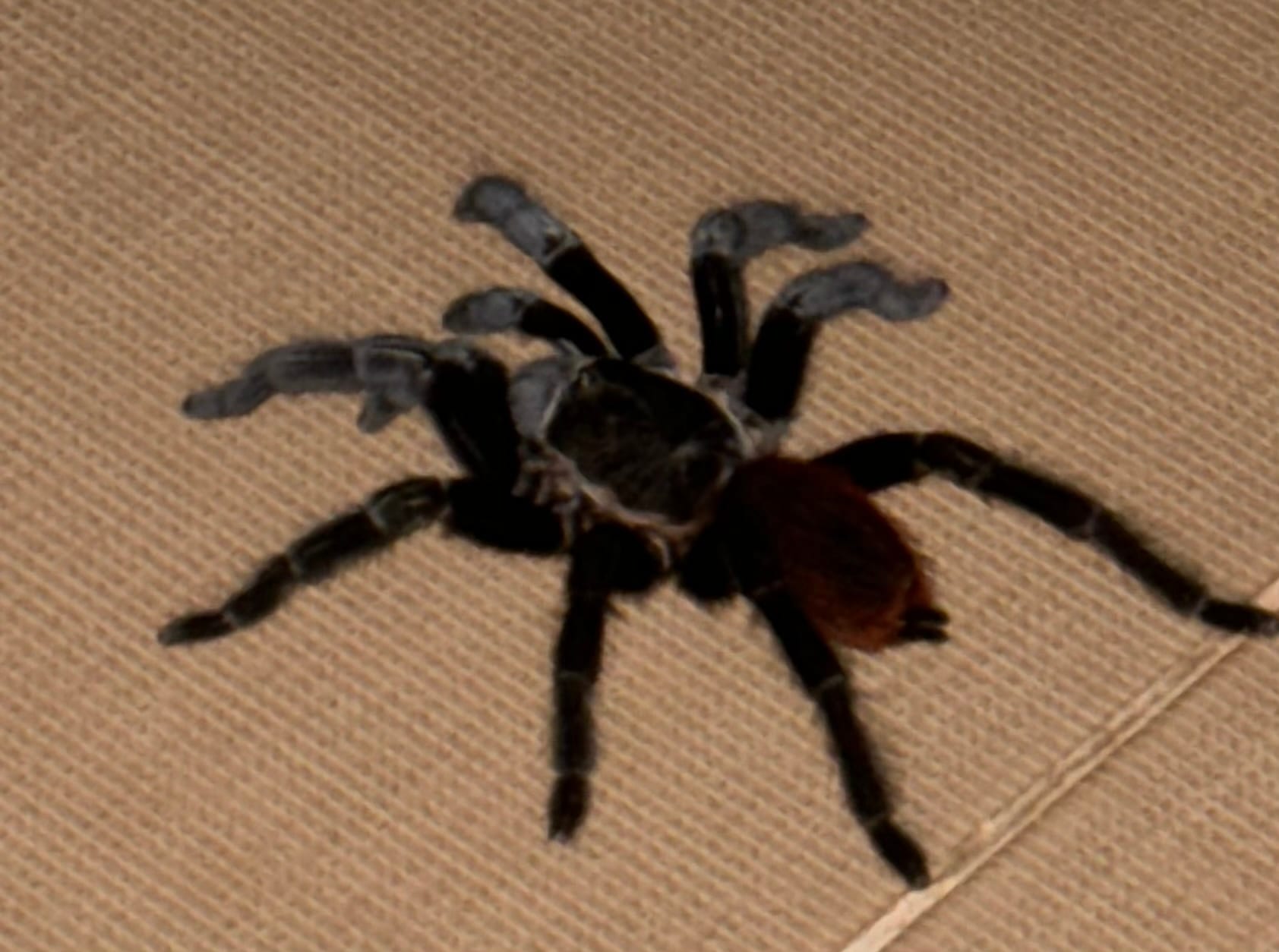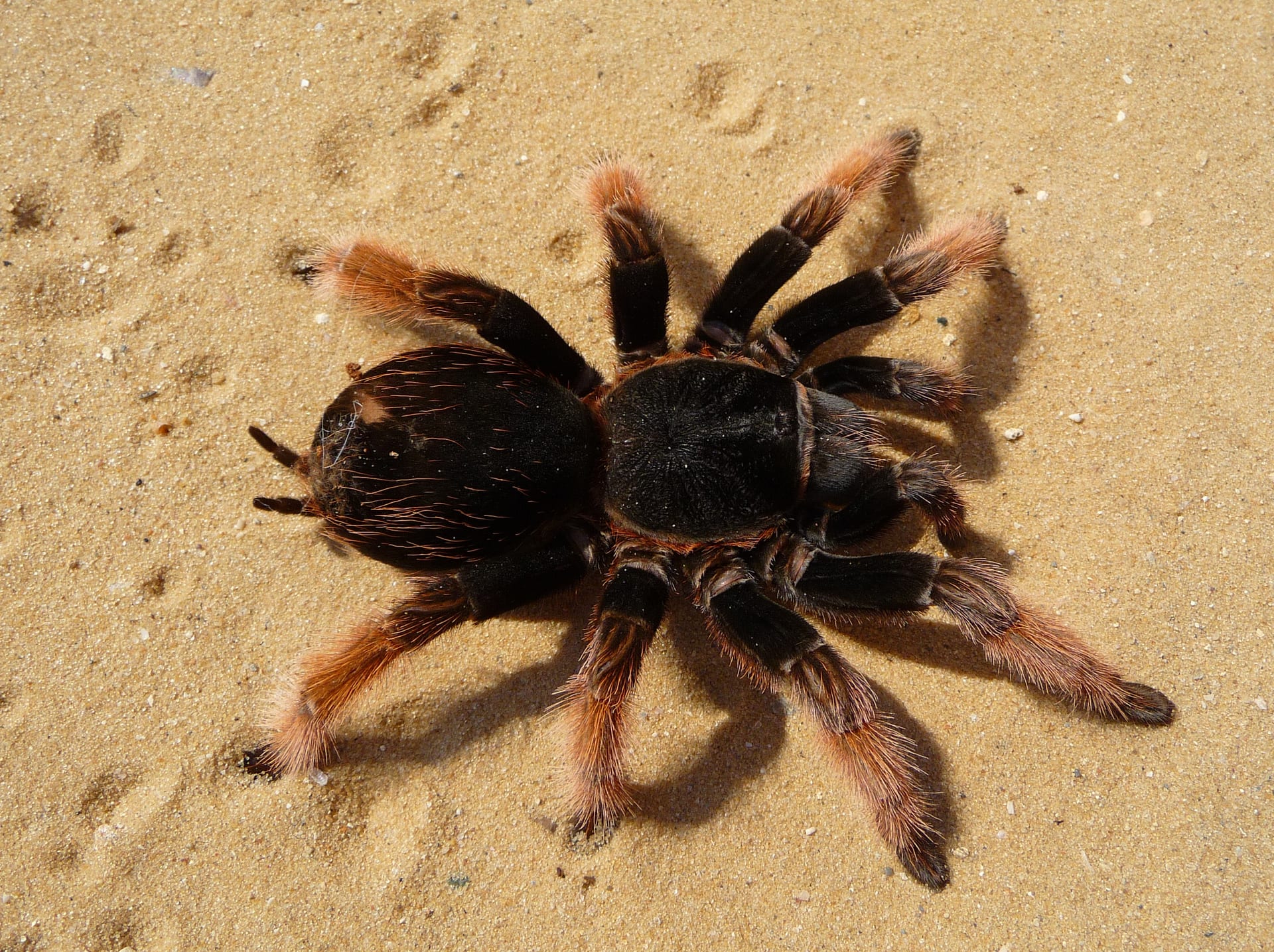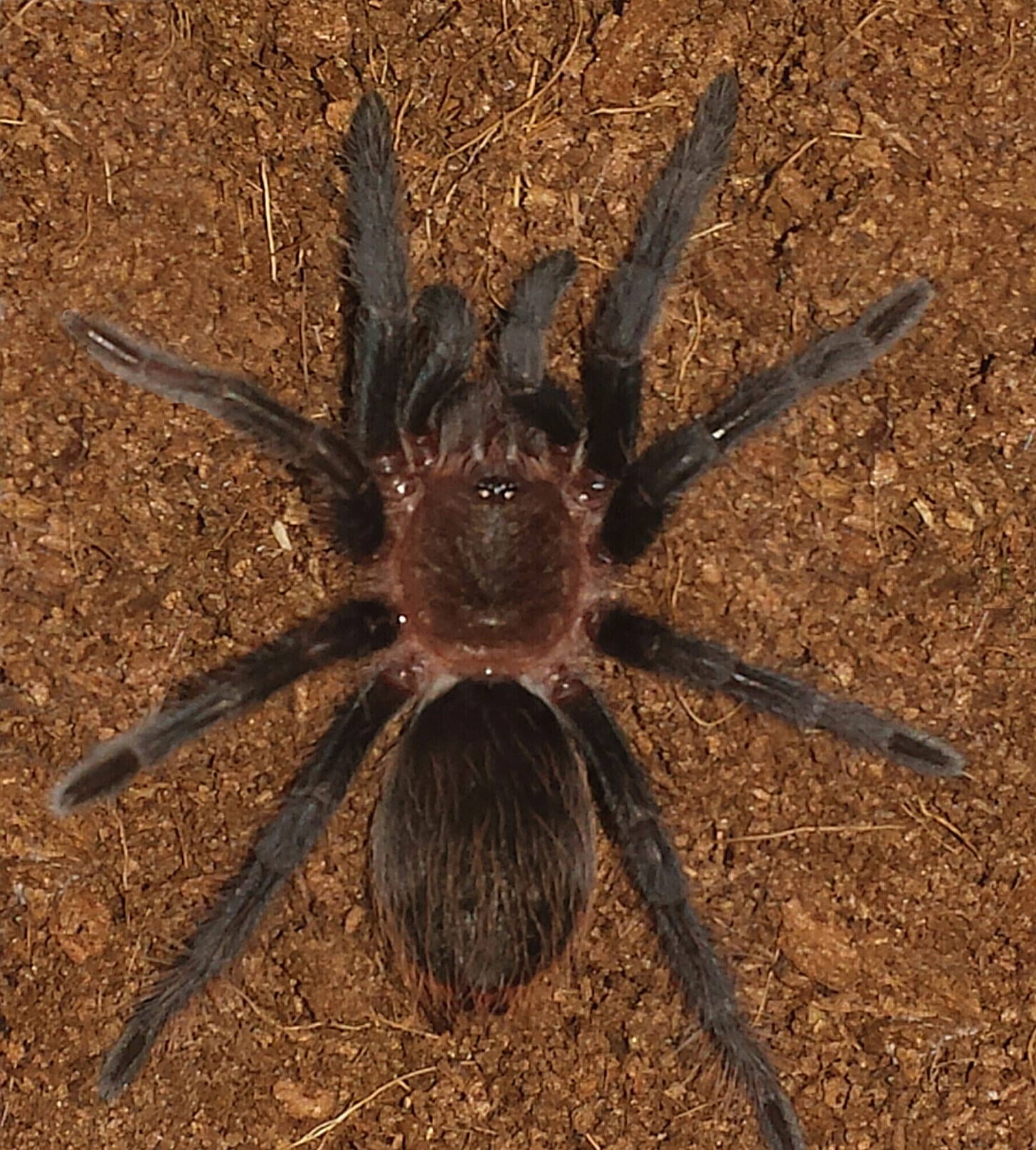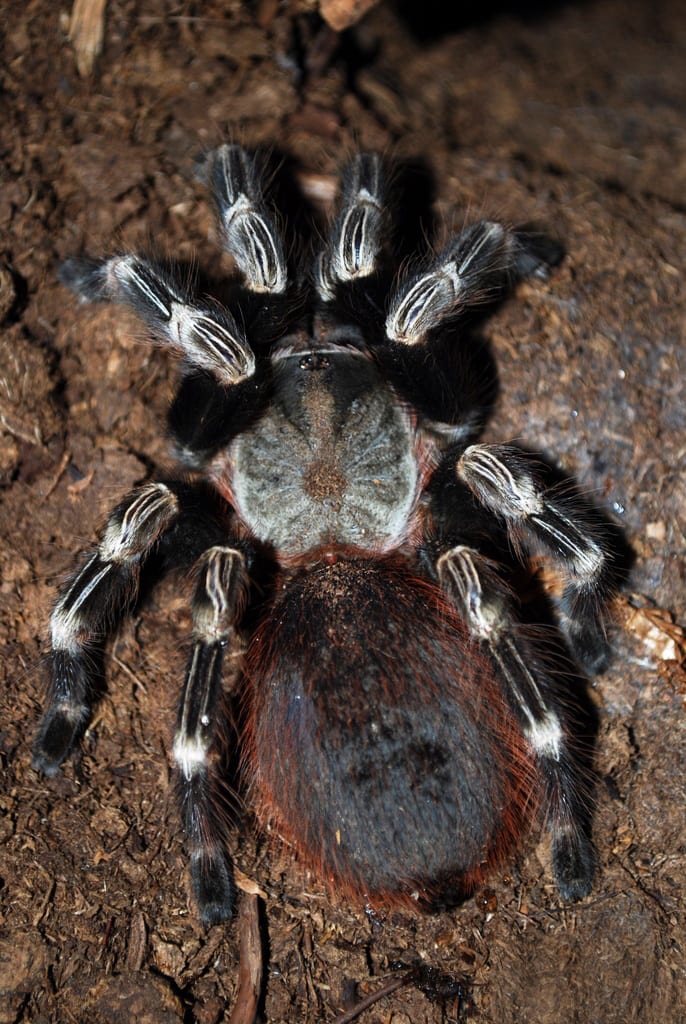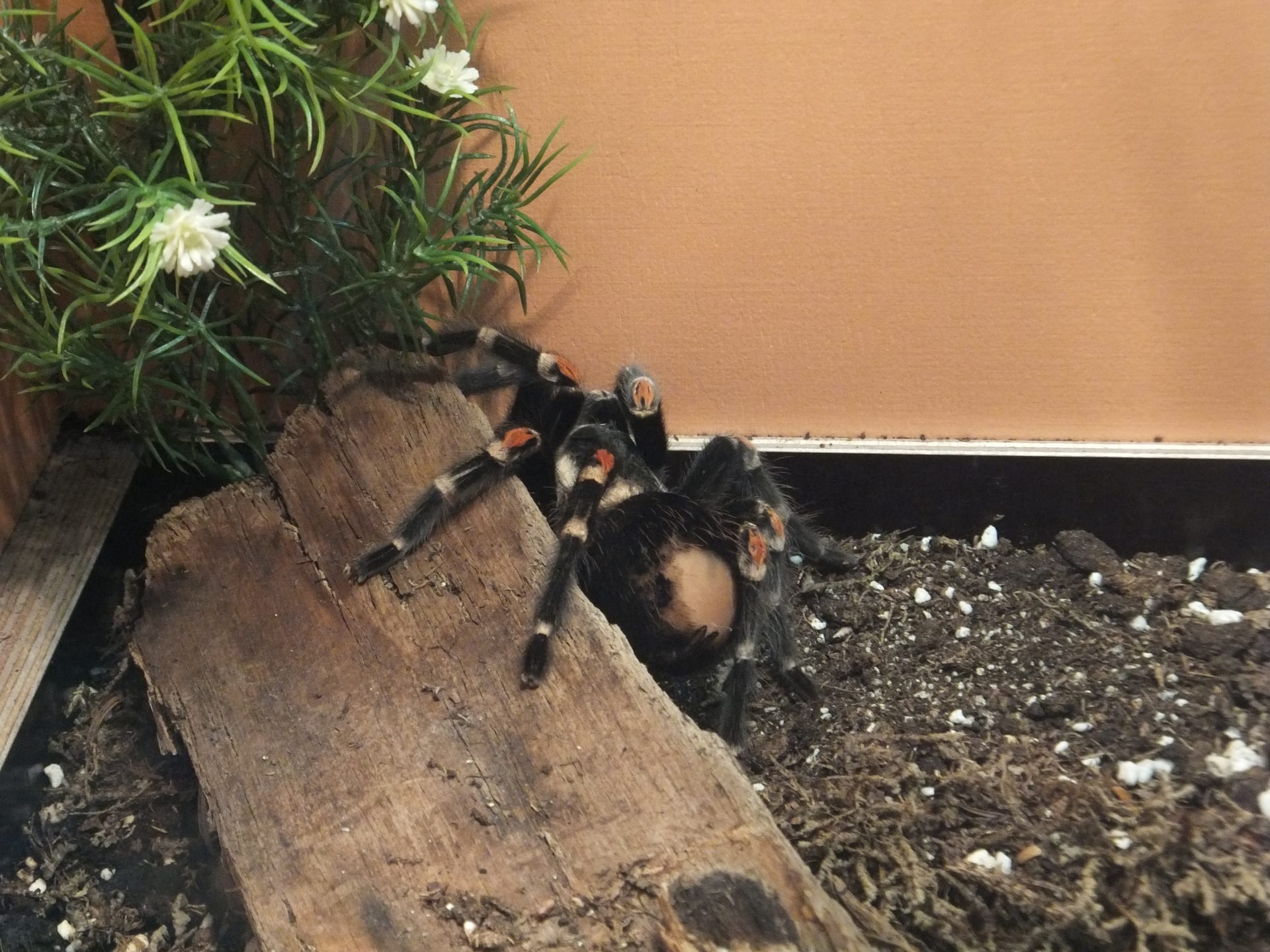
Source: Wikimedia Commons
Mexican Flame Knee
BeginnerBrachypelma auratum
A tarantula endemic to the Mexican states of Guerrero and Michoacan. It resembles the Mexican red knee but is darker, and the red striations on its patellae suggest a flame, hence the name flame knee.
Difficulty
Beginner
Lifespan
Females take 9-10 years to mature in the wild and can then live about another 10 (figures for the genus Brachypelma)
Size
Body length about 4.5-6cm with legs up to 7cm (range for larger Brachypelma species)
Diet
Live insects such as crickets
About
The Mexican flame knee (Brachypelma auratum) is a theraphosid tarantula endemic to the Mexican states of Guerrero and Michoacan. It looks much like B. smithi, the classic Mexican red knee, but is darker overall, with finer, sharper red striations on the patellae. Those markings suggest a flame and give the spider its common name. Because it is so similar to B. smithi it was not recognised as a distinct species until 1992. In the wild it has been found living communally with a small frog, Eleutherodactylus occidentalis. Brachypelma species are known as docile tarantulas that are easy to keep in a terrarium, and the females are long-lived: in the wild they take 9-10 years to mature and can then live about another ten. Collection for the pet trade and habitat destruction have put every species in the genus on CITES Appendix II.
Source: Wikipedia (CC BY-SA 4.0)
Lifespan of the Mexican Flame Knee
The Mexican Flame Knee lives Females take 9-10 years to mature in the wild and can then live about another 10 (figures for the genus Brachypelma).
Size of the Mexican Flame Knee
The Mexican Flame Knee grows to Body length about 4.5-6cm with legs up to 7cm (range for larger Brachypelma species).
Basic Info
Origin
Mexico (states of Guerrero and Michoacan)
Lifespan
Females take 9-10 years to mature in the wild and can then live about another 10 (figures for the genus Brachypelma)
Size
Body length about 4.5-6cm with legs up to 7cm (range for larger Brachypelma species)
Care Specifications
PeacefulSolitary
Sources: Wikipedia: Brachypelma auratum / Wikipedia: Brachypelma (genus; morphology and captivity) / GBIF Brachypelma auratum
References & Sources
Edited & verified by: BreederDirect editorial team
The taxonomic, regulatory, and husbandry data on this page are compiled and verified against the authoritative primary sources below.
Taxonomy & Authority
Accepted name: Brachypelma auratum Schmidt, 1992
Authority databases: GBIF
Nomenclature follows global taxonomic authority databases.
Regulations & Conservation Status
CITES Appendix II
Brachypelma smithi (then not distinguished from B. hamorii) was placed on CITES Appendix II in 1985, and all remaining Brachypelma species were added in 1994.
Sources: CITES Appendices (Brachypelma spp., Appendix II) / Wikipedia: Brachypelma (conservation and CITES)
Regulations may change. Always verify the latest information with the relevant authorities.
Mexican Flame Knee Listings
Loading latest listingsFind listings for this species