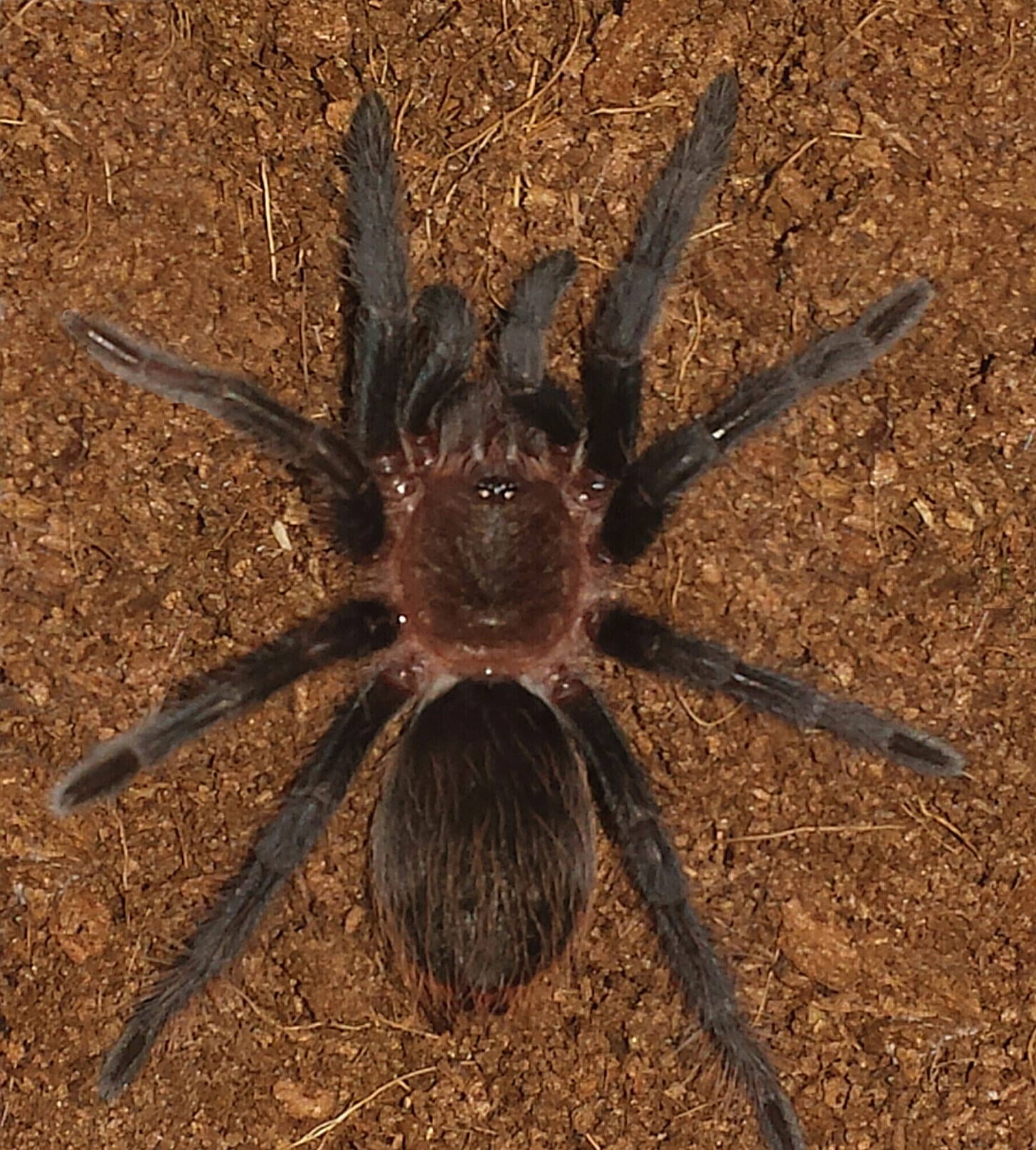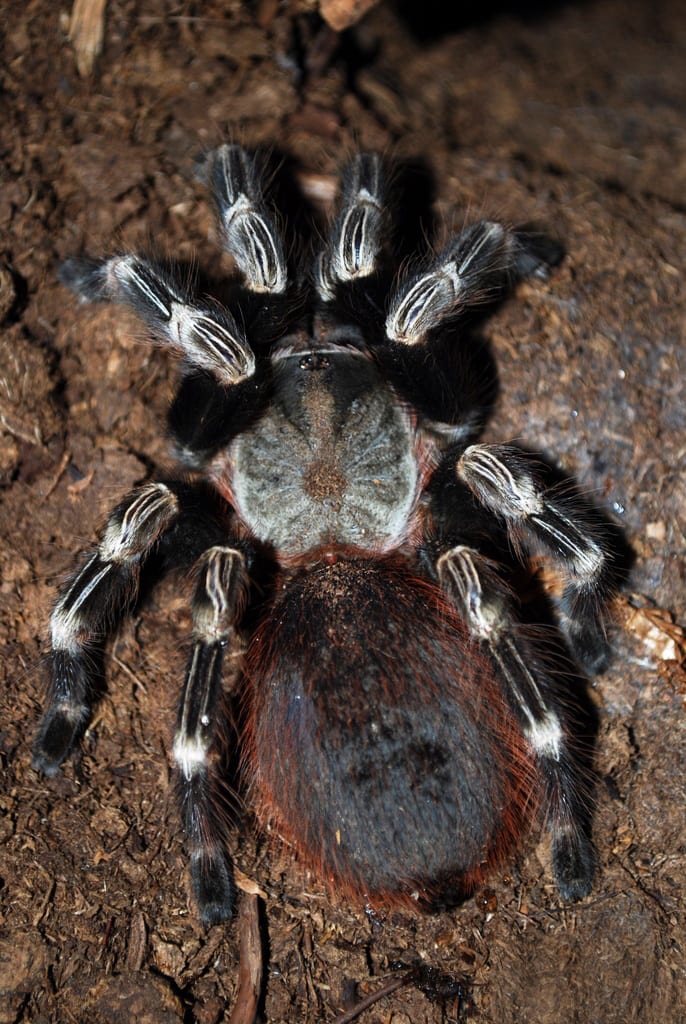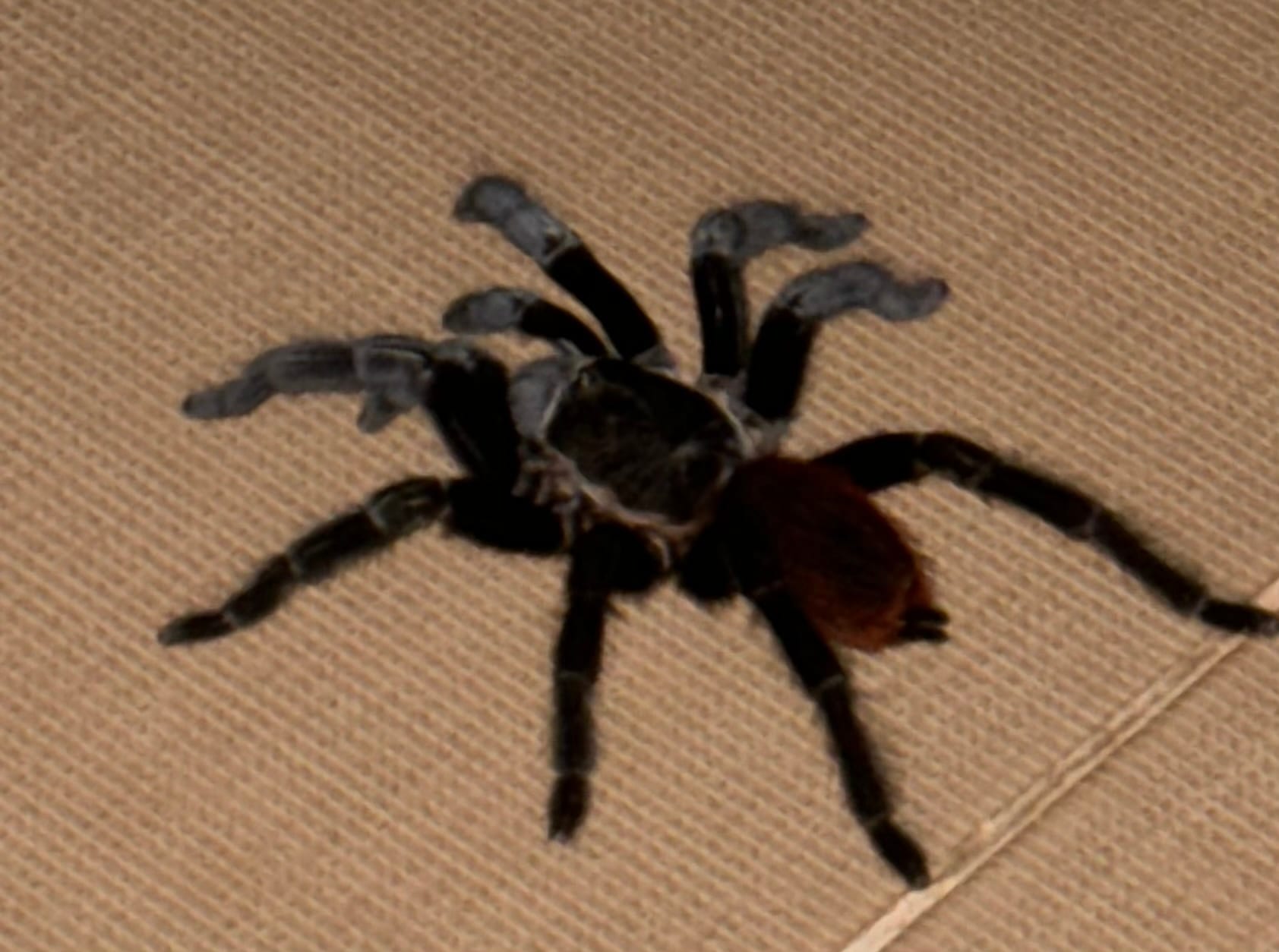
Source: Wikimedia Commons
Mexican Red Rump
BeginnerTliltocatl vagans
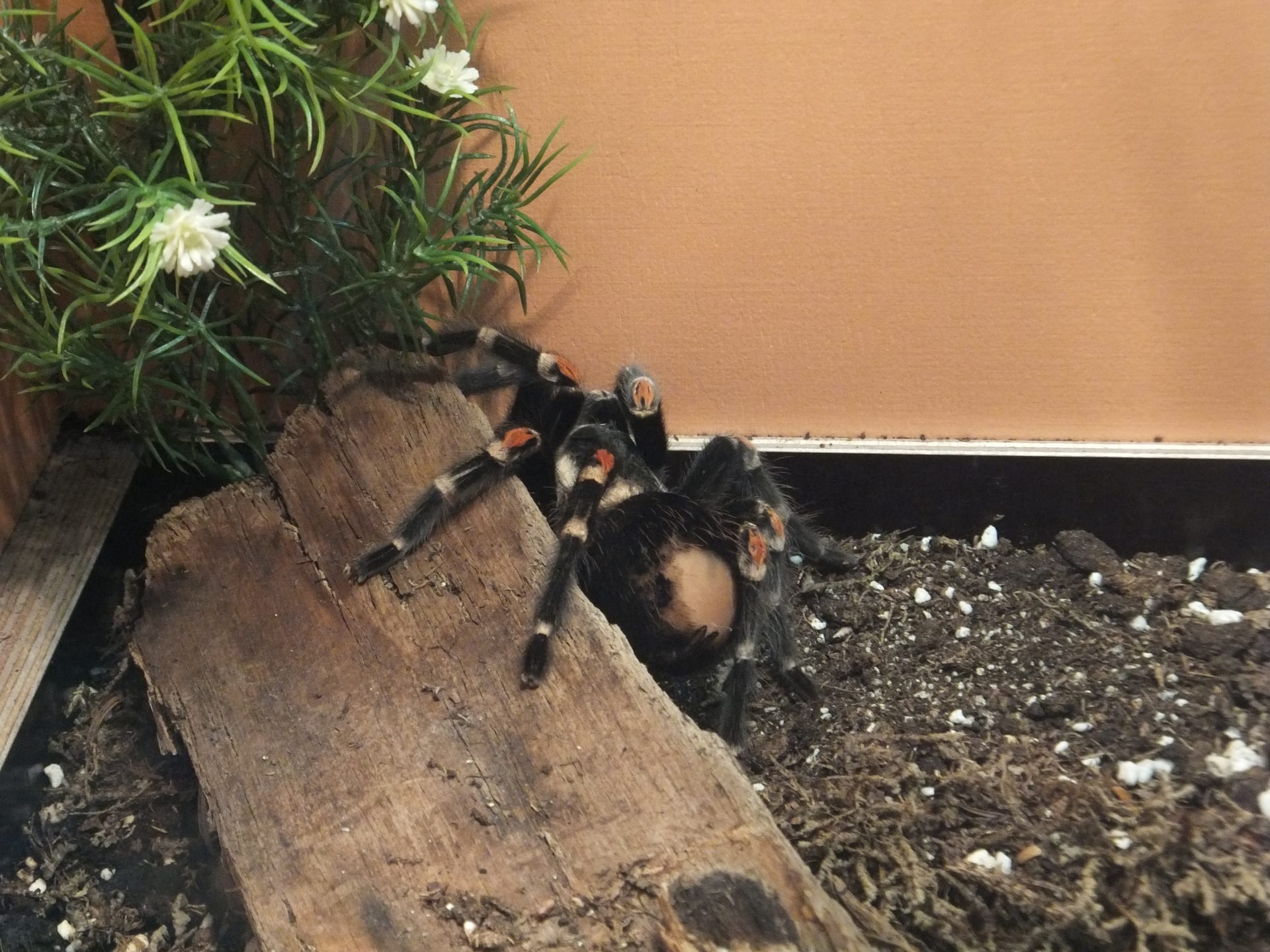
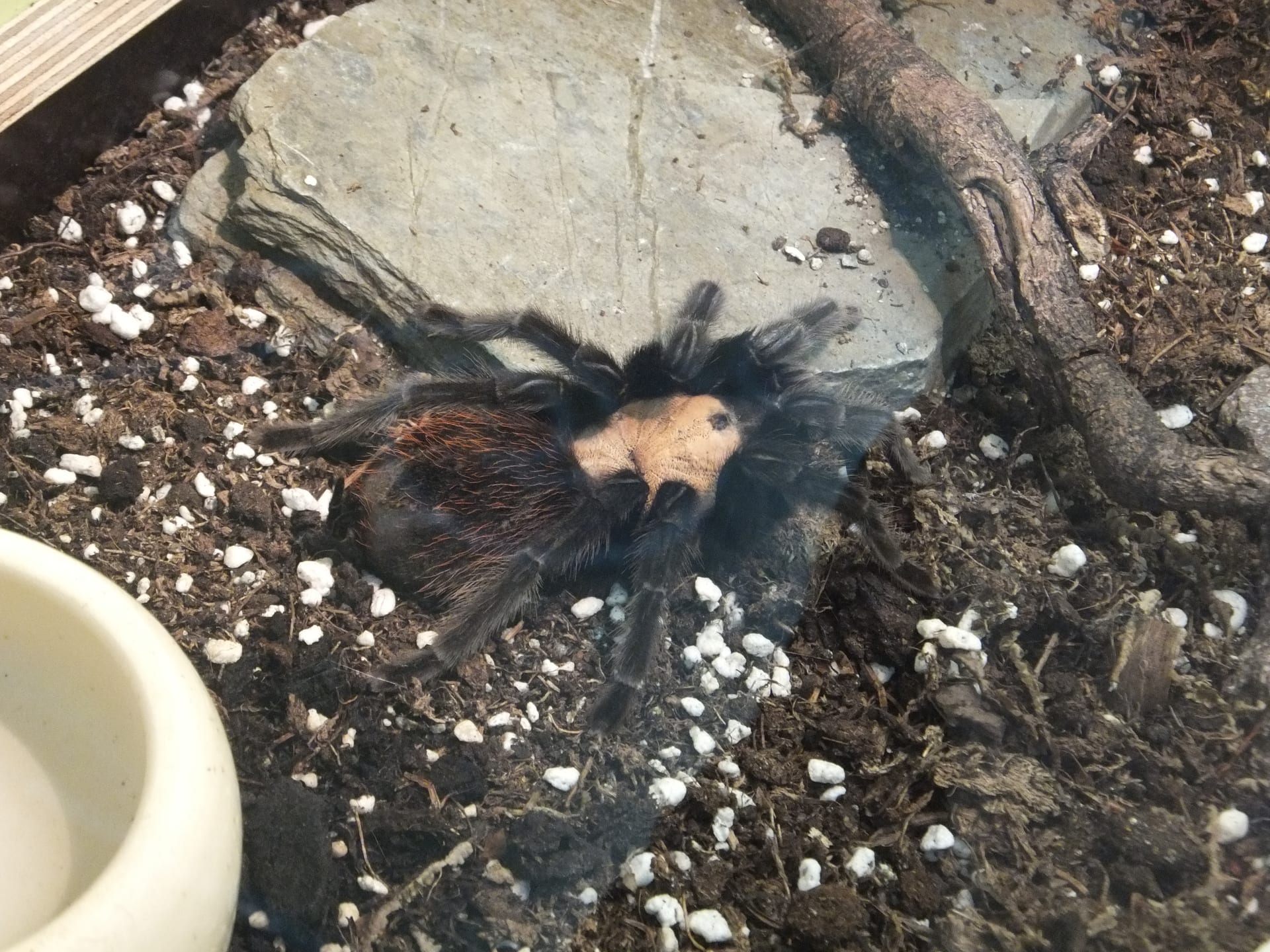
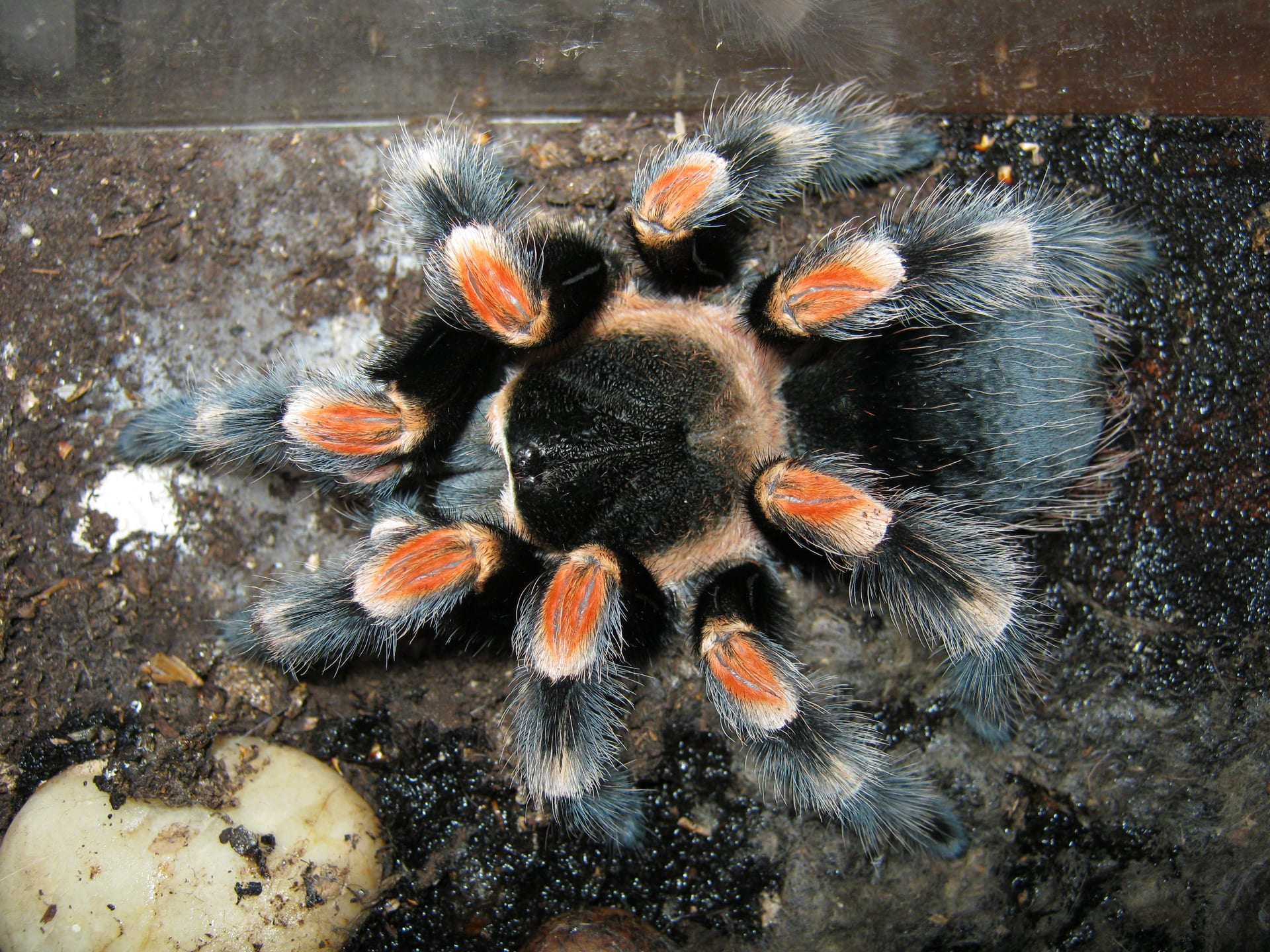
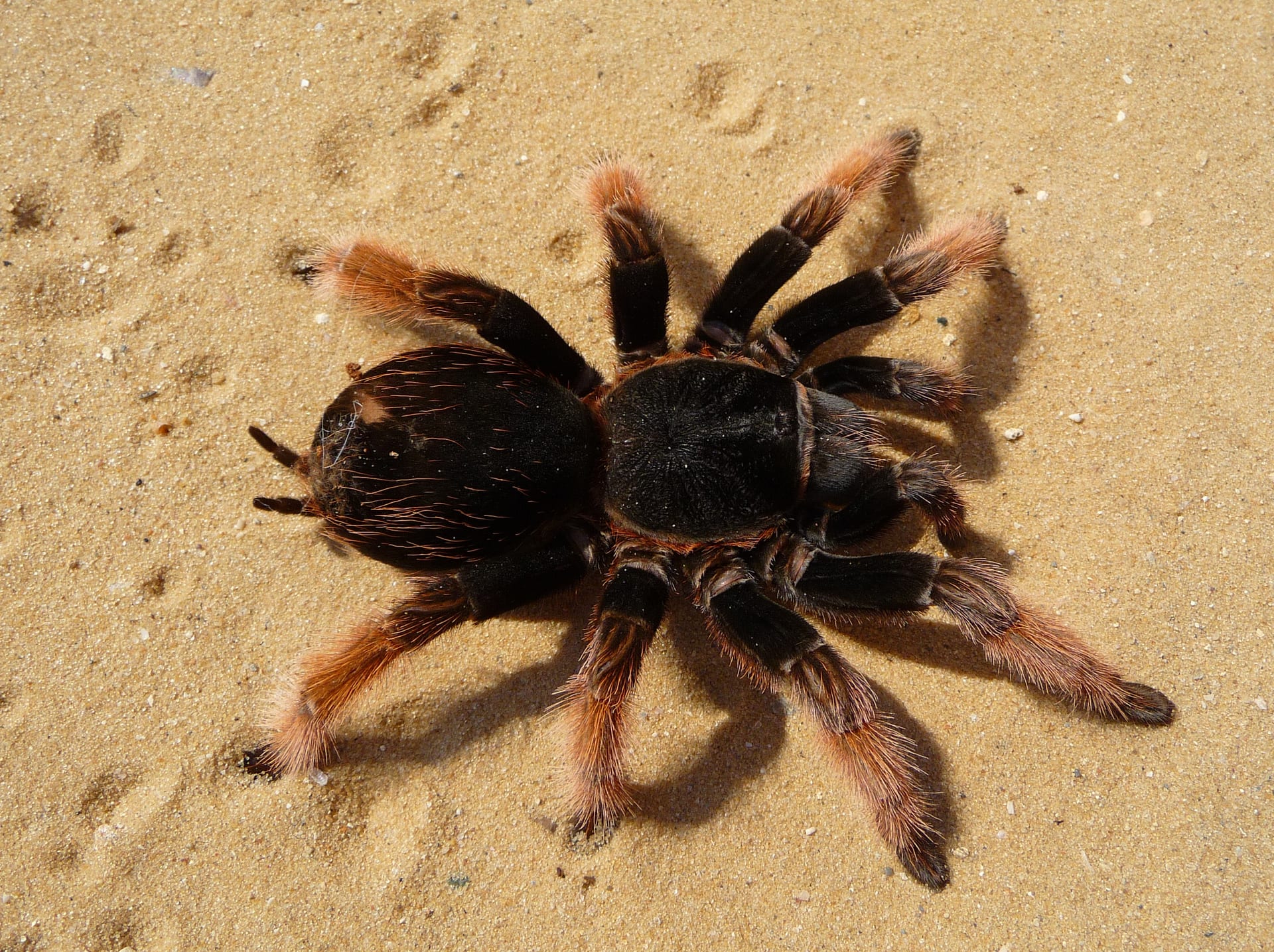
A terrestrial tarantula ranging from Mexico, notably the Yucatan Peninsula, into Central America. The red hairs on its black abdomen give it its name, and its legspan exceeds 16cm. It is widely kept and bred.
Difficulty
Beginner
Lifespan
Females can potentially reach 25-40 years
Size
Body up to about 5cm and legs up to about 5.5cm, with a legspan of some 16.5cm
Diet
Mainly insects, sometimes small lizards and rodents
About
The Mexican red rump (Tliltocatl vagans, formerly Brachypelma vagans) is a terrestrial tarantula ranging through Mexico, especially the Yucatan Peninsula, into Central America; GBIF records are dominated by Belize and Mexico and extend to Guatemala. The distinctive red hairs on its black abdomen give the species its name, and its legspan reaches about 16.5 cm, with males smaller and thinner than females. It prefers shrubland and lives in burrows it digs itself. Like most tarantulas it eats anything it can overpower, usually insects but sometimes small lizards and rodents. In 1996 the species was found in the wild in St. Lucie County, Florida, and it is now considered an established non-native there. It is frequently kept and bred in captivity, and is typically docile though skittish and prone to flicking urticating hairs. Females are long-lived, potentially reaching 25-40 years.
Source: Wikipedia (CC BY-SA 4.0)
Lifespan of the Mexican Red Rump
The Mexican Red Rump lives Females can potentially reach 25-40 years.
Size of the Mexican Red Rump
The Mexican Red Rump grows to Body up to about 5cm and legs up to about 5.5cm, with a legspan of some 16.5cm.
Basic Info
Origin
Mexico (including the Yucatan Peninsula) and Central America (Belize, Guatemala)
Lifespan
Females can potentially reach 25-40 years
Size
Body up to about 5cm and legs up to about 5.5cm, with a legspan of some 16.5cm
Care Specifications
PeacefulSolitary
Sources: Wikipedia: Tliltocatl vagans / Wikipedia: Tliltocatl (genus) / GBIF Tliltocatl vagans
References & Sources
Edited & verified by: BreederDirect editorial team
The taxonomic, regulatory, and husbandry data on this page are compiled and verified against the authoritative primary sources below.
Taxonomy & Authority
Accepted name: Tliltocatl vagans (Ausserer, 1875)
Synonyms: Brachypelma vagans (Ausserer, 1875)
Authority databases: GBIF
Nomenclature follows global taxonomic authority databases.
Regulations & Conservation Status
CITES Appendix II
The genus was split from Brachypelma in 2020. These spiders were covered when all Brachypelma species were added to CITES Appendix II in 1994, under the former name, and remain regulated after the split.
Sources: CITES Appendices (listed under its former name in Brachypelma, Appendix II) / Wikipedia: Tliltocatl (conservation and CITES)
Regulations may change. Always verify the latest information with the relevant authorities.
Mexican Red Rump Listings
Loading latest listingsFind listings for this species