 © Syrio / CC BY-SA 4.0
Mexican Flame Knee
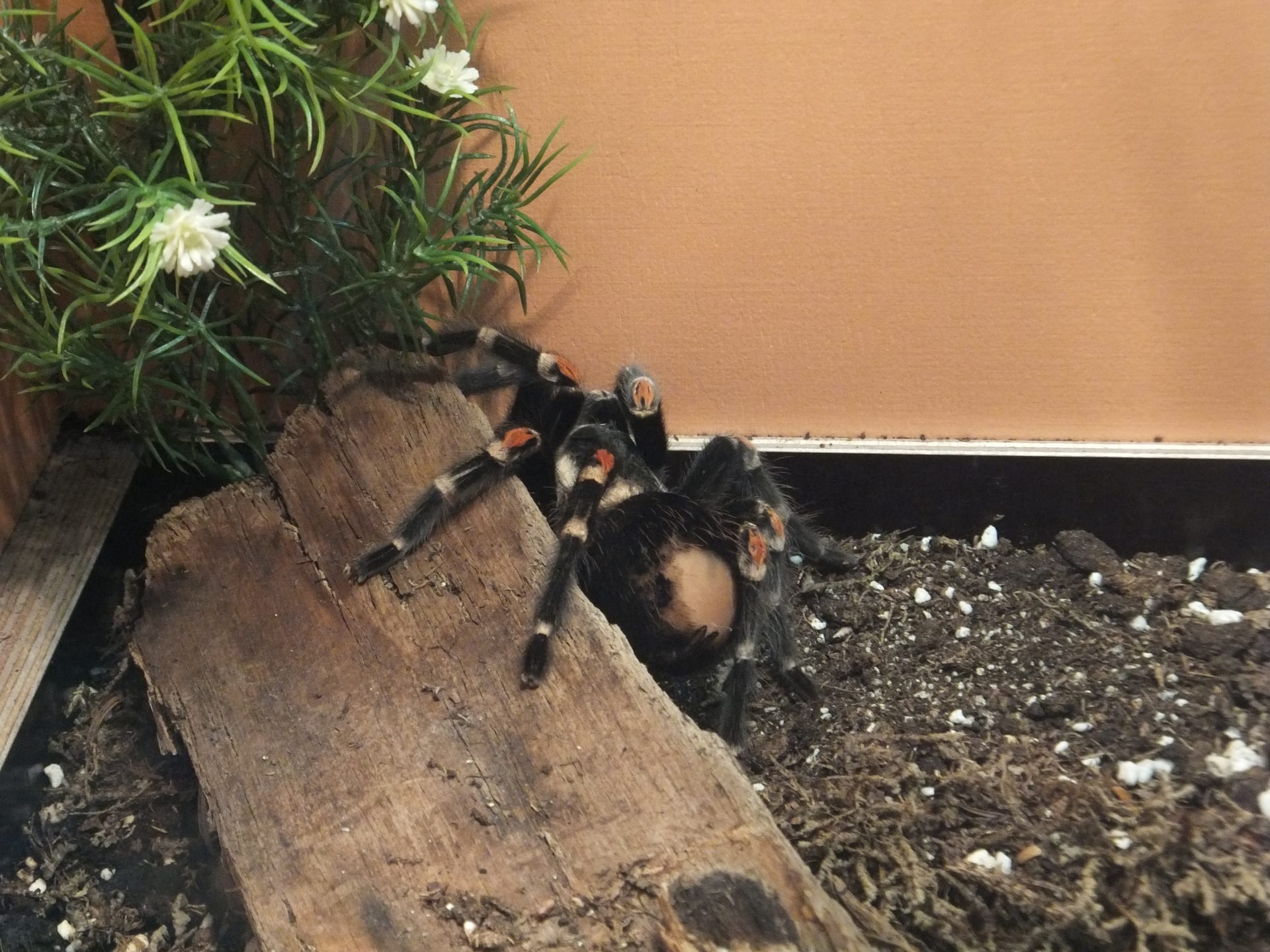
The Mexican Flame Knee is a tarantula found only in Mexico's Guerrero and Michoacán states. It closely resembles its relative, the Mexican Redknee, but has a darker overall coloration, with fiery red stripes across its knee joints that give the species its name. Calm and slow-moving by nature, it rarely turns aggressive unless startled, making it a popular choice for first-time tarantula keepers thanks to its beginner-friendly care level. Its sturdy build and striking leg contrast make it a rewarding species to observe.
View Mexican Flame Knee encyclopedia →0% commission on your first sales!Register by September 30, 2026 and your first 2 sales are commission-free!
Breeder Wanted!
List on BreederDirect and sell directly to customers nationwide!
5 Transparency Standards You Can Trust
When listing Exotic Invertebrates, Breeders disclose the following. We guarantee transparency on growth stage and breeding unit.
- Real Photos
- Breeding Unit
- Generation Info
- Body Length (mm)
- Country of Origin
Browse all 249 breeds
Verified breeders wanted for Exotic Invertebrates
Breeders are signing up now ahead of launch. Subscribe to be notified when new listings go live.
Getting alerts is free with a member account. When new listings match your saved search, we'll notify you by email and in-app.
Browse other categories
Verified breeders (preview)
Are you raising exotic invertebrates?
Register as a breeder and connect with buyers directly.
Apply as a breederMexican Flame Knee key facts
- Care level
- Beginner-friendly
- Lifespan
- Females take 9-10 years to mature in the wild and can then live about another 10 (figures for the genus Brachypelma)
- Size
- Body length about 4.5-6cm with legs up to 7cm (range for larger Brachypelma species)
- Diet
- Live insects such as crickets
- Temperature & Humidity
- It occurs in the hills and woodlands of southwestern Mexico. Avoid keeping it in hot, humid conditions.
- Enclosure
- A terrestrial, burrowing species. A wide enclosure with substrate deep enough to dig in and a hide suits it.
- Diet & Feeding
- Offer live insects such as crickets. Tarantulas do not catch prey in webs; they rely on venom, size and strength.
- Temperament & Venom
- Brachypelma species are known as docile tarantulas. When provoked they flick urticating hairs from the abdomen.
- Notes
- A CITES Appendix II species requiring permits for import and export. They are cannibalistic, so always house them singly.
About Mexican Flame Knee
The Mexican Flame Knee is a tarantula native to Mexico's Guerrero and Michoacán states, known for its fiery red knee markings, beginner-friendly care level, and long lifespan.
7 things to know before welcoming a Mexican Flame Knee
1Native to Mexico
This tarantula is found only in Mexico's Guerrero and Michoacán states in the wild. It's often confused with the closely related Mexican Redknee, but can be told apart by its darker coloration and the red stripes on its knee joints.
2Calm Temperament
Mexican Flame Knees are generally docile and rarely show aggression unless startled. When threatened, they may kick urticating hairs from their abdomen as a defense, so it's best to avoid handling them with bare hands.
3Prefers Dry Conditions
This species does best in a dry, well-ventilated enclosure and doesn't tolerate high humidity well. As a terrestrial species, give it a deep substrate layer and a hide to retreat into.
4Slow, Steady Growth
Adults reach a body length of roughly 4.5-6cm, with a leg span of up to about 7cm. Growth is gradual, so it takes time to reach full size.
5Remarkably Long-Lived
As is typical for the genus Brachypelma, females take around 9-10 years to reach maturity in the wild and can then live for another decade or so after that. Keep this long-term commitment in mind before bringing one home.
6Infrequent Feeding
Tarantulas have a slow metabolism and don't need to be fed often. As they mature, the intervals between feedings can be spaced out even further, keeping day-to-day care relatively light.
7Handle Molting With Care
Like all tarantulas, this species molts periodically as it grows, and its body is especially vulnerable just before and after a molt. If you notice signs of an upcoming molt, hold off on feeding and handling until it's fully recovered.
Frequently asked questions about Mexican Flame Knee
- Q.Is this species suitable for beginners?
- A.Yes, the Mexican Flame Knee is generally considered a beginner-friendly species. That said, it can kick urticating hairs when startled, so it's best handled calmly and with care.
- Q.How is it different from the Mexican Redknee?
- A.While closely related and similar in appearance, the Mexican Flame Knee has an overall darker body color and red knee stripes that resemble flames. It's also native specifically to Mexico's Guerrero and Michoacán states.
- Q.How large does it grow?
- A.Adults reach a body length of about 4.5-6cm, with a leg span of up to roughly 7cm. Since growth is gradual, you can watch it develop slowly over time from whatever size it is when you bring it home.
- Q.How long does it live?
- A.As with other Brachypelma species, females typically take 9-10 years to mature in the wild and can then live another decade or so beyond that. It's worth considering this long lifespan before deciding to keep one.
- Q.Is this species subject to any regulations?
- A.Mexican Flame Knee is listed in CITES Appendix II. International trade requires a permit from the exporting country, but as far as CITES is concerned, no registration is needed to buy or sell individuals already legally in Japan.
Learn more about Mexican Flame Knee in the encyclopedia
View Mexican Flame Knee encyclopedia entry →
Care difficulty, lifespan, size and diet — all basics covered.
More in this category
Can't find the one you're looking for?
Post your wishes for free and breeders with matching animals will contact you with introductions.