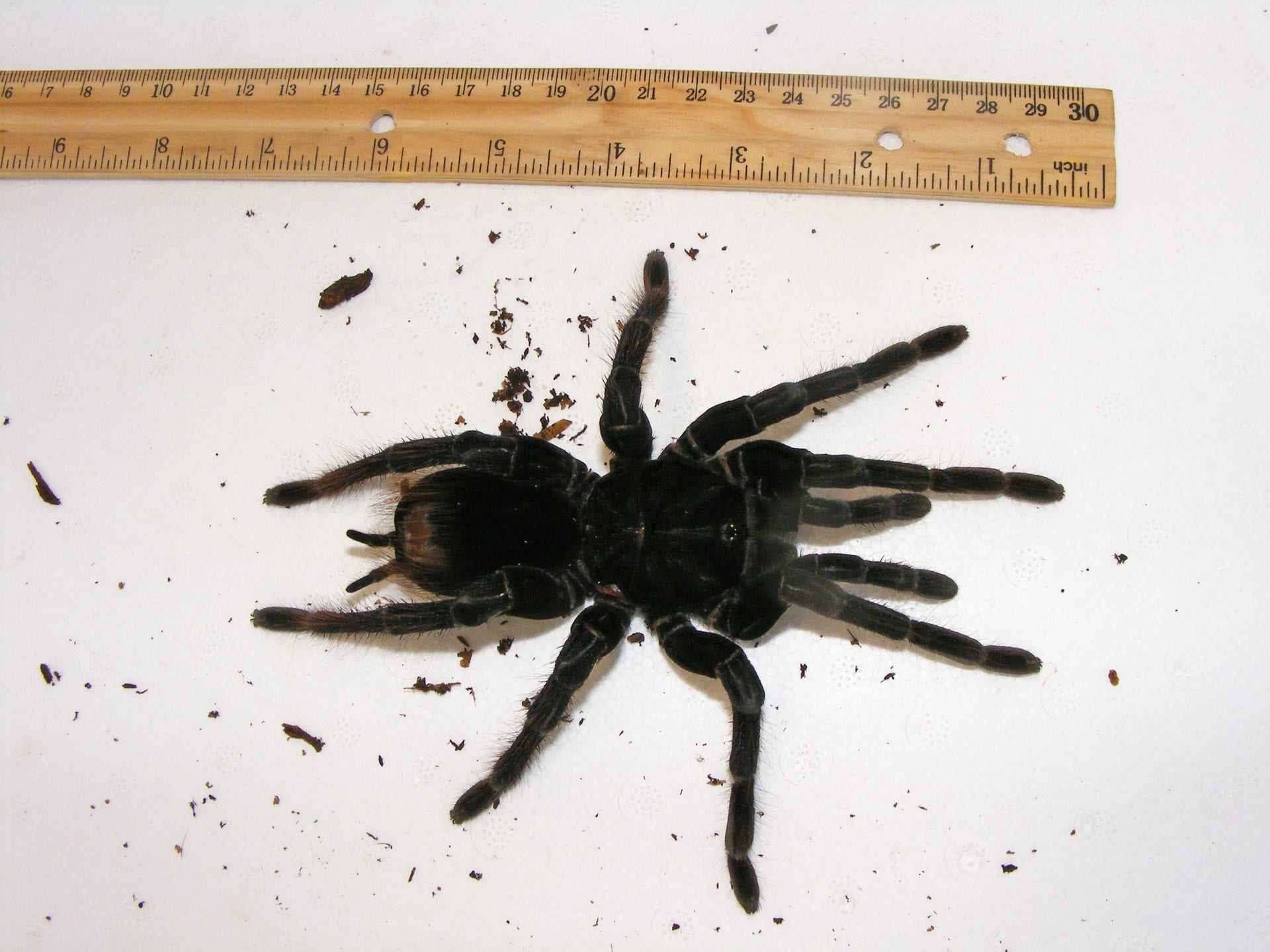
 © John / CC BY 2.0
Bolivian Steely Blue
The Bolivian Steely Blue is a large, ground-dwelling tarantula native to the rainforests of Bolivia and Peru, where it digs burrows in the substrate. Mature males develop a striking metallic blue-purple sheen on their legs, making them especially prized among enthusiasts. Females, by contrast, are solid black — a dramatic example of sexual dimorphism within the same species. Since this tarantula spends most of its time at ground level, a deep substrate layer lets you watch its burrowing behavior up close. It's generally considered a species better suited to keepers with some prior tarantula experience.
View Bolivian Steely Blue encyclopedia →0% commission on your first sales!Register by September 30, 2026 and your first 2 sales are commission-free!
Breeder Wanted!
List on BreederDirect and sell directly to customers nationwide!
5 Transparency Standards You Can Trust
When listing Exotic Invertebrates, Breeders disclose the following. We guarantee transparency on growth stage and breeding unit.
- Real Photos
- Breeding Unit
- Generation Info
- Body Length (mm)
- Country of Origin
Browse all 249 breeds
Verified breeders wanted for Exotic Invertebrates
Breeders are signing up now ahead of launch. Subscribe to be notified when new listings go live.
Getting alerts is free with a member account. When new listings match your saved search, we'll notify you by email and in-app.
Browse other categories
Verified breeders (preview)
Are you raising exotic invertebrates?
Register as a breeder and connect with buyers directly.
Apply as a breederAbout Bolivian Steely Blue
A large, ground-dwelling tarantula from Bolivia and Peru. Mature males show a metallic blue-purple leg sheen, while females are solid black — striking sexual dimorphism. Burrows in substrate; suited to intermediate keepers.
7 things to know before welcoming a Bolivian Steely Blue
1Deep Substrate for Burrowing
In the wild, this species digs burrows in the substrate to live in. Provide a deep enough substrate layer in captivity so it can dig and shelter naturally. Watching it excavate its burrow is one of the highlights of keeping this species.
2Striking Color Difference by Sex
Mature males develop a vivid metallic blue-purple sheen on their legs, while females remain solid black. Understanding that this color difference comes from sex and maturity helps avoid confusion when raising your tarantula.
3Lifespan Differs by Sex
Females can live up to around 15 years, making this a long-lived species, while males typically live only about 4 years after maturing. If you want a longer-term companion, a female may be the better choice.
4Best Suited to Intermediate Keepers
This species is considered suitable for intermediate keepers. Having some basic tarantula-keeping experience — temperature and humidity management, safe handling practices — will help you care for it with confidence.
5Give a Large Species Its Space
As a large, ground-dwelling tarantula, it needs an enclosure with adequate space. Molting places significant strain on its body, so keep disturbances to a minimum before and after a molt.
6Care Around Hairs and Defensive Bites
Like many tarantulas, it may flick urticating hairs from its abdomen or bite defensively when startled. Minimize direct hand contact and use proper tools for enclosure maintenance.
7Prepare the Enclosure Before Arrival
Set up a stable temperature and humidity, a hiding spot, and substrate deep enough for burrowing before your tarantula arrives, to reduce stress from the environment change. Also confirm how you'll source feeder insects in advance.
Frequently asked questions about Bolivian Steely Blue
- Q.Do males and females really look that different?
- A.Yes — mature males develop a metallic blue-purple sheen on their legs, while females are solid black all over. This striking sexual dimorphism is one of the species' defining traits.
- Q.Is this tarantula suitable for beginners?
- A.This species is considered better suited to intermediate keepers. It's a good idea to gain some basic tarantula-keeping experience before bringing one home.
- Q.How long can I expect to keep one?
- A.Lifespan varies significantly by sex: females can live up to around 15 years, while males typically live about 4 years. If you want a longer-term companion, a female may be the better choice.
- Q.How should I set up the substrate?
- A.Since this species digs burrows to live in, provide a substrate layer with enough depth for burrowing. Watching it excavate its burrow is one of the rewarding parts of keeping this species.
- Q.Is its temperament calm or aggressive?
- A.It's generally considered a relatively calm species, but as with any large tarantula, it may flick urticating hairs or bite defensively if startled. Avoid direct hand contact and use proper tools when handling the enclosure.
Learn more about Bolivian Steely Blue in the encyclopedia
View Bolivian Steely Blue encyclopedia entry →
Care difficulty, lifespan, size and diet — all basics covered.
More in this category
Can't find the one you're looking for?
Post your wishes for free and breeders with matching animals will contact you with introductions.