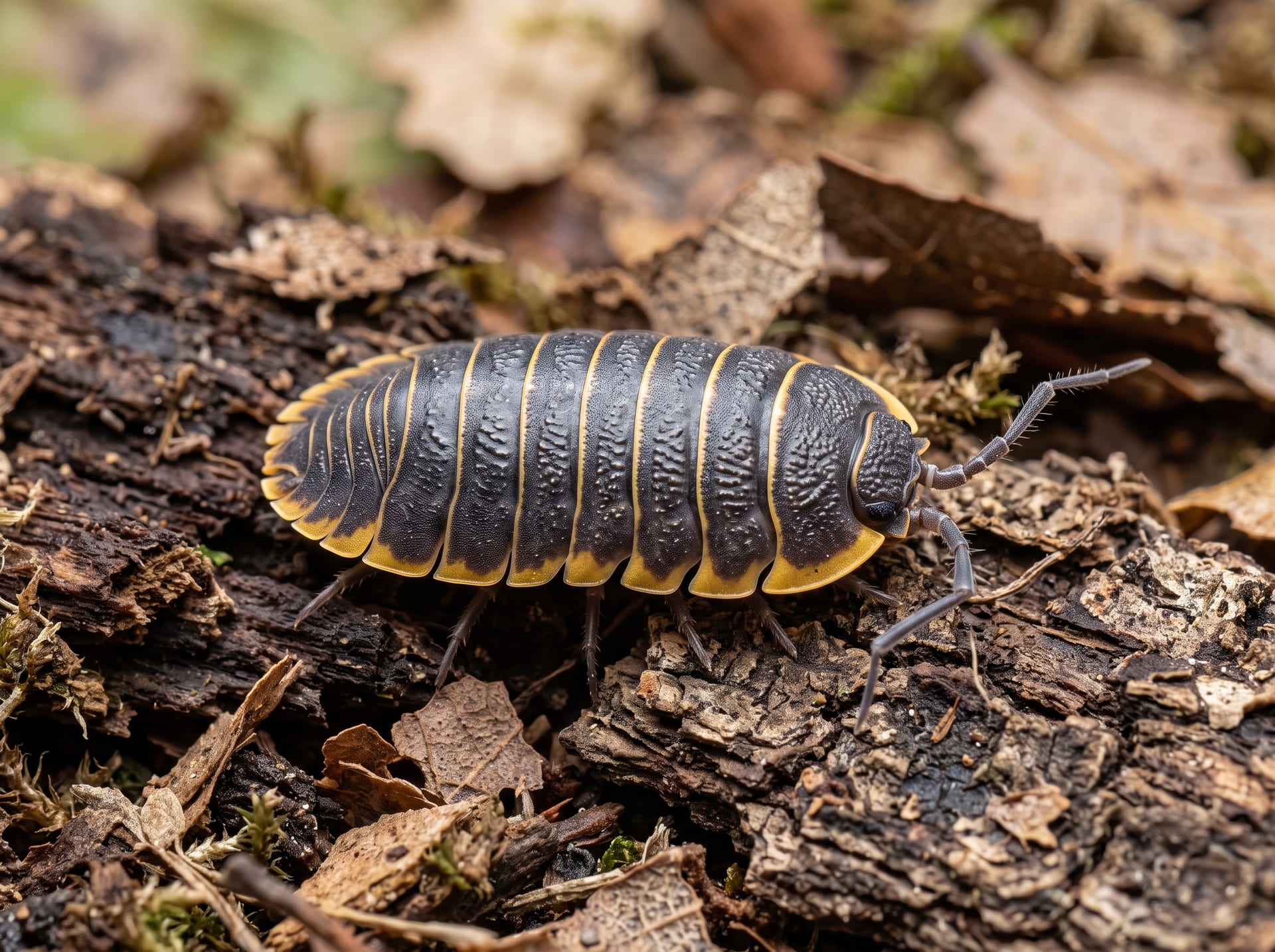
Magnificent Isopod
The Magnificent Isopod is a striking species native to Spain, prized for its rugged, textured exoskeleton and impressively large size among isopods. True to its name, this species has become a favorite among exotic invertebrate keepers for its bold, sculptural appearance. Despite moving quickly, it has no bite or venom to worry about — it's a harmless detritivore that feeds on decaying wood and leaf litter. It thrives in slightly dry conditions with plenty of calcium available, and adults typically reach about 2 to 3 cm in length. While hardy overall, its care calls for some prior isopod-keeping experience, making it best suited to intermediate keepers.
View Magnificent Isopod encyclopedia →0% commission on your first sales!Register by September 30, 2026 and your first 2 sales are commission-free!
Breeder Wanted!
List on BreederDirect and sell directly to customers nationwide!
5 Transparency Standards You Can Trust
When listing Exotic Invertebrates, Breeders disclose the following. We guarantee transparency on growth stage and breeding unit.
- Real Photos
- Breeding Unit
- Generation Info
- Body Length (mm)
- Country of Origin
Browse all 249 breeds
Verified breeders wanted for Exotic Invertebrates
Breeders are signing up now ahead of launch. Subscribe to be notified when new listings go live.
Getting alerts is free with a member account. When new listings match your saved search, we'll notify you by email and in-app.
Browse other categories
Verified breeders (preview)
Are you raising exotic invertebrates?
Register as a breeder and connect with buyers directly.
Apply as a breederAbout Magnificent Isopod
A large, ruggedly textured isopod from Spain, prized for its bold appearance. Harmless and venom-free, it favors dry conditions and plenty of calcium — a species best suited to intermediate keepers.
7 things to know before welcoming a Magnificent Isopod
1Prefers Drier Conditions
Unlike many isopod species, the Magnificent Isopod dislikes excess moisture and prefers a drier substrate. Set up both a dry zone and a lightly dampened zone to create a humidity gradient, and choose a well-ventilated enclosure to keep conditions stable.
2Calcium Supply Matters
Plenty of calcium is essential for maintaining its rugged, textured exoskeleton. Mix cuttlebone, crushed eggshell, or a dedicated calcium supplement into the substrate or food so it's always available — a shortage can lead to failed molts.
3Surprisingly Quick Mover
Despite its chunky, armored look, this isopod moves quickly. Choose an enclosure that seals tightly to prevent escapes through lid gaps or vents, and expect it to dart for cover when startled.
4No Bite, No Venom
The Magnificent Isopod cannot bite or sting and poses no danger to handle. It can be picked up safely with bare hands, making it a relatively reassuring choice even in households with young children, as long as it's handled gently.
5Feeds on Decaying Wood
In the wild, it breaks down decaying wood and leaf litter, playing a useful role as a detritivore. In captivity, offering rotted wood, dried leaves, and vegetable scraps recreates its natural diet.
6Prep the Enclosure First
Before bringing one home, set up a well-sealed, ventilated enclosure with deep substrate and hiding spots like rotted wood or leaf litter. Add a calcium source too, so the habitat is fully ready before your isopod arrives.
7Lifespan of About 2-3 Years
The Magnificent Isopod typically lives around 2 to 3 years. Consistent temperature and humidity management along with steady calcium supplementation help it thrive throughout its life — some prior isopod-keeping experience is helpful given its intermediate difficulty level.
Frequently asked questions about Magnificent Isopod
- Q.Is this isopod suitable for beginners?
- A.The Magnificent Isopod is generally considered better suited to intermediate keepers. Some prior isopod-keeping experience helps with managing its drier habitat requirements and calcium supplementation. First-timers should research its care needs thoroughly before bringing one home.
- Q.Is it safe to handle?
- A.Yes — it doesn't bite or carry venom, so it's safe to hold with bare hands. Still, handle it gently and briefly to avoid causing it stress.
- Q.How big does it get?
- A.Adults typically reach about 2 to 3 cm in length. Combined with its rugged, textured exoskeleton, it has a noticeably substantial presence for an isopod.
- Q.How long does it live?
- A.Its lifespan is roughly 2 to 3 years. Consistent temperature, humidity, and calcium management help it stay healthy throughout that time.
- Q.What should I feed it?
- A.In the wild, it feeds on decaying wood and leaf litter as a detritivore. In captivity, offering rotted wood, dried leaves, and vegetable scraps mimics its natural diet, alongside a steady calcium source.
Learn more about Magnificent Isopod in the encyclopedia
View Magnificent Isopod encyclopedia entry →
Care difficulty, lifespan, size and diet — all basics covered.
More in this category
Can't find the one you're looking for?
Post your wishes for free and breeders with matching animals will contact you with introductions.