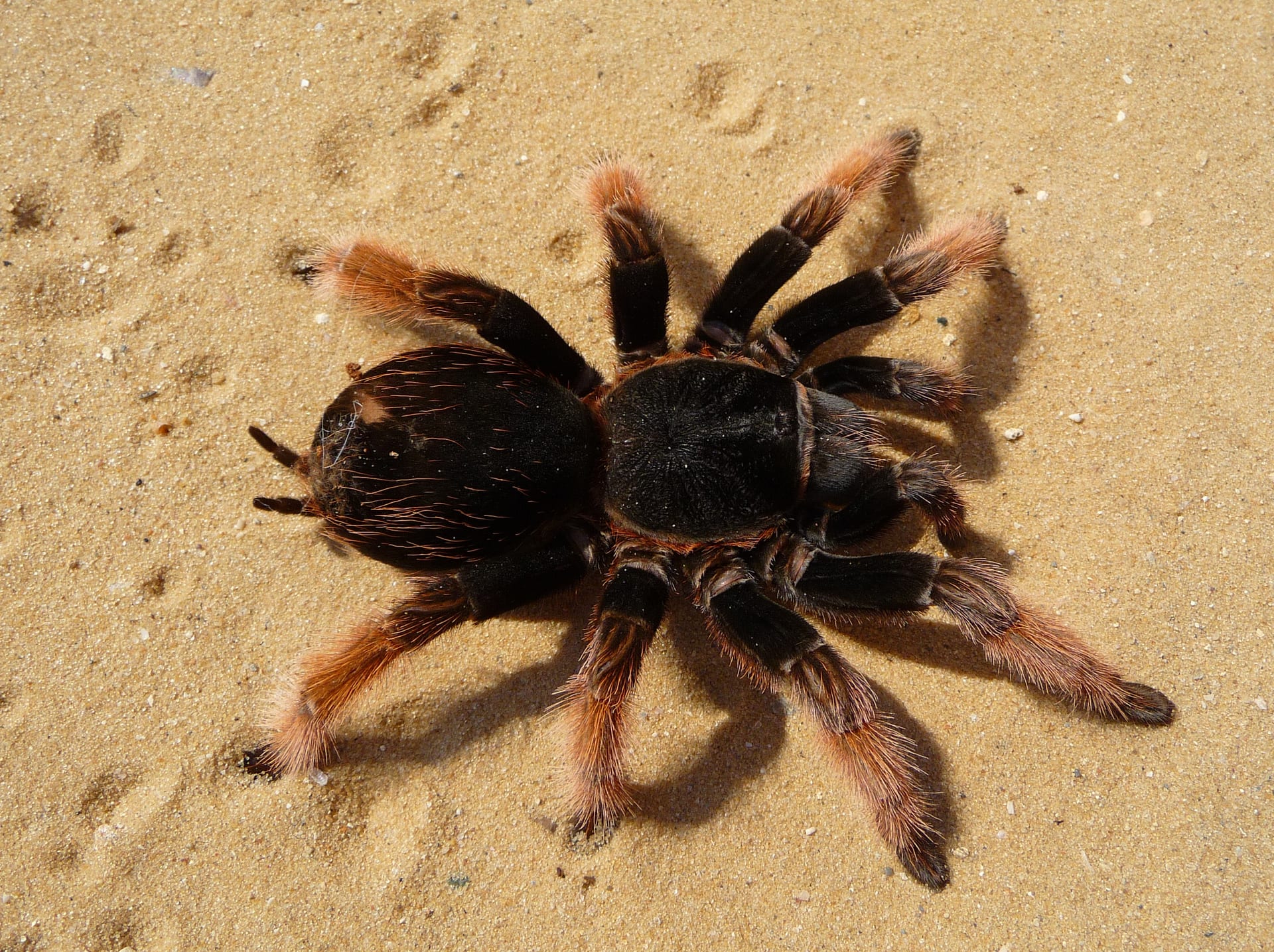
 © George Chernilevsky / Public domain
Mexican Pink Tarantula
The Mexican Pink Tarantula is a rare species found only in the Jalisco and Nayarit states of western Mexico. Its body is covered in uniform rust-colored hairs, and the black markings on its carapace help distinguish it from the closely related B. boehmei. Known for its calm demeanor, it's well suited to keepers who enjoy quiet observation over frequent handling. Considered one of the rarest species in its genus, it draws attention for its striking coloration. With slow, steady growth, it offers years of engagement for dedicated keepers.
View Mexican Pink Tarantula encyclopedia →0% commission on your first sales!Register by September 30, 2026 and your first 2 sales are commission-free!
Breeder Wanted!
List on BreederDirect and sell directly to customers nationwide!
5 Transparency Standards You Can Trust
When listing Exotic Invertebrates, Breeders disclose the following. We guarantee transparency on growth stage and breeding unit.
- Real Photos
- Breeding Unit
- Generation Info
- Body Length (mm)
- Country of Origin
Browse all 249 breeds
Verified breeders wanted for Exotic Invertebrates
Breeders are signing up now ahead of launch. Subscribe to be notified when new listings go live.
Getting alerts is free with a member account. When new listings match your saved search, we'll notify you by email and in-app.
Browse other categories
Verified breeders (preview)
Are you raising exotic invertebrates?
Register as a breeder and connect with buyers directly.
Apply as a breederMexican Pink Tarantula key facts
- Care level
- Intermediate
- Lifespan
- Females take 9-10 years to mature in the wild and can then live about another 10 (figures for the genus Brachypelma)
- Size
- Adults 6-7.5cm in body length with a 16cm legspan
- Diet
- Live insects such as crickets
- Temperature & Humidity
- It occurs between 300 and 1400 m. Temperature and humidity affect the survival and development of eggs and spiderlings and appear to govern its distribution more than food resources or intraspecific interactions. There are no established captive figures.
- Enclosure
- A terrestrial, burrowing species. A wide enclosure with substrate deep enough to dig in and a hide suits it.
- Diet & Feeding
- Offer live insects such as crickets. Growth is slow; do not try to force it with heavy feeding.
- Temperament & Venom
- Brachypelma species are known as docile tarantulas. When provoked they flick urticating hairs from the abdomen.
- Notes
- Regarded as the rarest and most threatened species in the genus. A CITES Appendix II species requiring permits for import and export.
About Mexican Pink Tarantula
A guide to the Mexican Pink Tarantula, a rare species from western Mexico known for its rust-colored coat and calm temperament. An intermediate-level species worth knowing before you bring one home.
7 things to know before welcoming a Mexican Pink Tarantula
1A Species with a Limited Range
Native only to the Jalisco and Nayarit states of western Mexico, this species is considered among the rarest in its genus. Its narrow natural range is part of what makes it so distinctive.
2Suited to Intermediate Keepers
This species is generally recommended for keepers with some prior tarantula experience rather than absolute beginners. Familiarity with basic temperature and humidity management is a good foundation before bringing one home.
3Identified by Dark Carapace Markings
While the entire body is covered in uniform rust-colored hair, the black markings on the carapace are the key feature separating it from the closely related B. boehmei. Checking for this trait beforehand can help confirm you're getting the right species.
4Know the Adult Size in Advance
Adults reach a body length of about 6-7.5 cm, with a leg span of roughly 16 cm. Choosing an enclosure sized for this eventual adult size can save you from needing to upgrade later.
5A Long-Term Commitment
In the wild, females take roughly 9-10 years to reach maturity and can then live for around another 10 years. Plan for a long-term commitment before bringing one home.
6Calm, But Handle With Care
While generally calm-natured, like tarantulas in general it may display defensive behavior when stressed. It's best to avoid unnecessary handling and enjoy observing it instead.
7Prepare the Setup Before Arrival
Set up the enclosure, substrate, and water dish before your tarantula arrives. Having a stable environment ready in advance helps it settle in comfortably.
Frequently asked questions about Mexican Pink Tarantula
- Q.Can beginners keep a Mexican Pink Tarantula?
- A.This species is generally considered suited to intermediate keepers rather than complete beginners. It's a good idea to gain some basic tarantula-keeping experience first.
- Q.How does it differ from the closely related B. boehmei?
- A.Both species share a uniform rust-colored coat, but the Mexican Pink can be identified by the black markings on its carapace.
- Q.How large does it grow?
- A.Adults reach a body length of about 6-7.5 cm with a leg span of around 16 cm. It's worth choosing an enclosure with this final size in mind.
- Q.How long does it live?
- A.In the wild, females take about 9-10 years to mature and can then live for roughly another 10 years. It's a long-term commitment worth planning for.
- Q.Is it subject to CITES regulation?
- A.Mexican Pink Tarantula is listed in CITES Appendix II. International trade requires a permit from the exporting country, but as far as CITES is concerned, no registration is needed to buy or sell individuals already legally in Japan.
Learn more about Mexican Pink Tarantula in the encyclopedia
View Mexican Pink Tarantula encyclopedia entry →
Care difficulty, lifespan, size and diet — all basics covered.
More in this category
Can't find the one you're looking for?
Post your wishes for free and breeders with matching animals will contact you with introductions.