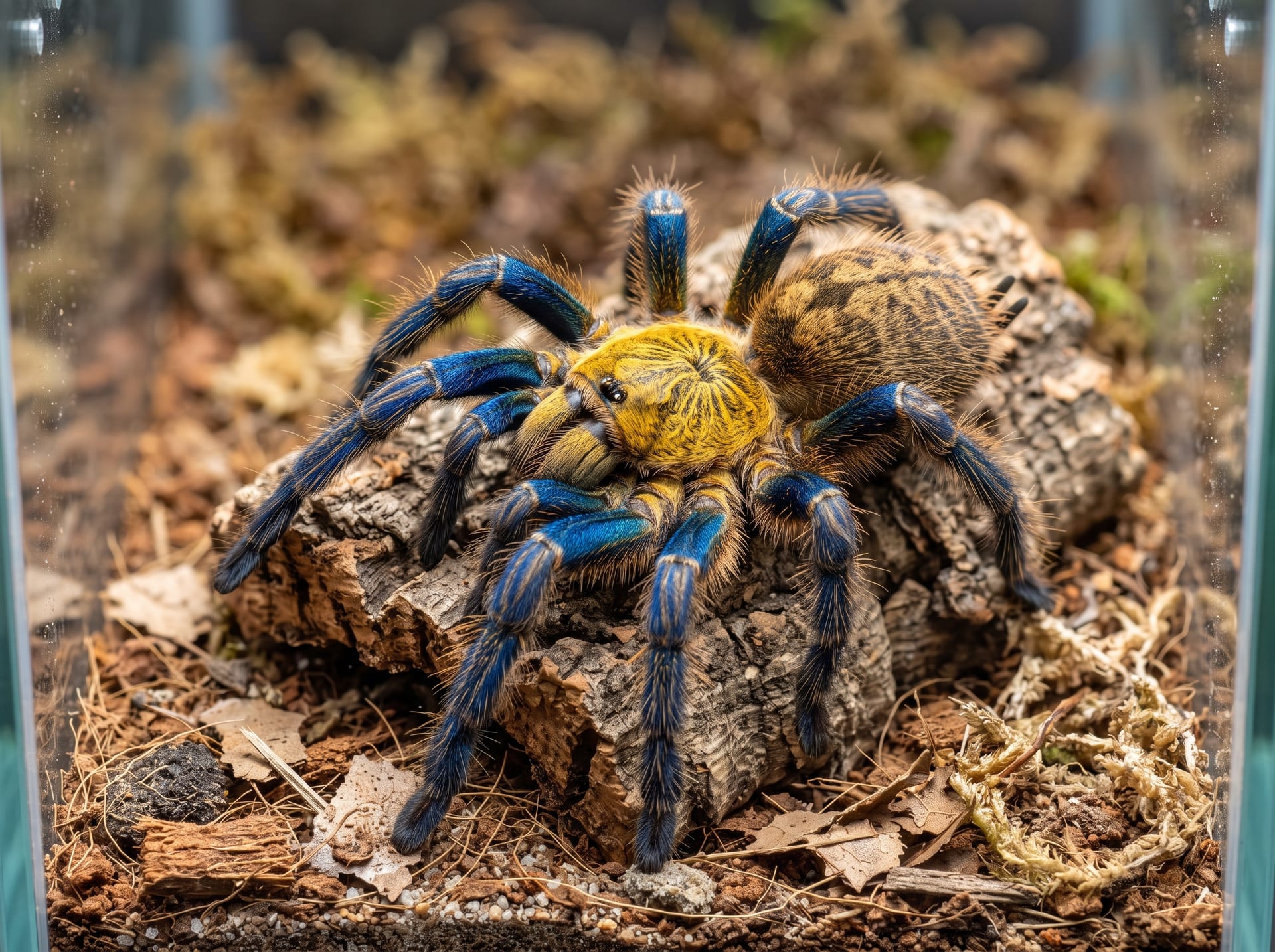
Golden Blue Leg Baboon
The Golden Blue Leg Baboon is a striking tarantula native to South Africa, prized for the contrast between its shimmering golden carapace and metallic blue legs. True to its baboon-spider heritage, it's a burrowing species that digs its own retreat and spends much of its time tucked out of sight. As an Old World species without urticating hairs, it relies on defensive posturing, quick movement, and biting to protect itself, and its venom is considered relatively potent. Because it tends toward fast, defensive behavior, handling calls for real experience, making this an advanced-keeper species — but its vivid coloring and commanding presence make it a standout in any collection.
View Golden Blue Leg Baboon encyclopedia →0% commission on your first sales!Register by September 30, 2026 and your first 2 sales are commission-free!
Breeder Wanted!
List on BreederDirect and sell directly to customers nationwide!
5 Transparency Standards You Can Trust
When listing Exotic Invertebrates, Breeders disclose the following. We guarantee transparency on growth stage and breeding unit.
- Real Photos
- Breeding Unit
- Generation Info
- Body Length (mm)
- Country of Origin
Browse all 249 breeds
Verified breeders wanted for Exotic Invertebrates
Breeders are signing up now ahead of launch. Subscribe to be notified when new listings go live.
Getting alerts is free with a member account. When new listings match your saved search, we'll notify you by email and in-app.
Browse other categories
Verified breeders (preview)
Are you raising exotic invertebrates?
Register as a breeder and connect with buyers directly.
Apply as a breederGolden Blue Leg Baboon key facts
- Care level
- Advanced
- Lifespan
- Female 10-12 years / Male 3-4 years
- Size
- Leg span 12-14 cm
- Temperature
- 23〜28℃
- Humidity
- 60〜70%
- Diet
- Live insects such as crickets and roaches, offered roughly weekly.
- Habitat
- Fossorial-leaning setup with deep substrate and a hide.
- Temp & Humidity
- 23-28°C, 60-70% humidity; keep on the drier side.
- Feeding
- Quick, eager feeder; feed about weekly.
- Caution
- No urticating hairs but fast and defensive; venom is potent—never handle.
About Golden Blue Leg Baboon
A South African Old World tarantula with a golden carapace and metallic blue legs. No urticating hairs, but fast, defensive, and fairly venomous — an advanced species. Lifespan: females 10–12 years, males 3–4 years.
7 things to know before welcoming a Golden Blue Leg Baboon
1Suited to Experienced Keepers
This species moves fast and stays alert, so handling and maintenance call for prior experience. It suits keepers who already have tarantula-care experience rather than first-time owners.
2No Urticating Hairs, But Defensive
As an Old World species, it doesn't flick urticating hairs for defense — instead it relies on threat postures, quick movement, and biting. Its venom is considered fairly potent, so avoid unnecessary contact.
3A Burrowing Species
In the wild it digs and lives in burrows, so a deep substrate layer and a hide will help it settle in captivity. It spends much of its time out of sight, so don't be alarmed if it stays hidden.
4Watch for Quick Movement
When startled, this spider can move very quickly, so take care not to let it escape when opening the enclosure. A cage with a secure, lockable lid is strongly recommended.
5Lifespan Differs by Sex
Females can live 10–12 years, while males have a much shorter lifespan of around 3–4 years after maturing. Choose a female if you're hoping for a long-term companion.
6Adult Size and Enclosure Space
Adults reach a leg span of about 12–14 cm. Since it's a burrowing species, choose an enclosure tall enough to hold a deep layer of substrate.
7Bite Risk and Everyday Handling
Given its defensive temperament and fairly potent venom, it's best kept as a display animal rather than handled directly. Use tools like tongs during maintenance to minimize unnecessary contact.
Frequently asked questions about Golden Blue Leg Baboon
- Q.Can beginners keep this species?
- A.This species is considered suitable for advanced keepers. Because it moves quickly and tends to be defensive, it's best to gain experience with other tarantulas first.
- Q.Does it have urticating hairs?
- A.No, as an Old World species it doesn't have urticating hairs. Instead, it defends itself through threat displays, quick movement, and biting.
- Q.How long does it live?
- A.Females typically live 10–12 years, while males live around 3–4 years. If you want a long-term companion, a female is the better choice.
- Q.Is it safe to handle by hand?
- A.Since it's defensive and its venom is considered fairly potent, direct handling isn't recommended. Use tools such as tongs when performing maintenance instead.
- Q.Are there any legal restrictions?
- A.This species is not listed under CITES.
Learn more about Golden Blue Leg Baboon in the encyclopedia
View Golden Blue Leg Baboon encyclopedia entry →
Care difficulty, lifespan, size and diet — all basics covered.
More in this category
Can't find the one you're looking for?
Post your wishes for free and breeders with matching animals will contact you with introductions.