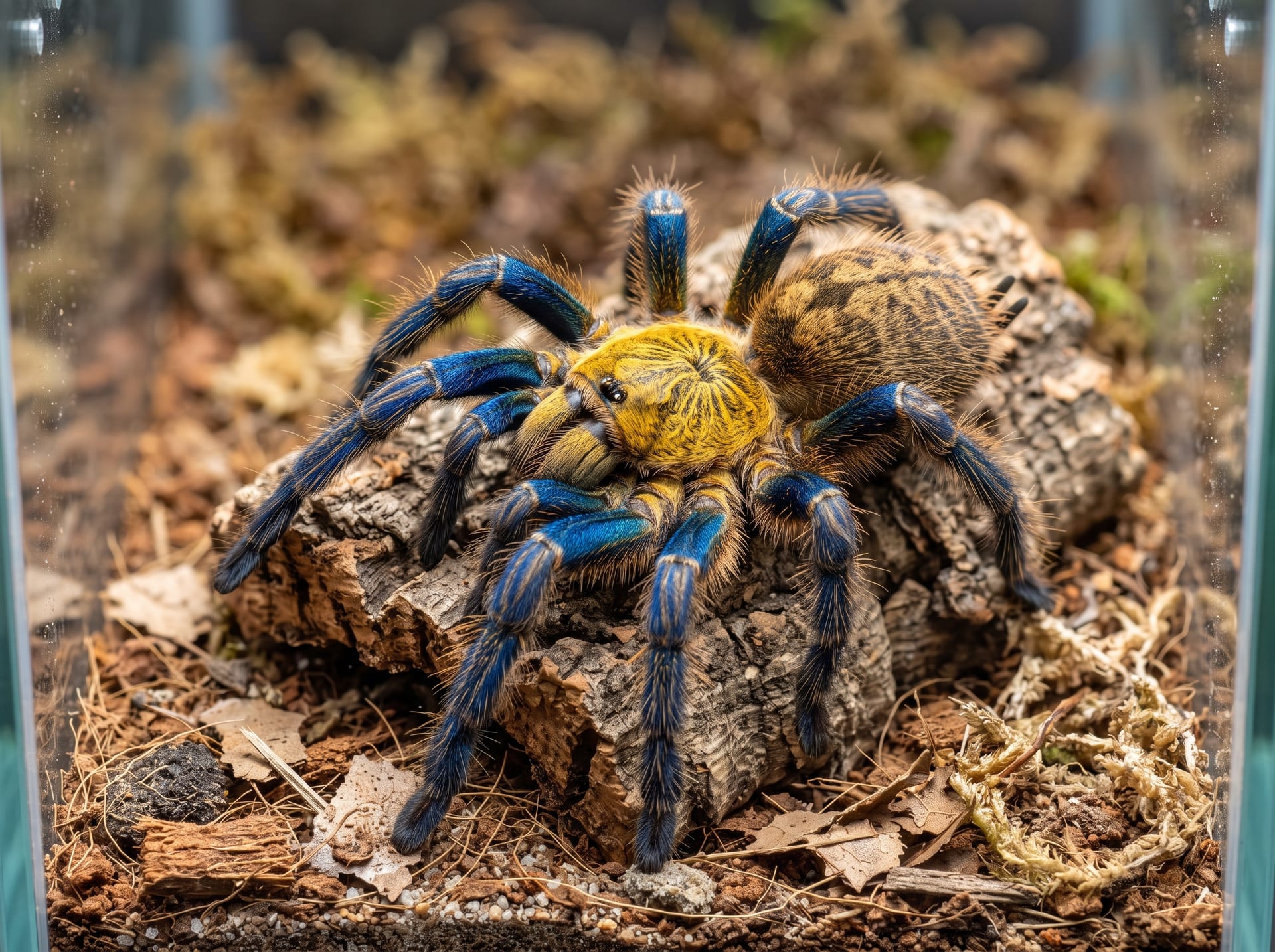
AI-generated image
Golden Blue Leg Baboon
AdvancedHarpactira pulchripes
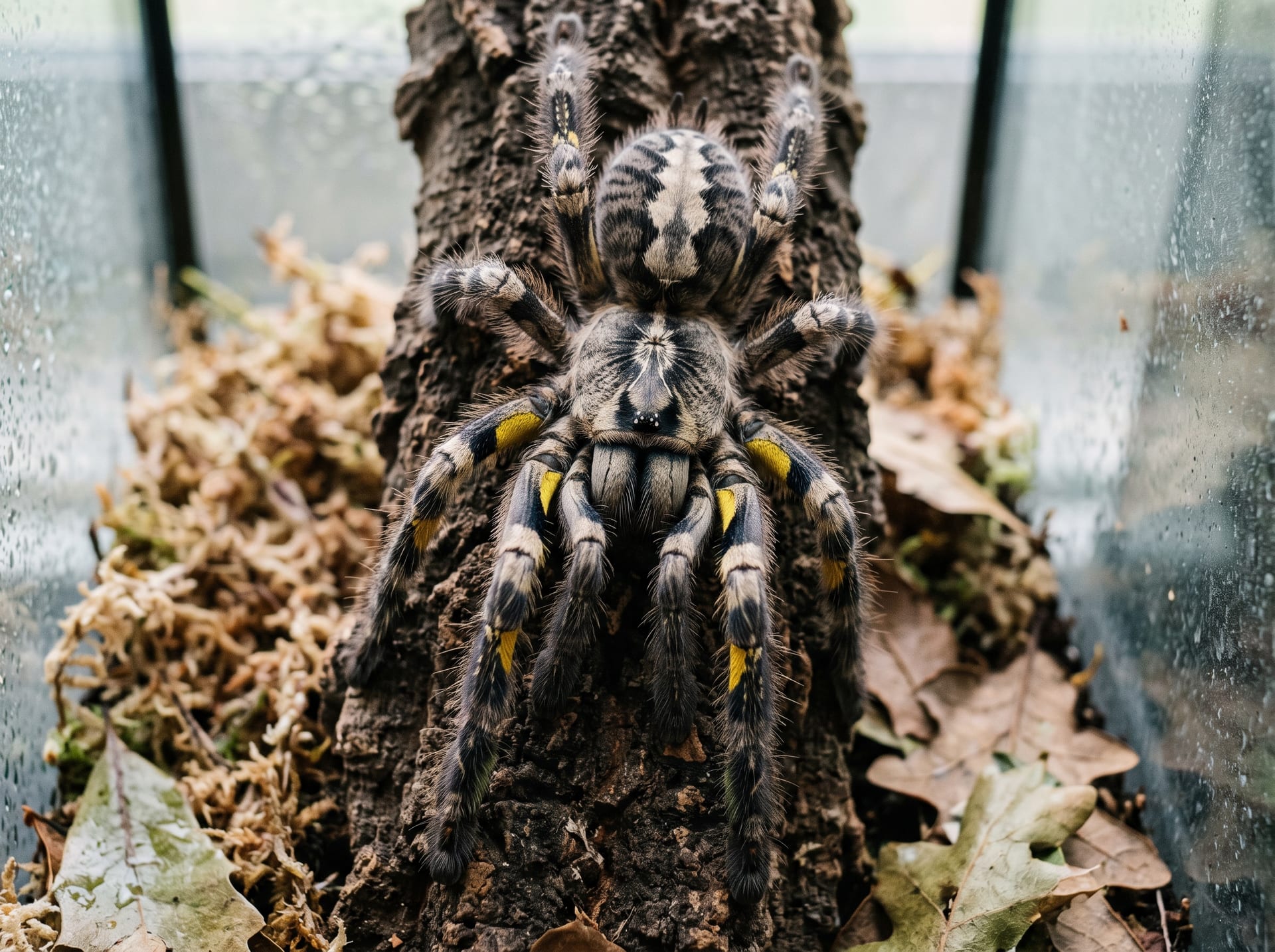
A South African baboon spider combining a golden carapace with metallic blue legs. It lacks urticating hairs but is fast, defensive and potently venomous—an advanced Old World species.
Difficulty
Advanced
Temperature
23〜28℃
Lifespan
Female 10-12 years / Male 3-4 years
Size
Leg span 12-14 cm
Humidity
60〜70%
Diet
Live insects such as crickets and roaches, offered roughly weekly.
About
The Golden Blue Leg Baboon (Harpactira pulchripes) is a South African baboon spider prized for its golden carapace and metallic blue legs. It grows to about 12-14 cm and prefers a dry setup at 23-28°C and 60-70% humidity. Though it lacks urticating hairs, it is fast, defensive and potently venomous—an advanced Old World species best kept without handling.
Lifespan of the Golden Blue Leg Baboon
The Golden Blue Leg Baboon lives Female 10-12 years / Male 3-4 years.
Size of the Golden Blue Leg Baboon
The Golden Blue Leg Baboon grows to Leg span 12-14 cm.
Basic Info
Origin
Dry grasslands of South Africa
Lifespan
Female 10-12 years / Male 3-4 years
Size
Leg span 12-14 cm
Temperature
23〜28℃
Humidity
60〜70%
Diet
Live insects such as crickets and roaches, offered roughly weekly.
Care Guide
References & Sources
Edited & verified by: BreederDirect editorial team
The taxonomic, regulatory, and husbandry data on this page are compiled and verified against the authoritative primary sources below.
Golden Blue Leg Baboon Listings
Loading latest listingsFind listings for this species