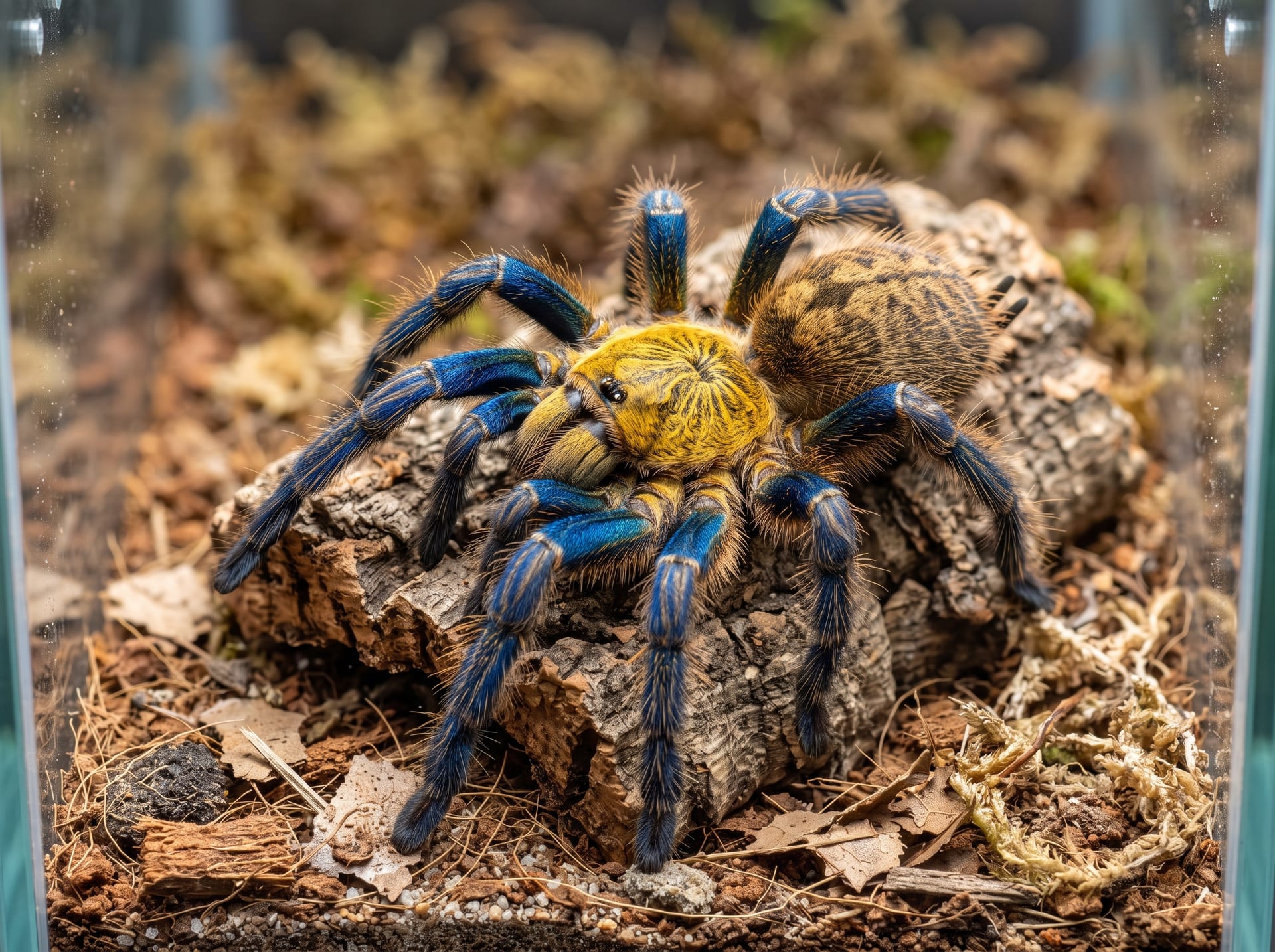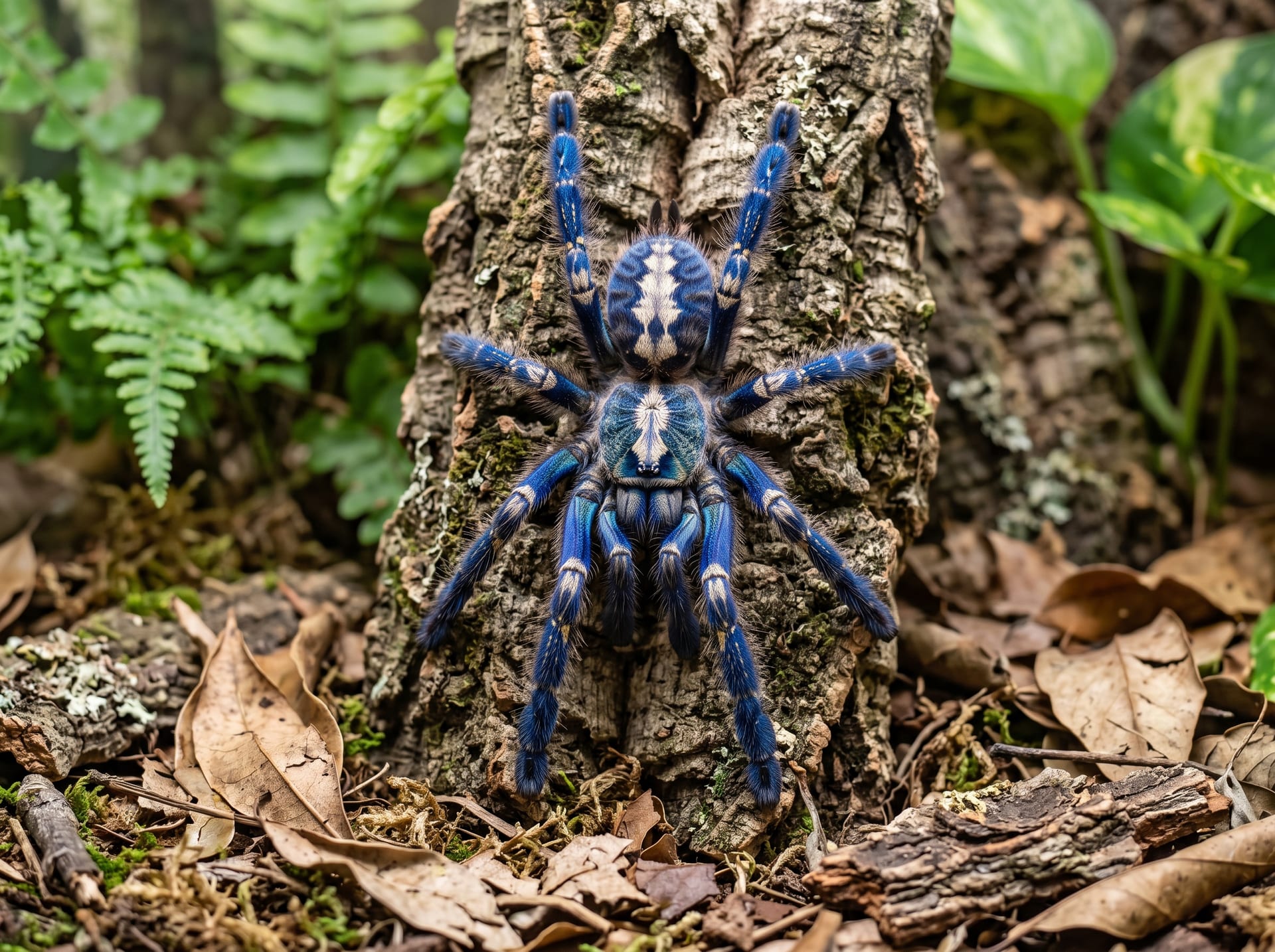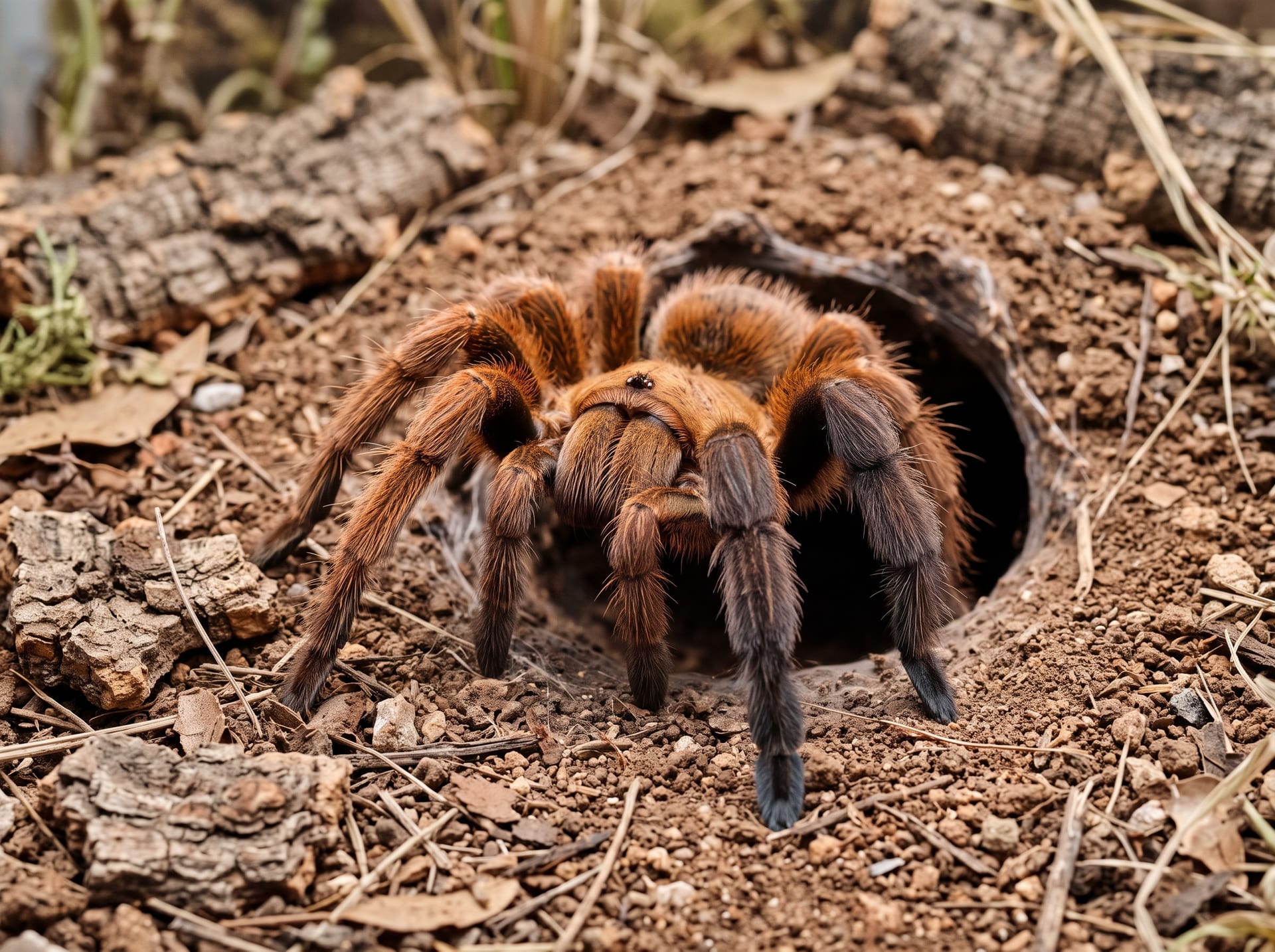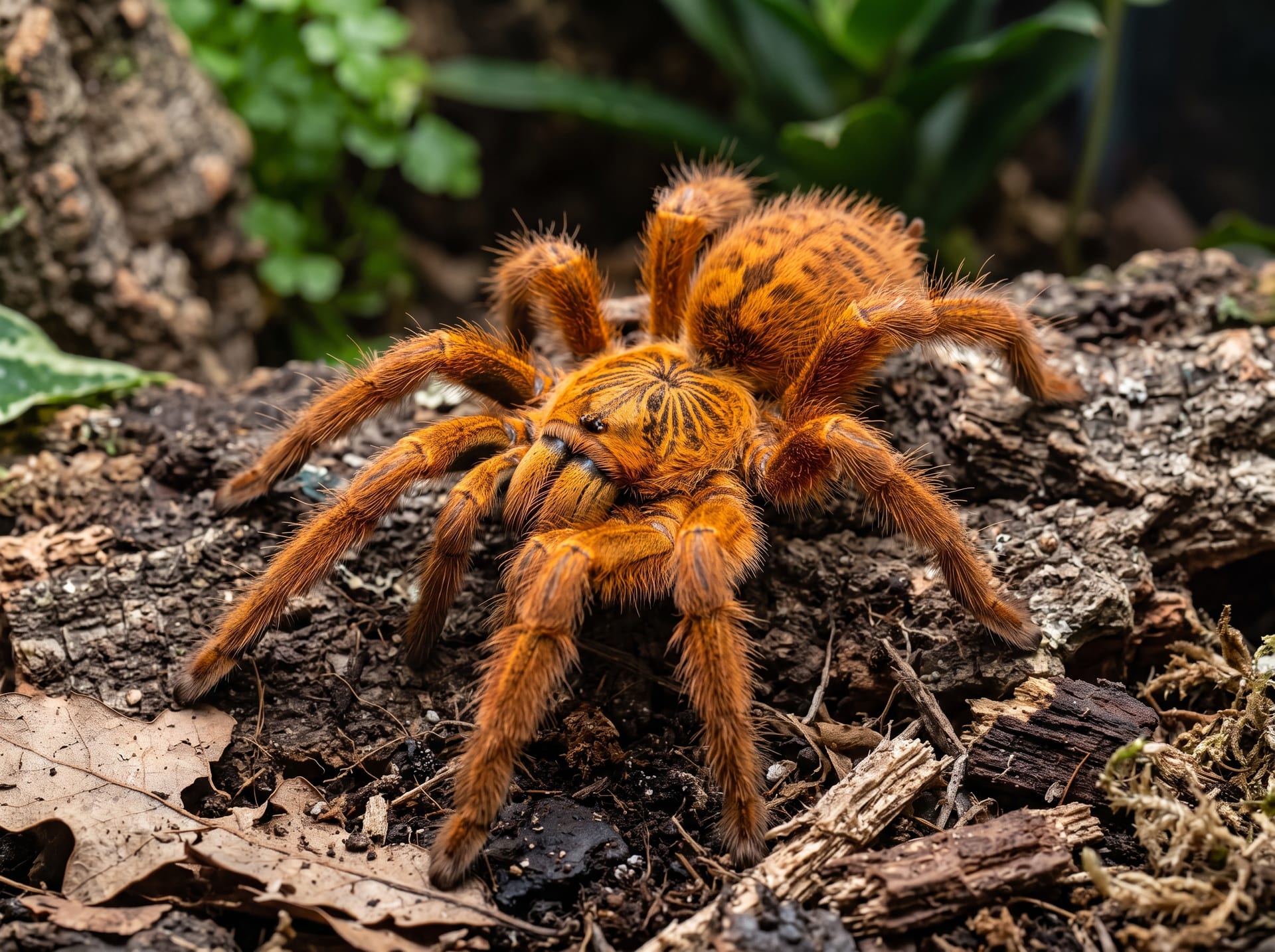
AI-generated image
Indian Ornamental
AdvancedPoecilotheria regalis
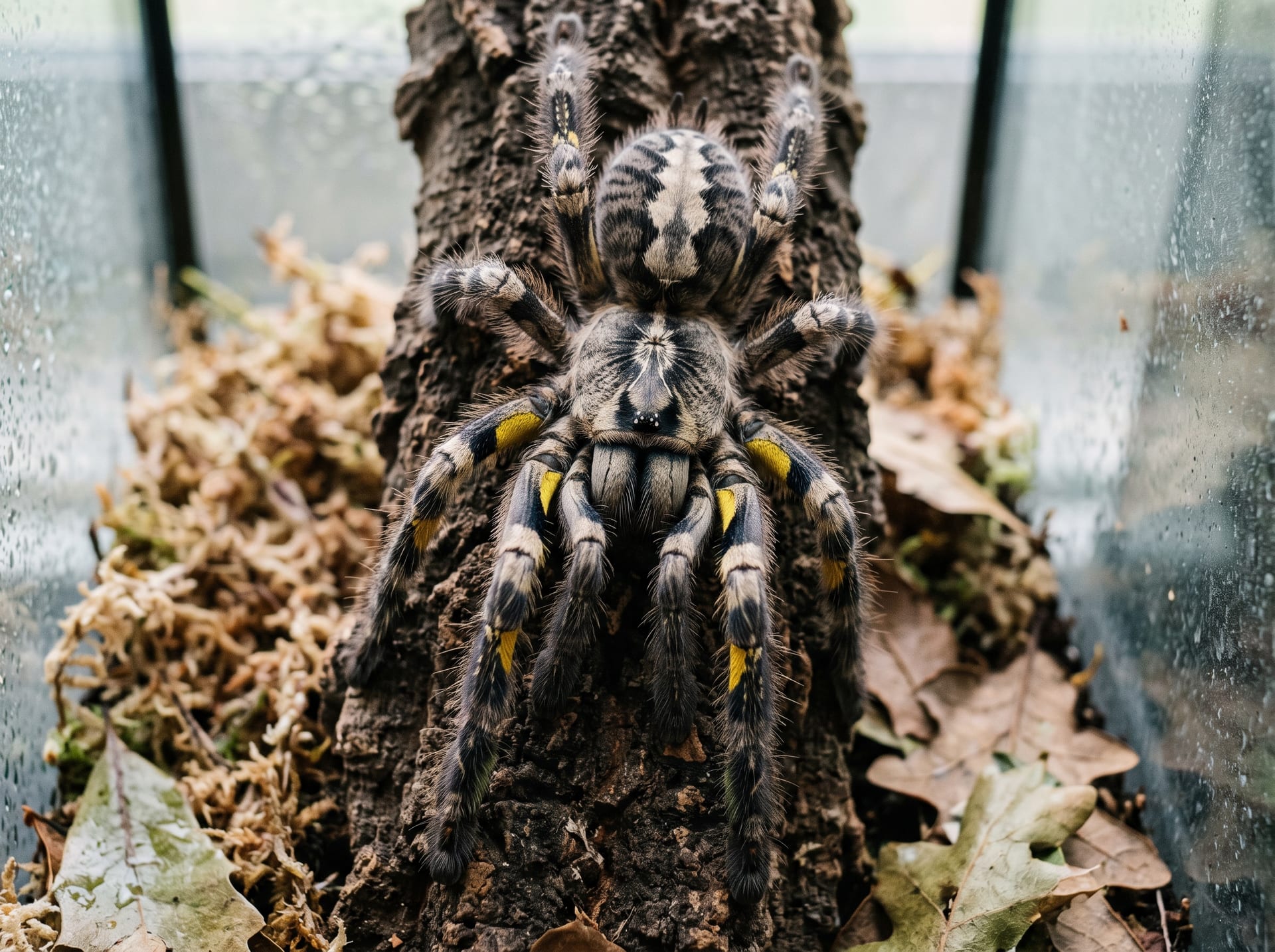
An arboreal Old World species from India with intricate camouflage and bright yellow leg undersides. Extremely fast, defensive, and medically significant venom—for experienced keepers only.
Difficulty
Advanced
Temperature
24〜28℃
Lifespan
Female 12-15 years / Male 3-4 years
Size
Leg span 15-18 cm
Humidity
70〜80%
Diet
Live insects such as crickets and roaches, offered roughly weekly.
About
The Indian Ornamental (Poecilotheria regalis) is an arboreal Old World species from the forests of central and southern India, distinguished by intricate camouflage patterning and bright yellow leg undersides, reaching a 15–18cm leg span. Extremely fast and defensive, it lacks urticating hairs but carries medically significant venom, making it suitable for experienced keepers only. It is kept at 24–28°C with 70–80% humidity and fed crickets and dubia roaches about weekly. Direct handling should be avoided, as bites can cause intense pain and muscle cramping.
Basic Info
Origin
Forests of central and southern India
Lifespan
Female 12-15 years / Male 3-4 years
Size
Leg span 15-18 cm
Temperature
24〜28℃
Humidity
70〜80%
Diet
Live insects such as crickets and roaches, offered roughly weekly.
Care Guide
Habitat
Tall enclosure with vertical cork bark hides for an arboreal layout.
Temp & Humidity
24-28°C, 70-80% humidity; keep humid with ventilation.
References & Sources
Edited & verified by: br-choku editorial team
The taxonomic, regulatory, and husbandry data on this page are compiled and verified against the authoritative primary sources below.
Indian Ornamental Listings
Loading latest listingsFind listings for this species