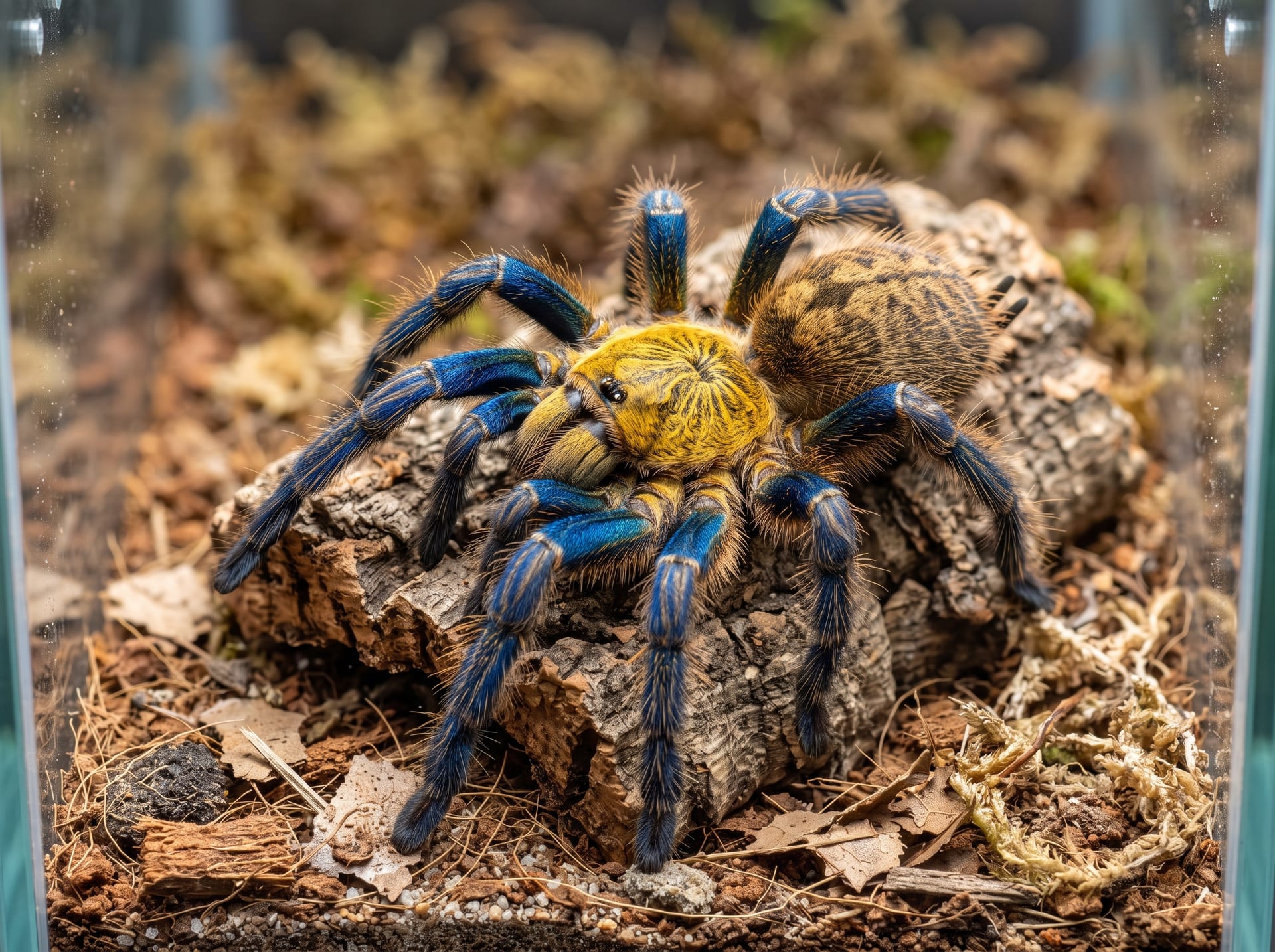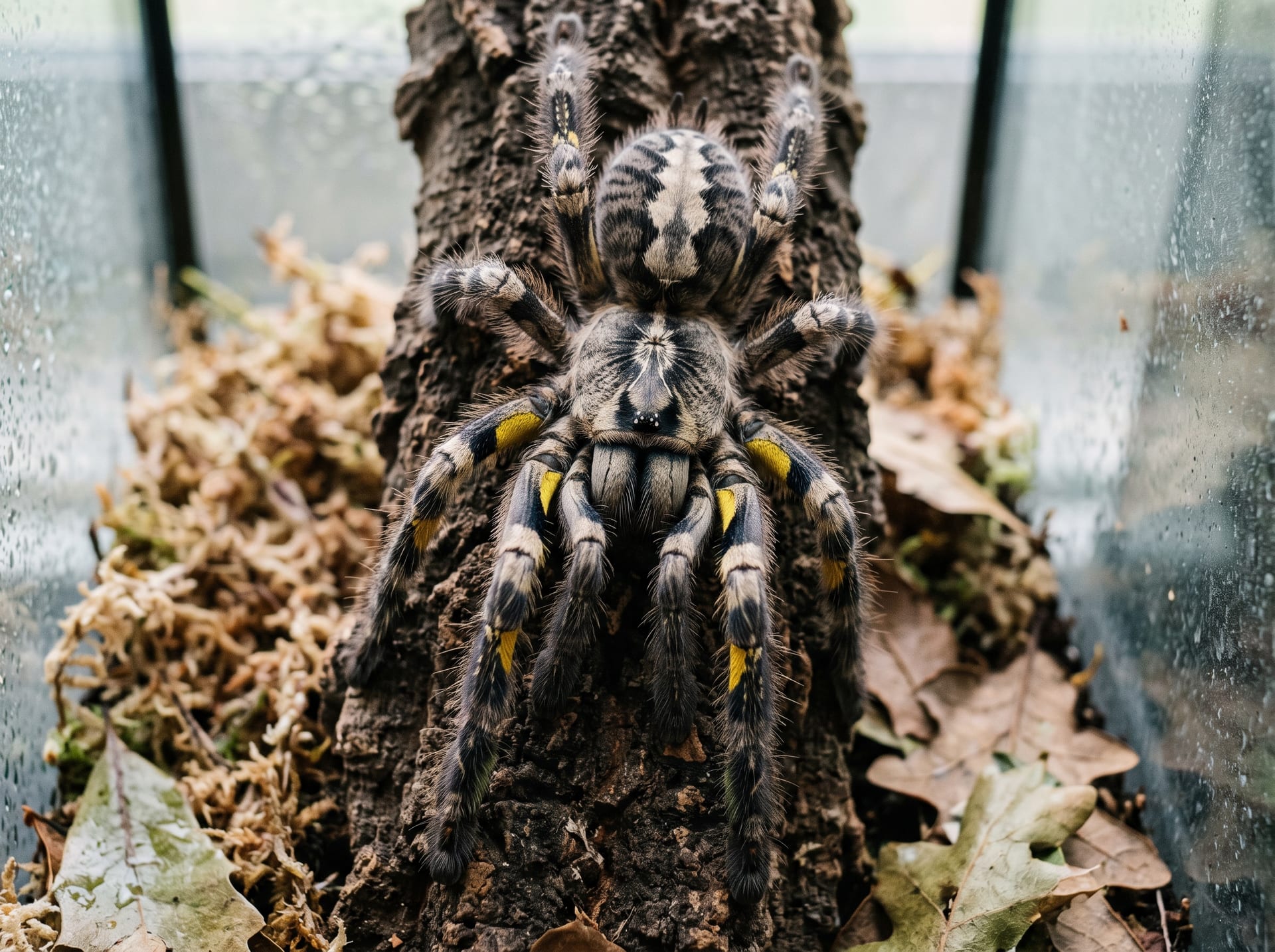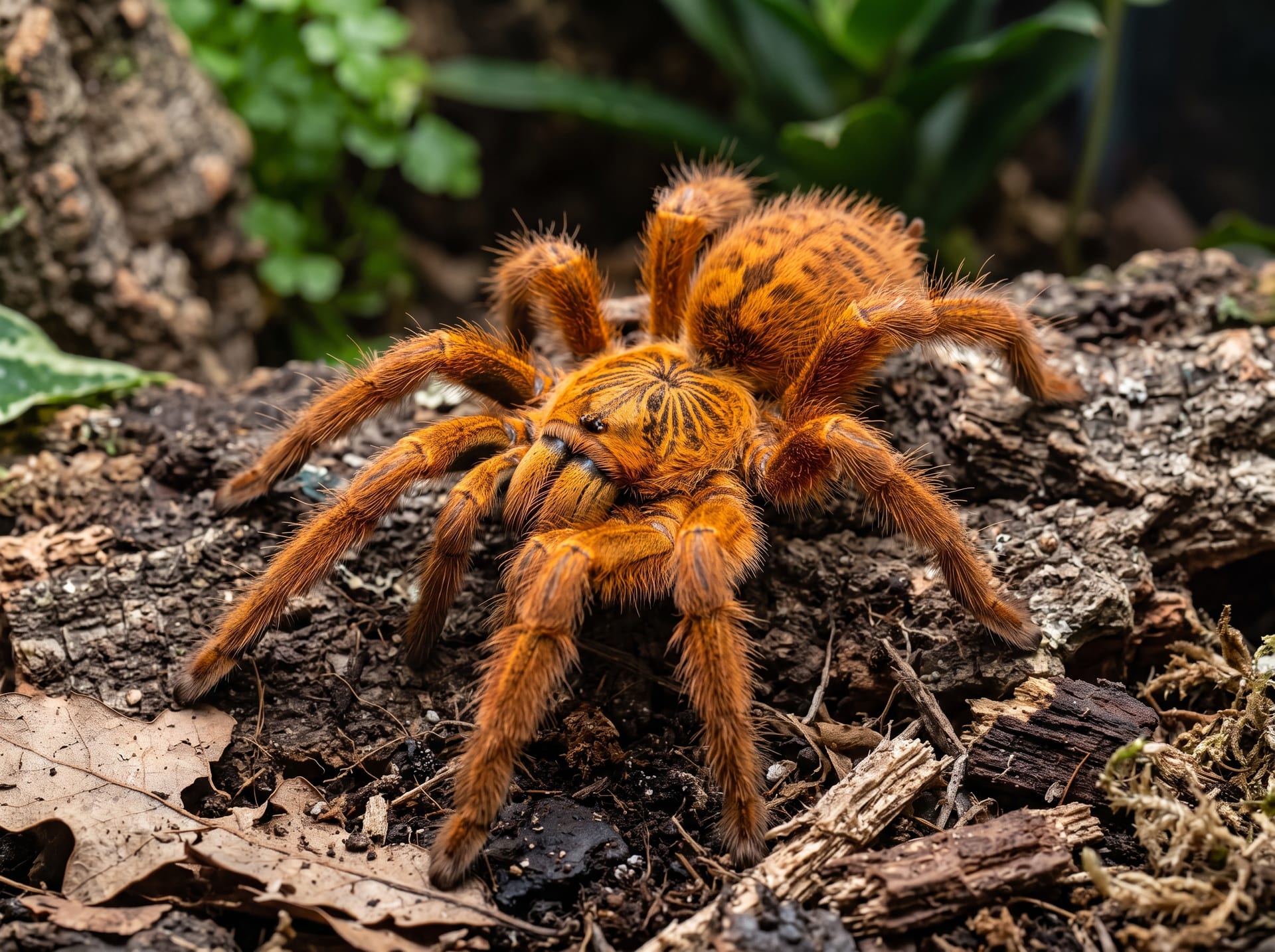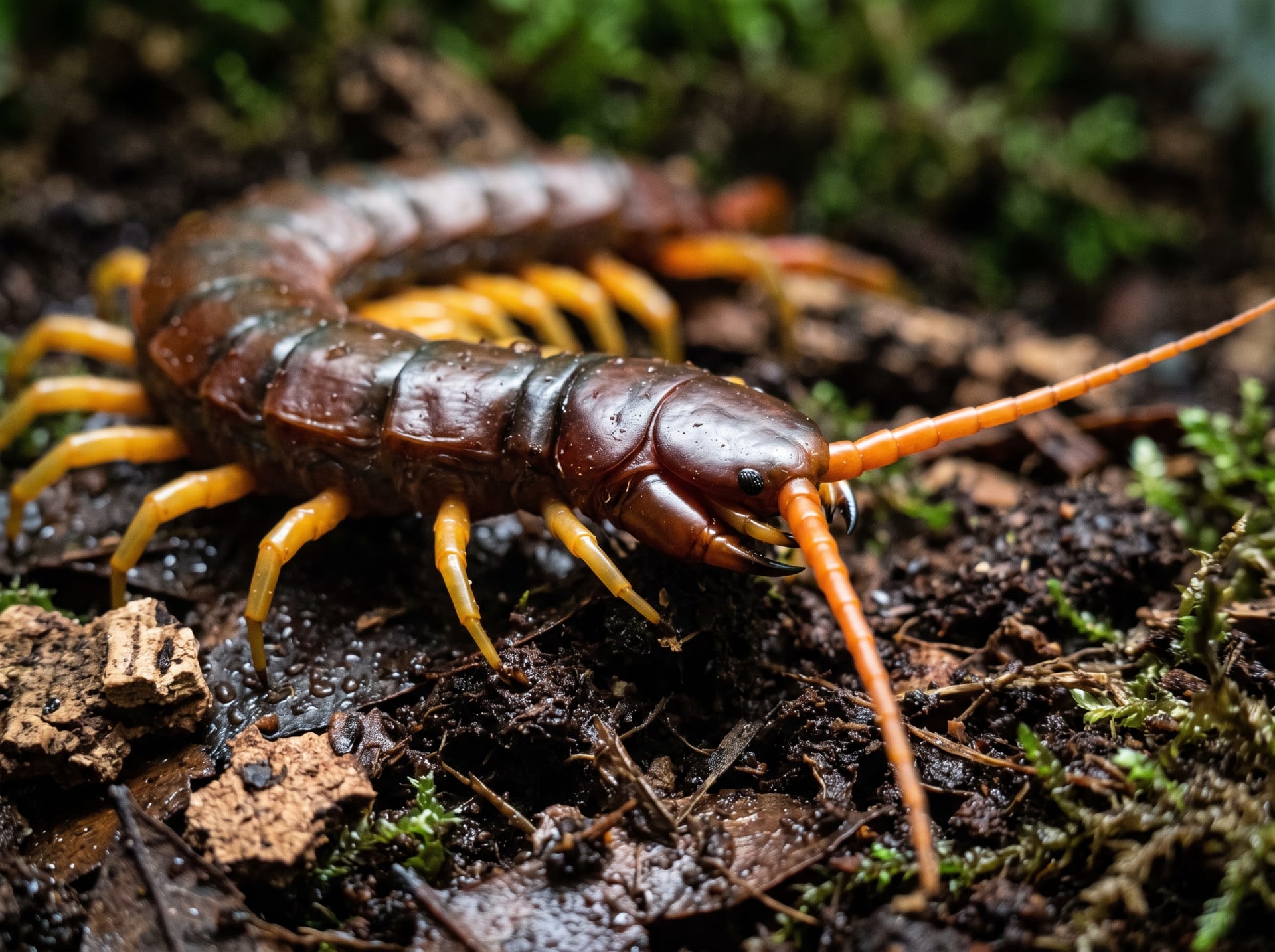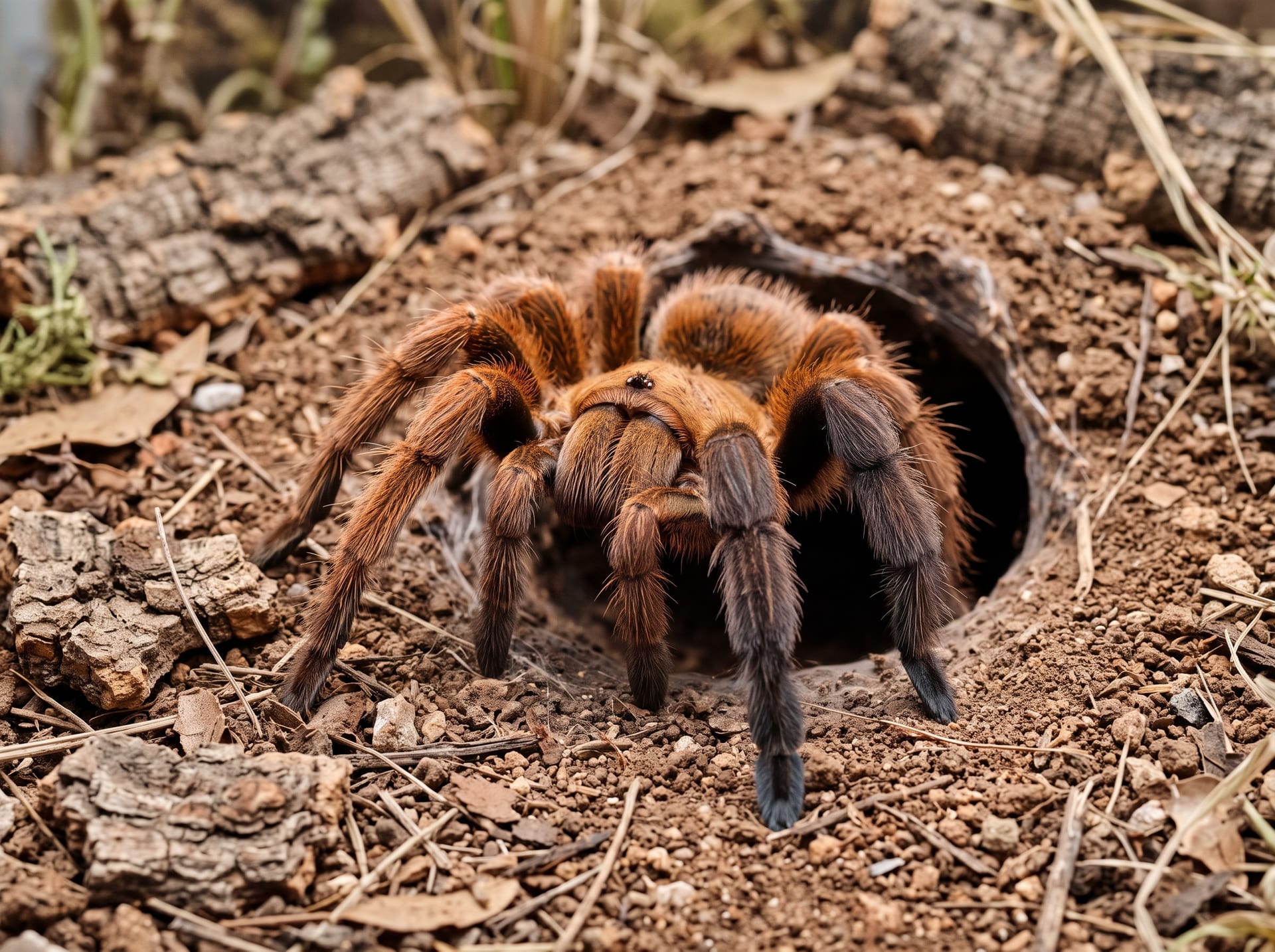
AI-generated image
King Baboon
AdvancedPelinobius muticus
A heavy, rust-colored fossorial baboon spider from East Africa. Very slow-growing but long-lived, it is defensive and potently venomous—an advanced Old World species.
Difficulty
Advanced
Temperature
24〜28℃
Lifespan
Female 20-25 years / Male around 10 years
Size
Leg span 18-20 cm
Humidity
50〜65%
Diet
Live insects such as crickets and roaches, offered roughly weekly.
About
The King Baboon (Pelinobius muticus) is a large, fossorial baboon spider from East Africa (Kenya and Tanzania) with a heavy, rust-colored body reaching 18-20 cm in legspan. Very slow-growing yet long-lived—females can reach 20-25 years—it burrows in deep, dry substrate at 24-28°C and 50-65% humidity. Defensive and potently venomous, this advanced Old World species should not be handled.
Lifespan of the King Baboon
The King Baboon lives Female 20-25 years / Male around 10 years.
Size of the King Baboon
The King Baboon grows to Leg span 18-20 cm.
Basic Info
Origin
Dry lands of East Africa (Kenya, Tanzania)
Lifespan
Female 20-25 years / Male around 10 years
Size
Leg span 18-20 cm
Temperature
24〜28℃
Humidity
50〜65%
Diet
Live insects such as crickets and roaches, offered roughly weekly.
Care Guide
References & Sources
Edited & verified by: BreederDirect editorial team
The taxonomic, regulatory, and husbandry data on this page are compiled and verified against the authoritative primary sources below.
King Baboon Listings
Loading latest listingsFind listings for this species