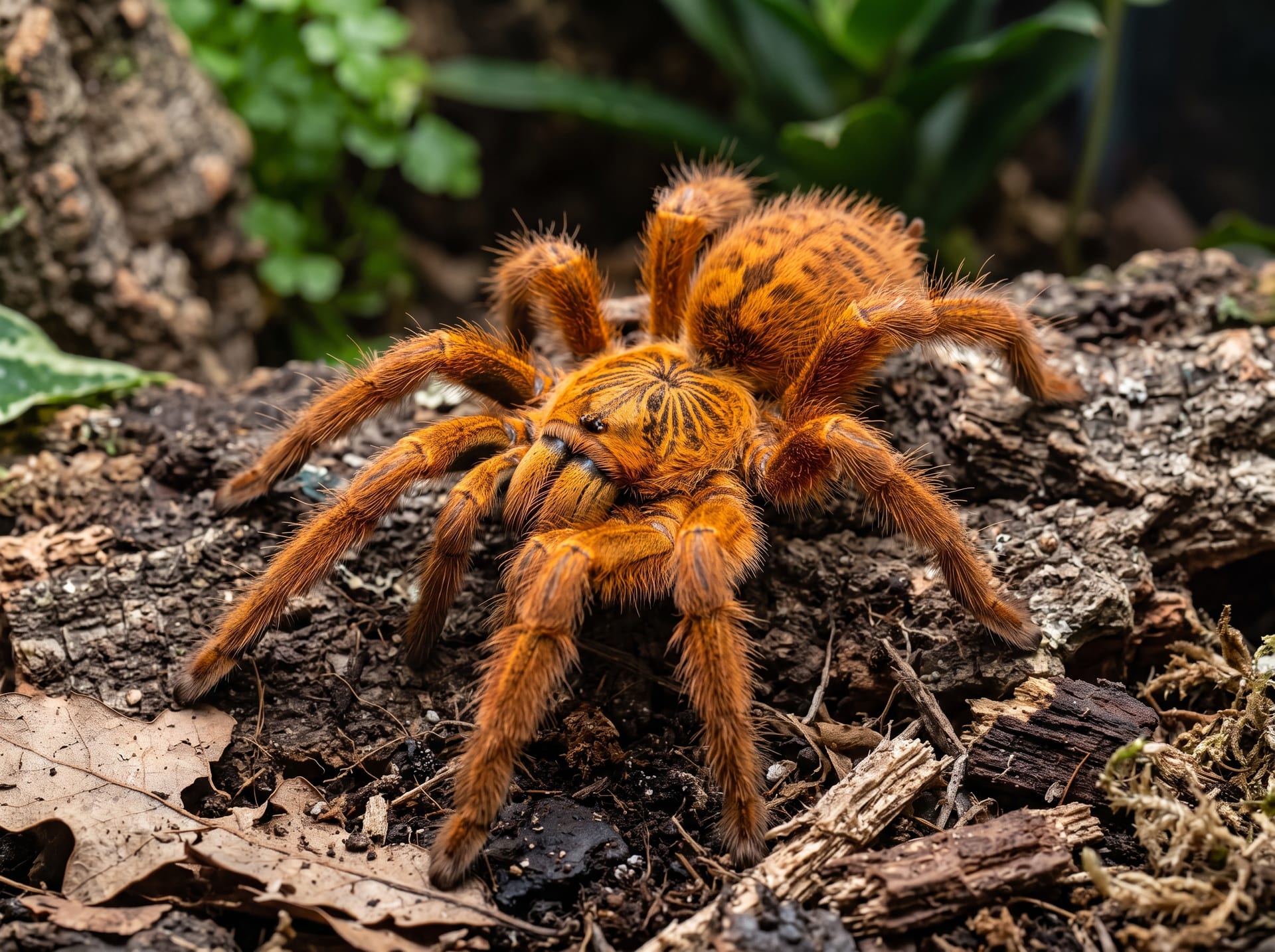
AI-generated image
Orange Baboon Tarantula
AdvancedPterinochilus murinus
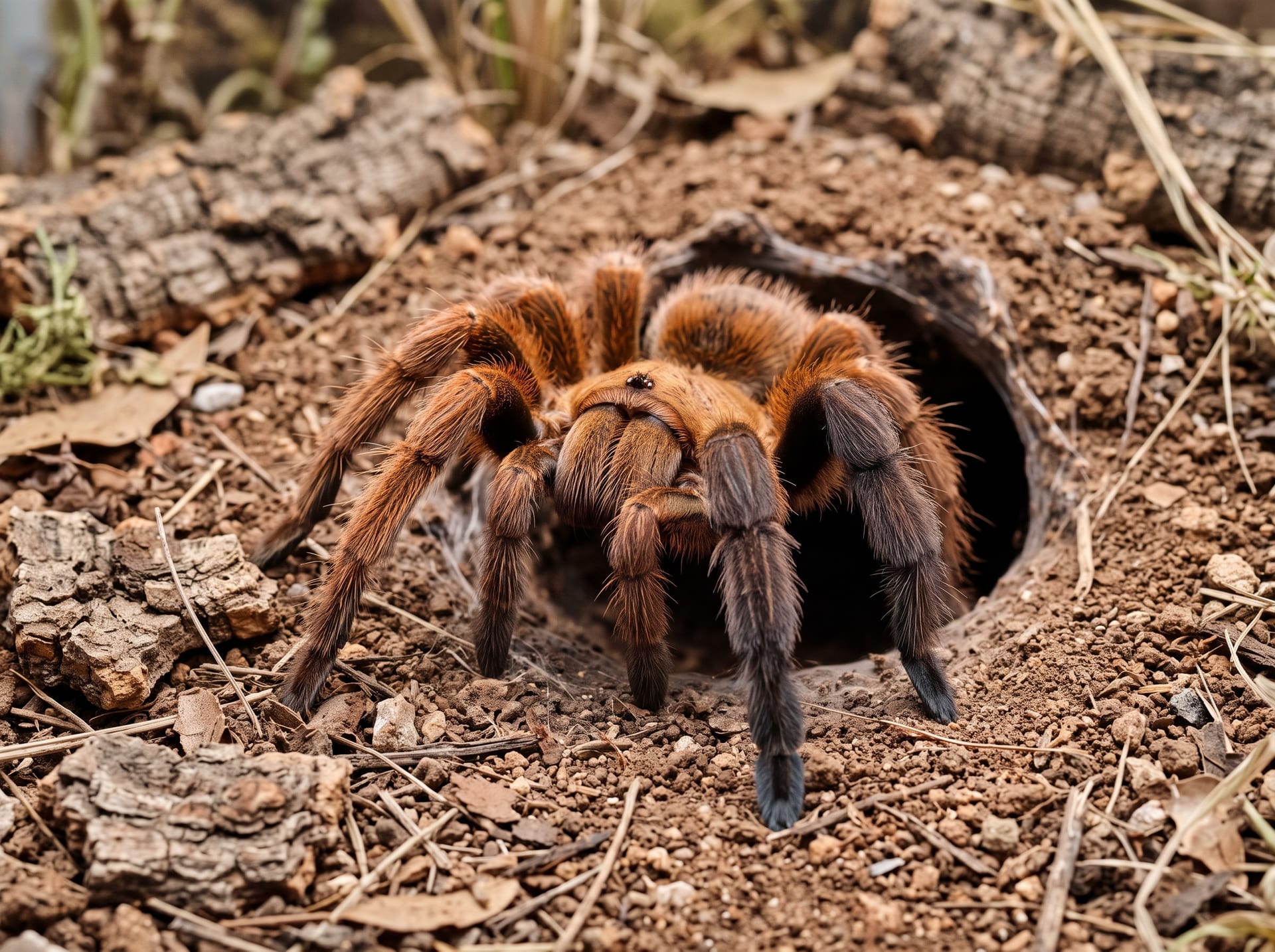
A vivid orange African baboon spider, nicknamed the OBT. Exceptionally fast, defensive and potently venomous—among the most demanding Old World species to handle.
Difficulty
Advanced
Temperature
24〜28℃
Lifespan
Female 12-15 years / Male 3-4 years
Size
Leg span 11-14 cm
Humidity
50〜65%
Diet
Live insects such as crickets and roaches, offered roughly weekly.
About
The Orange Baboon Tarantula (Pterinochilus murinus), nicknamed the "OBT," is a vivid orange baboon spider from eastern and central Africa. Exceptionally fast, defensive and potently venomous, it is among the most demanding Old World species and should never be handled.
Lifespan of the Orange Baboon Tarantula
The Orange Baboon Tarantula lives Female 12-15 years / Male 3-4 years.
Size of the Orange Baboon Tarantula
The Orange Baboon Tarantula grows to Leg span 11-14 cm.
Temperature & humidity for the Orange Baboon Tarantula
The ideal temperature for the Orange Baboon Tarantula is 24〜28℃. Ideal humidity is 50〜65%.
Reaching 11-14 cm, it thrives in a dry setup at 24-28°C and 50-65% humidity.
Basic Info
Origin
Arid East and Central Africa
Lifespan
Female 12-15 years / Male 3-4 years
Size
Leg span 11-14 cm
Temperature
24〜28℃
Humidity
50〜65%
References & Sources
Edited & verified by: BreederDirect editorial team
The taxonomic, regulatory, and husbandry data on this page are compiled and verified against the authoritative primary sources below.
Orange Baboon Tarantula Listings
Loading latest listingsFind listings for this species