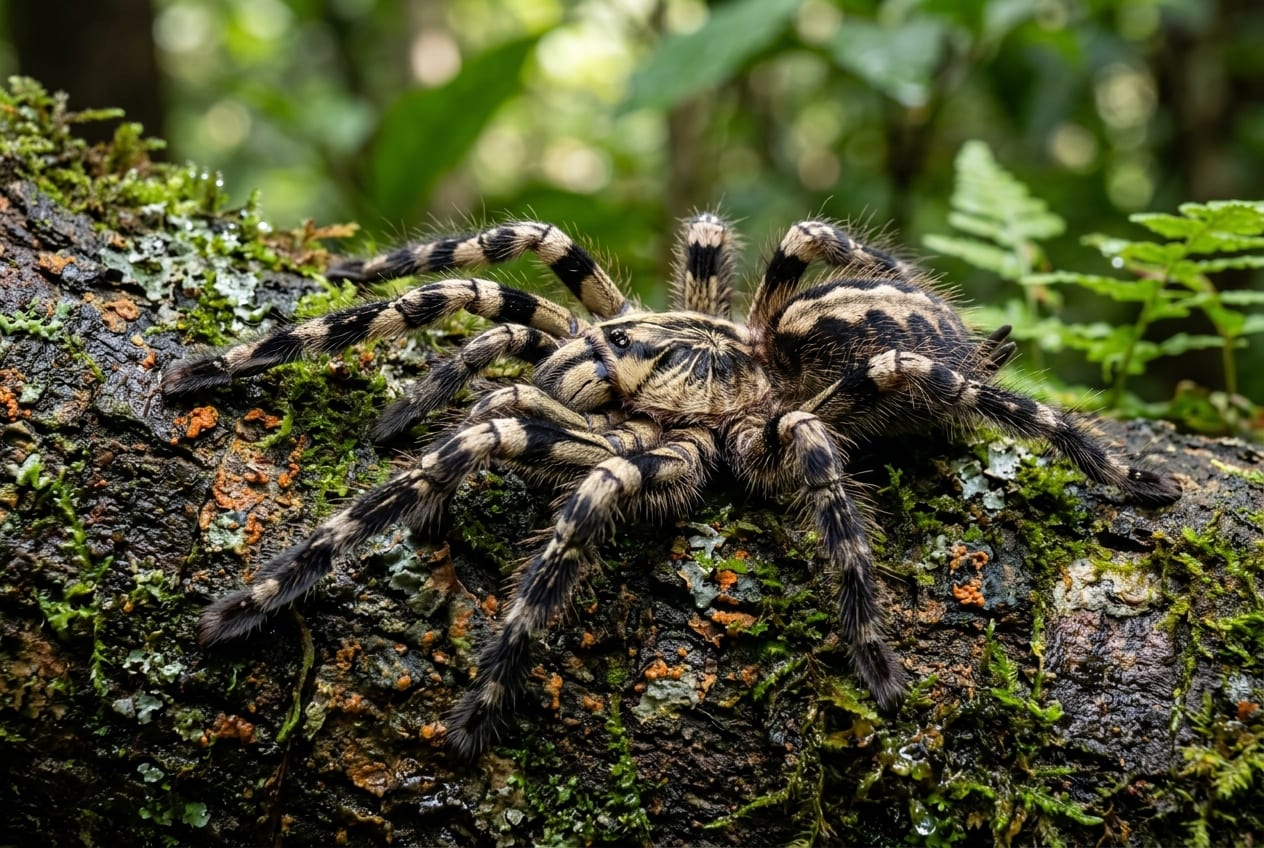
Tiger Ornamental
The Tiger Ornamental is an arboreal tarantula native to the Eastern Ghats mountains of India, known from only about six locations around the state of Andhra Pradesh — making it a genuinely rare species. Its name comes from the striking black bands that run symmetrically down its legs, giving it a zebra-like tiger pattern. Naturally skittish and sensitive to vibration, it relies on potent venom for defense, so handling requires real care. Prized by experienced keepers for its quick movements and striking coloration, it's considered an advanced-level species.
View Tiger Ornamental encyclopedia →0% commission on your first sales!Register by September 30, 2026 and your first 2 sales are commission-free!
Breeder Wanted!
List on BreederDirect and sell directly to customers nationwide!
5 Transparency Standards You Can Trust
When listing Exotic Invertebrates, Breeders disclose the following. We guarantee transparency on growth stage and breeding unit.
- Real Photos
- Breeding Unit
- Generation Info
- Body Length (mm)
- Country of Origin
Browse all 249 breeds
Verified breeders wanted for Exotic Invertebrates
Breeders are signing up now ahead of launch. Subscribe to be notified when new listings go live.
Getting alerts is free with a member account. When new listings match your saved search, we'll notify you by email and in-app.
Browse other categories
Verified breeders (preview)
Are you raising exotic invertebrates?
Register as a breeder and connect with buyers directly.
Apply as a breederTiger Ornamental key facts
- Care level
- Advanced
- Lifespan
- Females 12-15 years / males 3-4 years
- Size
- About 17-20cm leg span
- Temperature
- 24〜28℃
- Humidity
- 65〜75%
- Diet
- Live insects such as crickets and roaches
- Temperature & Humidity
- It grows fast in warm conditions of 24-28 C. No species-specific humidity figure is available; care information for the genus gives 65-75%. Ventilate well to prevent mould.
- Enclosure
- Arboreal, so use a tall enclosure. Fix a short branch or cork bark vertically so it can build a retreat; once established it rarely relocates.
- Diet & Feeding
- Feed adult crickets and roaches. Use smaller prey for spiderlings and keep a small water container in the enclosure.
- Temperament & Venom
- Shy, retreating to its shelter instead of threat-posing. It has no urticating hairs. The venom is medically significant and can cause severe effects in humans and pets, so it must not be handled.
- Notes
- Listed on CITES Appendix II, so international trade requires a permit. The IUCN Red List treats it as Data Deficient and its biology remains poorly known.
About Tiger Ornamental
The Tiger Ornamental is an arboreal tarantula endemic to India's Eastern Ghats, known for zebra-striped legs and potent venom. An advanced-level species reaching a legspan of about 17-20cm.
7 things to know before welcoming a Tiger Ornamental
1Vertical Enclosure Needed
As an arboreal species, the Tiger Ornamental needs a tall enclosure with cork bark or branches to climb rather than a wide, ground-level setup. Without enough vertical space and hiding spots, it can become stressed.
2Skittish and Fast-Moving
This species is easily startled by sound or vibration and will bolt at high speed when disturbed. It's best kept in a quiet setting and observed rather than handled.
3Potent Venom
Despite its timid nature, this tarantula has notably potent venom for defense, and a bite can cause significant pain and swelling. Avoid direct hand contact and use tools for enclosure maintenance.
4A Rare, Localized Species
This species is known from just a handful of locations in the Eastern Ghats around Andhra Pradesh, India, making it a genuinely rare tarantula. Given its limited native range, it's a species worth keeping with extra care and respect.
5Zebra-Striped Legs
Its defining feature is the symmetrical black banding on its legs, arranged in a zebra-like pattern. The vividness of this pattern can also change as the spider grows and molts.
6Humidity and Ventilation Balance
Arboreal tarantulas need a balance of adequate humidity and good airflow. Make sure the enclosure has proper ventilation so it doesn't become overly humid or stagnant.
7Prepare Before Bringing One Home
Because it's fast, flighty, and capable of quick escapes, it's important to fully set up a tall enclosure with climbing branches and feeder insects before bringing one home. Double-check that the lid locks securely.
Frequently asked questions about Tiger Ornamental
- Q.Can beginners keep a Tiger Ornamental?
- A.The Tiger Ornamental is considered an advanced-level species. Because it moves quickly and has potent venom, it's recommended for keepers who already have tarantula-keeping experience.
- Q.How dangerous is its venom?
- A.Although naturally shy, this species is known for using potent venom in self-defense, and a bite can cause significant pain. Always use tools rather than bare hands when tending the enclosure.
- Q.How big does it grow?
- A.Adults reach a legspan of roughly 17 to 20cm. Since it's an arboreal species, make sure the enclosure height matches its adult size.
- Q.What kind of enclosure does it need?
- A.Since it's arboreal, height matters more than floor space. Provide cork bark or driftwood to climb, along with good ventilation.
- Q.Is it covered by CITES?
- A.Tiger Ornamental is listed in CITES Appendix II. International trade requires a permit from the exporting country, but as far as CITES is concerned, no registration is needed to buy or sell individuals already legally in Japan.
Learn more about Tiger Ornamental in the encyclopedia
View Tiger Ornamental encyclopedia entry →
Care difficulty, lifespan, size and diet — all basics covered.
More in this category
Can't find the one you're looking for?
Post your wishes for free and breeders with matching animals will contact you with introductions.