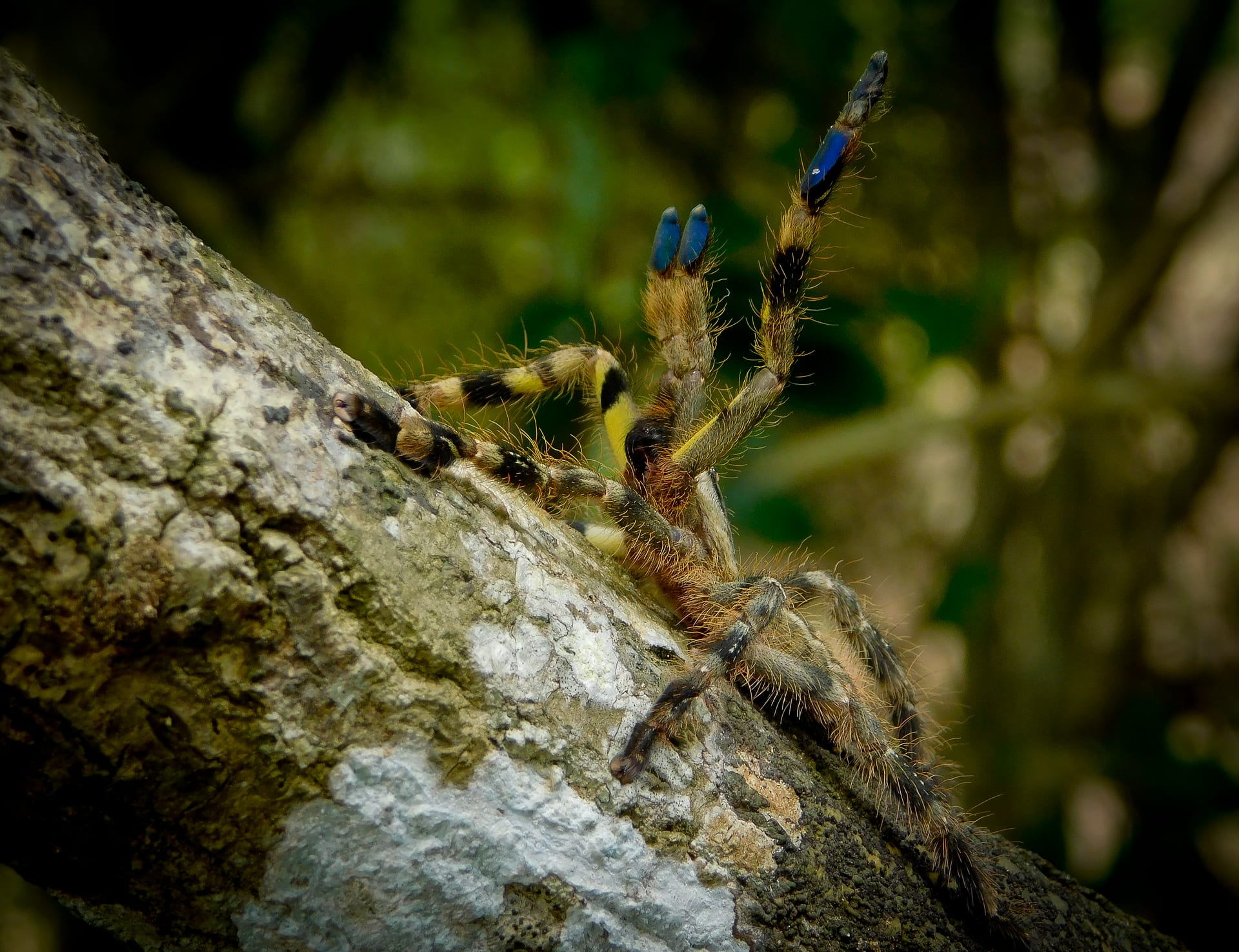
 © Gerard Mendis / CC BY-SA 4.0
Sri Lankan Ornamental
The Sri Lankan Ornamental is an arboreal tarantula native to the forests of central Sri Lanka, and serves as the type species of the genus Poecilotheria. Its body shows an intricate camouflage of black, white, and grey, accented by a pale grey leaf-shaped band running the length of the abdomen. Quick-moving and strongly defensive when disturbed, it calls for careful, experienced handling. For keepers who want to observe a striking, wild-natured spider from a respectful distance, it's a rewarding but advanced choice.
View Sri Lankan Ornamental encyclopedia →0% commission on your first sales!Register by September 30, 2026 and your first 2 sales are commission-free!
Breeder Wanted!
List on BreederDirect and sell directly to customers nationwide!
5 Transparency Standards You Can Trust
When listing Exotic Invertebrates, Breeders disclose the following. We guarantee transparency on growth stage and breeding unit.
- Real Photos
- Breeding Unit
- Generation Info
- Body Length (mm)
- Country of Origin
Browse all 249 breeds
Verified breeders wanted for Exotic Invertebrates
Breeders are signing up now ahead of launch. Subscribe to be notified when new listings go live.
Getting alerts is free with a member account. When new listings match your saved search, we'll notify you by email and in-app.
Browse other categories
Verified breeders (preview)
Are you raising exotic invertebrates?
Register as a breeder and connect with buyers directly.
Apply as a breederSri Lankan Ornamental key facts
- Care level
- Advanced
- Lifespan
- Females 12-15 years / males 3-4 years
- Size
- Body length: females 4.5-5cm, males 3.2-3.5cm
- Temperature
- 24〜27℃
- Humidity
- 65〜75%
- Diet
- Live insects such as crickets and roaches
- Temperature & Humidity
- Care information for the genus gives 24-27 C and 65-75% humidity, with good ventilation needed to prevent mould.
- Enclosure
- Arboreal, so use a tall enclosure. Stand cork bark vertically to imitate a tree hollow and provide a water dish.
- Diet & Feeding
- Offer live insects such as crickets and roaches. It ambushes rather than webs its prey, so feed live.
- Temperament & Venom
- Very defensive when disturbed, and fast. It has no urticating hairs and relies on venom, which in this genus is regarded as medically significant; do not handle it.
- Notes
- Listed on CITES Appendix II, so international trade requires a permit, and in 2018 it was protected under the US Endangered Species Act. Its area of occupancy is given as under 500 square kilometres.
About Sri Lankan Ornamental
An arboreal tarantula from central Sri Lanka, marked by black, white, and grey camouflage and a leaf-shaped band on the abdomen. Fast-moving and defensive—best suited to experienced keepers.
7 things to know before welcoming a Sri Lankan Ornamental
1An advanced-level species
This tarantula is fast-moving and strongly defensive when disturbed, making it best suited to keepers with prior tarantula experience rather than first-time owners.
2Arboreal enclosure setup
As an arboreal species, it needs vertical space rather than floor area. Set up cork bark or driftwood to climb, with crevices to retreat into.
3Highly defensive temperament
When startled or provoked, it reacts quickly and defensively. Routine care should be done with tools rather than bare hands to avoid triggering a defensive response.
4Bites and safety awareness
Compared with many other tarantulas, bites from this species are more likely to cause noticeable symptoms. If bitten, avoid self-treatment and seek medical advice if needed.
5Leave it undisturbed when molting
Before and after molting, the spider is especially vulnerable. Pause feeding and cleaning once you notice pre-molt signs, and keep its environment calm.
6Humidity and temperature control
Originating from tropical Sri Lanka, it needs consistently warm temperatures and elevated humidity in captivity. Balance ventilation with moisture retention to avoid extremes.
7House individually
Tarantulas carry a risk of cannibalism, so each spider should be housed alone. Prepare a separate enclosure, climbing material, and hide for each individual before it arrives.
Frequently asked questions about Sri Lankan Ornamental
- Q.Can beginners keep this species?
- A.It's generally considered an advanced-level species. Because it's fast-moving and defensive, prior tarantula-keeping experience is recommended.
- Q.Is its bite dangerous?
- A.Bites from this species are said to cause more noticeable symptoms than many other tarantulas. If bitten, avoid self-treatment and consult a medical professional if needed.
- Q.How large does it grow as an adult?
- A.Adult body length is about 4.5–5 cm for females and 3.2–3.5 cm for males, with females growing somewhat larger.
- Q.Are there any legal restrictions on keeping it?
- A.Sri Lankan Ornamental is listed in CITES Appendix II. International trade requires a permit from the exporting country, but as far as CITES is concerned, no registration is needed to buy or sell individuals already legally in Japan.
- Q.Does it need to be housed alone?
- A.Yes. Because of the risk of cannibalism, each spider should be kept in its own separate enclosure rather than housed together.
Learn more about Sri Lankan Ornamental in the encyclopedia
View Sri Lankan Ornamental encyclopedia entry →
Care difficulty, lifespan, size and diet — all basics covered.
More in this category
Can't find the one you're looking for?
Post your wishes for free and breeders with matching animals will contact you with introductions.