Source: Wikimedia Commons
Sri Lankan Ornamental
AdvancedPoecilotheria fasciata
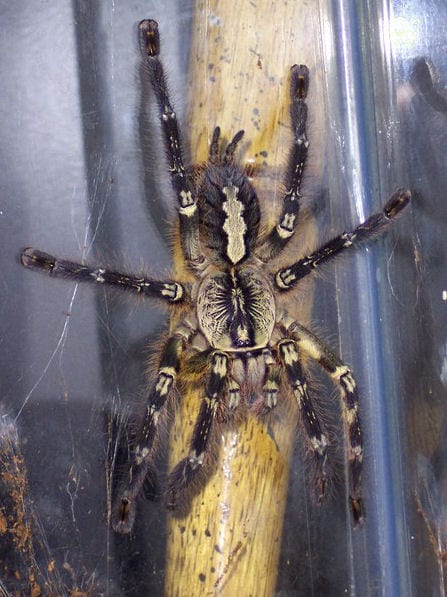
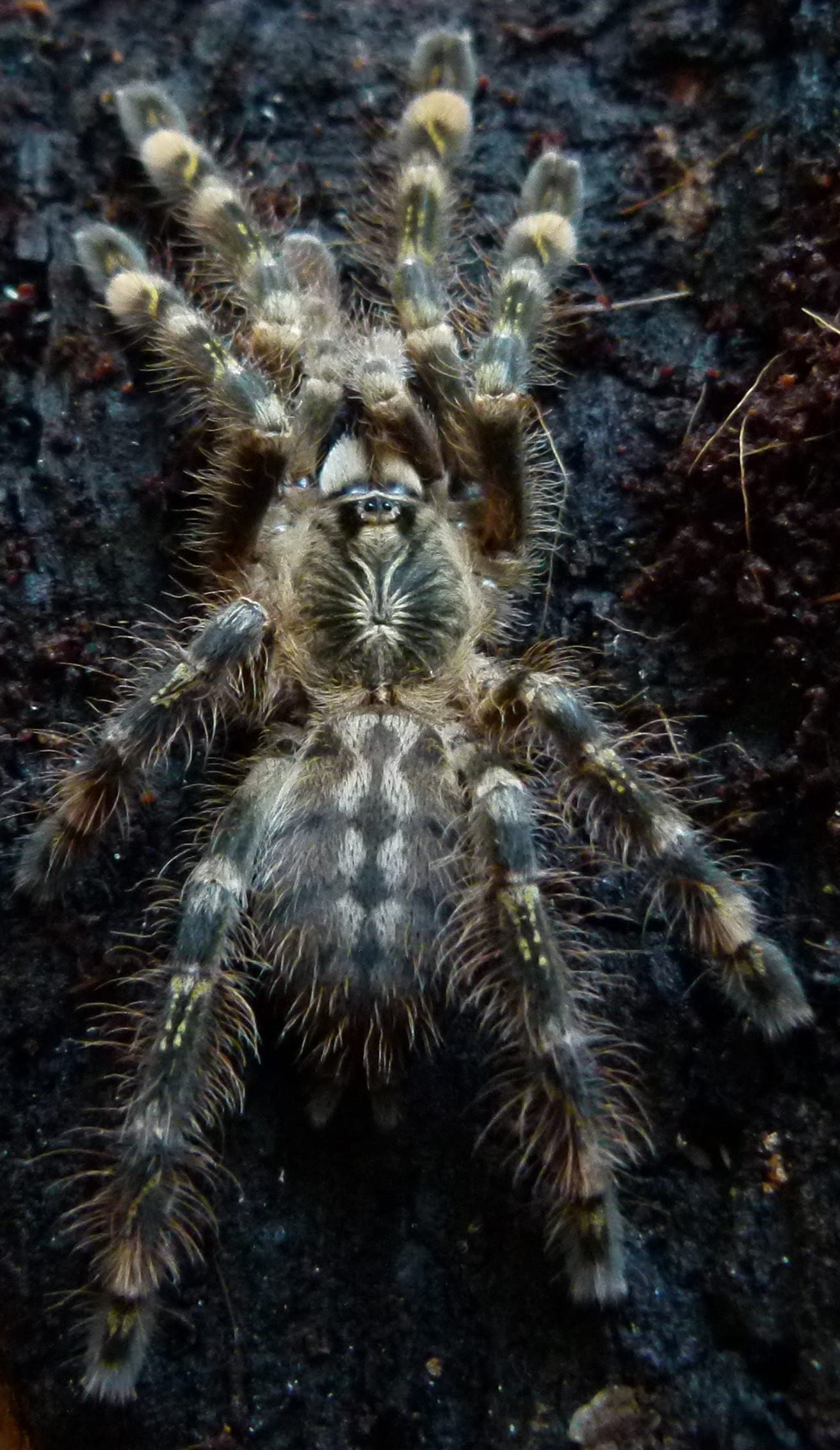
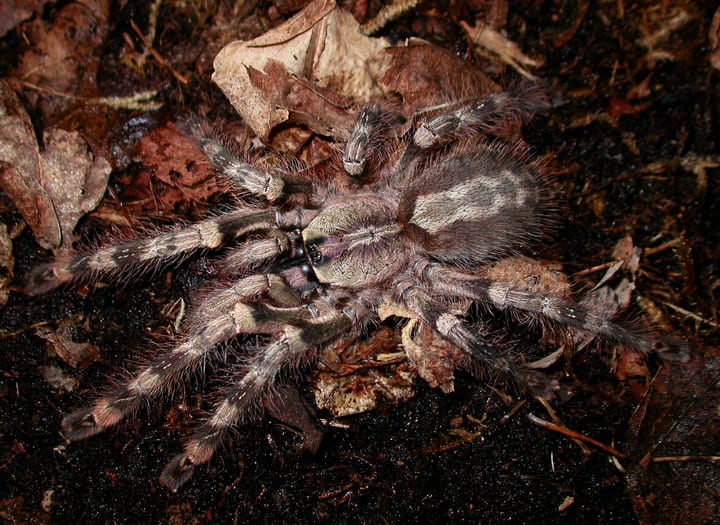
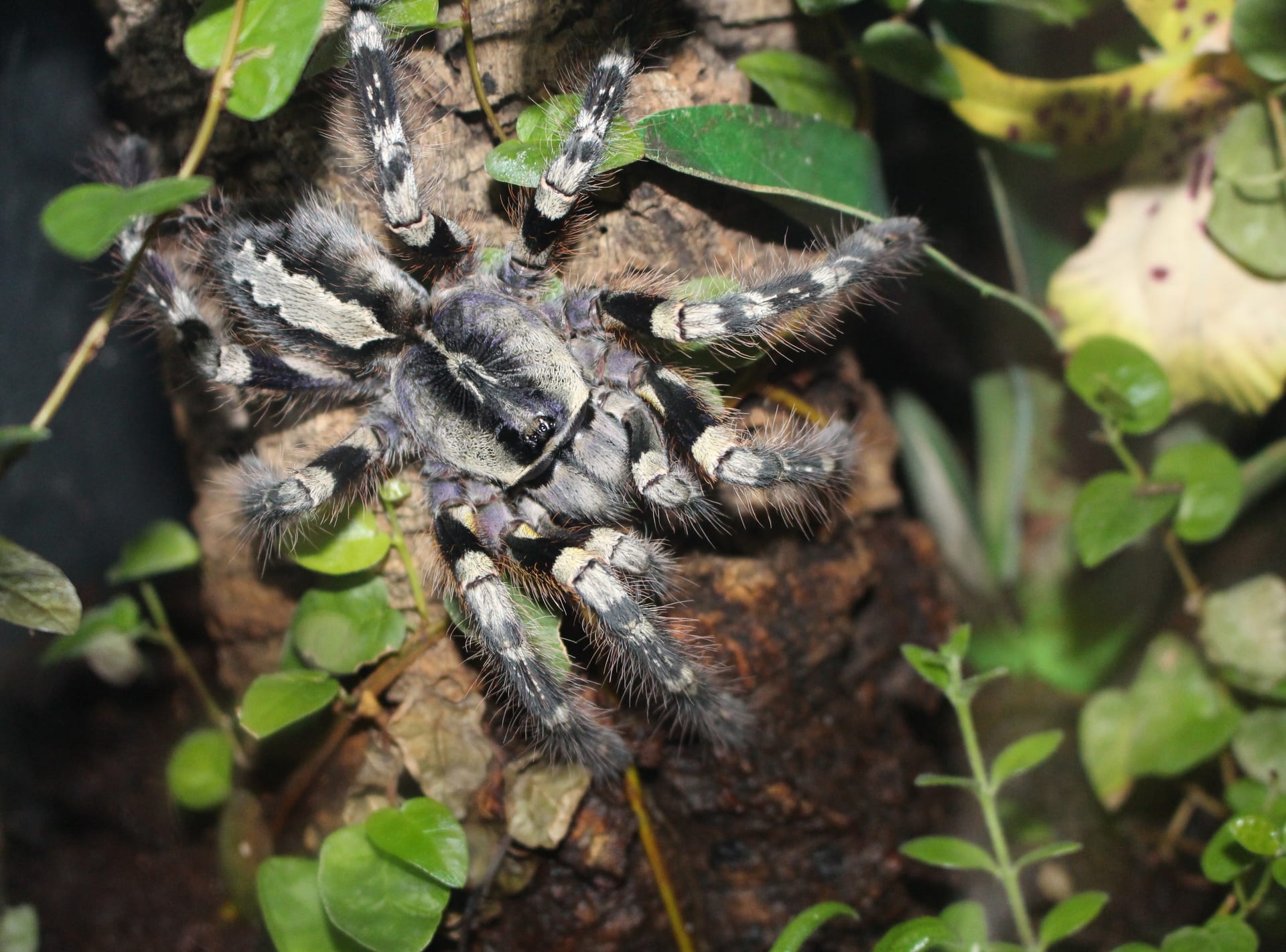
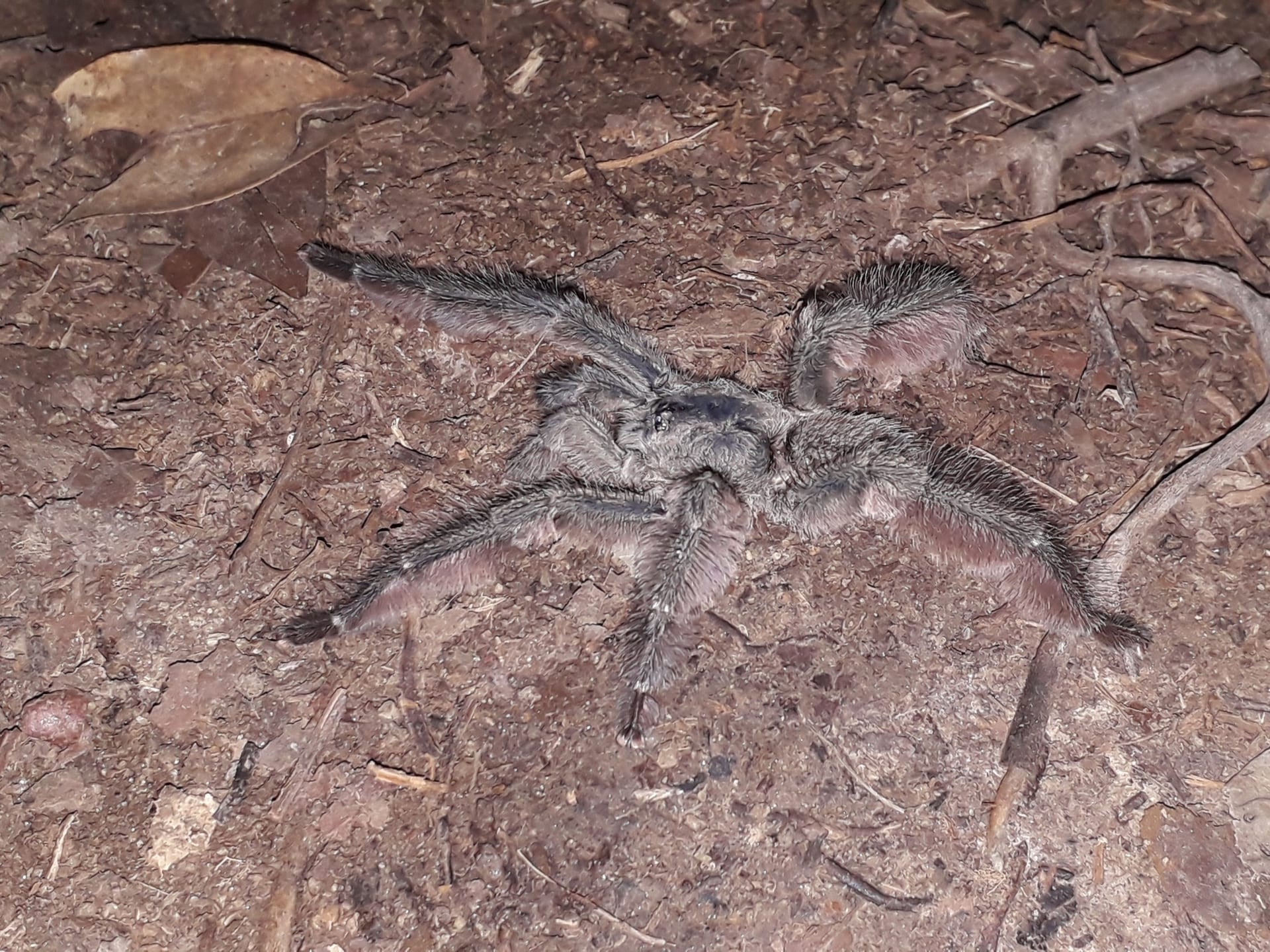
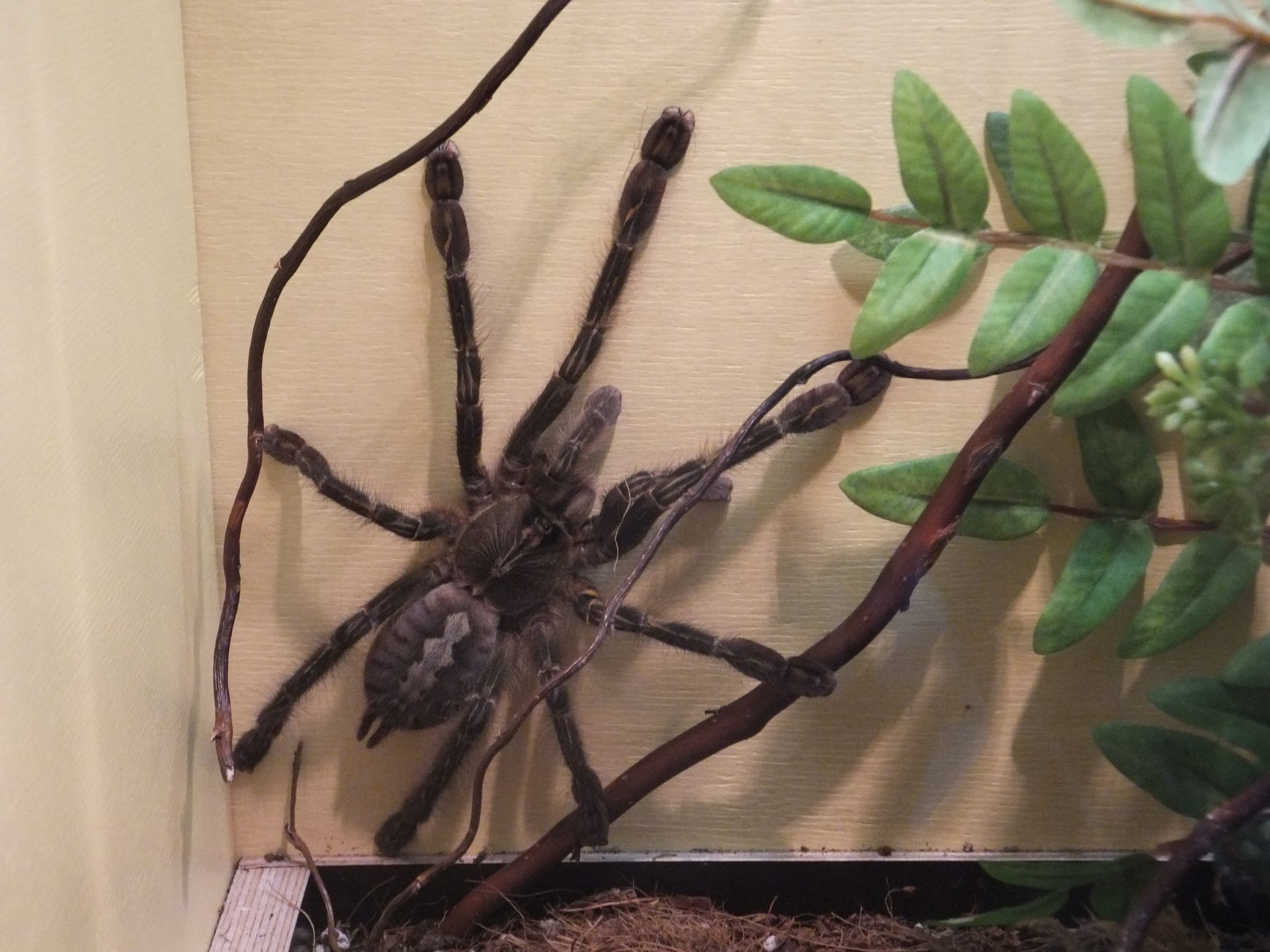
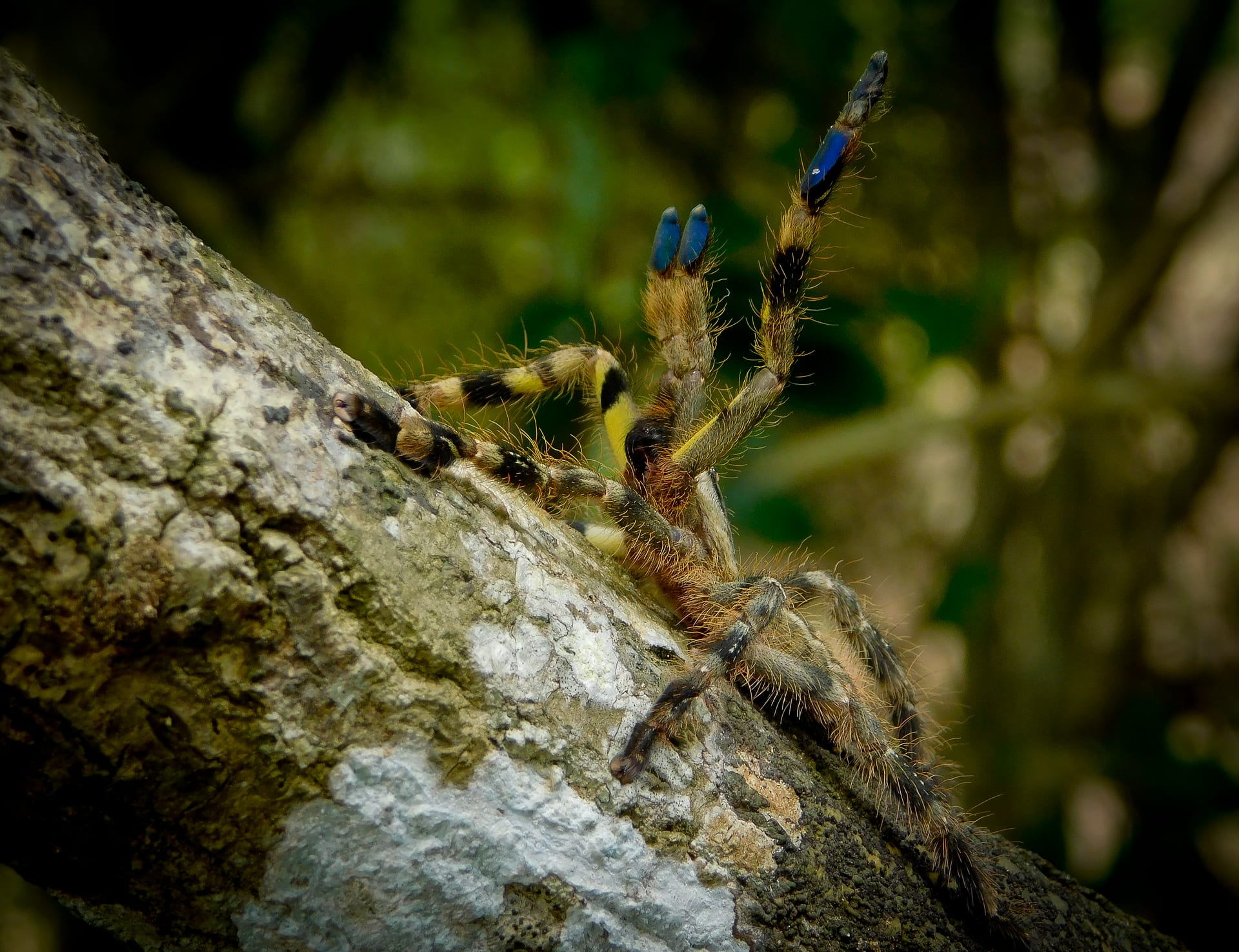
An arboreal tarantula endemic to central Sri Lanka and the type species of the genus. It is covered in intricate black, white and grey cryptic markings, with a pale grey foliate band running the length of the abdomen. It is strongly defensive when disturbed.
Difficulty
Advanced
Temperature
24〜27℃
Lifespan
Females 12-15 years / males 3-4 years
Size
Body length: females 4.5-5cm, males 3.2-3.5cm
Humidity
65〜75%
Diet
Live insects such as crickets and roaches
About
Poecilotheria fasciata is a large arboreal tarantula endemic to central Sri Lanka and the type species of the genus, described by Latreille in 1804 as Mygale fasciata. It can be told from other ornamental tarantulas by the very narrow dark band on the femur of the first pair of legs and the thin broken band on the femur of the fourth pair. Females are dorsally covered in black, white and grey cryptic markings, with a light grey foliate median band running the whole length of the opisthosoma; males are a more uniform brown with weaker markings. The species occurs in the dry and intermediate zones of Sri Lanka and is most abundant in tree hollows and under bark, in coconut and banana plantations and sometimes in human dwellings. Males are nomadic while females are not. When disturbed it is very defensive and nimble. In 2018 it was listed for protection under the US Endangered Species Act.
Source: Wikipedia (CC BY-SA 4.0)
Lifespan of the Sri Lankan Ornamental
The Sri Lankan Ornamental lives Females 12-15 years / males 3-4 years.
Size of the Sri Lankan Ornamental
The Sri Lankan Ornamental grows to Body length: females 4.5-5cm, males 3.2-3.5cm.
Females have a body length of 45-50 mm and males are smaller at 32-35 mm.
Temperature & humidity for the Sri Lankan Ornamental
The ideal temperature for the Sri Lankan Ornamental is 24〜27℃. Ideal humidity is 65〜75%.
Basic Info
Origin
Central Sri Lanka (endemic)
Care Specifications
Semi-aggressiveSolitary
Sources: Wikipedia / Wikipedia: Poecilotheria (genus) / GBIF / The Tarantula Collective: Poecilotheria regalis (congener reference)
References & Sources
Edited & verified by: BreederDirect editorial team
The taxonomic, regulatory, and husbandry data on this page are compiled and verified against the authoritative primary sources below.
Taxonomy & Authority
Accepted name: Poecilotheria fasciata (Latreille, 1804)
Synonyms: Mygale fasciata Latreille, 1804
Authority databases: GBIF
Nomenclature follows global taxonomic authority databases.
Regulations & Conservation Status
CITES Appendix II
Since 2019 all species of Poecilotheria have been listed on CITES Appendix II; international trade requires a CITES export permit from the country of export.
Sources: CITES Appendices (Poecilotheria spp. Appendix II)
Regulations may change. Always verify the latest information with the relevant authorities.
Sri Lankan Ornamental Listings
Loading latest listingsFind listings for this species