Source: Wikimedia Commons
Purple Tree Spider
IntermediateTapinauchenius plumipes
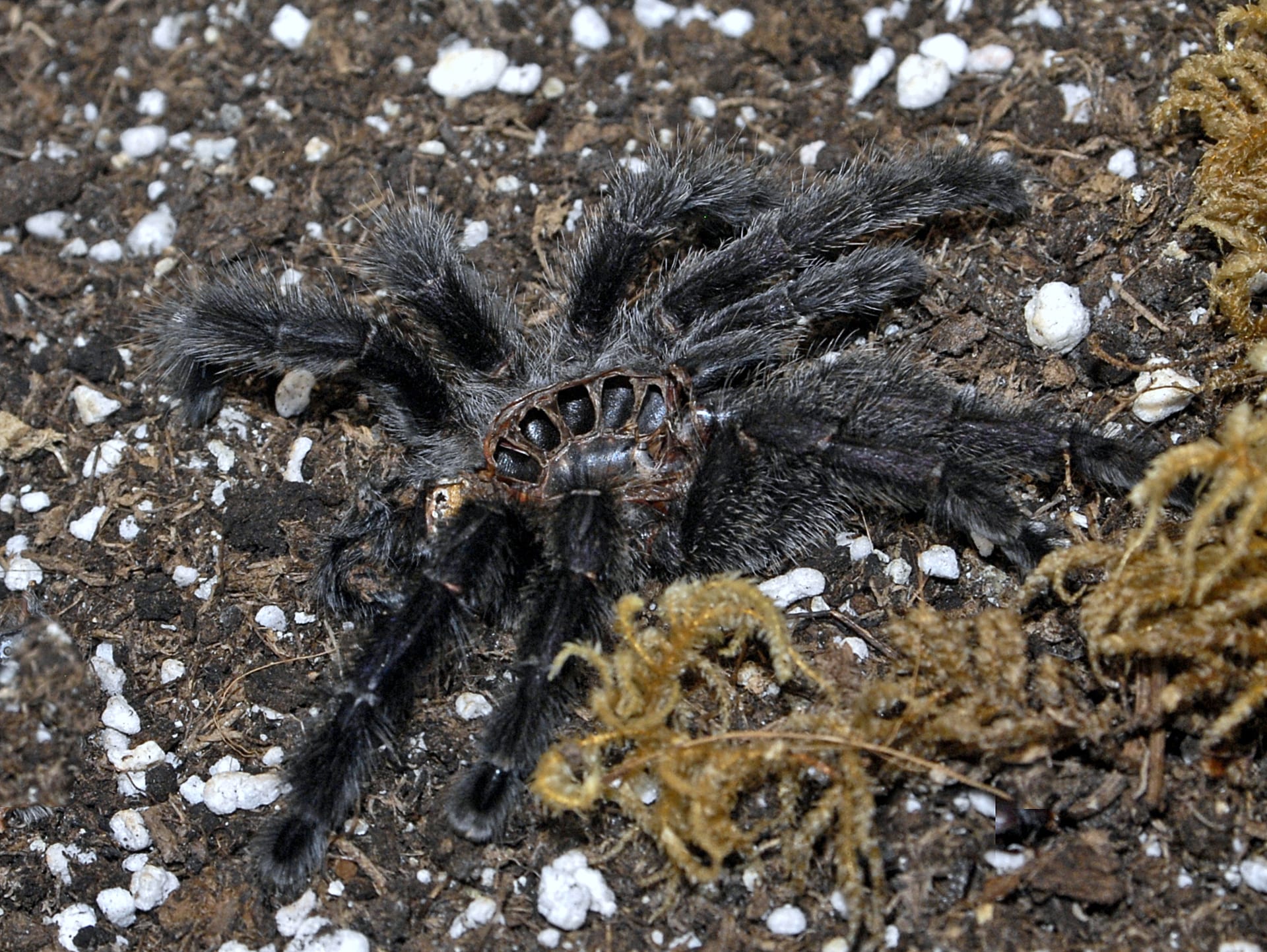
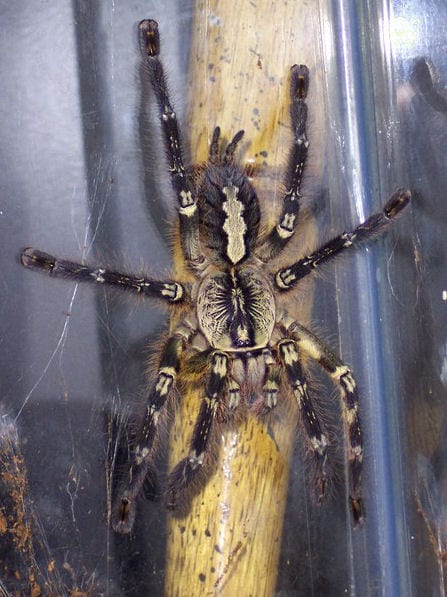
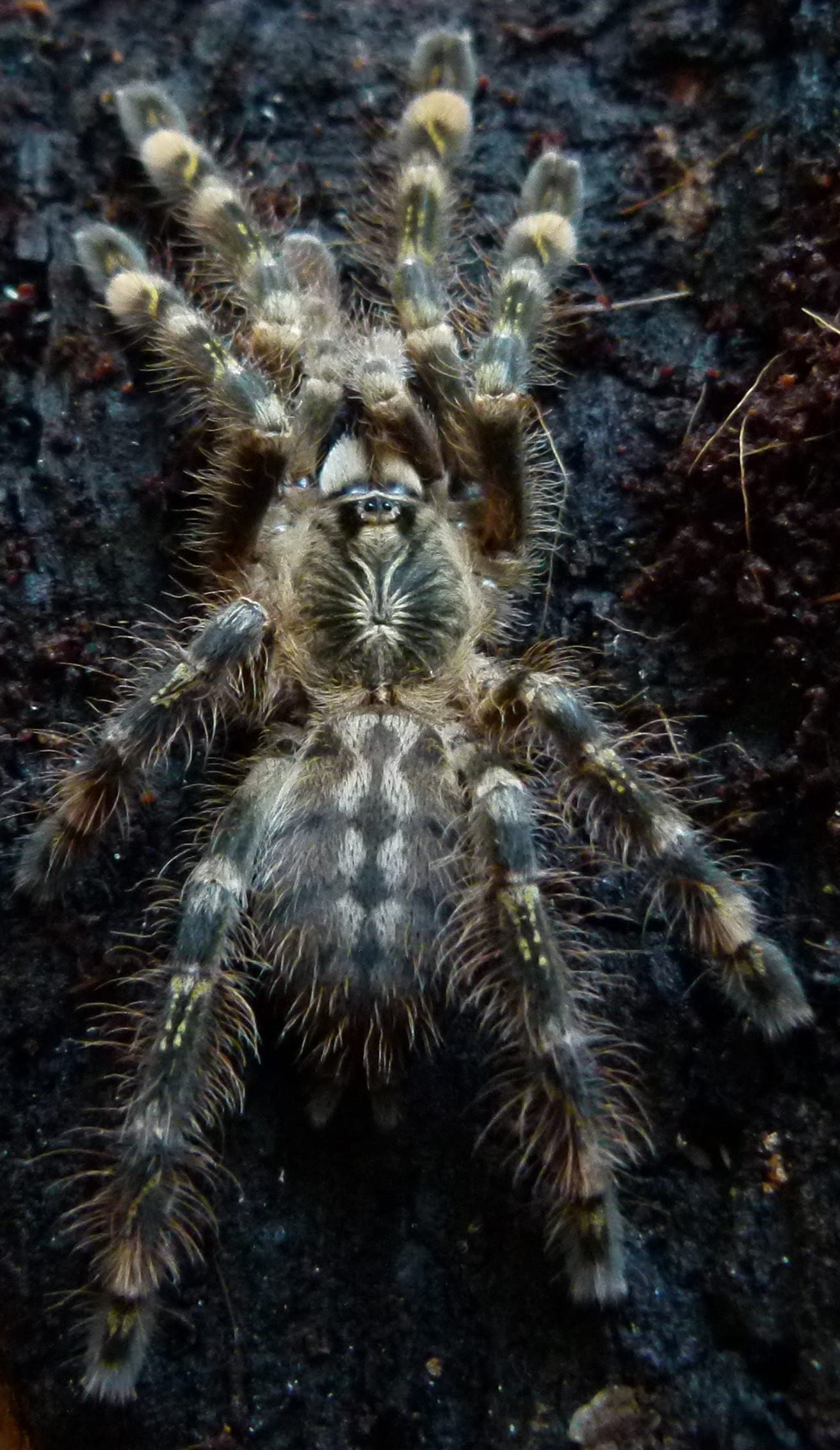
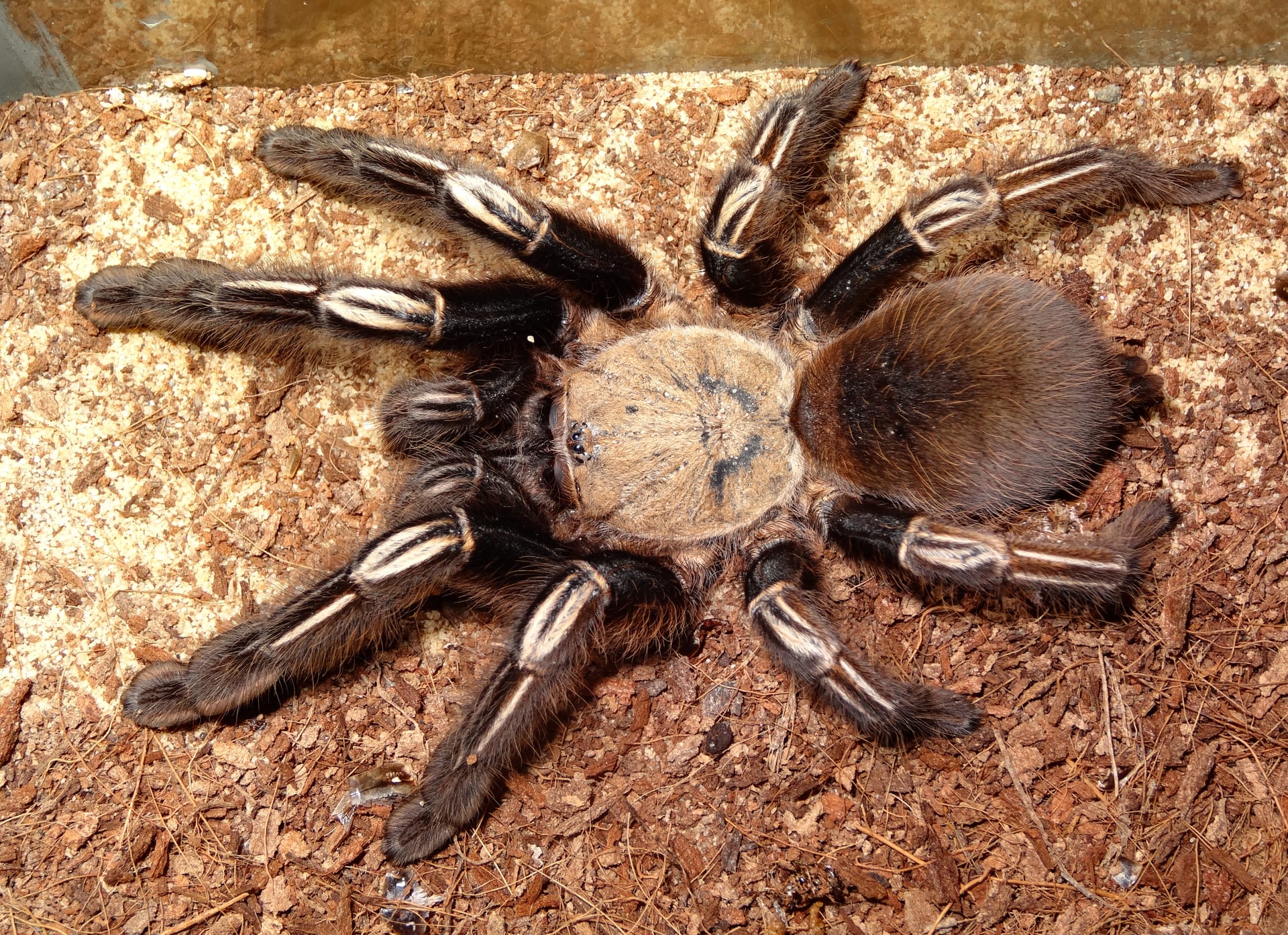
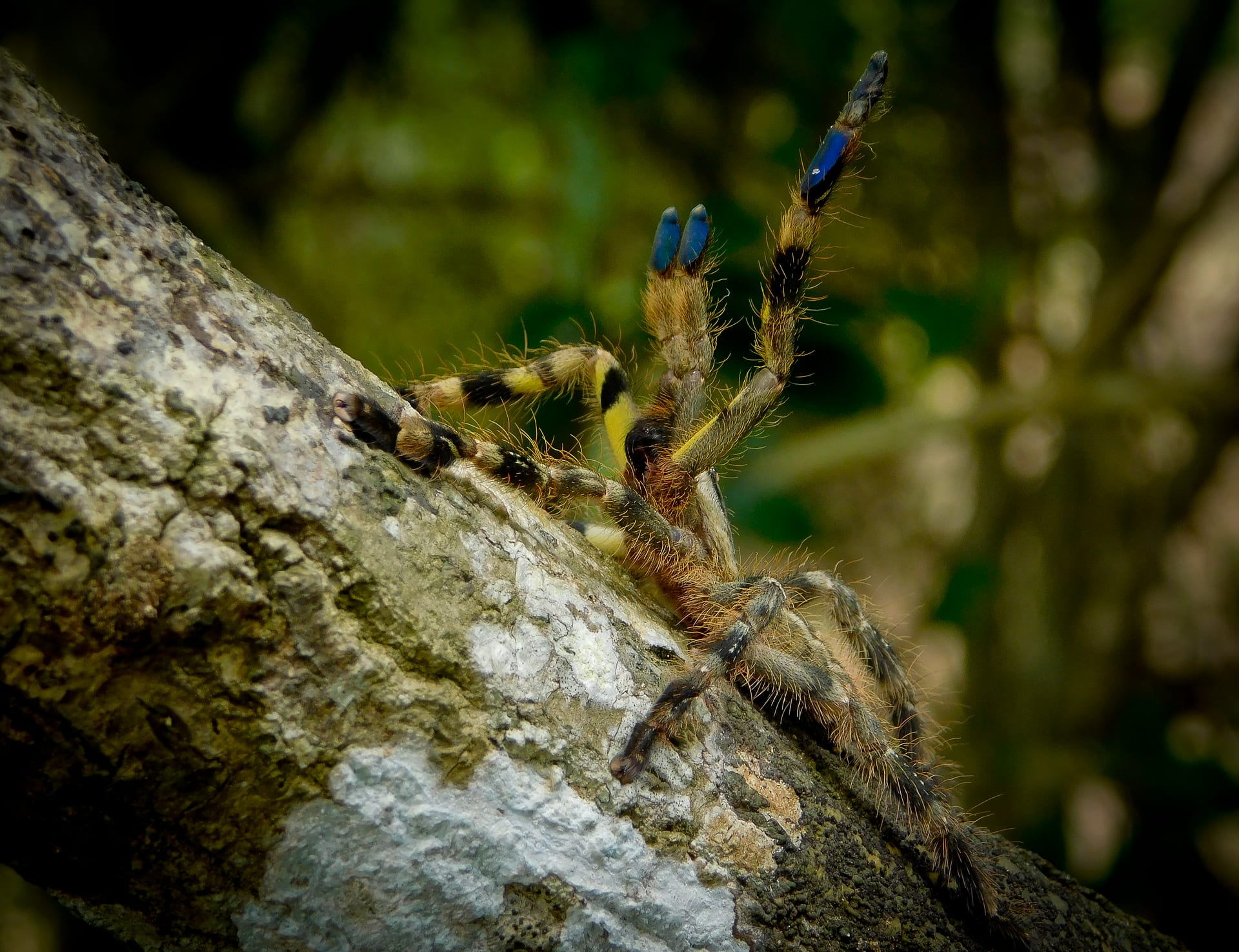
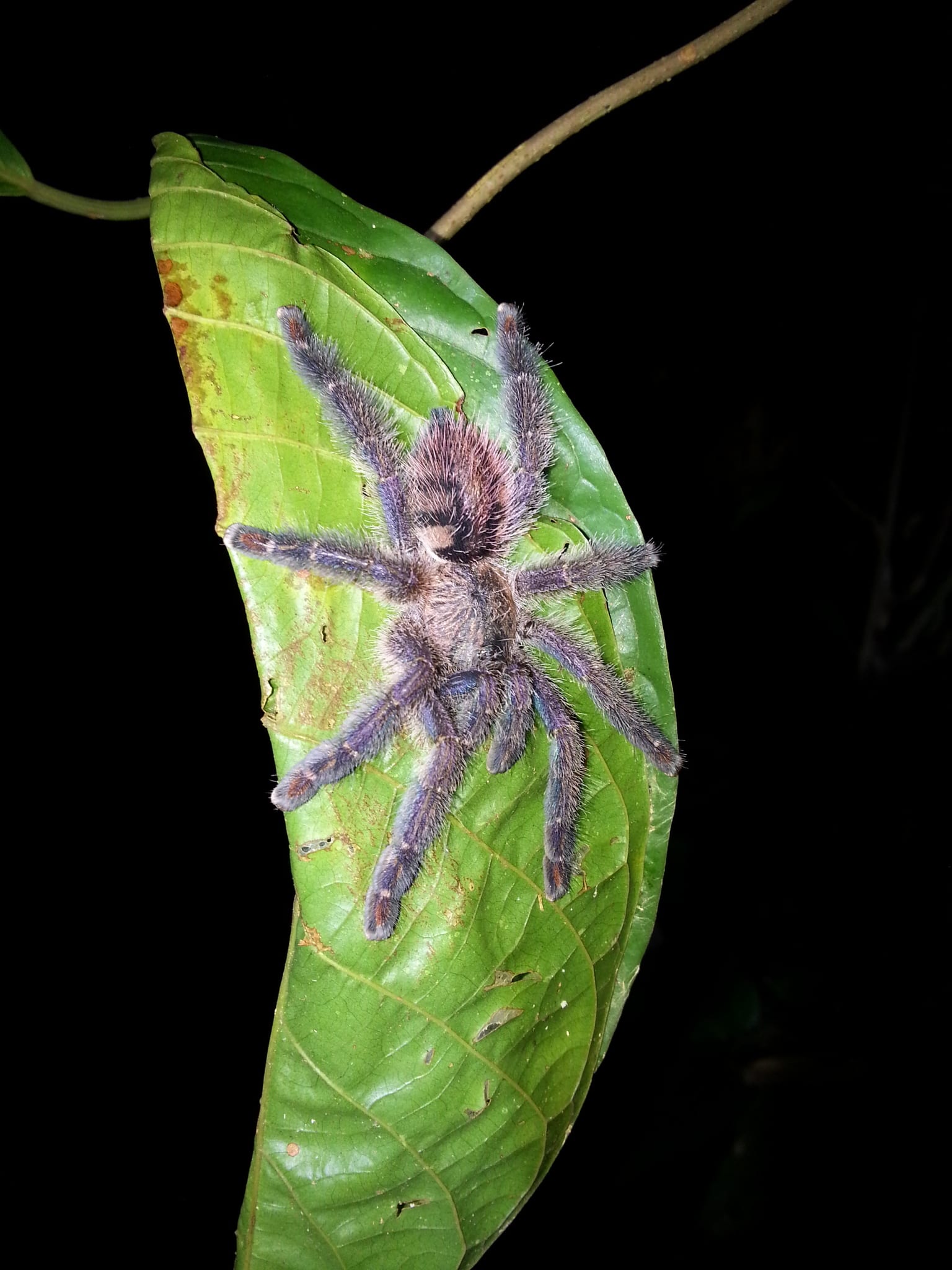
An arboreal tarantula with a dark purple-tinged body and long slender legs. The trade name Tapinauchenius violaceus is now treated as a synonym of this species. It is extremely fast and builds tube webs against bark.
Difficulty
Intermediate
Temperature
25〜27℃
Lifespan
Females 8-12 years / males 2-3 years
Size
Body about 6cm (female) and 3.5cm (male), leg span about 10cm
Diet
Active live insects such as crickets and roaches
About
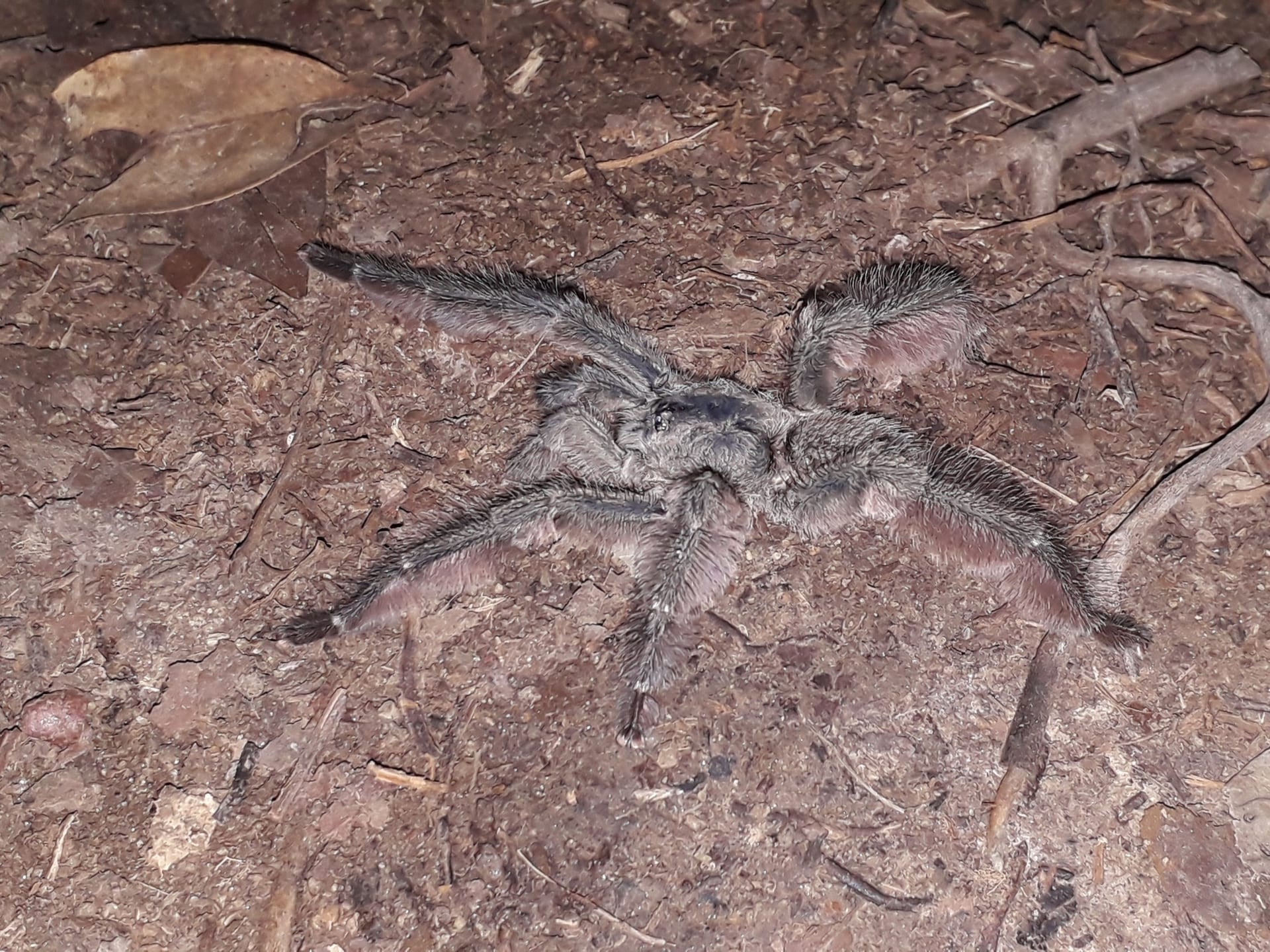
Tapinauchenius plumipes was described by C. L. Koch in 1842 as Mygale plumipes and became the type species when Ausserer erected the genus Tapinauchenius in 1871. It lives in humid tropical forest in Guyana, Suriname, French Guiana and the Brazilian states of Para and Amazonas. A 2022 revision of the genus synonymised both T. violaceus and T. gigas (Caporiacco, 1954), long used as trade names, with this species. Colour is variable: the typical form is dark grey with an olive sheen on the carapace, while animals traded as the violaceus form are dark purple with a green sheen. In captivity a vertical enclosure of roughly 20 by 20 by 35cm with anchor points for webbing is recommended, at 25-27 C by day and a few degrees cooler at night with humidity near 80 percent. The venom is weak and the spider is not aggressive, but its speed and jumping make it unsuitable for beginners.
Source: Wikipedia (CC BY-SA 4.0)
Lifespan of the Purple Tree Spider
The Purple Tree Spider lives Females 8-12 years / males 2-3 years.
Size of the Purple Tree Spider
The Purple Tree Spider grows to Body about 6cm (female) and 3.5cm (male), leg span about 10cm.
Females reach about 6cm in body length and leg span is around 10cm in both sexes.
Temperature & humidity for the Purple Tree Spider
The ideal temperature for the Purple Tree Spider is 25〜27℃.
Basic Info
Origin
Northeastern South America (Guyana, Suriname, French Guiana, and the Brazilian states of Para and Amazonas)
Care Specifications
PeacefulSolitary
Sources: Polish Wikipedia: Tapinauchenius plumipes (husbandry) / Wikipedia: Tapinauchenius plumipes / GBIF
References & Sources
Edited & verified by: BreederDirect editorial team
The taxonomic, regulatory, and husbandry data on this page are compiled and verified against the authoritative primary sources below.
Taxonomy & Authority
Accepted name: Tapinauchenius plumipes (C. L. Koch, 1842)
Synonyms: Mygale plumipes C. L. Koch, 1842, Tapinauchenius violaceus (Mello-Leitão, 1930), Tapinauchenius gigas Caporiacco, 1954
Authority databases: GBIF
Nomenclature follows global taxonomic authority databases.
Regulations & Conservation Status
Not CITES-listed
Sources: CITES Appendices (species not listed)
Regulations may change. Always verify the latest information with the relevant authorities.
Purple Tree Spider Listings
Loading latest listingsFind listings for this species