Source: Wikimedia Commons
Skeleton Tarantula
IntermediateEphebopus murinus
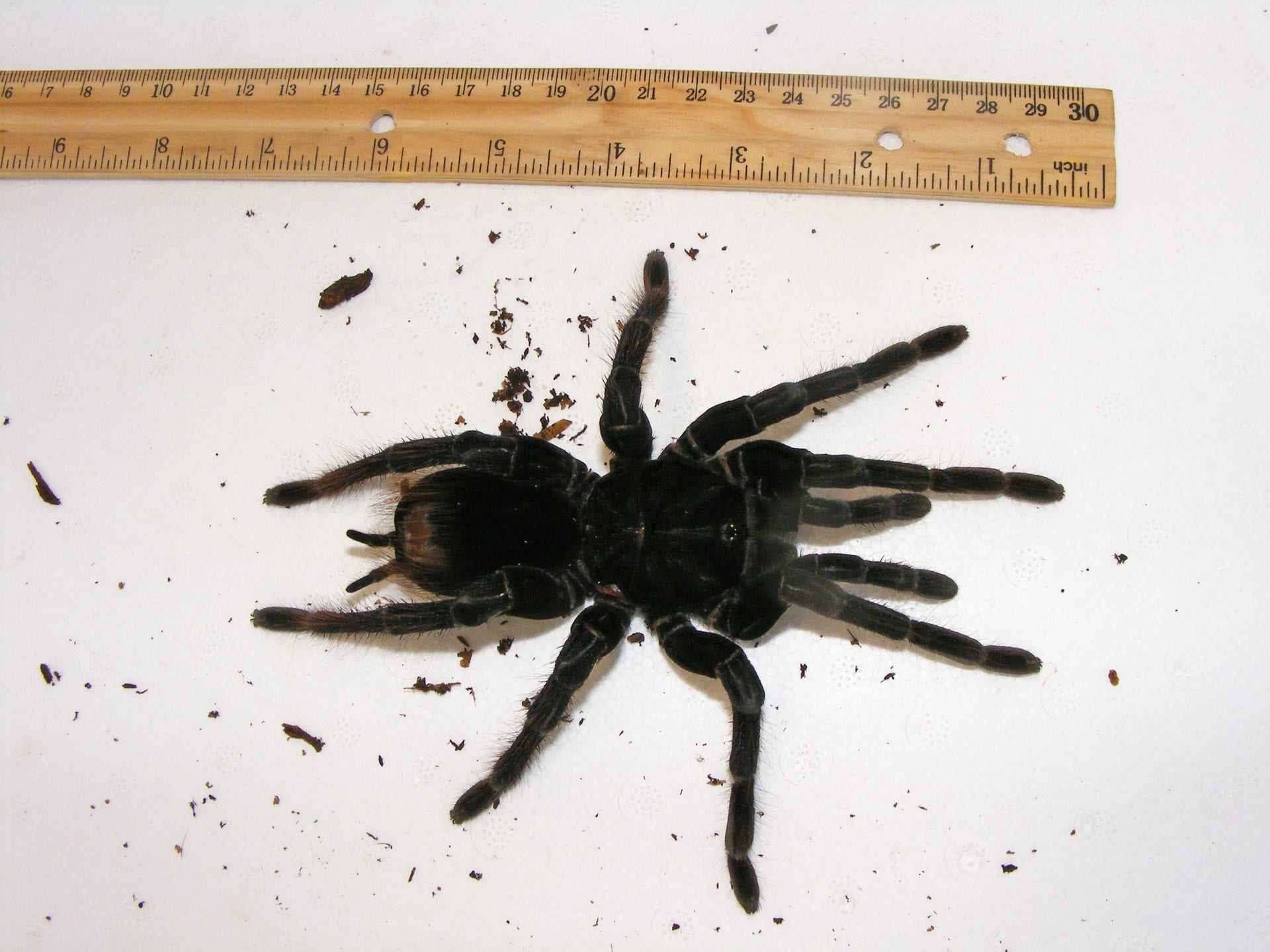
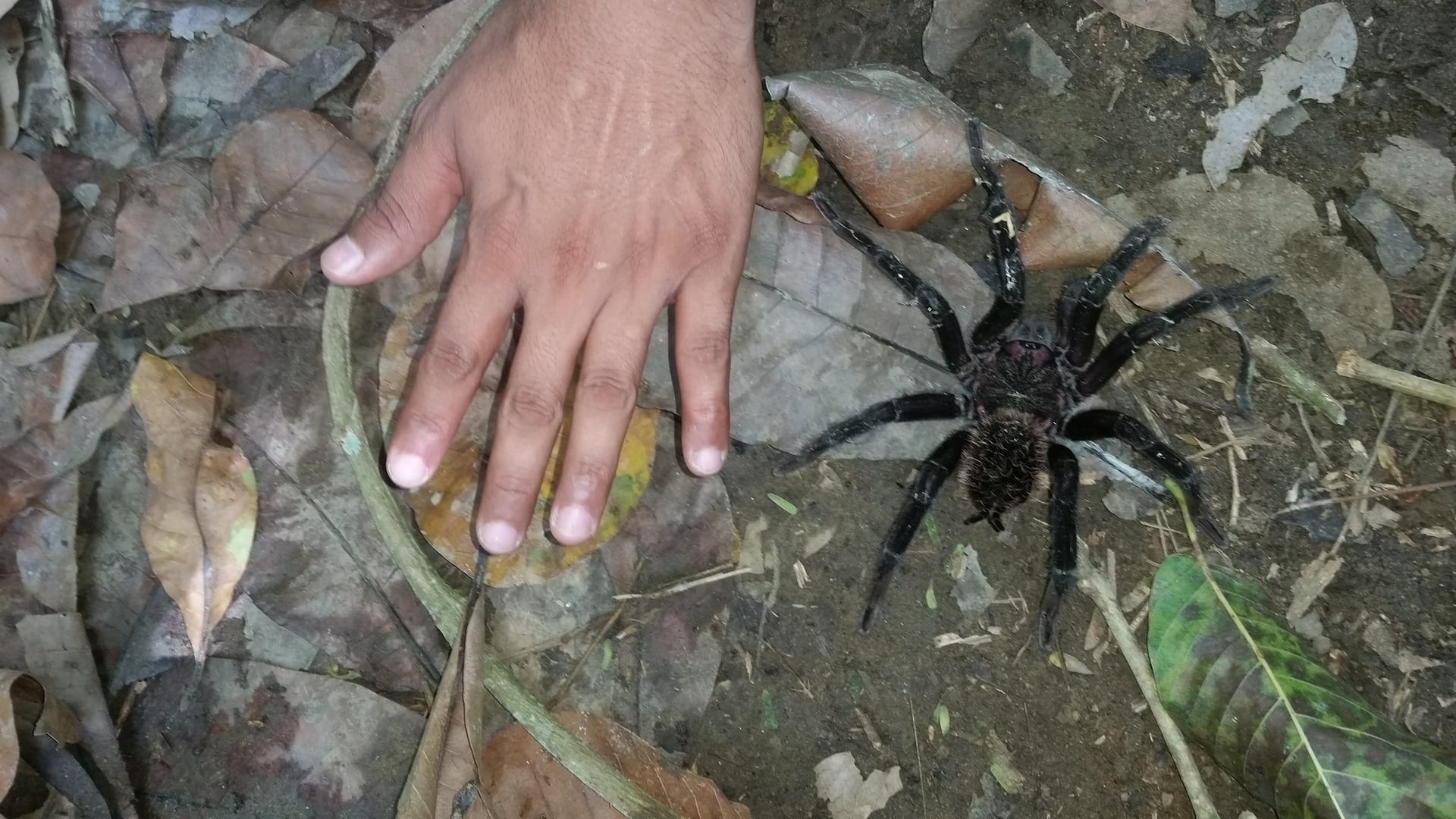
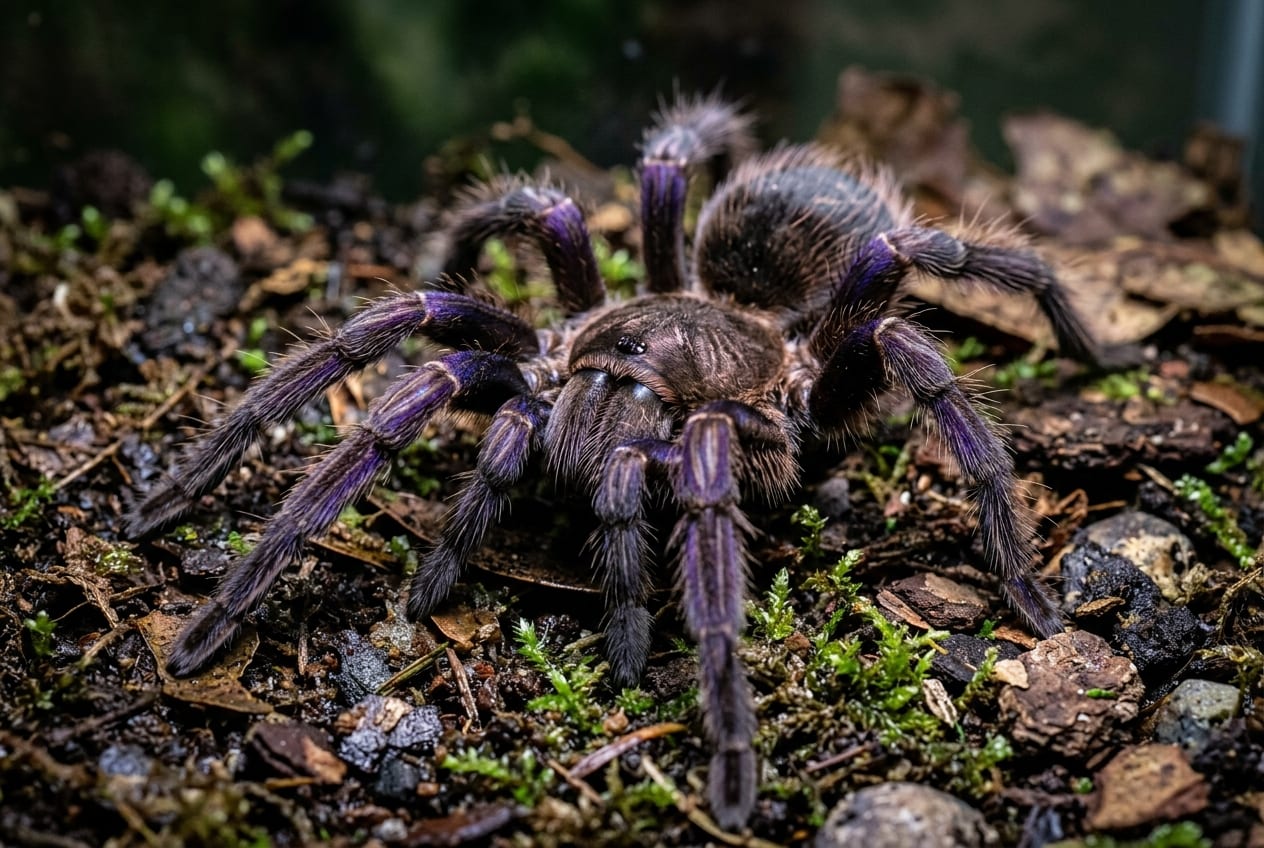
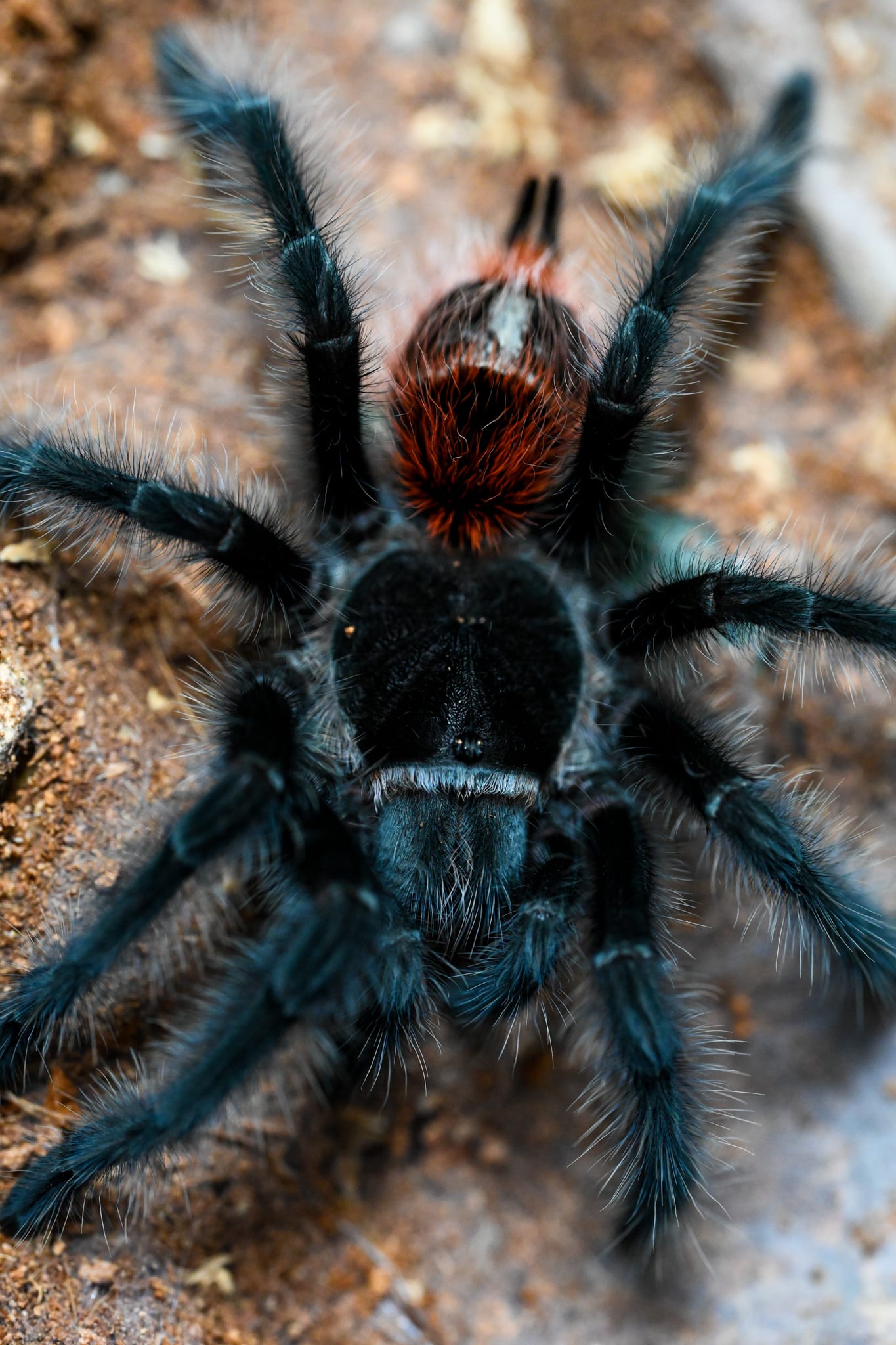
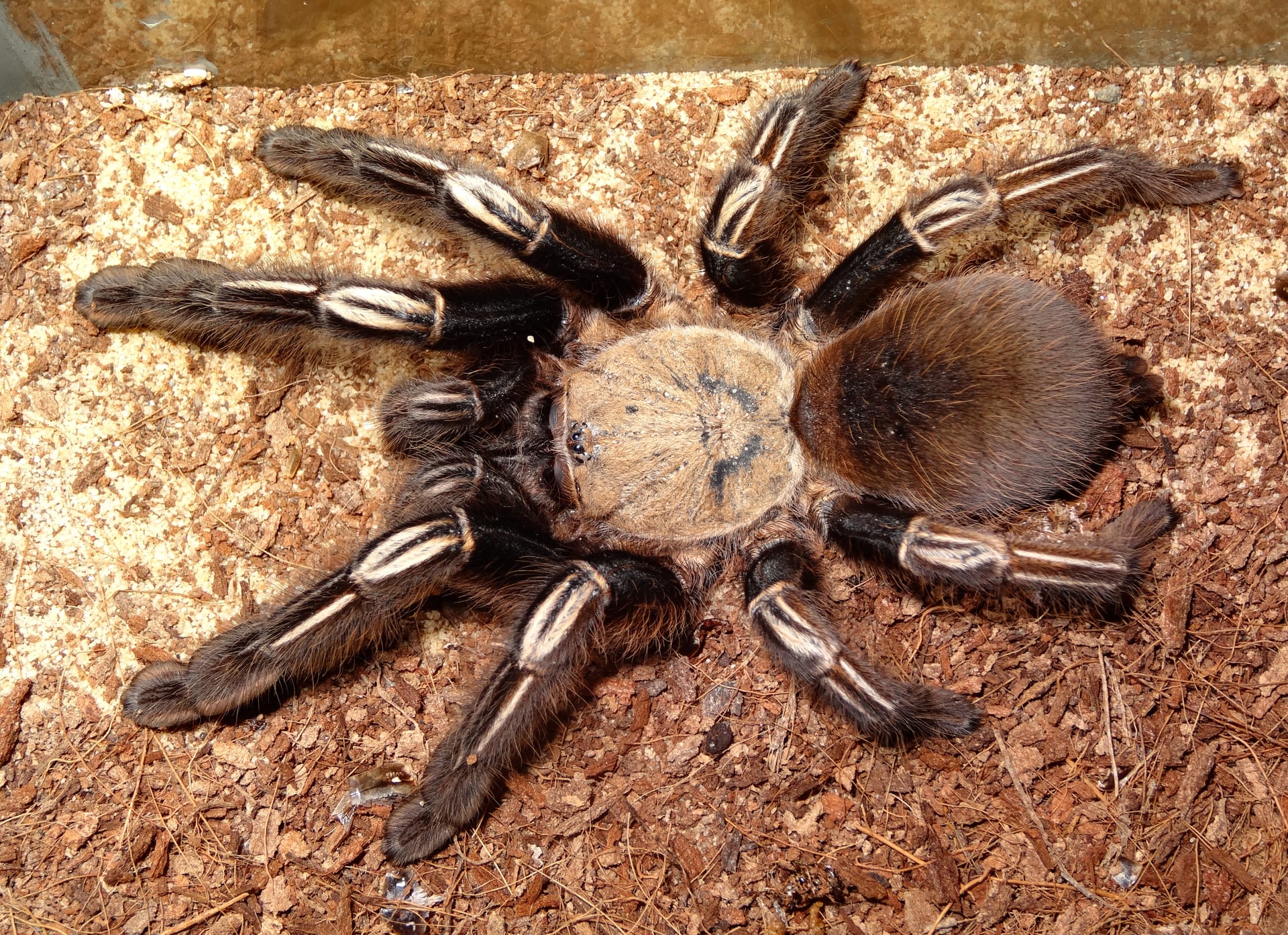
A terrestrial tarantula whose black legs carry skeleton-like pale yellow stripes. Like all Ephebopus it bears urticating hairs on the palpal femora rather than the abdomen, and it digs a heavily webbed burrow.
Difficulty
Intermediate
Temperature
22〜25℃
Lifespan
Females 10-13 years / males 3-4 years
Size
Leg span 11-12cm, up to 15cm in females; body 5-6cm
Diet
Live insects such as crickets, roaches and mealworms
About
Ephebopus murinus was described by Walckenaer in 1837 as Mygale murina and moved to Ephebopus by Simon in 1892. The genus name comes from the Greek for youth and foot, and the specific name from the Latin for mouse-coloured. It occurs in lowland forest in northern Brazil, French Guiana and Suriname. The legs are black, the abdomen small and brown, and the carapace coffee-coloured to golden. The skeleton-like leg striping gives the species its common name. Adults reach a leg span of 11-12cm, with females up to 15cm. Unusually for the subfamily Aviculariinae, which is mostly arboreal, it lives on the forest floor and builds a heavily webbed burrow beneath the topsoil or among branches and rocks. Ephebopus species carry their urticating hairs on the palpal femora rather than the abdomen and release them by rubbing the palps against the chelicerae. It is fast and readily rears up to display its fangs. Around 22-25 C suits it, with substrate kept damp to match the rainfall of its range.
Source: Wikipedia (CC BY-SA 4.0)
Lifespan of the Skeleton Tarantula
The Skeleton Tarantula lives Females 10-13 years / males 3-4 years.
Size of the Skeleton Tarantula
The Skeleton Tarantula grows to Leg span 11-12cm, up to 15cm in females; body 5-6cm.
Temperature & humidity for the Skeleton Tarantula
The ideal temperature for the Skeleton Tarantula is 22〜25℃.
Basic Info
Origin
Lowland forest in northern South America (northern Brazil, French Guiana, Suriname)
Care Specifications
AggressiveSolitary
Sources: Exotic Pets UK: Skeleton Tarantula care sheet / Wikipedia: Skeleton tarantula / GBIF
References & Sources
Edited & verified by: BreederDirect editorial team
The taxonomic, regulatory, and husbandry data on this page are compiled and verified against the authoritative primary sources below.
Taxonomy & Authority
Accepted name: Ephebopus murinus (Walckenaer, 1837)
Synonyms: Mygale murina Walckenaer, 1837, Santaremia pococki F. O. Pickard-Cambridge, 1896
Authority databases: GBIF
Nomenclature follows global taxonomic authority databases.
Regulations & Conservation Status
Not CITES-listed
Sources: CITES Appendices (species not listed)
Regulations may change. Always verify the latest information with the relevant authorities.
Skeleton Tarantula Listings
Loading latest listingsFind listings for this species