Source: Wikimedia Commons
Pink Zebra Beauty
BeginnerEupalaestrus campestratus
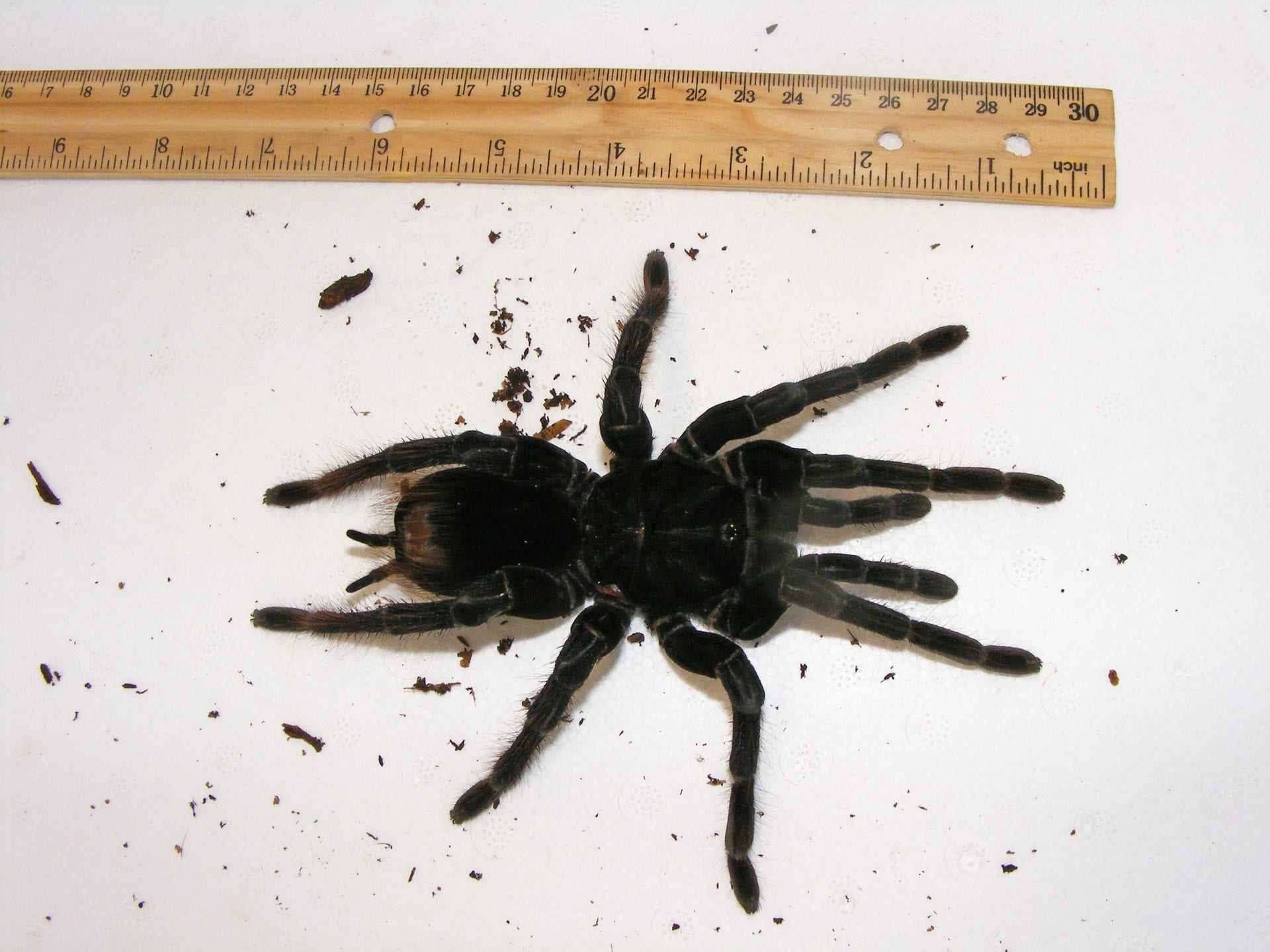
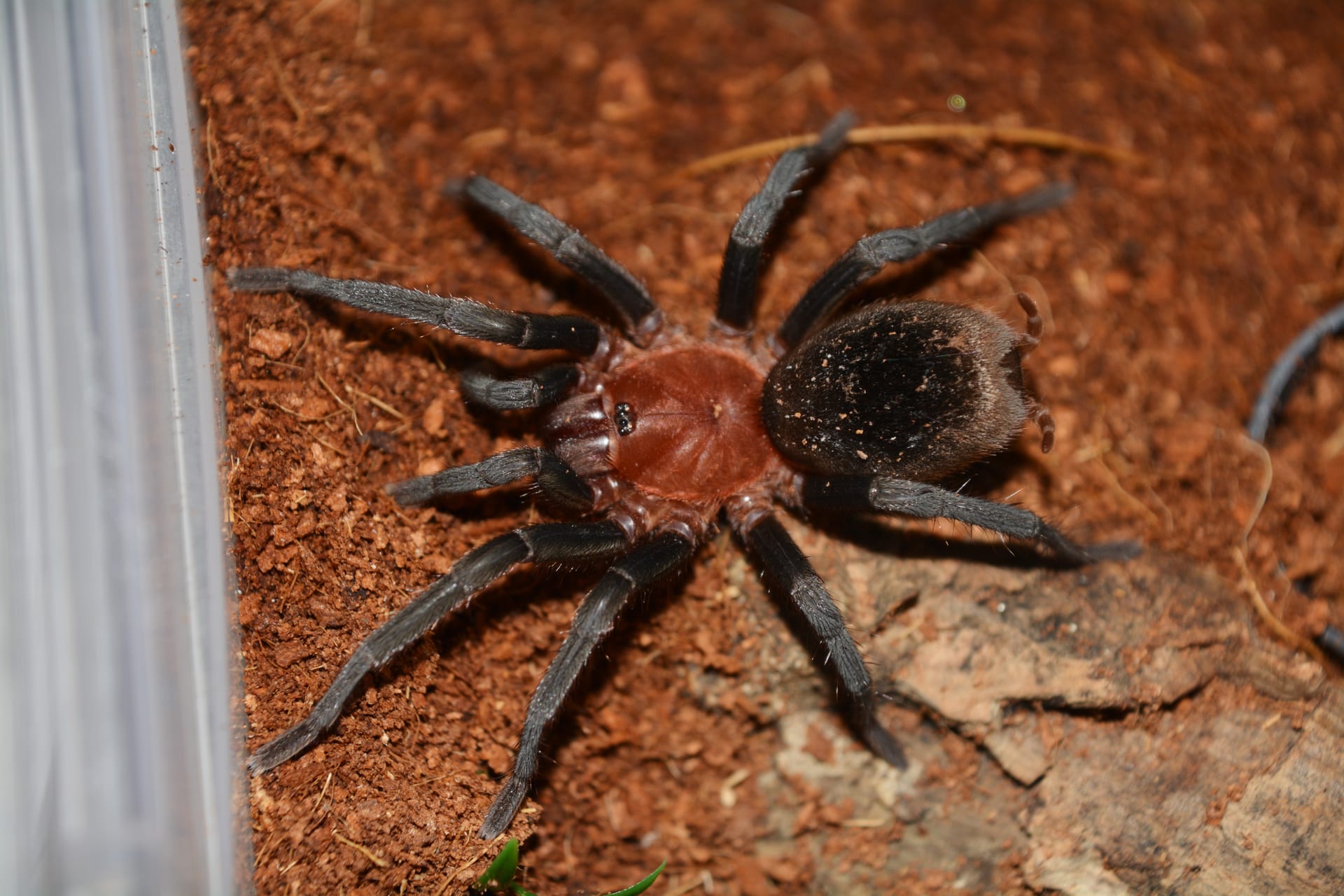
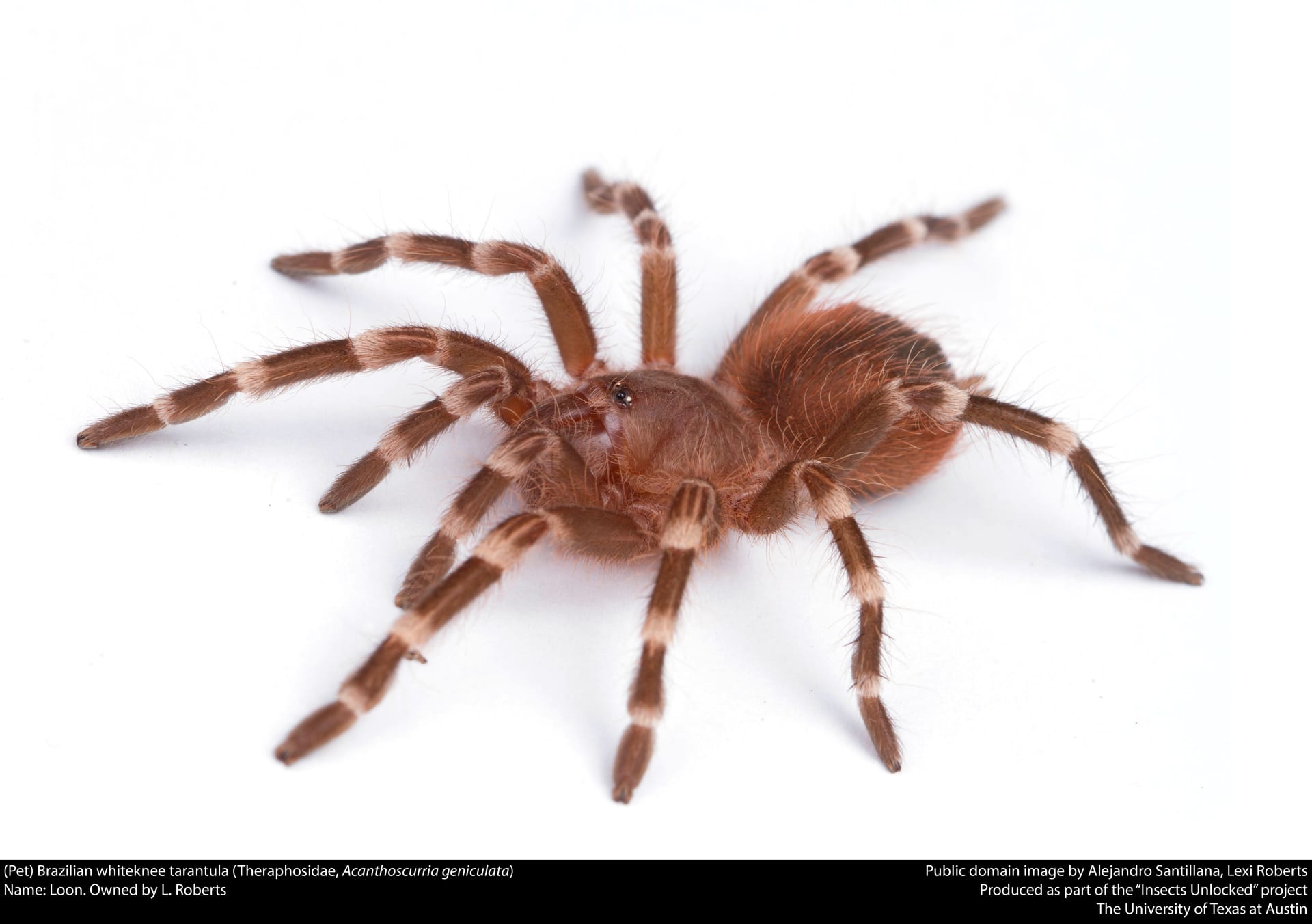
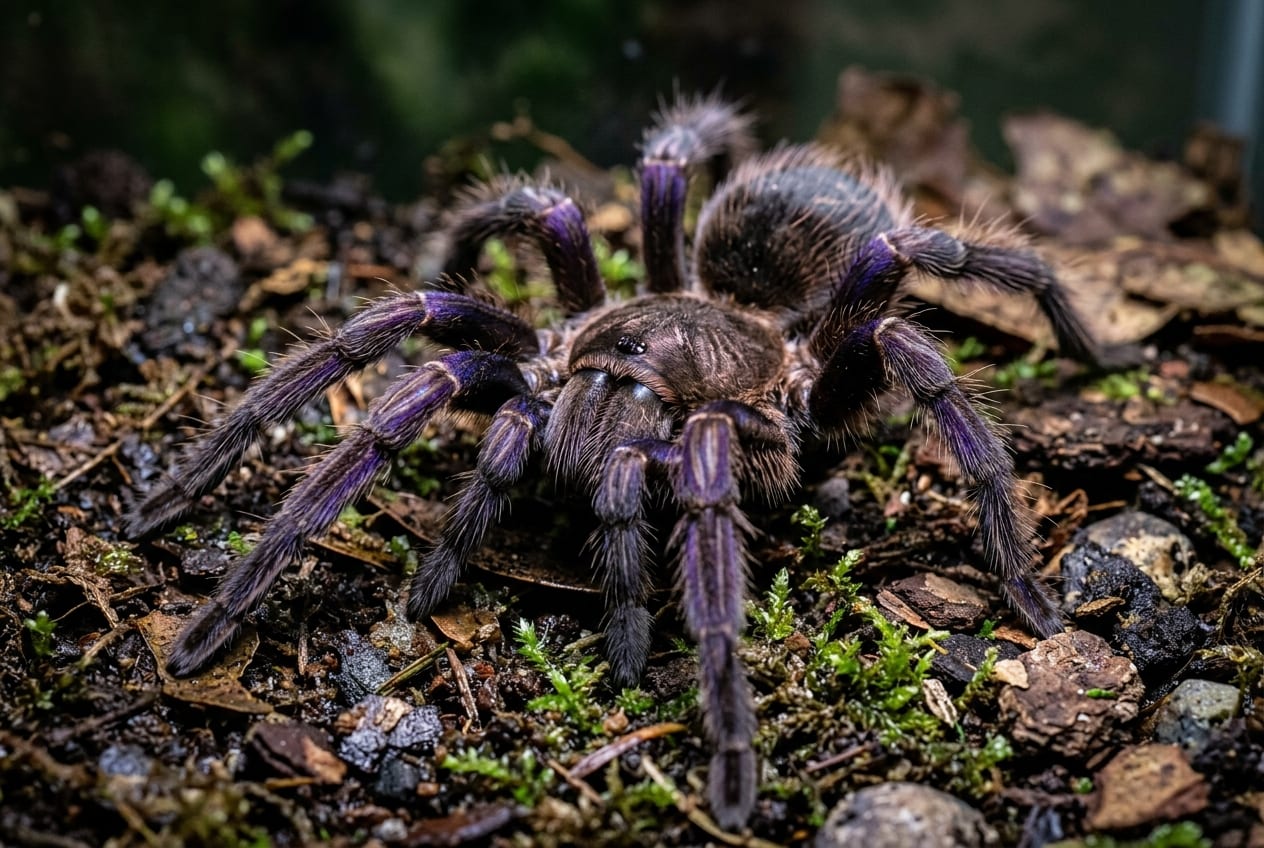
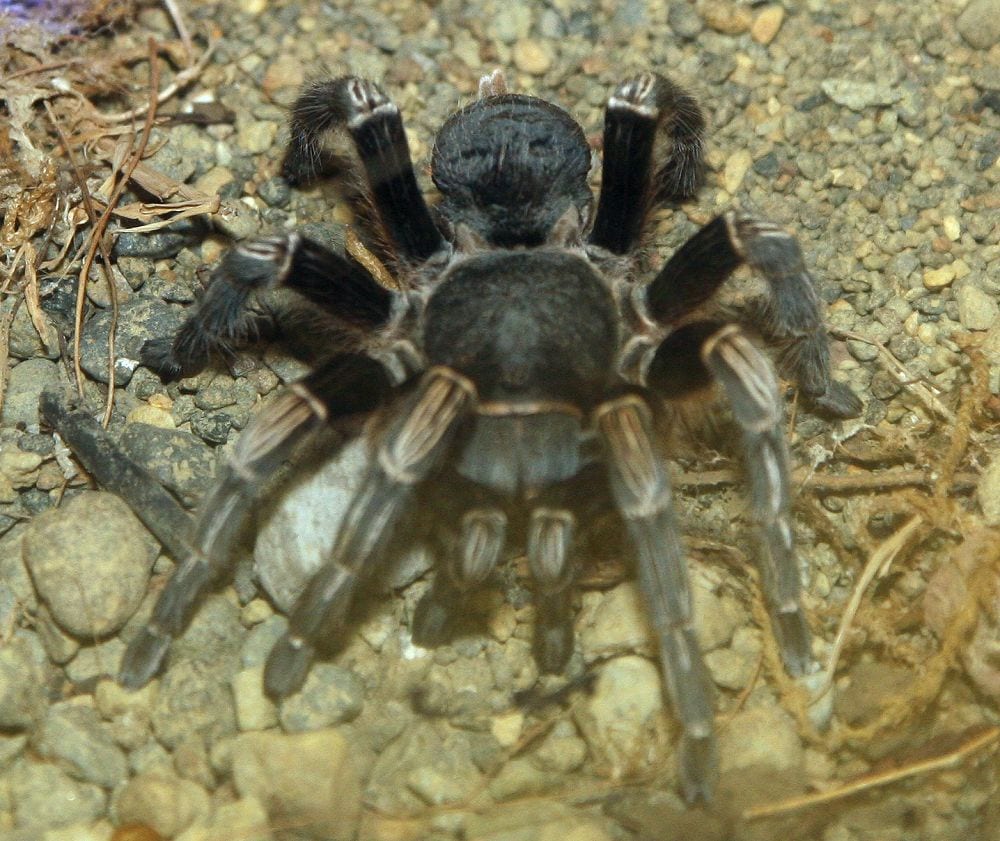
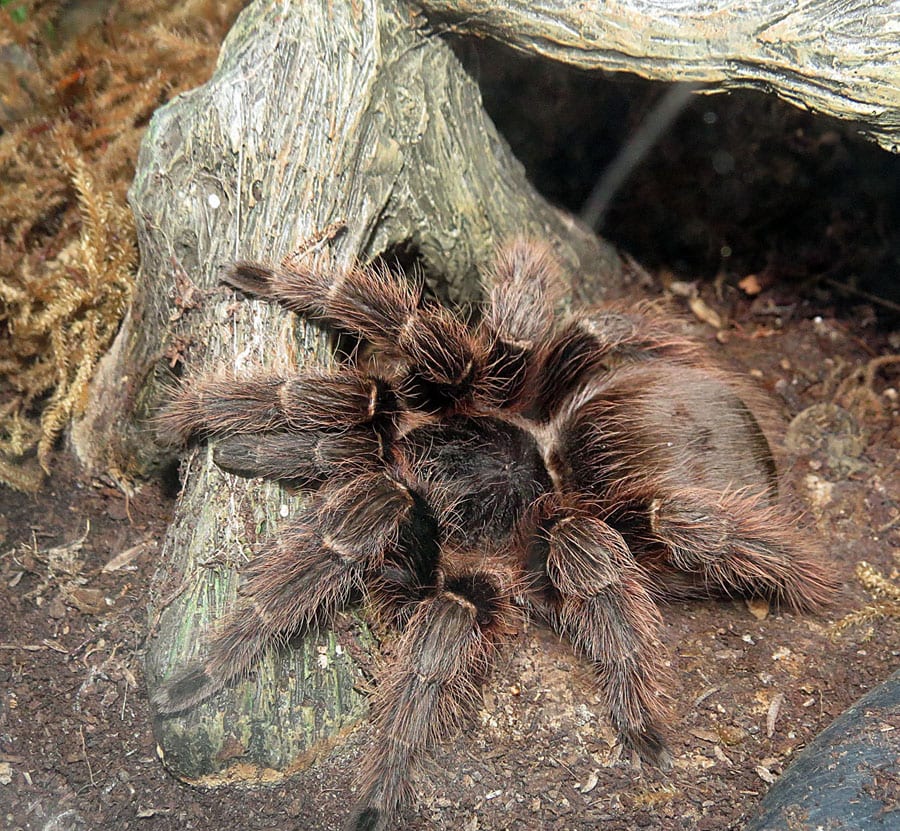
A terrestrial tarantula from South America, dark brown with pale yellow stripes at the knees and pinkish curly hairs. Leg span reaches about 15cm at most. Slow-moving and exceptionally docile, it is a popular first species.
Difficulty
Beginner
Temperature
20〜24℃
Lifespan
Females 15-20 years / males 3-5 years
Size
Up to about 14-15cm leg span
Humidity
70〜80%
Diet
Live insects such as crickets and roaches
About
Eupalaestrus campestratus is a terrestrial tarantula found in Brazil, Paraguay, Argentina and Uruguay. Its dark brown body with pale yellow striping near the patellae resembles Grammostola pulchripes, but at a maximum leg span of about 15 cm it is clearly smaller. Pinkish curly hairs grow on the sides and undersides of the legs and on the abdomen, and the hind legs are thicker and longer than the others, a trait shared across the genus Eupalaestrus. It moves slowly and is exceptionally docile, which keeps it in steady demand among keepers who value those qualities. It is hardy in captivity and lives well for years at room temperatures around 22-24 C with one corner of the enclosure kept slightly damp. Its appetite is good but growth is slow. It was hard to obtain until a few years ago, but successful breeding in Europe has brought it back into the hobby.
Source: Wikipedia (CC BY-SA 4.0)
Lifespan of the Pink Zebra Beauty
The Pink Zebra Beauty lives Females 15-20 years / males 3-5 years.
Size of the Pink Zebra Beauty
The Pink Zebra Beauty grows to Up to about 14-15cm leg span.
Temperature & humidity for the Pink Zebra Beauty
The ideal temperature for the Pink Zebra Beauty is 20〜24℃. Ideal humidity is 70〜80%.
Basic Info
Origin
Brazil, Paraguay, Argentina and Uruguay
Lifespan
Females 15-20 years / males 3-5 years
Care Specifications
PeacefulSolitary
Sources: The Spider Shop: Eupalaestrus campestratus / Wikipedia: Eupalaestrus campestratus / Tarantupedia: Eupalaestrus campestratus / GBIF
References & Sources
Edited & verified by: BreederDirect editorial team
The taxonomic, regulatory, and husbandry data on this page are compiled and verified against the authoritative primary sources below.
Taxonomy & Authority
Accepted name: Eupalaestrus campestratus (Simon, 1891)
Synonyms: Eurypelma campestratum, Eupalaestrus guyanus, Eupalaestrus pugilator, Eupalaestrus tennuitarsus
Authority databases: GBIF
Nomenclature follows global taxonomic authority databases.
Regulations & Conservation Status
Not CITES-listed
Sources: CITES Appendices (species not listed)
Regulations may change. Always verify the latest information with the relevant authorities.
Pink Zebra Beauty Listings
Loading latest listingsFind listings for this species