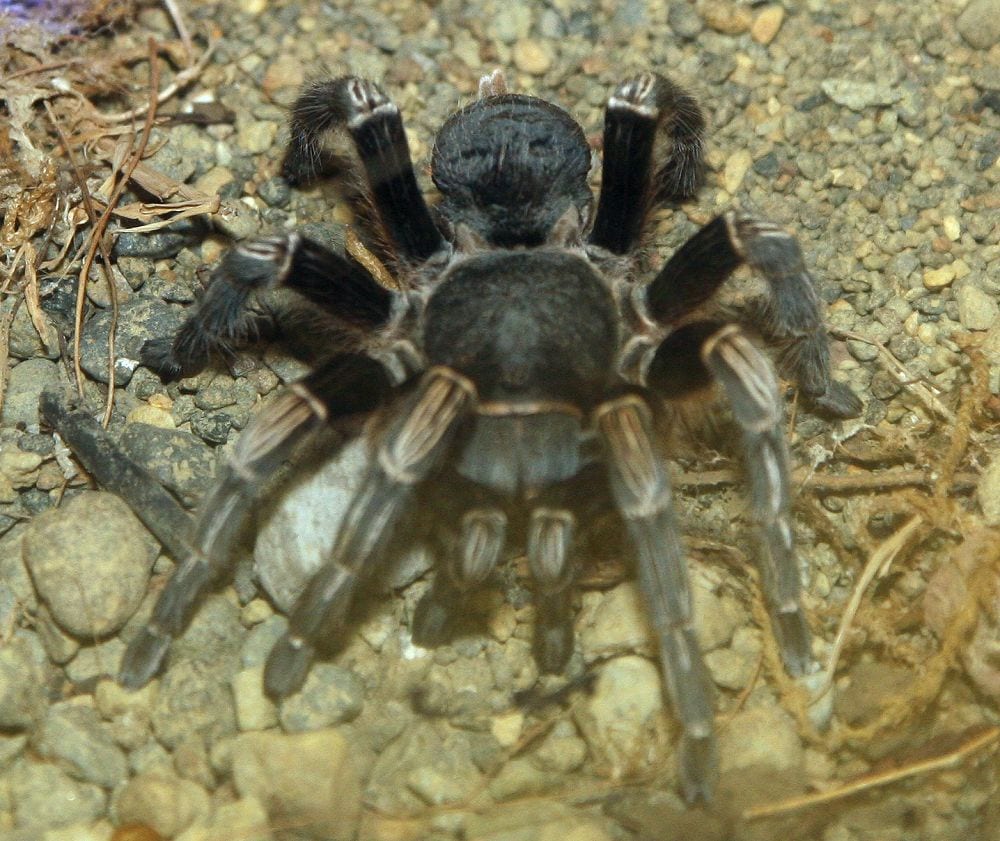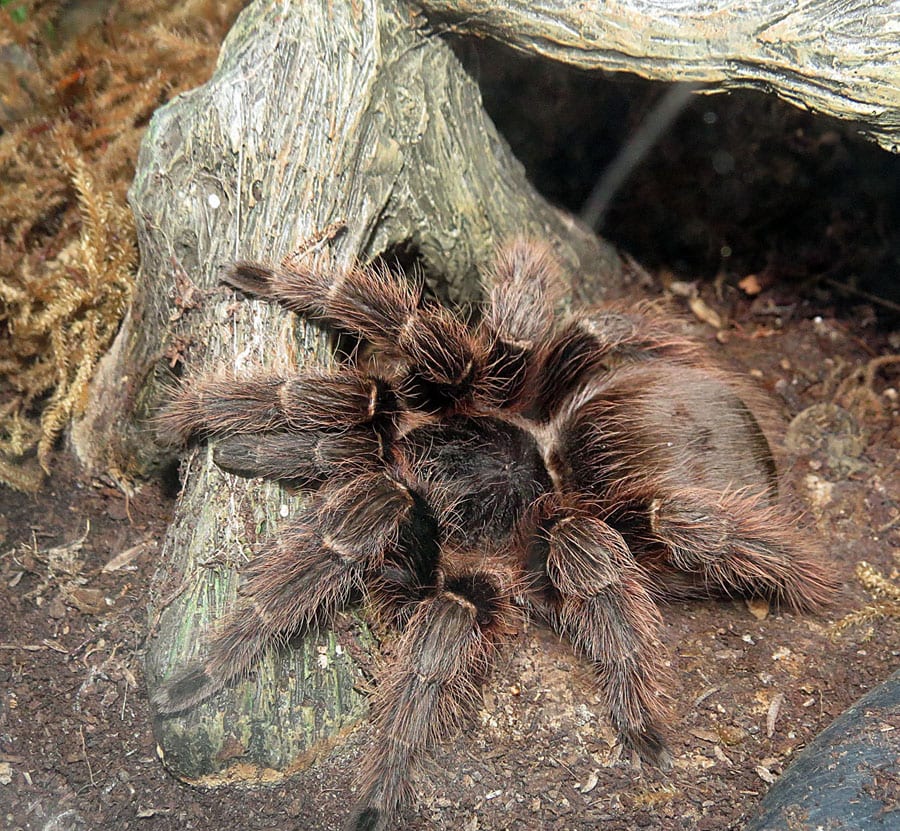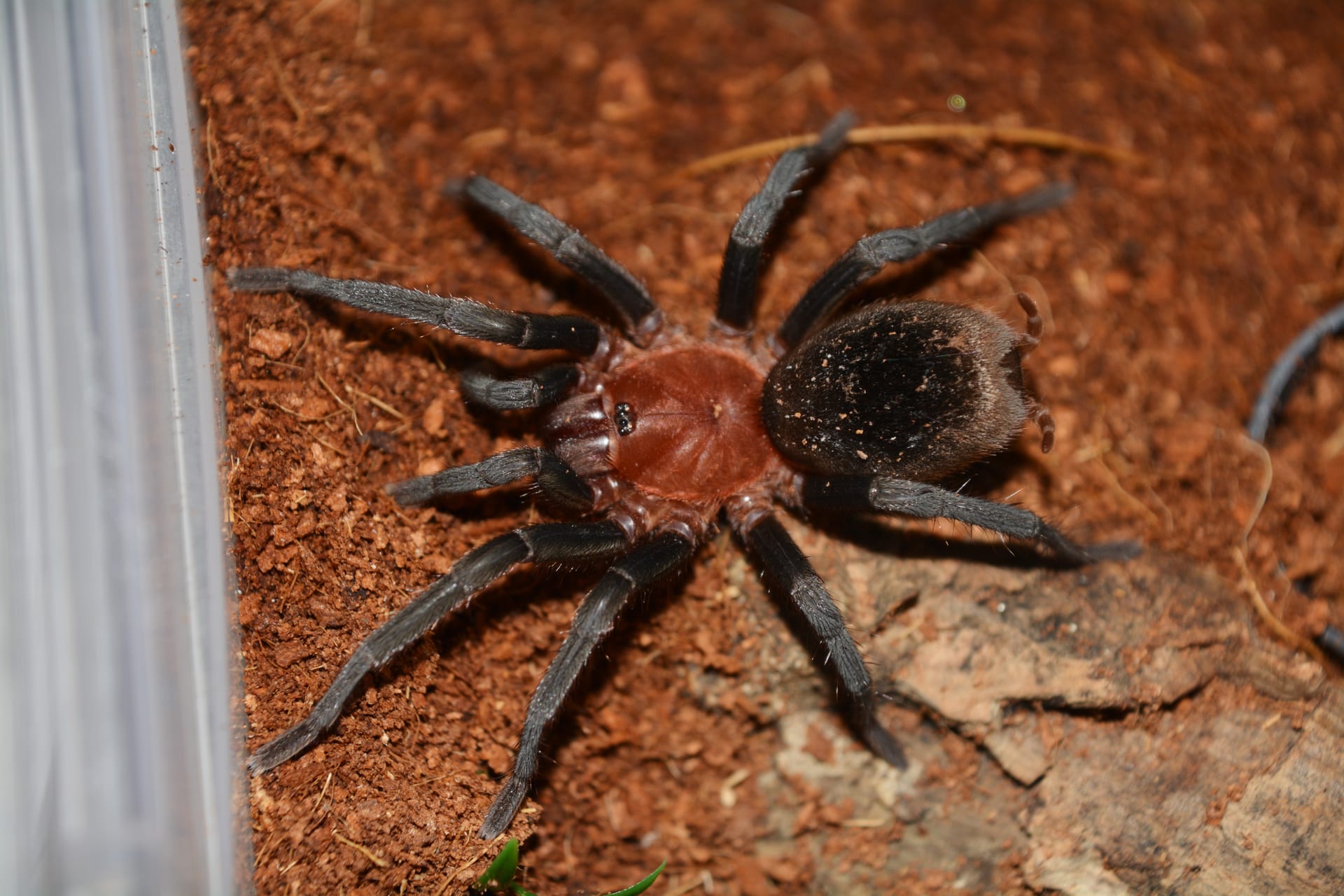
Source: Wikimedia Commons
Brazilian Redhead
BeginnerBumba horrida
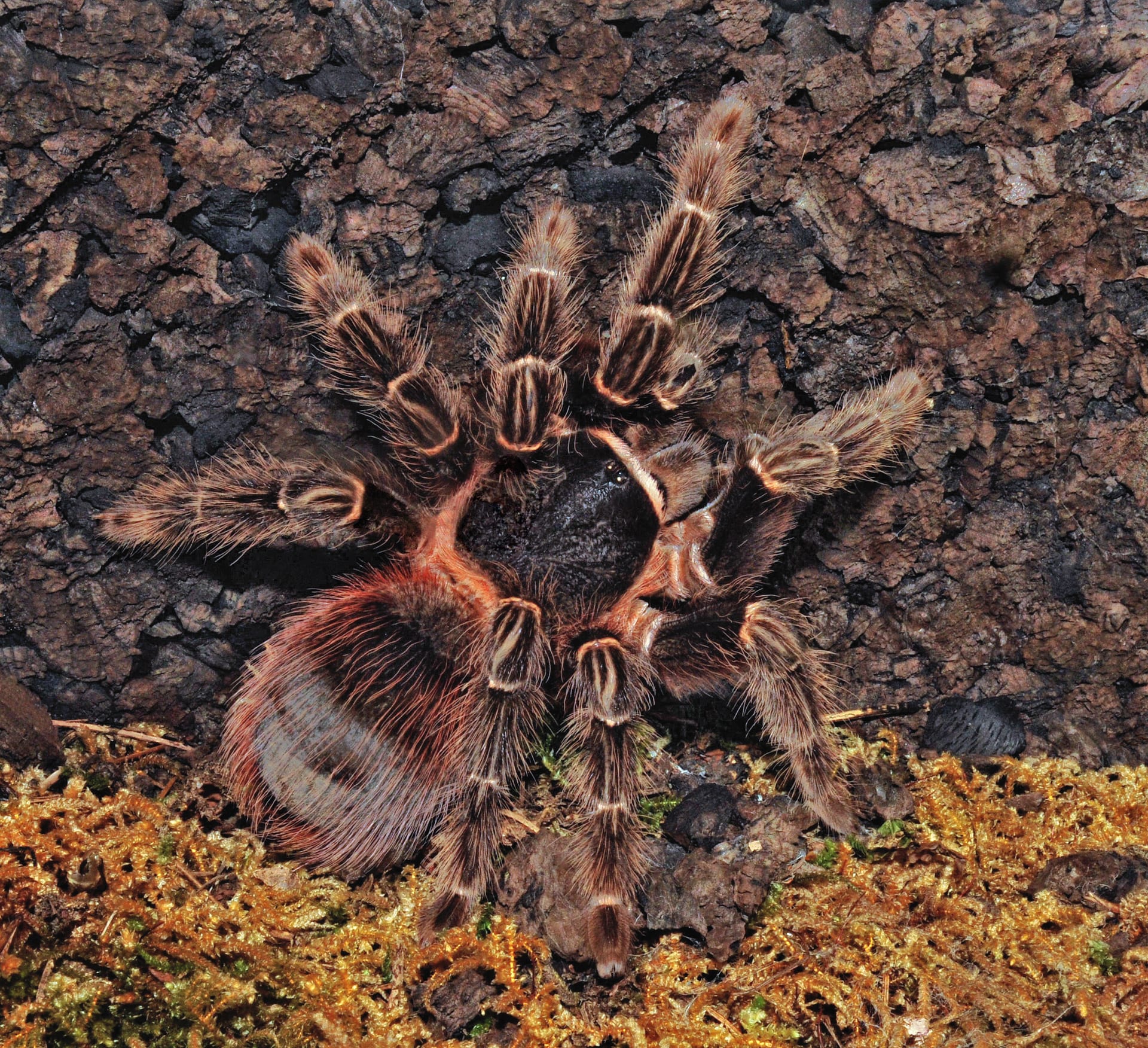
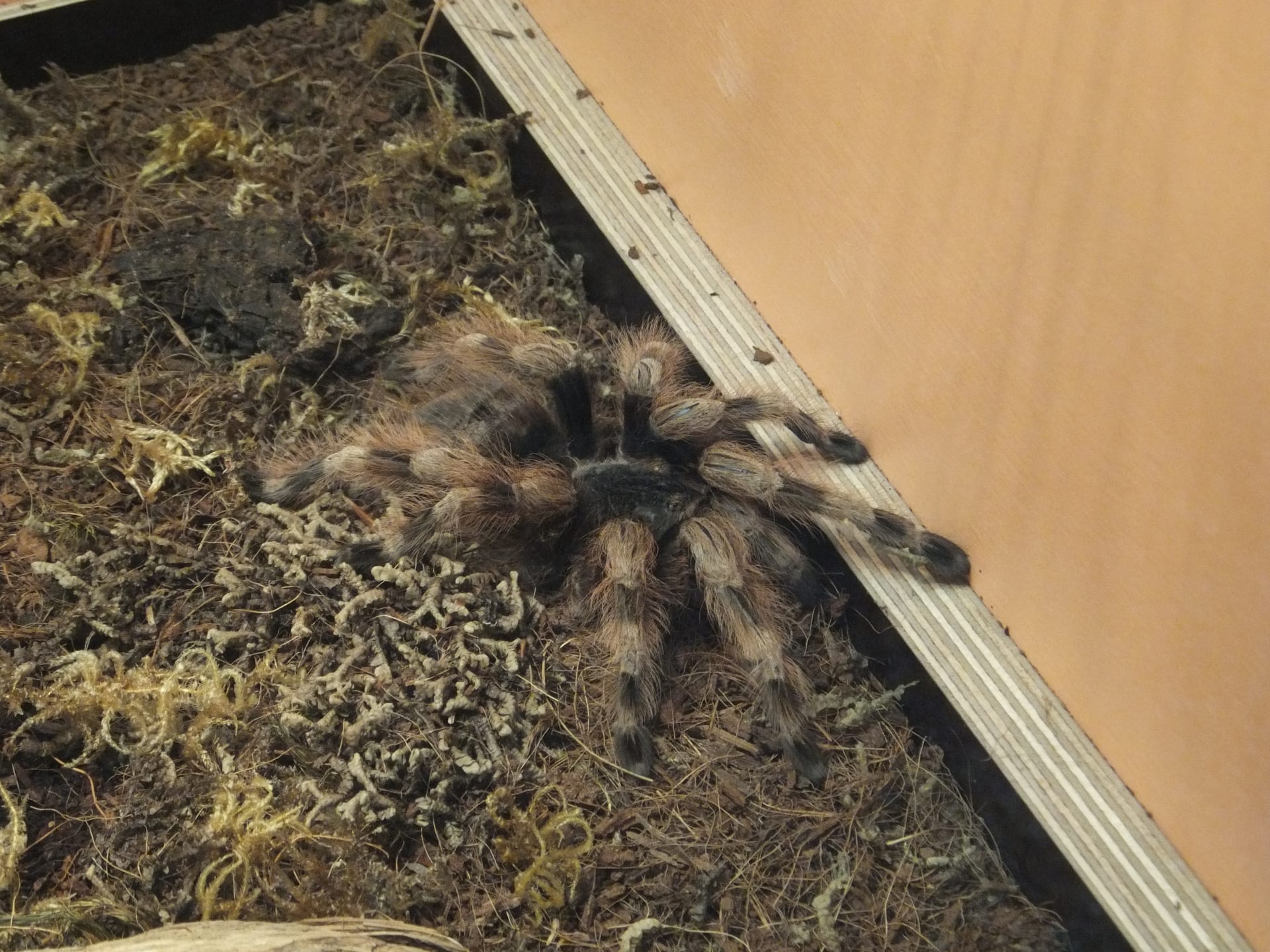
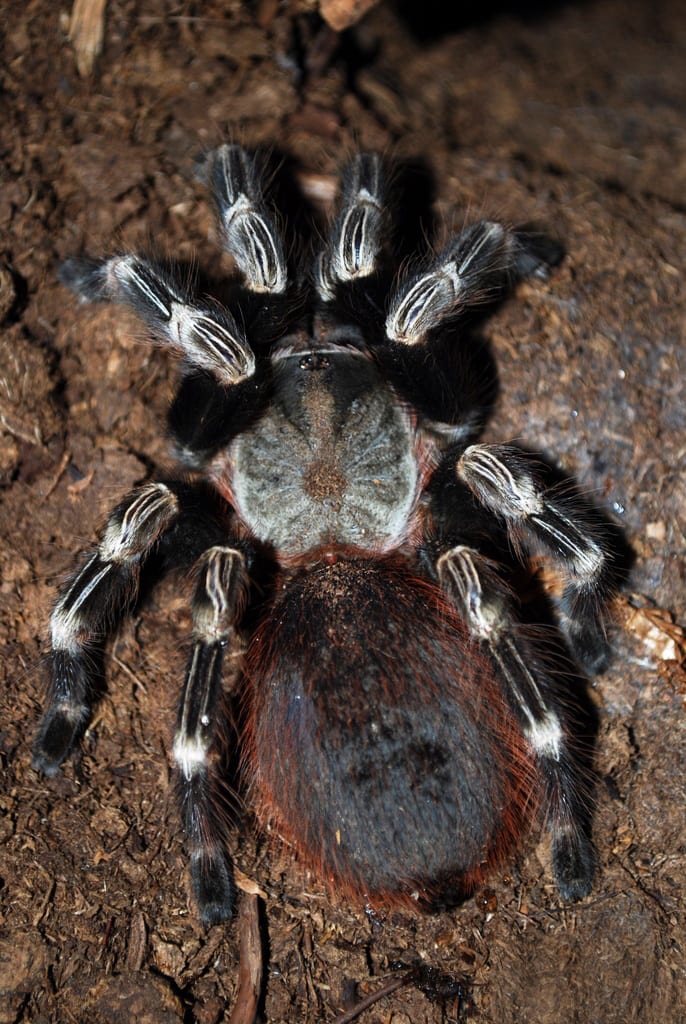
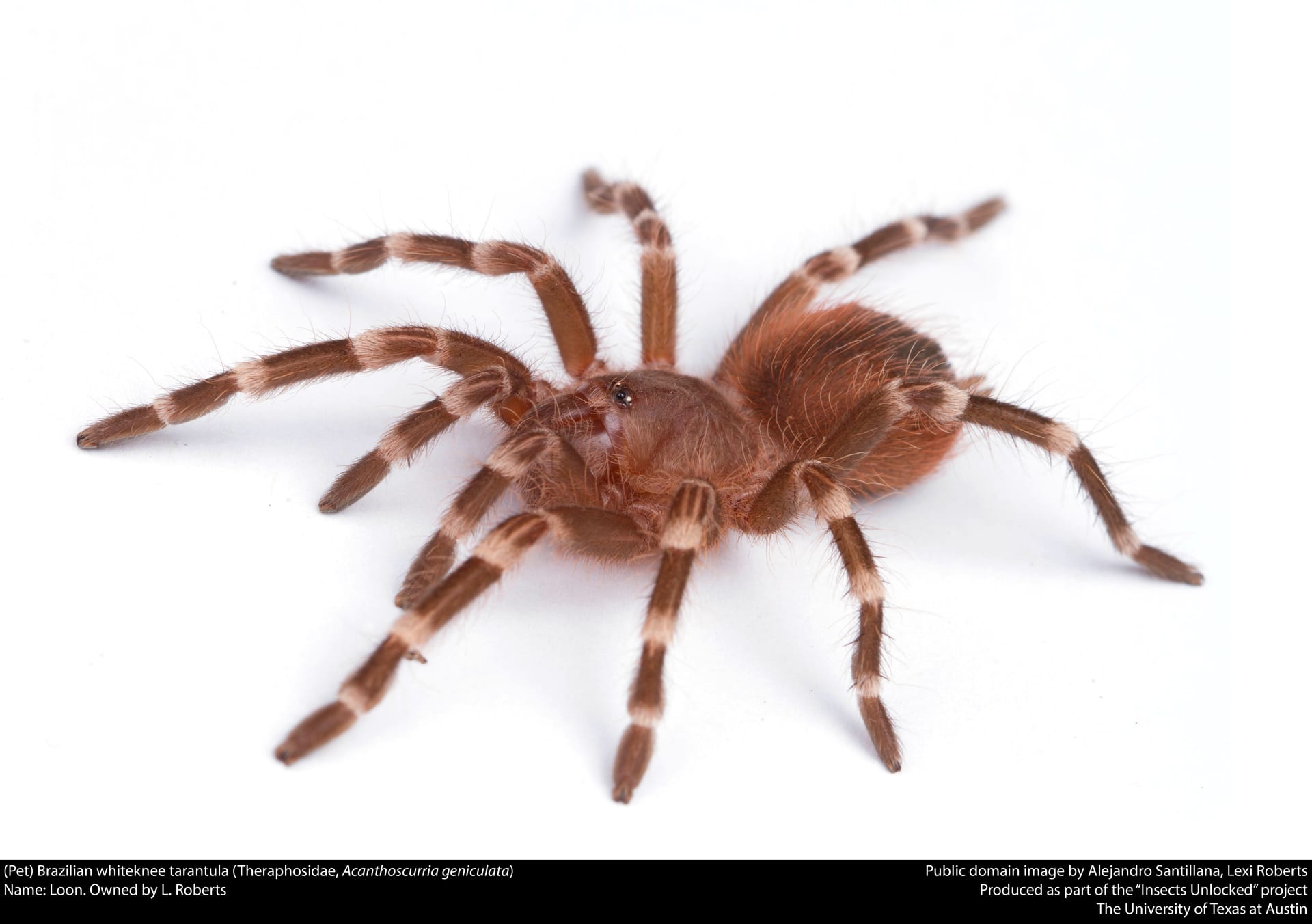
A medium-sized species from northern Brazil whose deep red carapace and long, slender legs give it an unusual, un-tarantula-like build. Leg span is 12-13cm. It is hardy and docile, and is treated as a beginner species.
Difficulty
Beginner
Temperature
22〜26℃
Lifespan
Females 12-15 years / males 3-4 years
Size
12-13cm leg span
Humidity
70〜80%
Diet
Live insects such as crickets and roaches
About
Bumba horrida is a medium-sized tarantula distributed from the Amazon region of northern Brazil into Venezuela, with a leg span of about 12-13 cm. Its deep red carapace combined with long, slender, tapering legs gives it a build closer to an ordinary spider than to a typical tarantula. The genus was first described as Iracema, but that name was already in use for a fish, so it became Maraca, which was also preoccupied, and in 2014 it was renamed Bumba. Its home range has a pronounced dry season of several months followed by a rainy one, and in captivity it copes with both dry and damp conditions. Given deep substrate it digs readily, and spiderlings may seal the burrow entrance and stay out of sight for months, which should not be dug up. It is skittish and bolts into its burrow when disturbed, but spends more time on the surface as it grows. Growth is fairly slow.
Source: Wikipedia (CC BY-SA 4.0)
Lifespan of the Brazilian Redhead
The Brazilian Redhead lives Females 12-15 years / males 3-4 years.
Size of the Brazilian Redhead
The Brazilian Redhead grows to 12-13cm leg span.
Temperature & humidity for the Brazilian Redhead
The ideal temperature for the Brazilian Redhead is 22〜26℃. Ideal humidity is 70〜80%.
Basic Info
Origin
Northern Brazil (Amazonas, Roraima and elsewhere) and Venezuela
Lifespan
Care Specifications
PeacefulSolitary
Sources: The Spider Shop: Bumba horrida / Tom's Big Spiders: Bumba cabocla Husbandry / Wikipedia: Bumba horrida / Tarantupedia: Bumba horrida / GBIF
References & Sources
Edited & verified by: BreederDirect editorial team
The taxonomic, regulatory, and husbandry data on this page are compiled and verified against the authoritative primary sources below.
Taxonomy & Authority
Accepted name: Bumba horrida (Schmidt, 1994)
Synonyms: Bumba cabocla, Maraca cabocla, Iracema cabocla, Paraphysa horrida
Authority databases: GBIF
Nomenclature follows global taxonomic authority databases.
Regulations & Conservation Status
Not CITES-listed
Sources: CITES Appendices (species not listed)
Regulations may change. Always verify the latest information with the relevant authorities.
Brazilian Redhead Listings
Loading latest listingsFind listings for this species