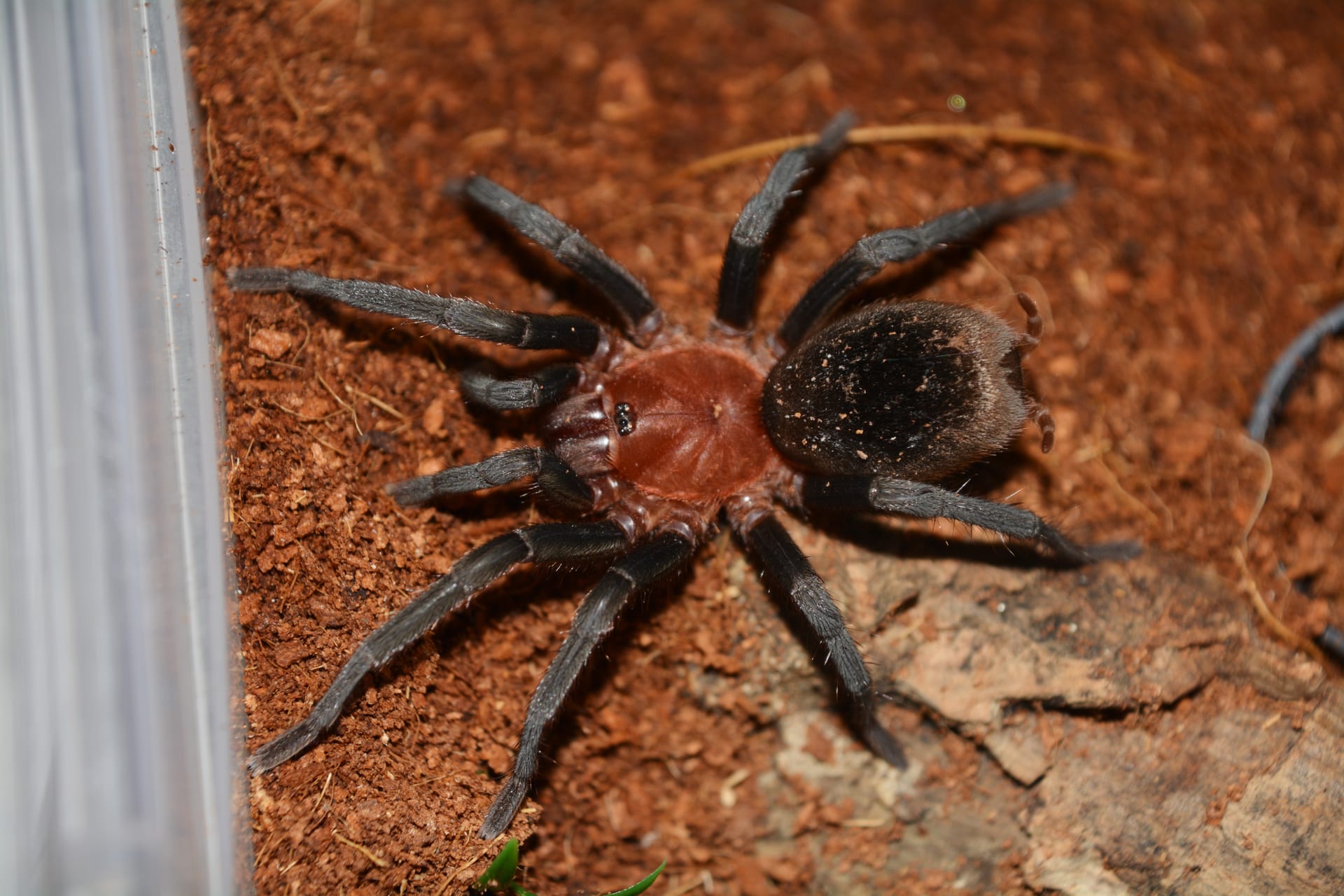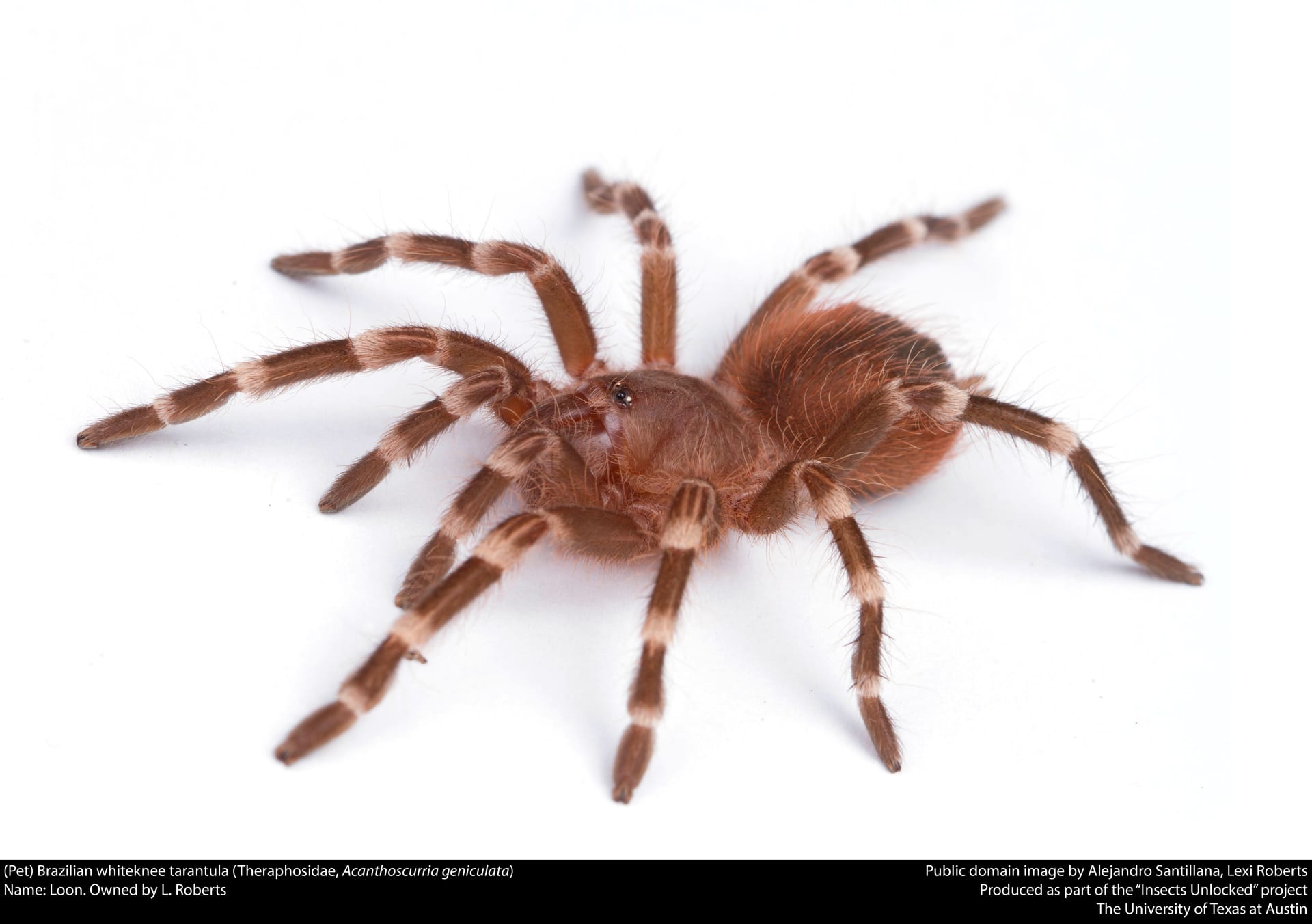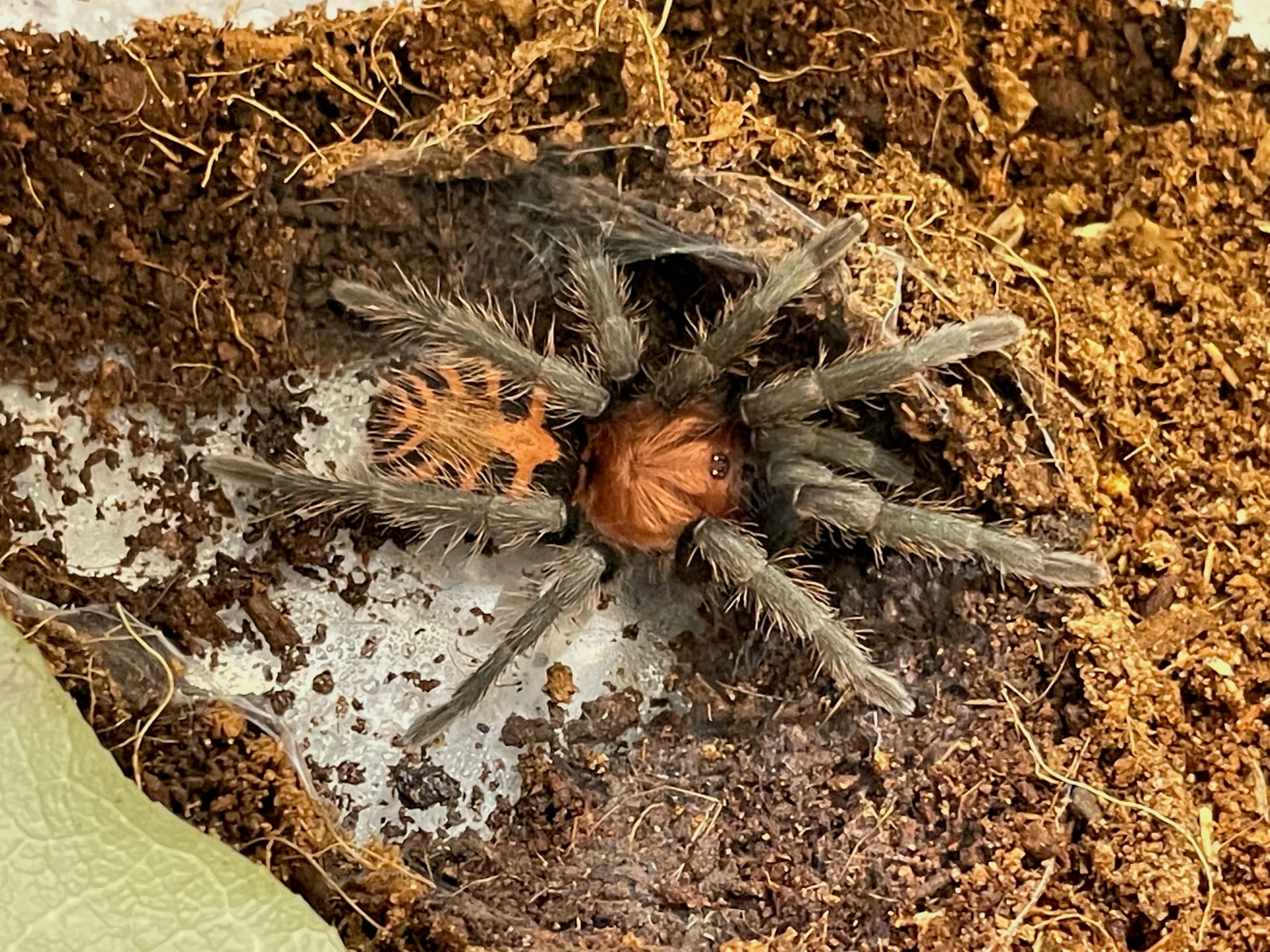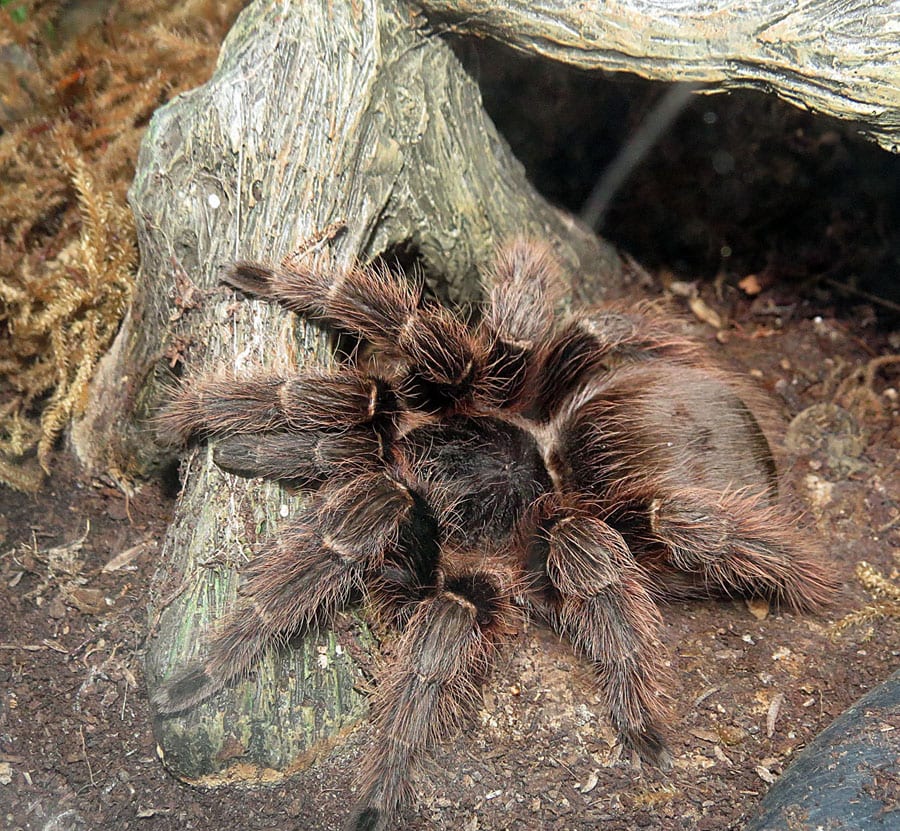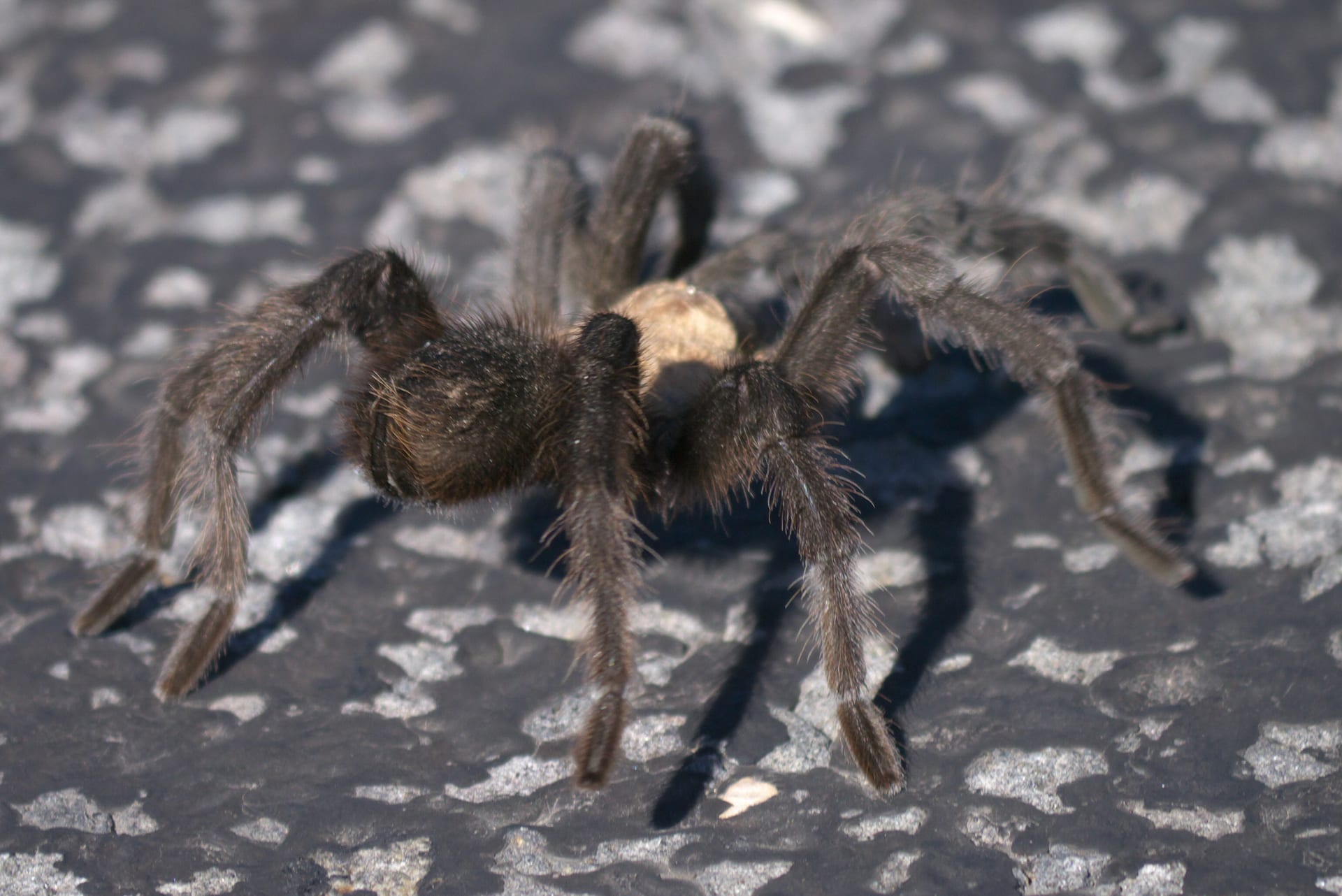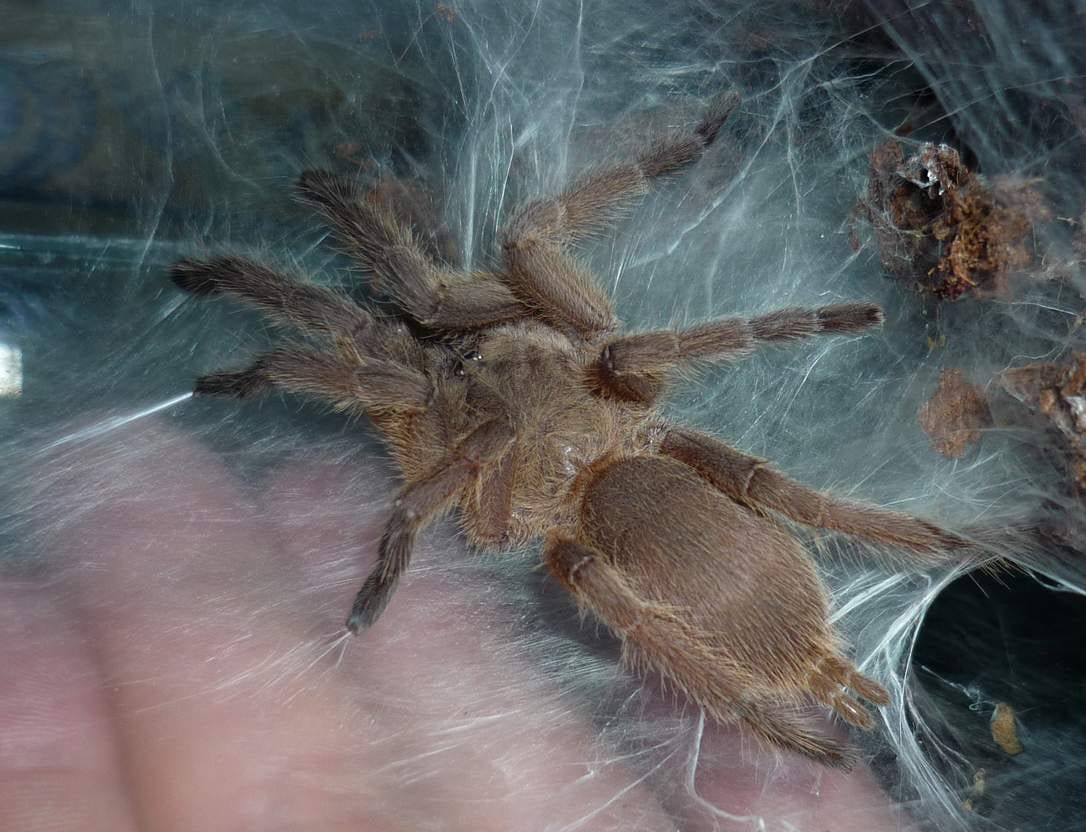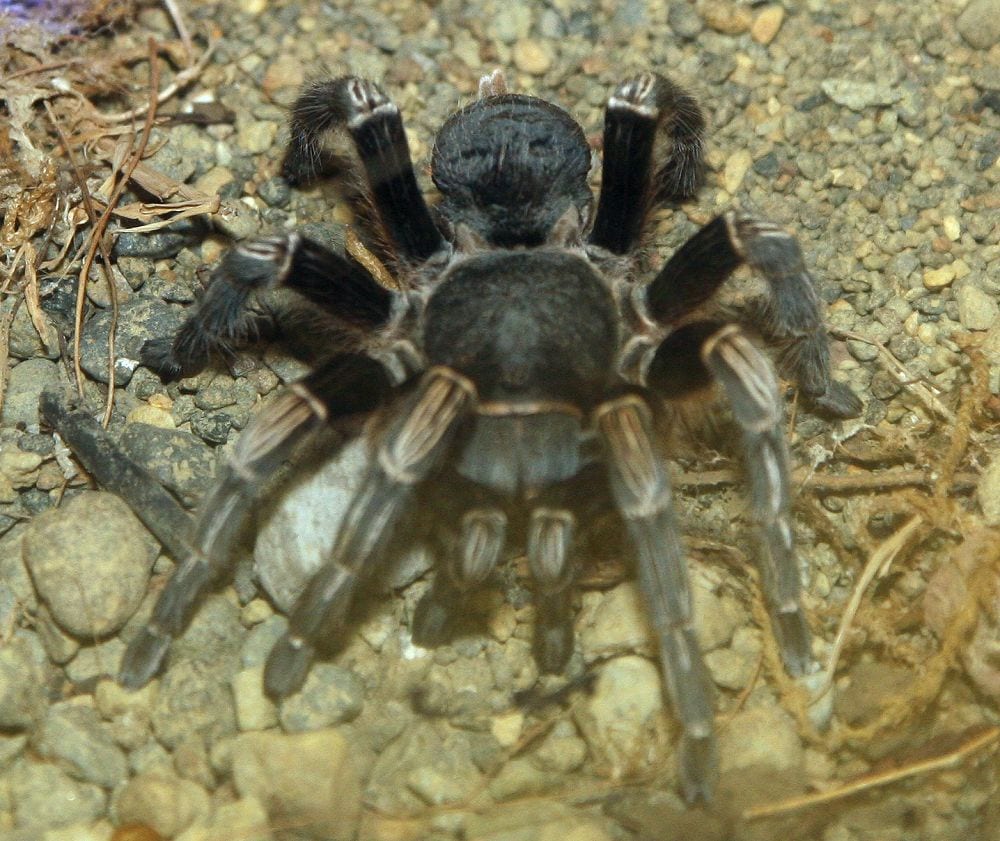
Source: Wikimedia Commons
Costa Rican Zebra Tarantula
BeginnerAphonopelma seemanni
A terrestrial tarantula from Central America, dark brown with white stripes at the leg joints. It digs a deep burrow and stays hidden. Calm and hardy, it keeps well on dry substrate at room temperature and is widely traded as a beginner species.
Difficulty
Beginner
Temperature
20〜24℃
Lifespan
Females up to about 20 years; males 5-10 years, about one year after maturing
Size
10-15cm leg span (body about 9cm)
Diet
Live insects such as crickets and roaches
About
Aphonopelma seemanni is a terrestrial tarantula found mainly in western Costa Rica and also in Honduras and Nicaragua. It is dark brown with white stripes near the leg joints, the pattern that gives it its common name; a brown colour form also exists. It lives in open, semiarid scrubland and digs deep burrows that buffer it against daytime heat and night-time cold, and is often found in large aggregations. Leg span is 10-15 cm; females live around 20 years while males survive only about a year after maturing. In captivity the key is 10-15 cm or more of substrate so it can burrow, with room temperature of 20-24 C, substrate kept on the dry side and a permanent water dish. It has urticating hairs but rarely kicks them, retreating into its burrow instead. It moves fast, so guard against escapes.
Source: Wikipedia (CC BY-SA 4.0)
Lifespan of the Costa Rican Zebra Tarantula
The Costa Rican Zebra Tarantula lives Females up to about 20 years; males 5-10 years, about one year after maturing.
Size of the Costa Rican Zebra Tarantula
The Costa Rican Zebra Tarantula grows to 10-15cm leg span (body about 9cm).
Temperature & humidity for the Costa Rican Zebra Tarantula
The ideal temperature for the Costa Rican Zebra Tarantula is 20〜24℃.
Basic Info
Origin
Central America (western Costa Rica, Honduras, Nicaragua)
Lifespan
Care Specifications
PeacefulSolitaryBreeding: Hard
Sources: The Tarantula Collective: Aphonopelma seemanni / Wikipedia / GBIF
References & Sources
Edited & verified by: BreederDirect editorial team
The taxonomic, regulatory, and husbandry data on this page are compiled and verified against the authoritative primary sources below.
Taxonomy & Authority
Accepted name: Aphonopelma seemanni (F. O. Pickard-Cambridge, 1897)
Authority databases: GBIF
Nomenclature follows global taxonomic authority databases.
Regulations & Conservation Status
Not CITES-listed
Sources: CITES Appendices (species not listed)
Regulations may change. Always verify the latest information with the relevant authorities.
Costa Rican Zebra Tarantula Listings
Loading latest listingsFind listings for this species