Source: Wikimedia Commons
Guatemalan Tiger Rump
IntermediateDavus pentaloris
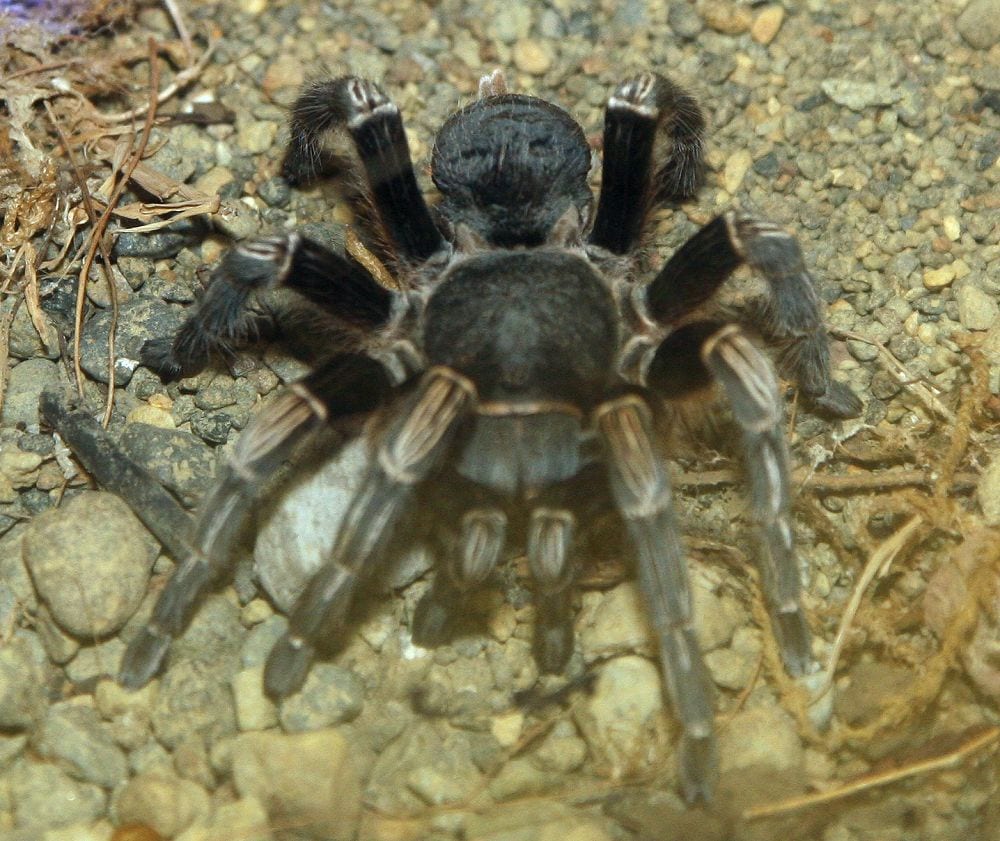
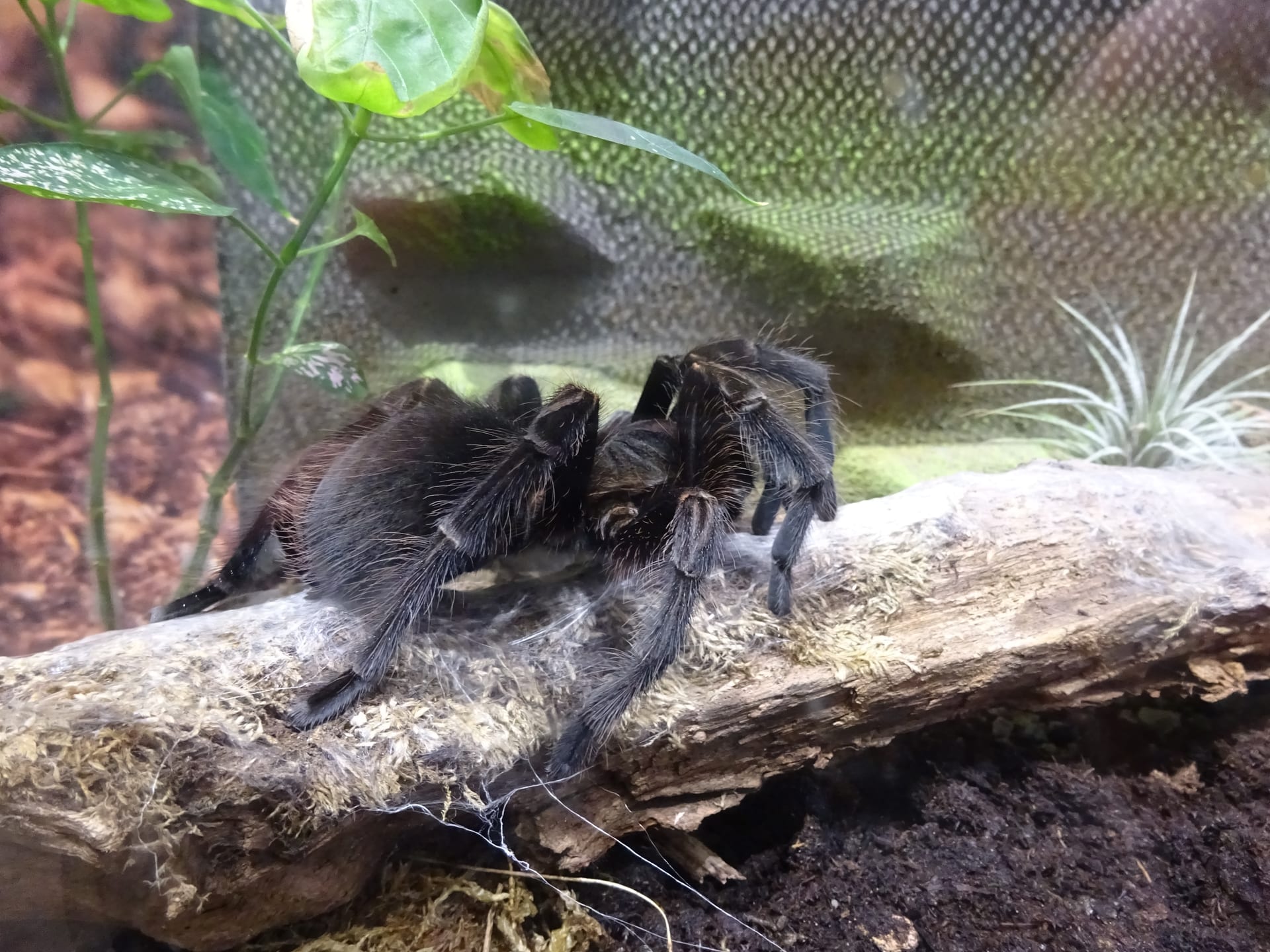
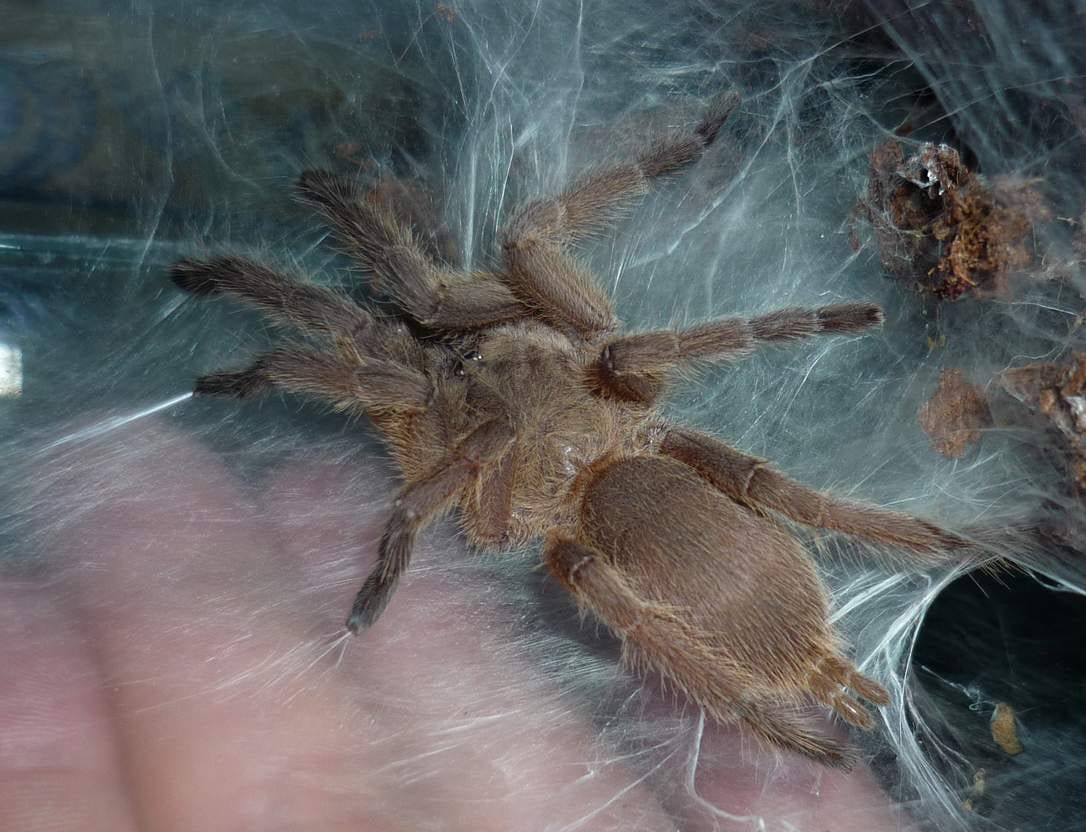
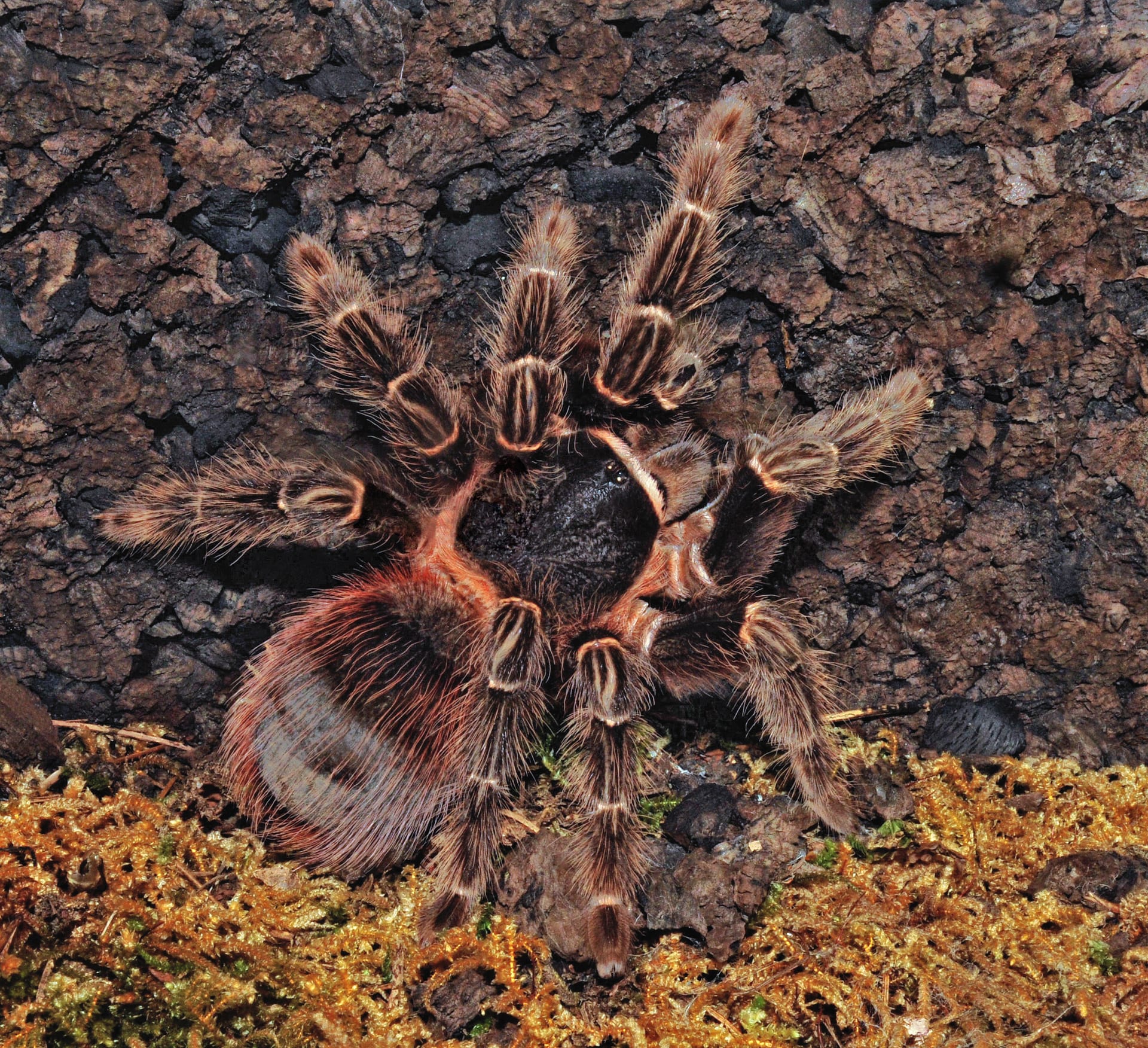
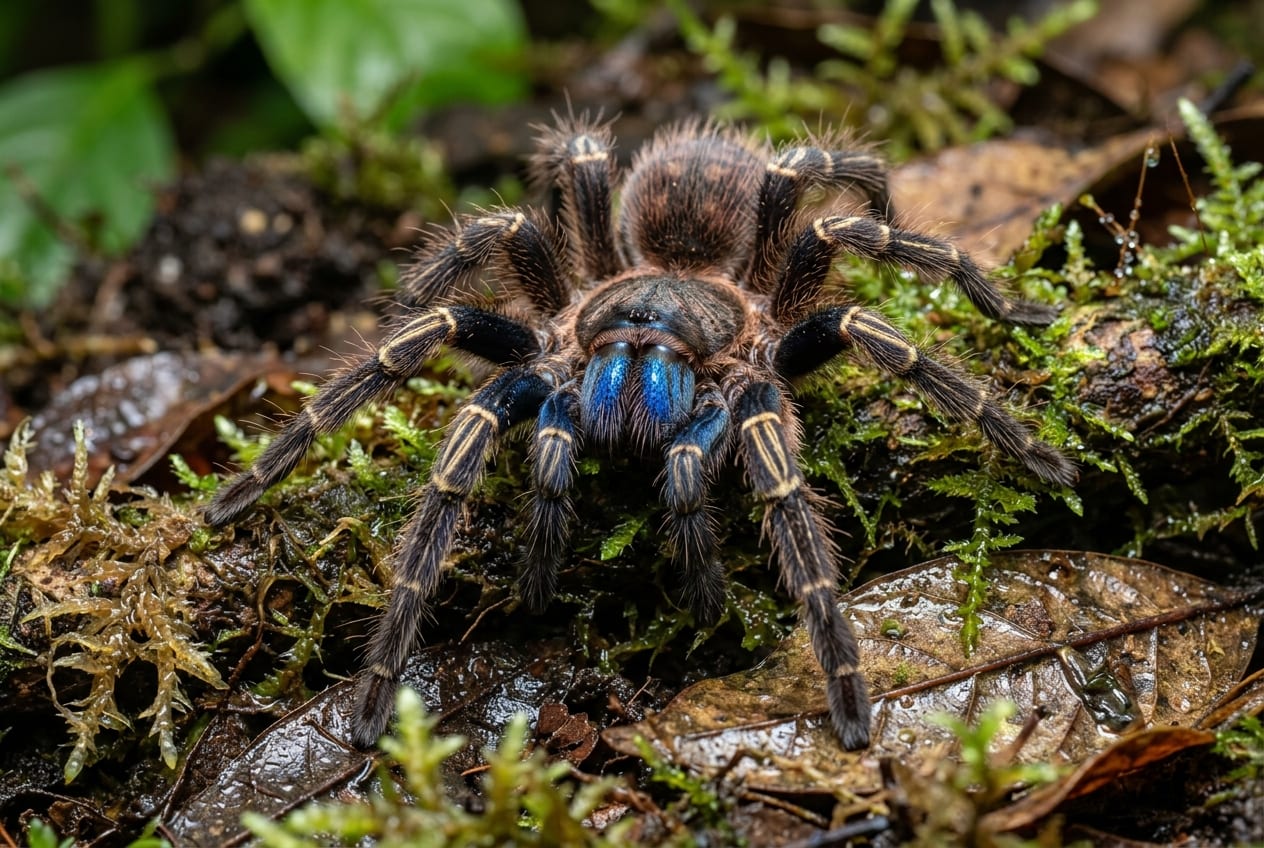
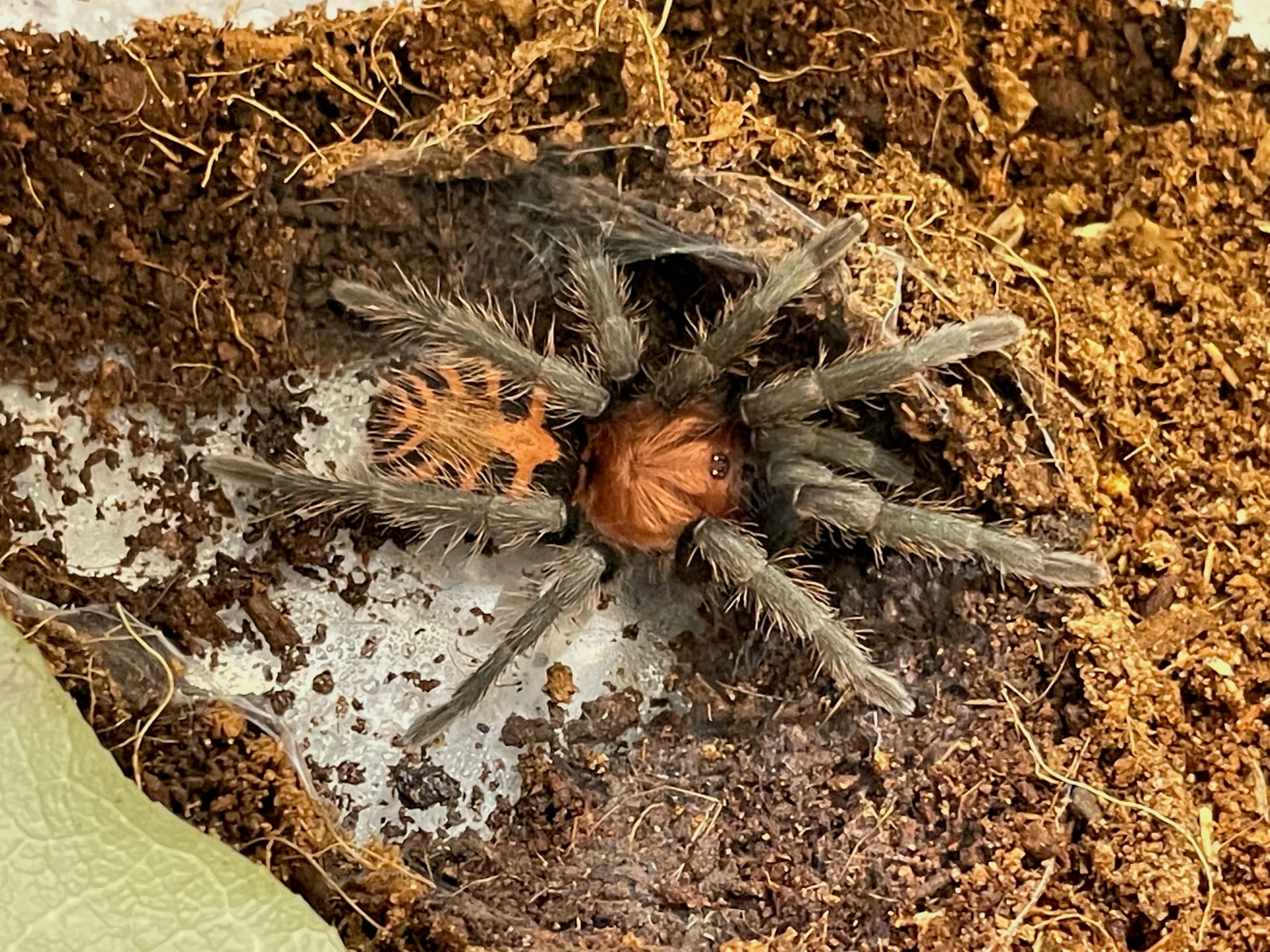
A terrestrial tarantula from Central America whose coppery carapace, black legs and orange-striped black abdomen suggest a tiger. With a leg span of 10-12cm it grows fast, and instead of digging deeply it webs heavily around its hide.
Difficulty
Intermediate
Temperature
22〜28℃
Lifespan
Females 8-11 years, males 2-4 years
Size
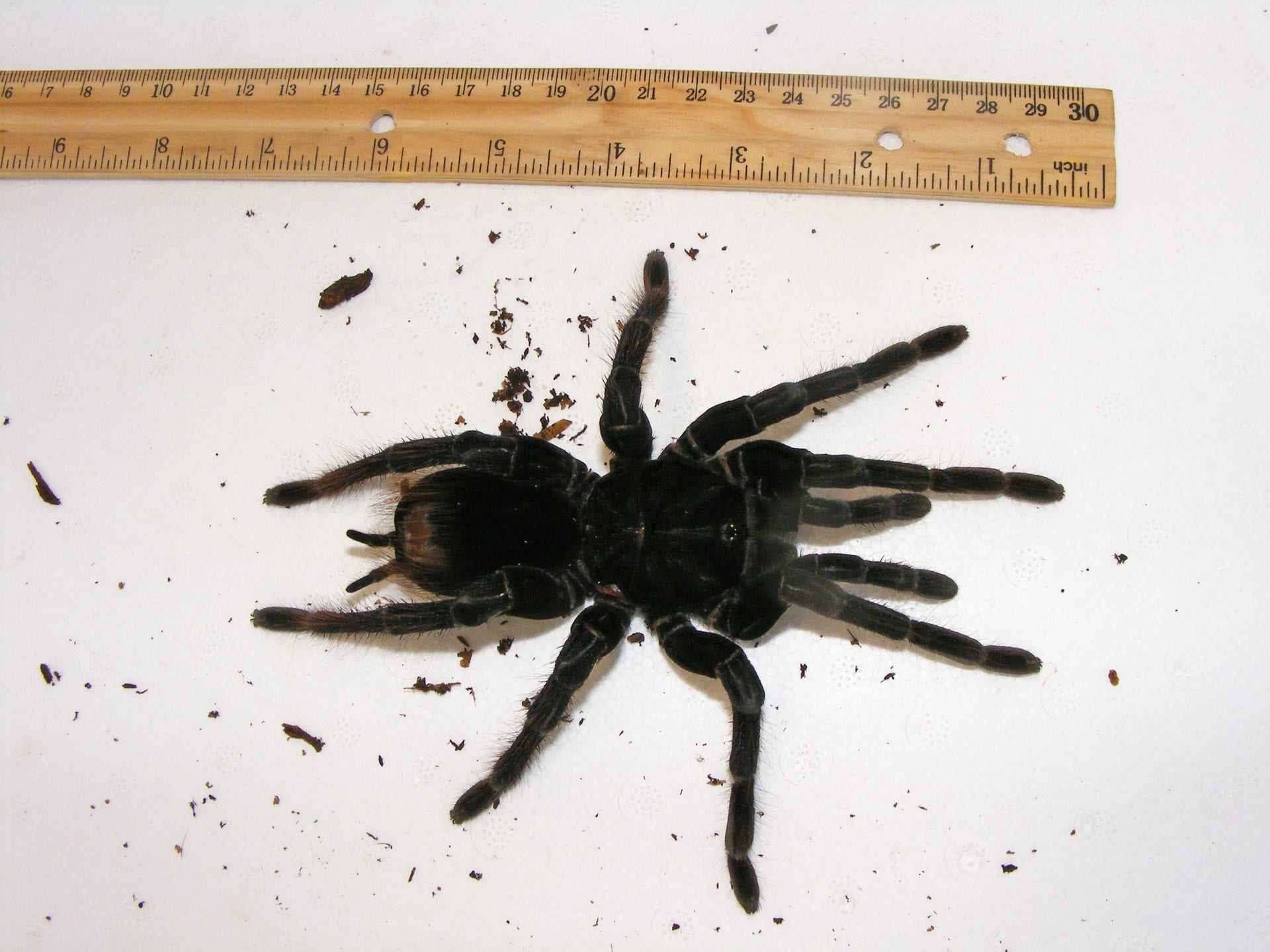
10-12cm leg span (body about 5cm)
Humidity
60〜65%
Diet
Live insects such as crickets and roaches
About
Davus pentaloris is a terrestrial tarantula of the lowland forests of southern Mexico, Guatemala and El Salvador. Its coppery to orange carapace, black legs and orange-striped black abdomen give it the tiger-like look behind its common name, though the number and vividness of the stripes vary greatly between individuals. It is an opportunistic ground dweller that uses leaf litter, logs and abandoned burrows rather than digging deeply, and instead webs heavily around its retreat. In captivity 5-8 cm of substrate and a hide are enough, and it does well at 23-25 C. Growth is fast and it matures within a few years. It is not defensive but it is quick, bolting suddenly when disturbed, so take care during maintenance. It has urticating hairs but seldom kicks them. It breeds readily and has been established in captivity since the 1980s.
Source: Wikipedia (CC BY-SA 4.0)
Lifespan of the Guatemalan Tiger Rump
The Guatemalan Tiger Rump lives Females 8-11 years, males 2-4 years.
Size of the Guatemalan Tiger Rump
The Guatemalan Tiger Rump grows to 10-12cm leg span (body about 5cm).
Temperature & humidity for the Guatemalan Tiger Rump
The ideal temperature for the Guatemalan Tiger Rump is 22〜28℃. Ideal humidity is 60〜65%.
Basic Info
Origin
Southern Mexico, Guatemala and El Salvador
Lifespan
Females 8-11 years, males 2-4 years
Care Specifications
PeacefulSolitaryBreeding: Easy
Sources: The Tarantula Collective: Davus pentaloris / The Spider Shop: Davus pentaloris / Wikipedia: Davus pentaloris / Tarantupedia: Davus pentaloris / GBIF
References & Sources
Edited & verified by: BreederDirect editorial team
The taxonomic, regulatory, and husbandry data on this page are compiled and verified against the authoritative primary sources below.
Taxonomy & Authority
Accepted name: Davus pentaloris (Simon, 1888)
Synonyms: Crypsidromus pentaloris, Hapalopus pentaloris, Davus mozinno
Authority databases: GBIF
Nomenclature follows global taxonomic authority databases.
Regulations & Conservation Status
Not CITES-listed
Sources: CITES Appendices (species not listed)
Regulations may change. Always verify the latest information with the relevant authorities.
Guatemalan Tiger Rump Listings
Loading latest listingsFind listings for this species