Tiger Shovelnose Catfish Care Guide | Tank Setup, Feeding, and Tank Mates for Large Catfish
Tiger Shovelnose Catfish (Pseudoplatystoma) care guide from South America's large catfish. Detailed explanation of required tank size, carnivorous diet management, compatible fish species, and growth management.
Key Takeaways
Tiger Shovelnose Catfish (Pseudoplatystoma) care guide from South America's large catfish. Detailed explanation of required tank size, carnivorous diet management, compatible fish species, and growth management.
About Tiger Shovelnose Catfish
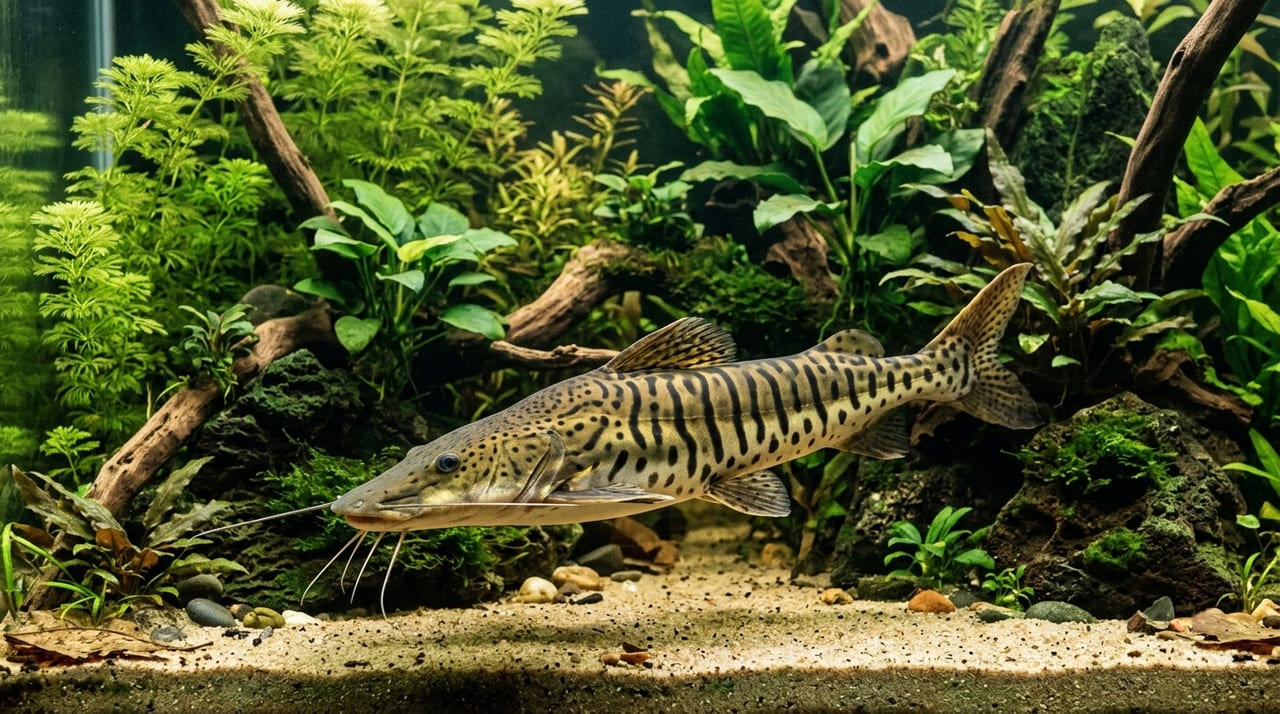
Tiger Shovelnose Catfish (scientific name: Pseudoplatystoma fasciatum and other species in circulation) are carnivorous catfish inhabiting large rivers in the Amazon basin of South America. Their most distinctive features are their dark and tan stripes reminiscent of a tiger, and their snout (rostrum) that is shovel-shaped, flattened, and protrudes broadly—they are also known by the name "Tiger Shovelnose Catfish" in English-speaking regions.
✍️
BreederDirect Editorial
The BreederDirect editorial team specializes in care information for animals, covering veterinary care and breeding to deliver beginner-friendly guides.
Find Tropical Fish on BreederDirect
Buy directly from verified breeders
Browse Related Listings
Find Tropical Fish listings related to this article on BreederDirect. Buy directly from verified breeders.
Adult specimens grow to large sizes exceeding 60–100 cm in total length. Most fish in circulation at shops are juveniles (around 10–20 cm), but their growth is rapid, and under proper conditions with adequate feeding, it is not uncommon for them to reach 40–50 cm in less than a year. Before purchase, firmly accepting the reality that you will be caring for a fish that ultimately reaches close to one meter is the first step to successful long-term care.
Related species such as P. tigrinum (Tiger Catfish) are also imported at times, and their care methods are the same. These fish are positioned as apex predators in the Amazon River ecosystem, and their carnivorous nature remains unchanged even under captive conditions.
Required Tank and Equipment
The tank to be the permanent home for adult specimens should be at minimum 150 cm in width, ideally 180 cm or larger. While it is possible to begin with a 90 cm tank during the juvenile stage, we recommend planning an early transition to a larger tank to minimize stress on the fish.
It is important to maximize the biological filtration capacity of your filter. Large carnivorous fish produce a large amount of waste, and filter performance is critical to maintaining stable water quality. The following combinations are commonly used:
Combination of hang-on filter + external filter: This classic setup ensures balanced physical and biological filtration and is easy to maintain.
Overflow-style tank: This allows the most stable water quality management in large tanks and is suited for those serious about keeping large fish.
Addition of sponge filters or internal filters: Using these as auxiliary sub-filters increases the surface area for bacterial colonization.
Fine sand or a bare bottom tank (without substrate) are easier-to-manage choices. With sand present, you can observe instinctive behaviors such as the fish burying its snout to search for prey; however, uneaten food and waste easily become buried in the sand and degrade water quality, making regular substrate cleaning essential.
Also, it is absolutely essential to secure the tank lid. Accidents in which large catfish, including Shovelnose catfish, jump out of the tank at night are frequently reported. Make sure to seal all gaps, including drainage holes and cable outlets.
Feeding and Diet Management
Tiger Shovelnose is a strictly carnivorous fish and actively preys on small- to medium-sized fish in the Amazon basin in the wild. Under captive conditions, feeding aligned with its dietary needs is fundamental to maintaining health.
Begin with frozen bloodworms, frozen krill, frozen smelt, and similar foods during the juvenile stage, and aim to switch to artificial pellets designed for large carnivorous fish (such as Carnivore) as early as possible. Accustoming juveniles to artificial feed from an early stage makes adult management significantly easier. Note that fish raised on live food alone may refuse artificial feed, requiring caution.
Once fully grown, it is ideal to make frozen smelt or marine-based fillet foods the primary diet. Live prey (goldfish, medaka, etc.) is effective for stress relief and inducing appetite; however, due to parasitic risk and nutritional imbalance, it cannot be recommended as a main food source.
Feeding guidelines are as follows:
Growth Stage
Feeding Frequency
Primary Foods
Juvenile (~20 cm)
1–2 times daily
Frozen bloodworms, krill, artificial pellets
Sub-adult (20–50 cm)
Once daily to once every 2 days
Frozen smelt, fillets, artificial pellets
Adult (50 cm+)
Once every 2–3 days
Frozen smelt, artificial pellets
Remove any uneaten food the same day. Leftover food from large fish causes rapid water quality deterioration.
Water Quality and Temperature Management
Tiger Shovelnose are adapted to the slightly acidic to neutral, soft-water environment of the Amazon River. Water parameters should be maintained as follows:
Temperature: 26–30 °C (a cooling device is necessary if summer temperatures exceed 32 °C)
pH: 6.0–7.5
Hardness: Soft water to moderately hard water
Perform water changes regularly, aiming for 1/4 to 1/3 of the tank volume weekly. Nitrate accumulates readily in large carnivorous fish tanks, and neglecting changes results in decreased appetite and surface sores. Cleaning the substrate during water changes allows efficient maintenance.
If you observe the fish directing its mouth toward the water surface or abnormal buoyancy, these are signs of oxygen depletion or water quality deterioration. Promptly increase aeration and perform a water change, and if necessary, use a water test kit to check ammonia, nitrite, and nitrate levels.
Considerations for Tank Mates
Due to their strong carnivorous nature—"anything that fits in the mouth gets eaten"—housing Tiger Shovelnose with tank mates is principally limited to fish of equal or larger size. Significantly smaller fish are at risk of predation.
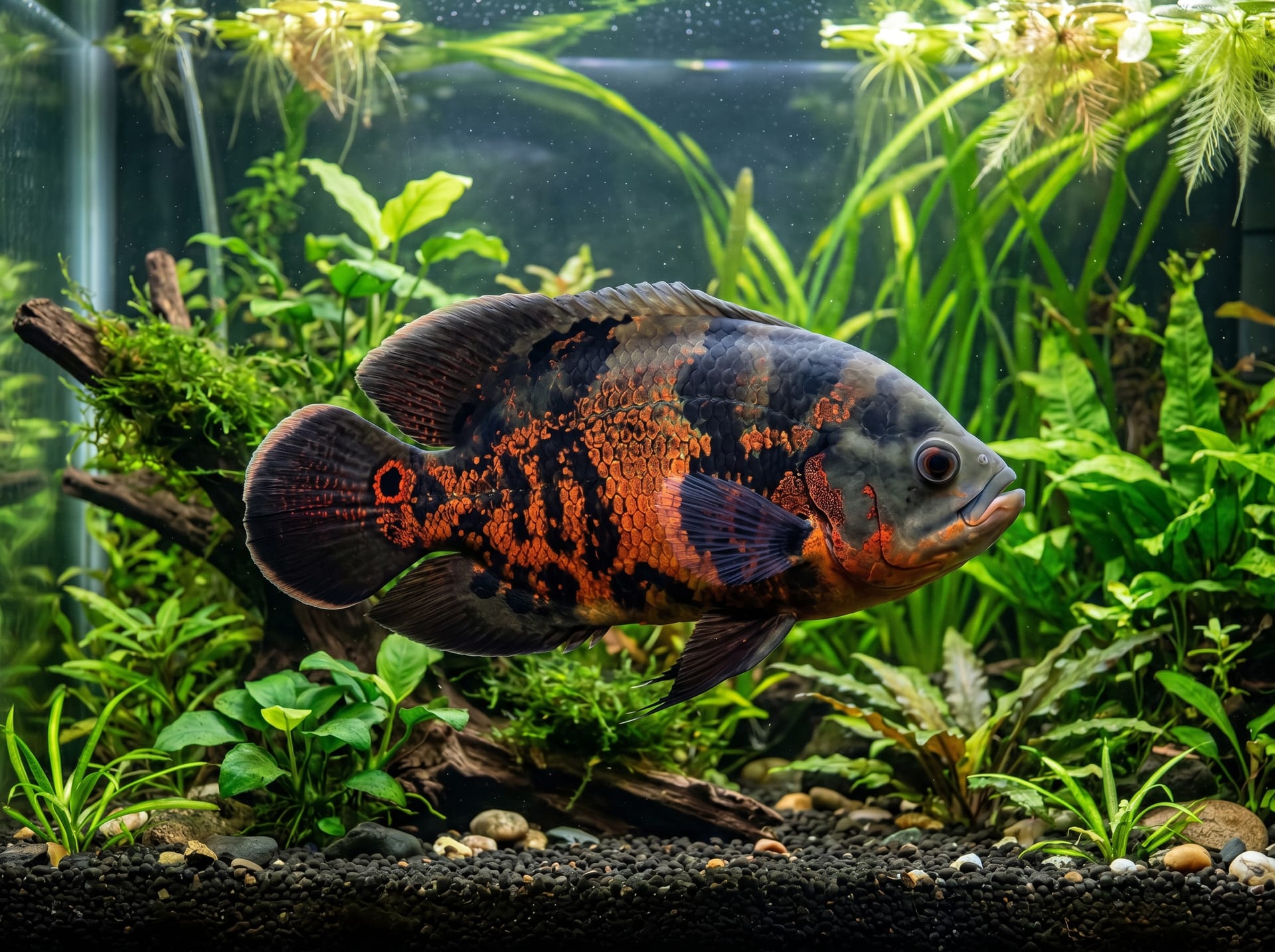
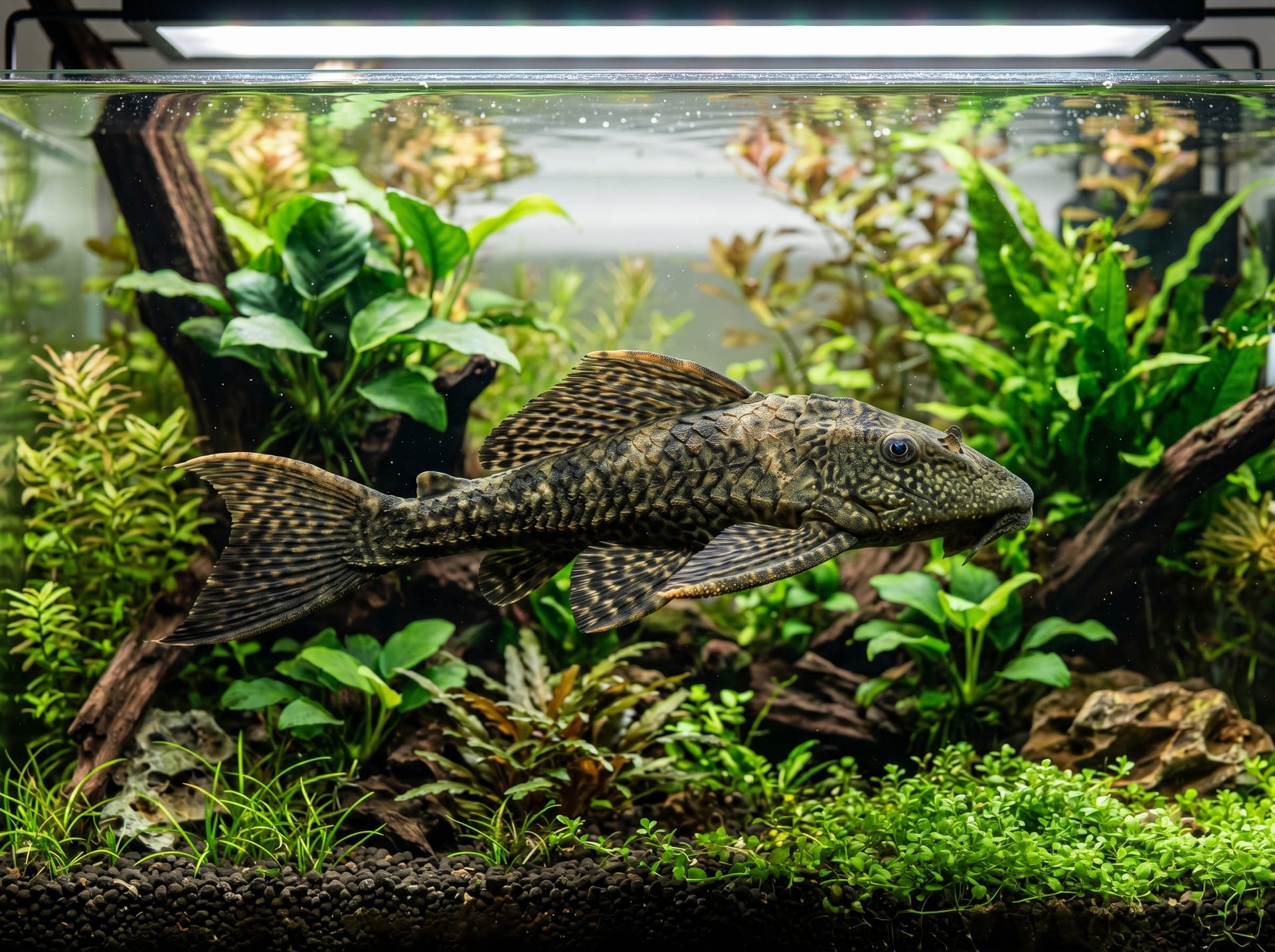
Fish species with successful co-housing records include gar species, large plecos (such as Sailfin plecos), Oscars, and large pacu species. However, even these fish tend to develop size differences while juveniles or young adults, so constant attention to size balance is necessary.
Territorial disputes may occur when housing the same or related species together. Use large driftwood or rock arrangements to provide each fish with its own secure space. If tank size is limited, solitary care is safest.
Success in Long-Term Care
Tiger Shovelnose Catfish are reported to live 10–15 years or longer under proper conditions. Because these are fish you will care for over a long period, daily observation and early intervention are essential.
The key indicator for health checks is changes in appetite. Healthy individuals respond quickly when food is added; however, if appetite decreases or the fish stays still at the bottom, first check water quality and temperature. Cloudiness, sores, or hemorrhagic spots on the body surface may indicate bacterial infection, and early isolation and medicinal treatment improve recovery rates.
It is important to establish a long-term plan before undertaking this care, including the maintenance costs of a large tank and the inconvenience of future moves. When acquiring juveniles directly from breeders, checking the size and housing conditions of the parents makes it easier to envision the adult form. With their striking body shape and distinctive presence, Tiger Shovelnose Catfish are a species that allows you to fully experience the rewards of keeping large fish when approached with adequate equipment and long-term commitment.