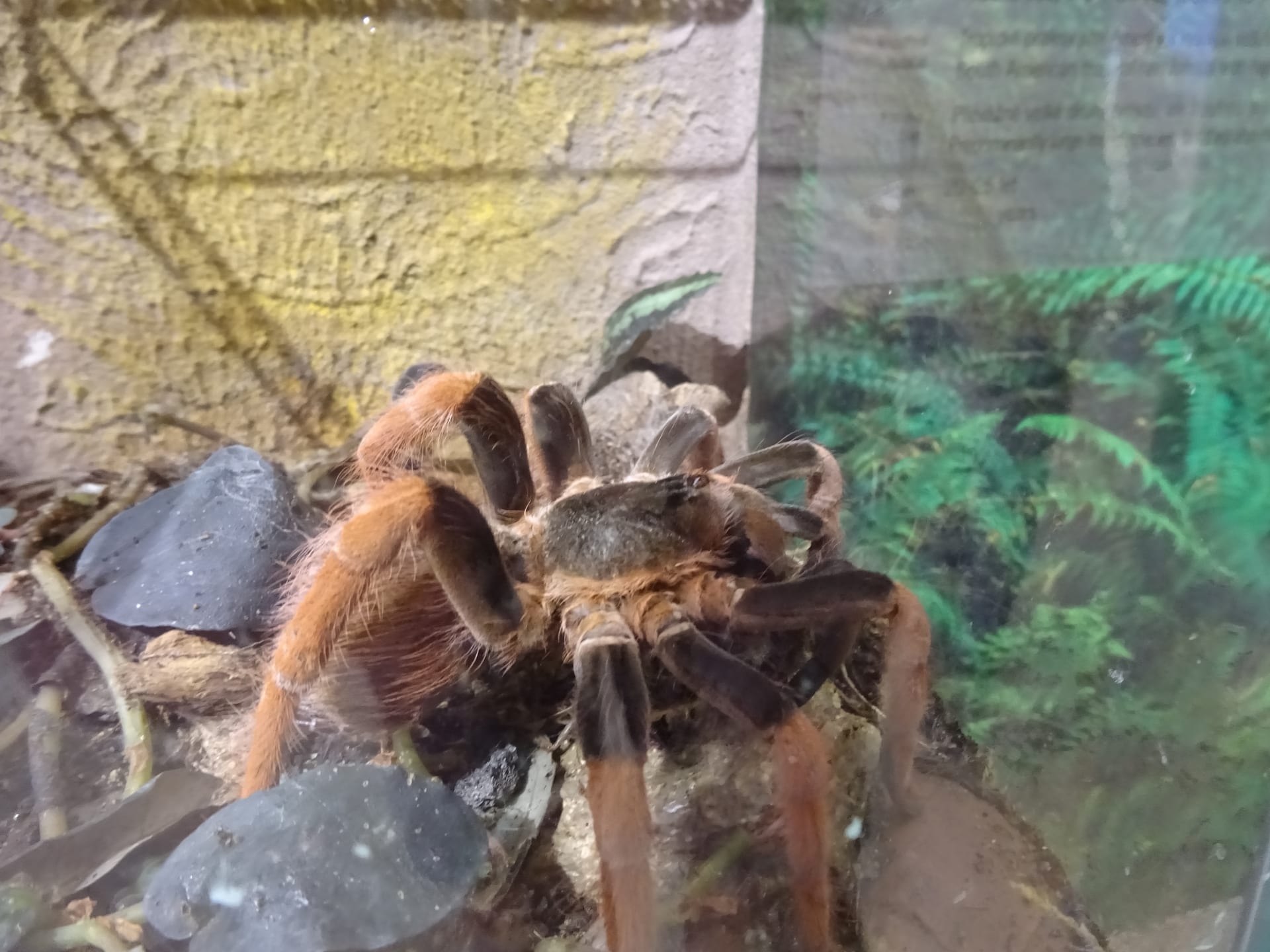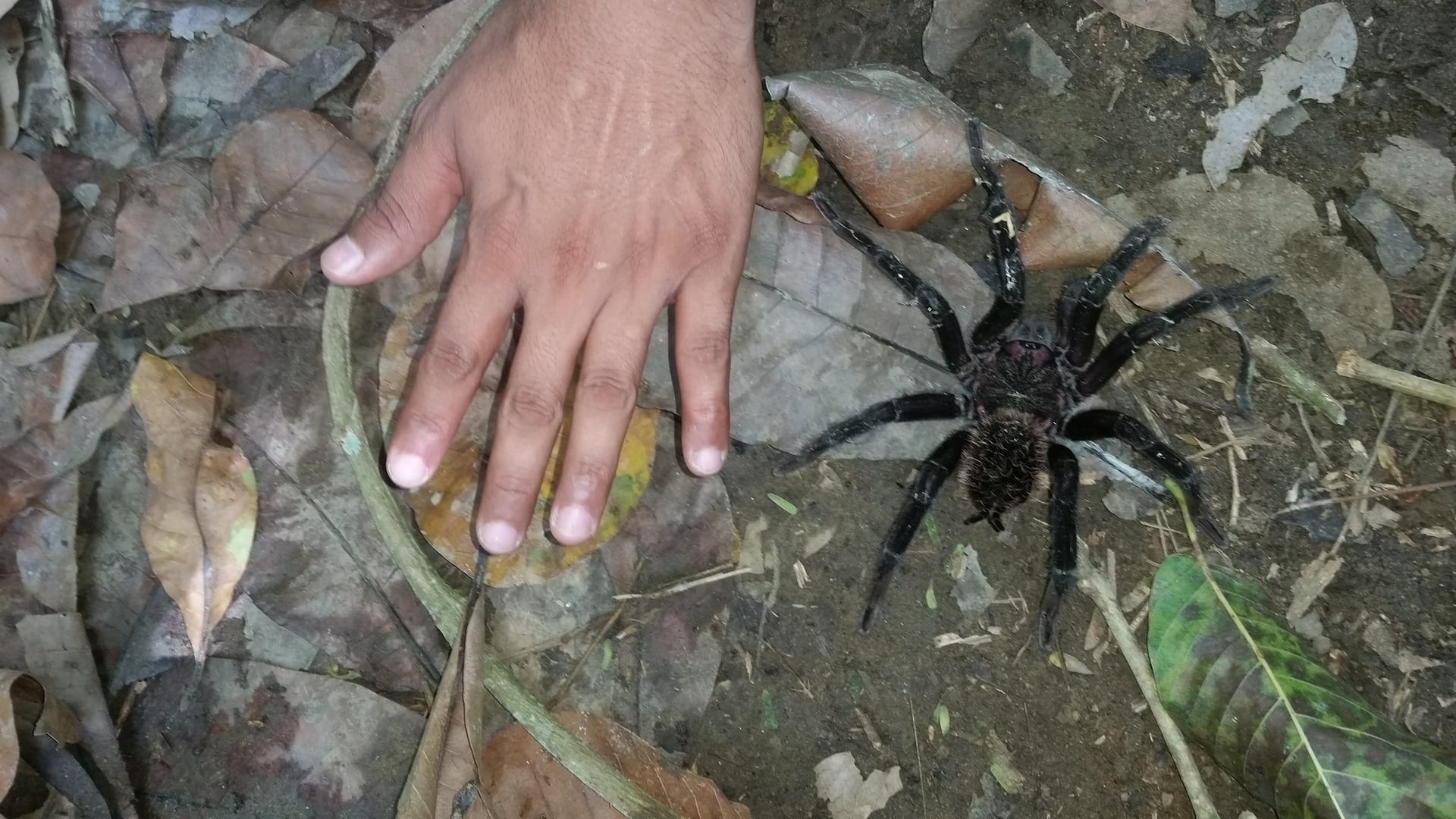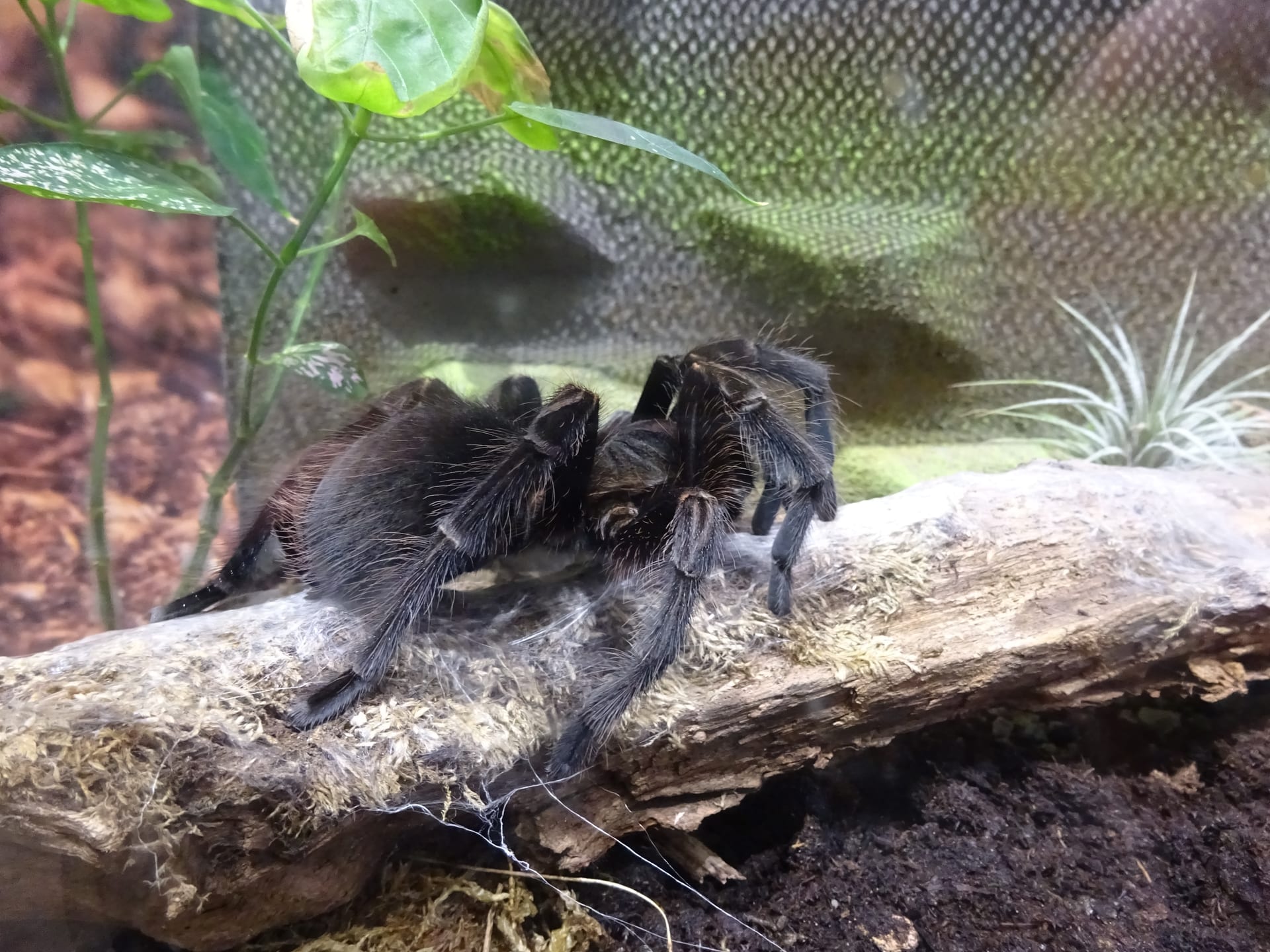
Source: Wikimedia Commons
Hispaniolan Giant Tarantula
IntermediatePhormictopus cancerides
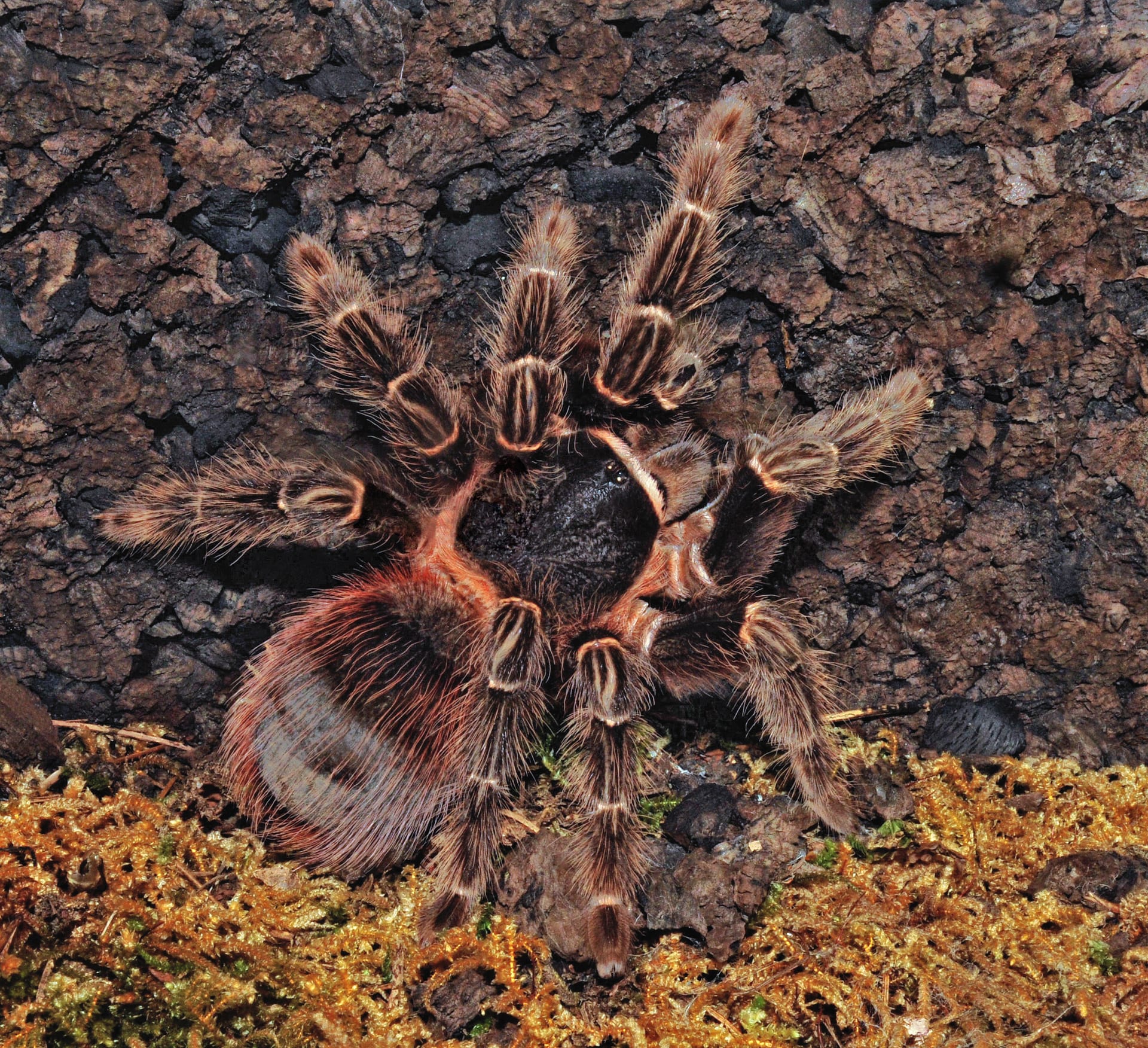
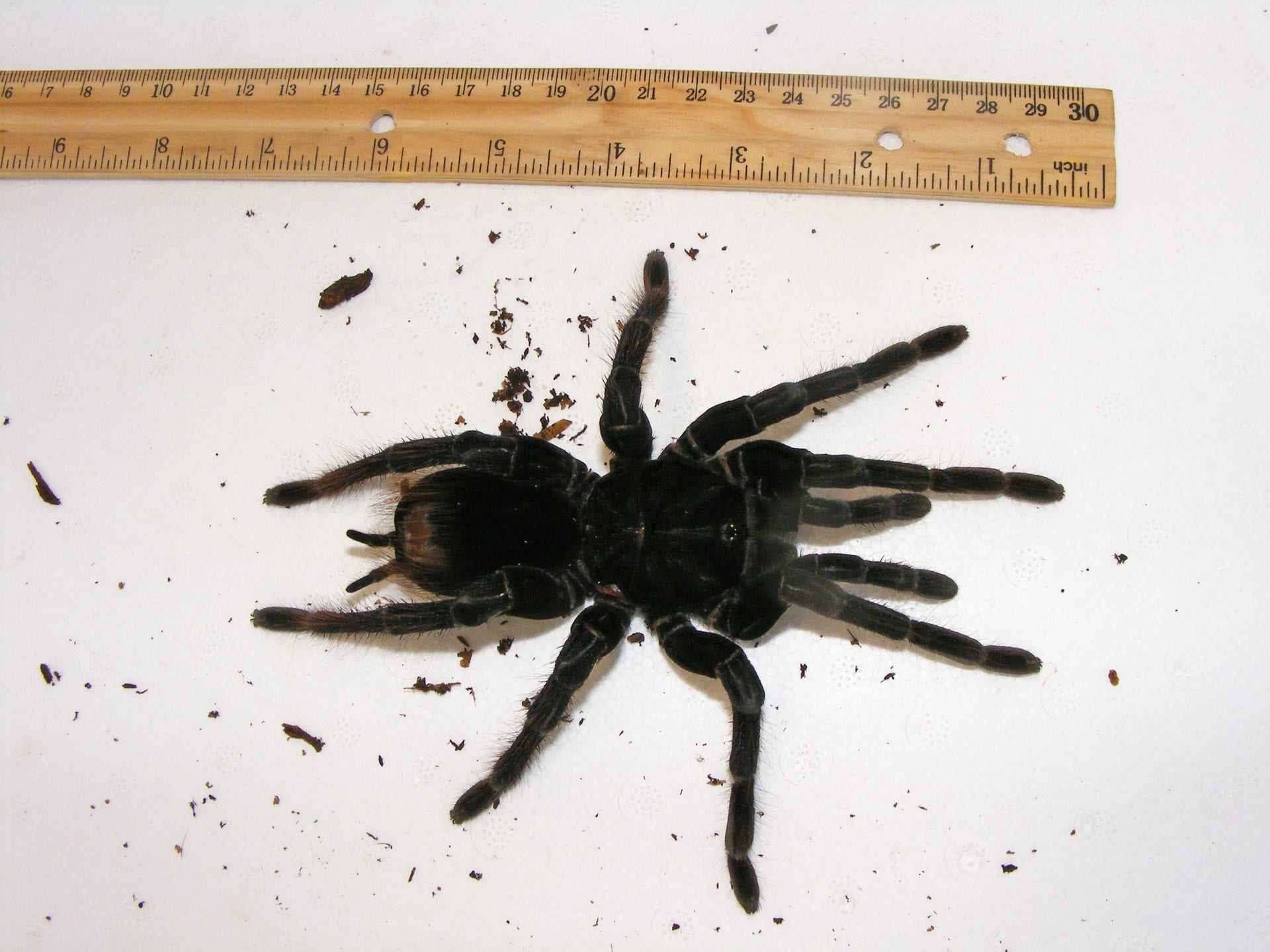
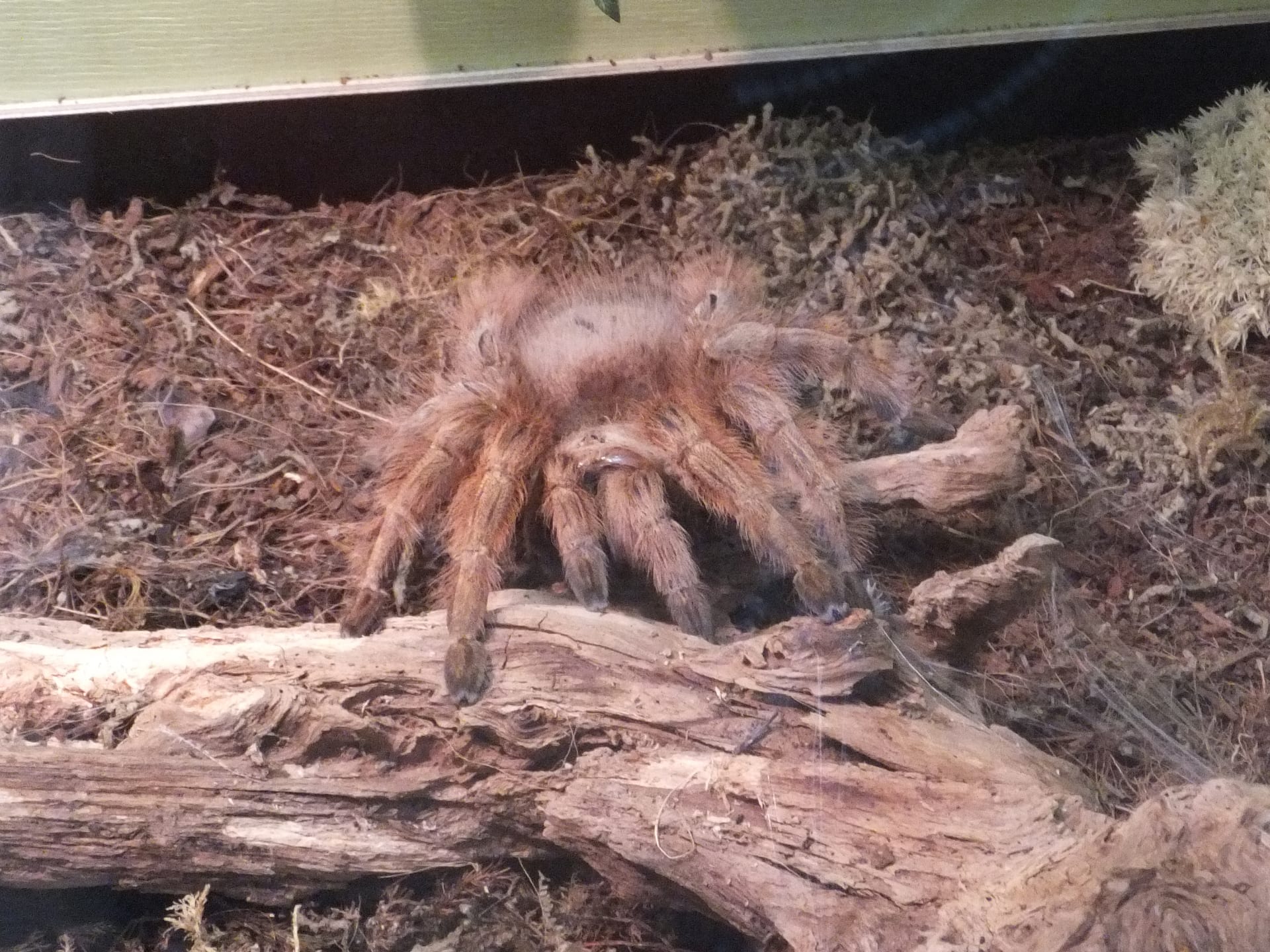
A large terrestrial tarantula from Hispaniola reaching 18-20cm in leg span. Spiderlings are turquoise, while adults have brown legs and a metallic carapace. It is known for a huge appetite and rapid growth.
Difficulty
Intermediate
Temperature
22〜28℃
Lifespan
Females 10-15 years / males 3-5 years
Size
18-20cm leg span
Humidity
60〜70%
Diet
Live insects such as crickets and roaches
About
Phormictopus cancerides is a large terrestrial tarantula of Hispaniola in the Caribbean, reaching a leg span of 18-20 cm. It is called cacata in the Dominican Republic and araignee-krab, or crab spider, in Haiti. By day it hides under rocks and debris and emerges at night to hunt. Its fangs exceed 2 cm; venom injected into the prey paralyses it and breaks down its tissues, which the spider then sucks up. Bites on humans are rarely harmful but cause irritation and swelling. Spiderlings are a vivid turquoise, maturing into animals with brown legs, a metallic bronze to purplish carapace and red hairs on the abdomen. It has a powerful appetite and grows very fast, and although it digs large burrows it is often out in the open even by day, which makes it a striking display species. Its chief predator is the tarantula hawk, a parasitoid wasp that lays its eggs on paralysed individuals.
Source: Wikipedia (CC BY-SA 4.0)
Lifespan of the Hispaniolan Giant Tarantula
The Hispaniolan Giant Tarantula lives Females 10-15 years / males 3-5 years.
Size of the Hispaniolan Giant Tarantula
The Hispaniolan Giant Tarantula grows to 18-20cm leg span.
Temperature & humidity for the Hispaniolan Giant Tarantula
The ideal temperature for the Hispaniolan Giant Tarantula is 22〜28℃. Ideal humidity is 60〜70%.
Basic Info
Origin
Hispaniola (Dominican Republic and Haiti)
Care Specifications
References & Sources
Edited & verified by: BreederDirect editorial team
The taxonomic, regulatory, and husbandry data on this page are compiled and verified against the authoritative primary sources below.
Taxonomy & Authority
Accepted name: Phormictopus cancerides (Latreille, 1806)
Synonyms: Mygale cancerides, Phormictopus cancerides tenuispinus
Authority databases: GBIF
Nomenclature follows global taxonomic authority databases.
Regulations & Conservation Status
Not CITES-listed
Sources: CITES Appendices (species not listed)
Regulations may change. Always verify the latest information with the relevant authorities.
Hispaniolan Giant Tarantula Listings
Loading latest listingsFind listings for this species