Source: Wikimedia Commons
Colombian Lesser Black
AdvancedXenesthis immanis
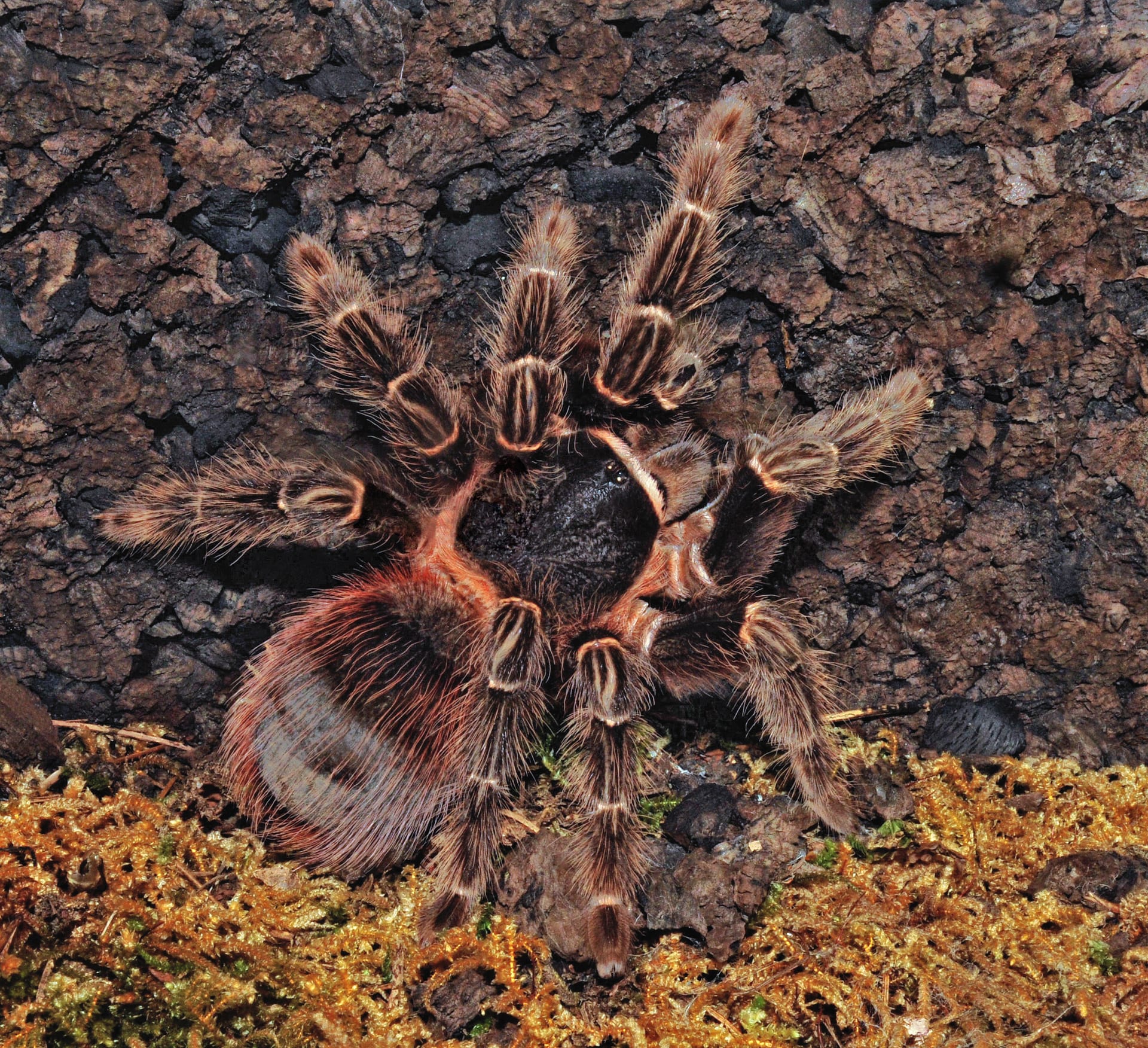
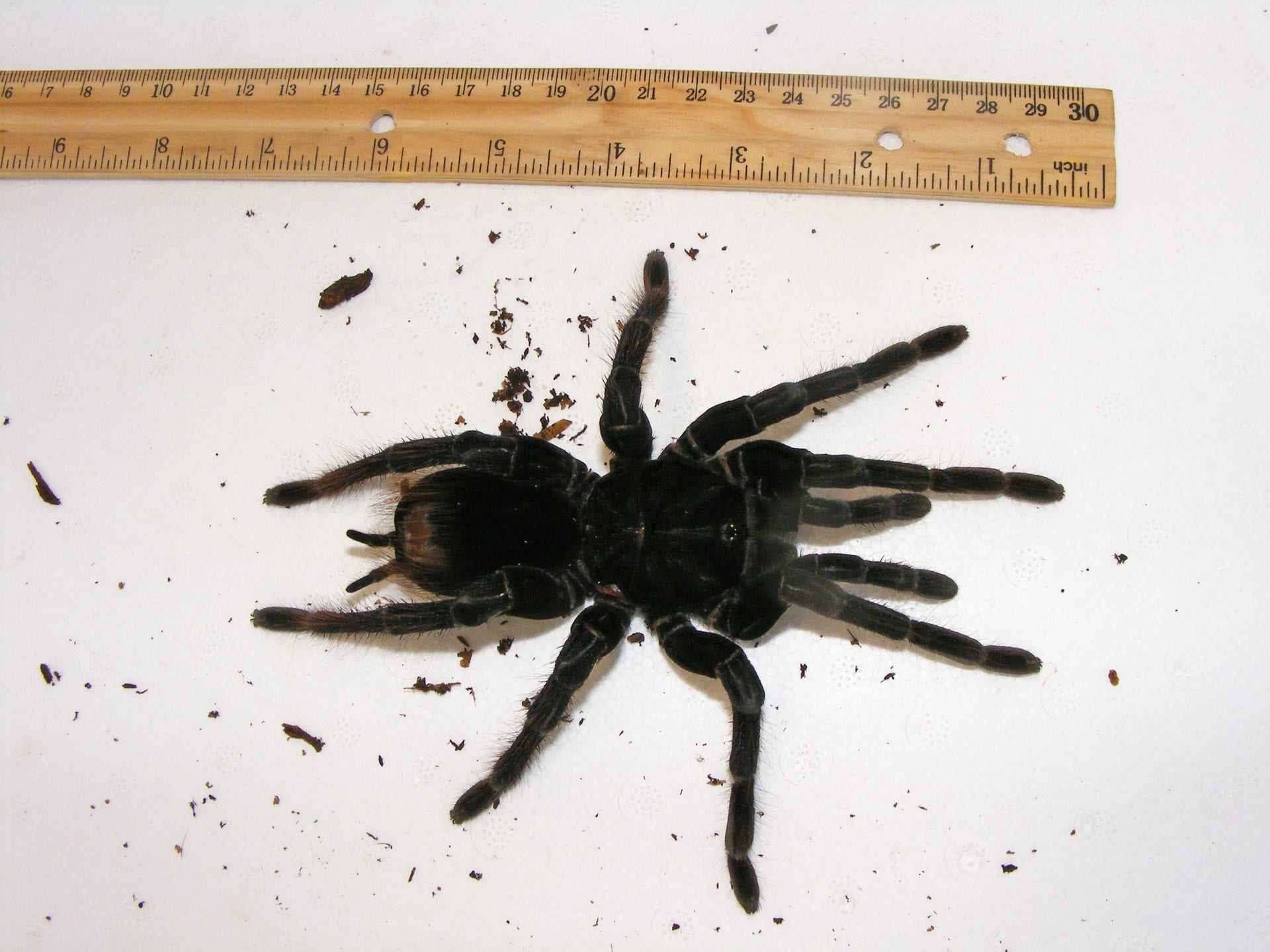
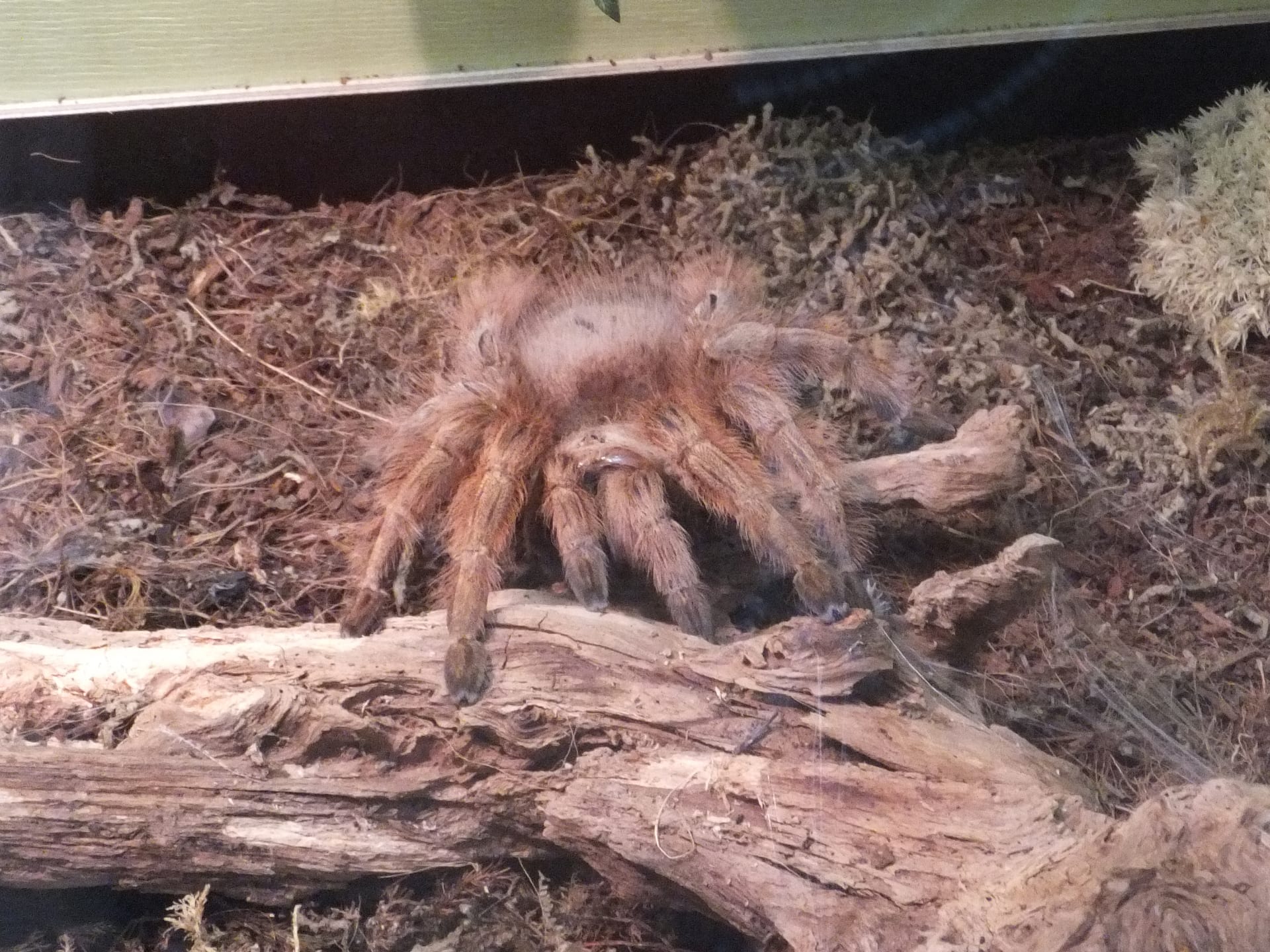
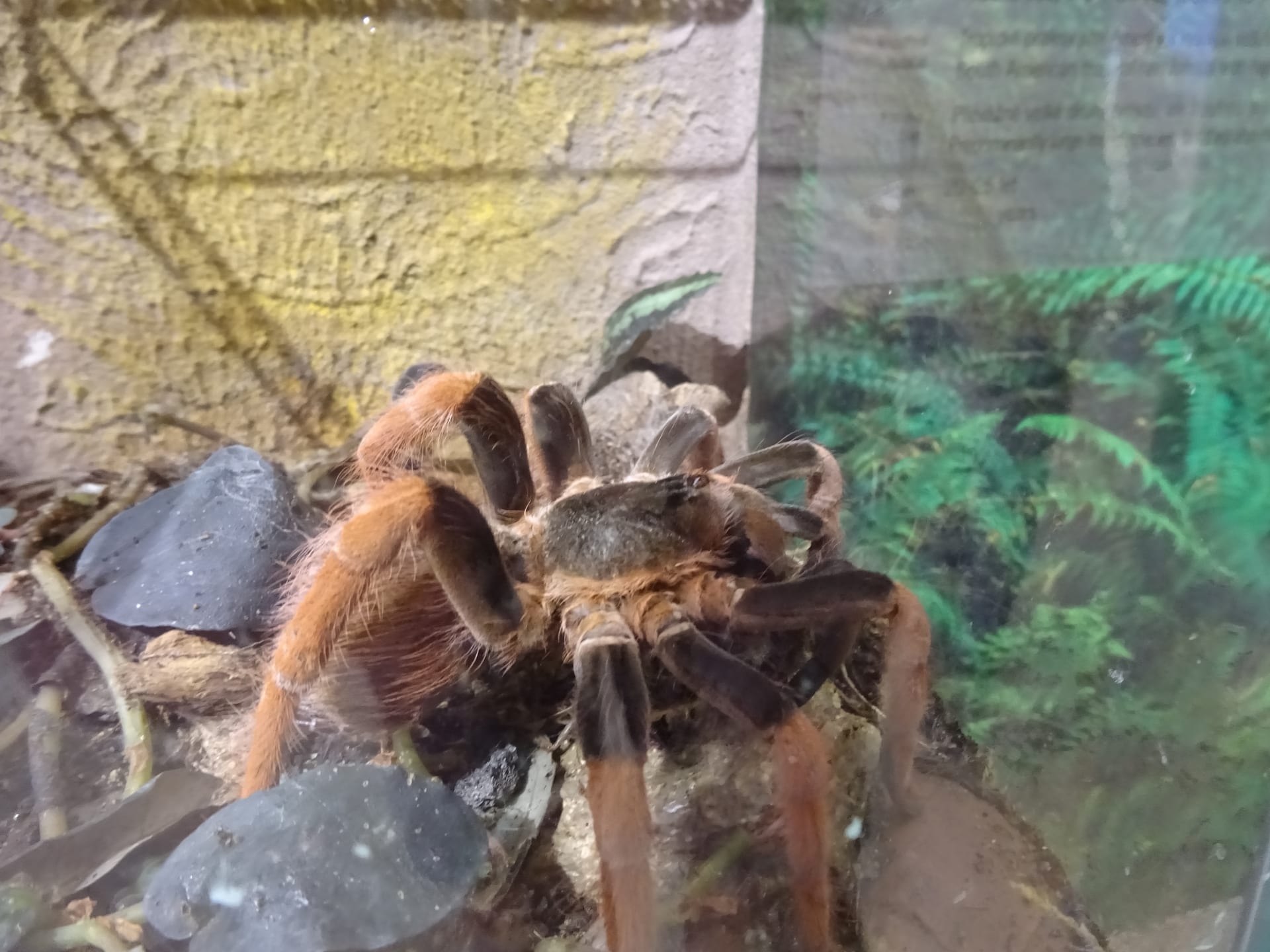
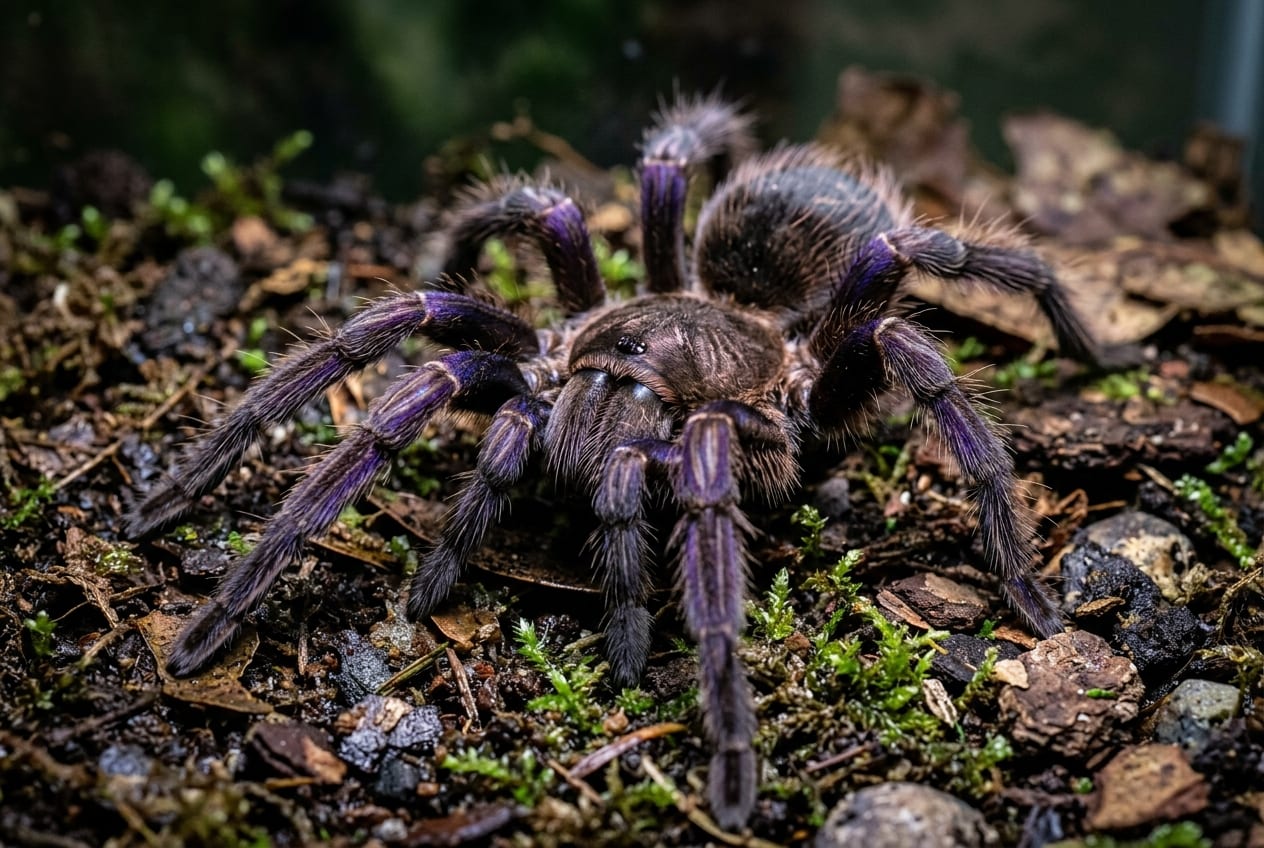
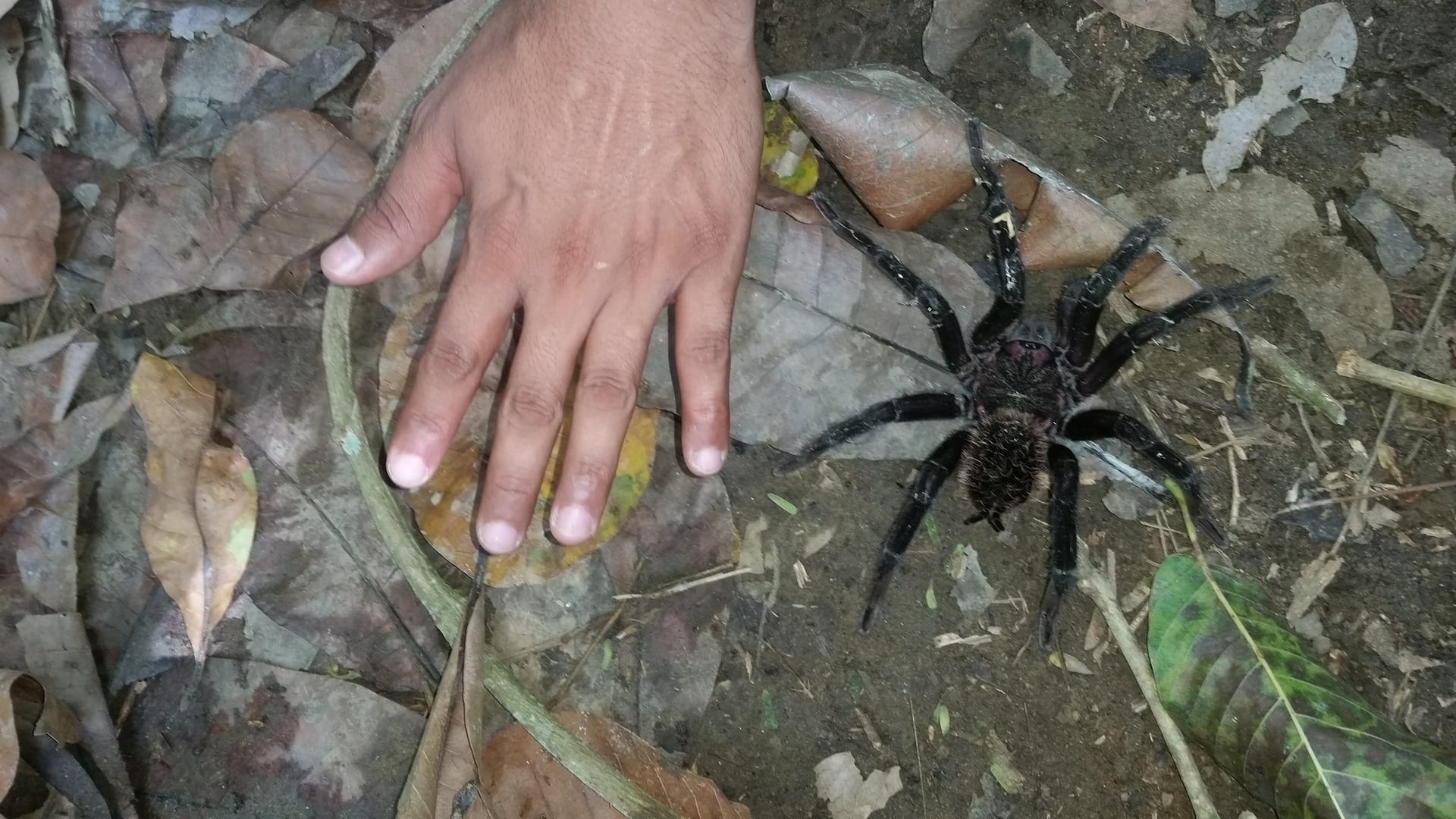
A large terrestrial tarantula, black overall with a reddish sheen on the carapace and light brown setae on the abdomen. Leg span reaches 25cm. It readily kicks urticating hairs and is seldom bred in captivity.
Difficulty
Advanced
Lifespan
Females 12-15 years, males 3-4 years
Size
Body 7-10cm, leg span 19-25cm
Diet
Large live insects such as crickets and roaches
About
Xenesthis immanis was described by Ausserer in 1875 as Lasiodora immanis, included in Xenesthis when Simon erected the genus in 1891, and given its current combination by Pocock in 1901; it is the type species of the genus. The male type came from around Bogota in Colombia and the female from around Caracas in Venezuela. It is terrestrial, digging silk-lined burrows in banks and roadside slopes and waiting at the entrance for prey from dusk onwards. If cornered it responds with a threat posture, a bite or its urticating hairs. It is known for tolerating the tiny frog Chiasmocleis ventrimaculata in its burrow rather than eating it, and a mutualism has been proposed in which the spider protects the frog while the frog protects the spider's eggs from ants. Successful captive matings are uncommon, and most animals in trade are wild caught.
Source: Wikipedia (CC BY-SA 4.0)
Lifespan of the Colombian Lesser Black
The Colombian Lesser Black lives Females 12-15 years, males 3-4 years.
Size of the Colombian Lesser Black
The Colombian Lesser Black grows to Body 7-10cm, leg span 19-25cm.
It is a large species, 7-10cm in body length with a leg span of 19-25cm, black with a reddish sheen on the carapace and light brown setae on the abdomen; males are more strongly contrasted.
Basic Info
Origin
Rainforest from Panama in Central America to northern South America (Colombia, Venezuela); also recorded from Peru
Lifespan
Females 12-15 years, males 3-4 years
Care Specifications
Semi-aggressiveSolitaryBreeding: Very hard
Sources: German Wikipedia: Xenesthis immanis / Wikipedia: Xenesthis immanis / GBIF
References & Sources
Edited & verified by: BreederDirect editorial team
The taxonomic, regulatory, and husbandry data on this page are compiled and verified against the authoritative primary sources below.
Taxonomy & Authority
Accepted name: Xenesthis immanis (Ausserer, 1875)
Synonyms: Lasiodora immanis Ausserer, 1875, Xenesthis colombiana Simon, 1891
Authority databases: GBIF
Nomenclature follows global taxonomic authority databases.
Regulations & Conservation Status
Not CITES-listed
Sources: CITES Appendices (species not listed)
Regulations may change. Always verify the latest information with the relevant authorities.
Colombian Lesser Black Listings
Loading latest listingsFind listings for this species