Source: Wikimedia Commons
Colombian Giant Redleg
IntermediateMegaphobema robustum
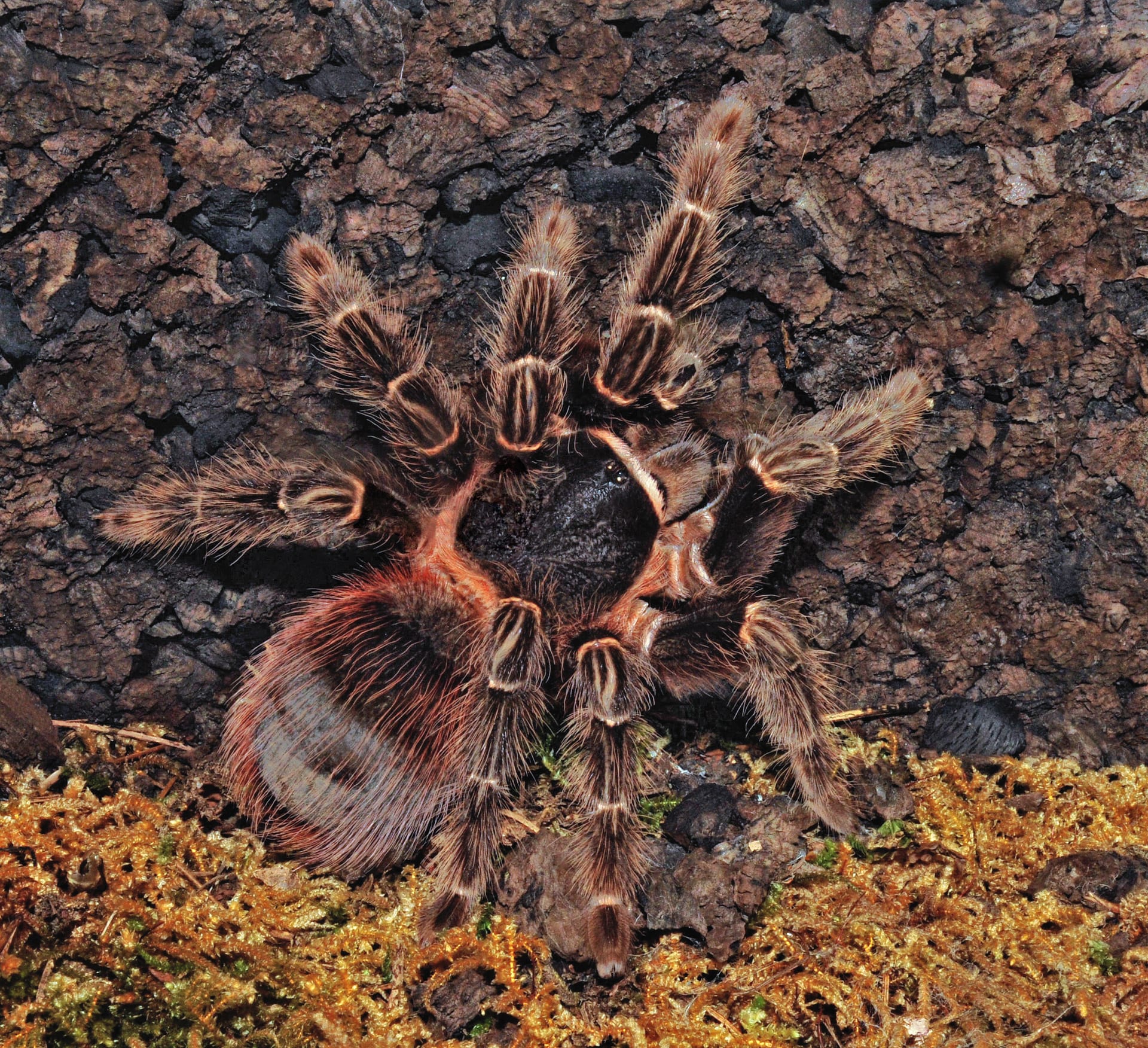
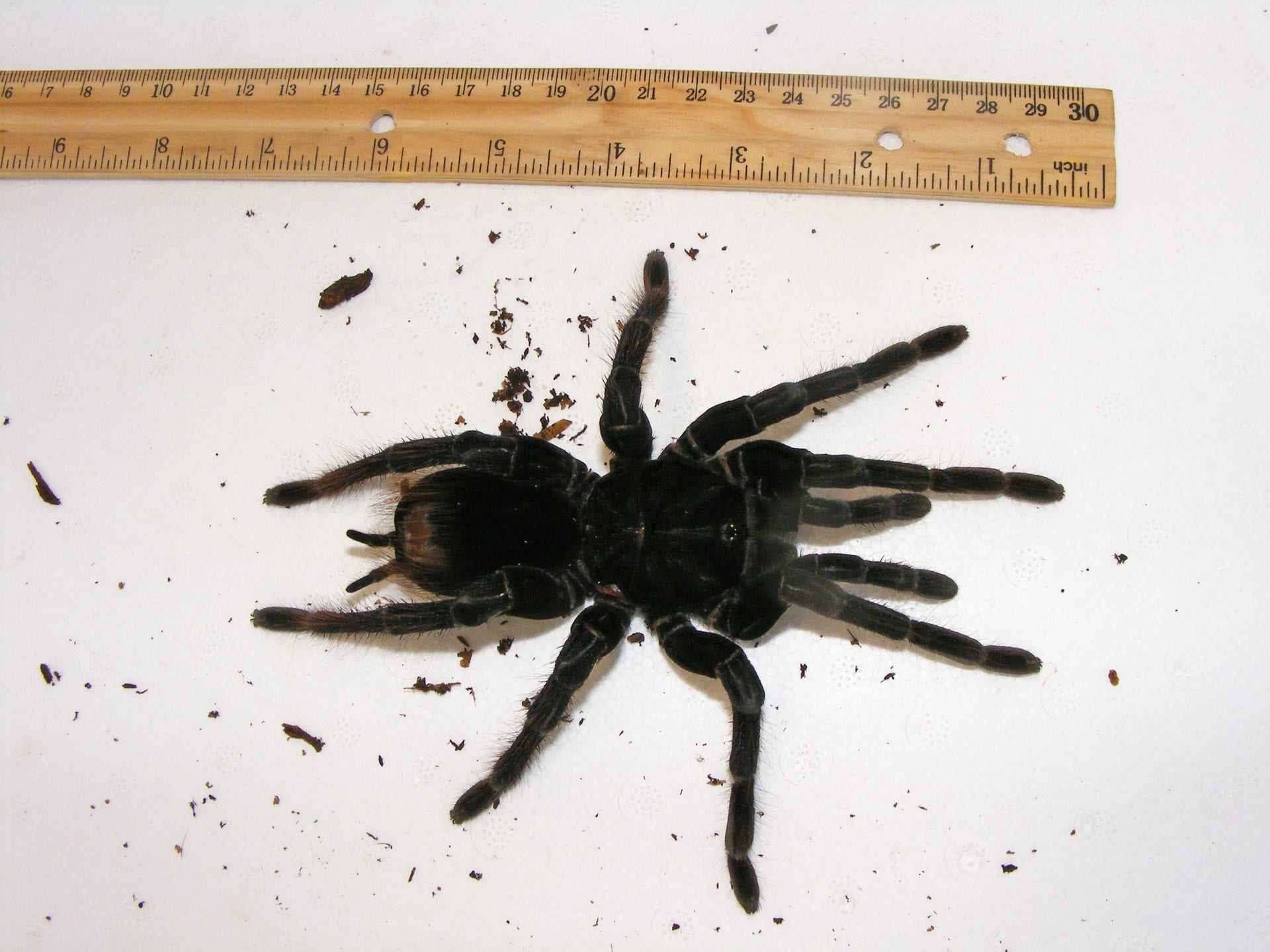
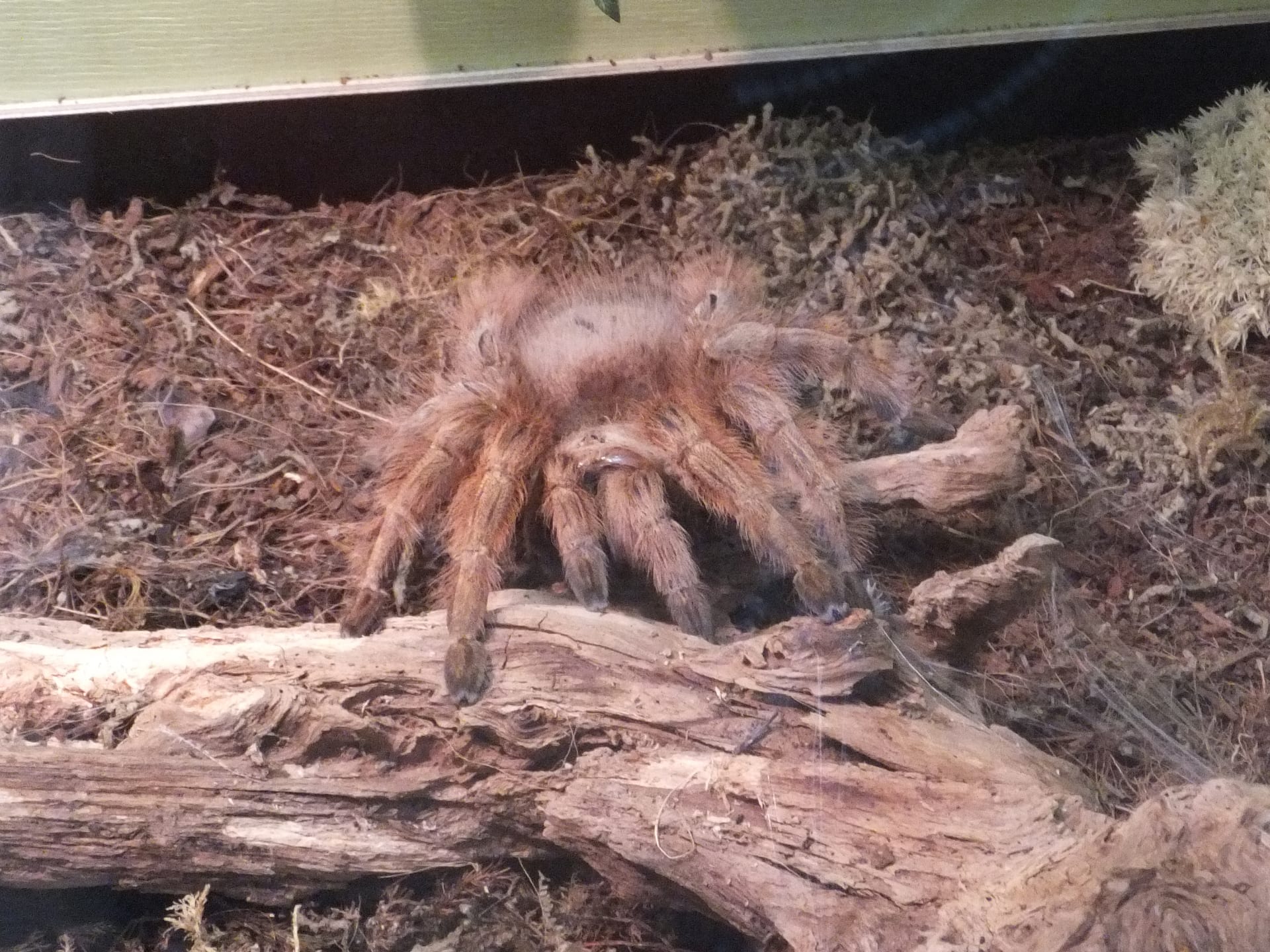
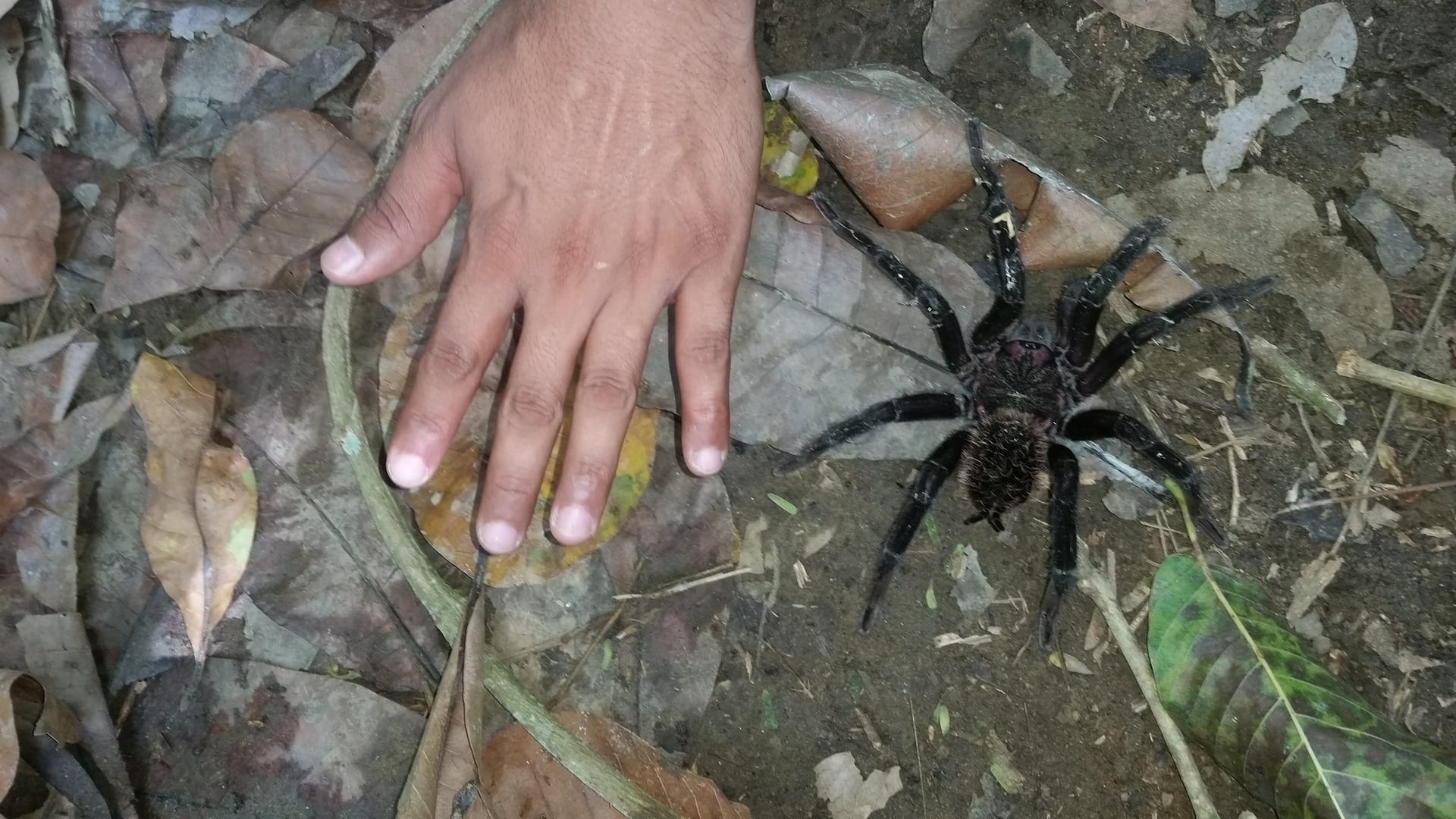
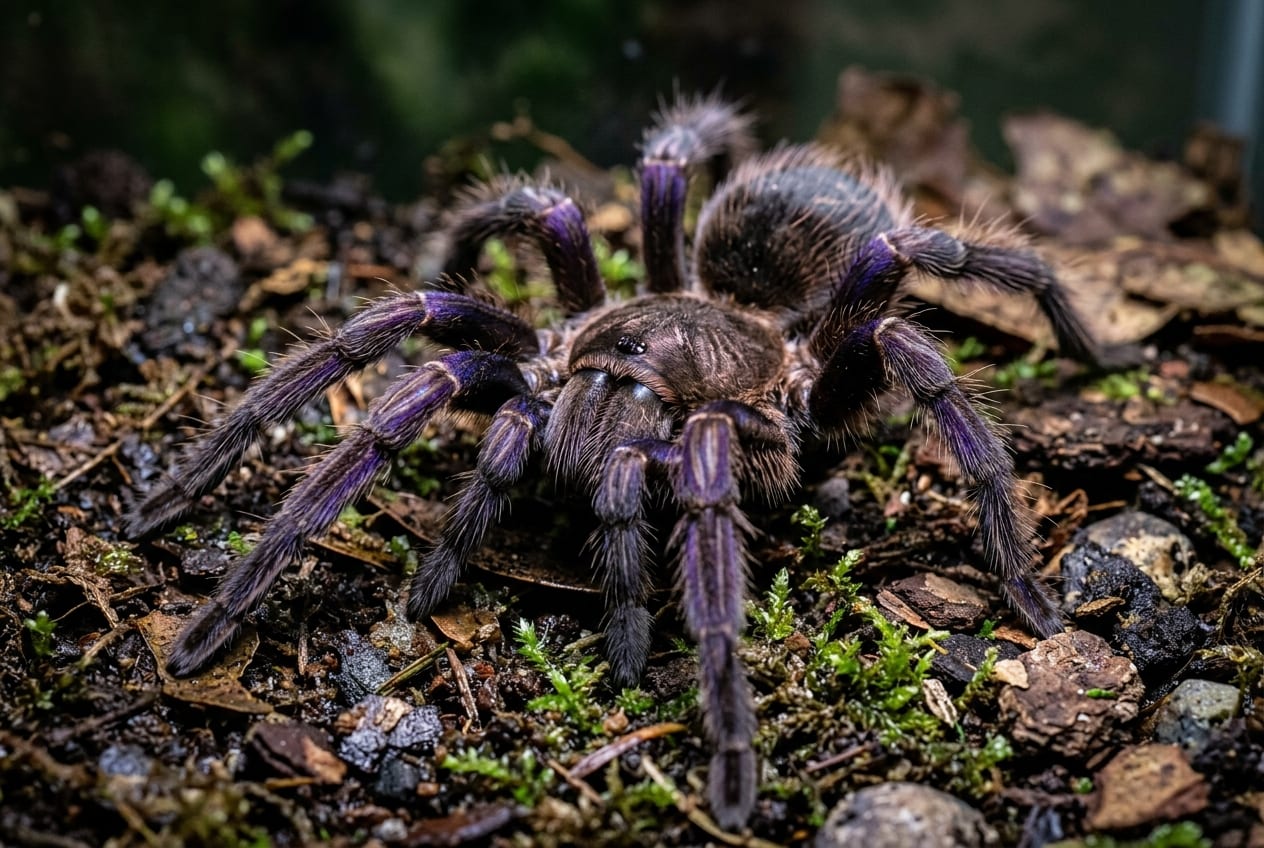
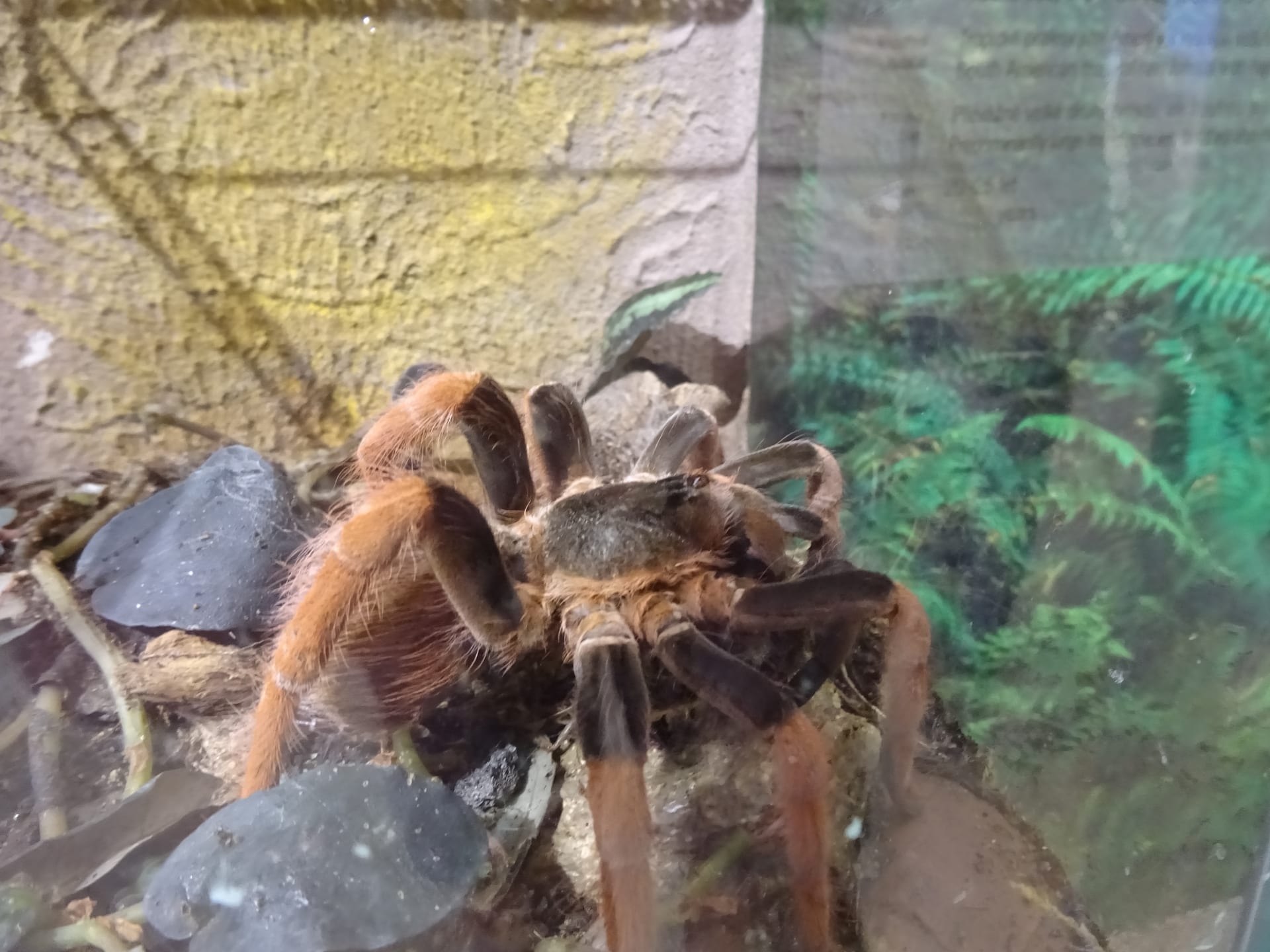
A large terrestrial tarantula from Colombia with a jet-black body and vivid orange legs, reaching a leg span of 20cm. Its hind legs carry heavy spines, and when alarmed it spins its whole body and lashes out with them, a defence seen in no other genus.
Difficulty
Intermediate
Temperature
20〜26℃
Lifespan
Females up to about 20 years
Size
15-20cm leg span
Humidity
70〜80%
Diet
Live insects such as crickets and roaches; large individuals also take small lizards and mice
About
Megaphobema robustum is a large terrestrial tarantula of the Colombian tropical rainforest, reaching a leg span of 15-20 cm. Against a deep black carapace and abdomen, the legs apart from the femora are clothed in bright orange setae, making it one of the most strikingly coloured species in the genus. It shelters in burrows dug beneath fallen logs to escape daytime heat and is active at night. Rows of large spines arm the hind legs, and when threatened it extends all its legs, rotates its whole body and strikes at the aggressor with them, a defence not seen in related genera. It also kicks urticating setae. Room temperature is sufficient in captivity and supplementary heating or lighting is generally unnecessary. It burrows readily, so give deep substrate and maintain humidity with a water dish and occasional misting. It is nervous and tends to stay hidden, but rarely bites. Exports from its home country are closed, so it is seldom traded and rarely bred.
Source: Wikipedia (CC BY-SA 4.0)
Lifespan of the Colombian Giant Redleg
The Colombian Giant Redleg lives Females up to about 20 years.
Size of the Colombian Giant Redleg
The Colombian Giant Redleg grows to 15-20cm leg span.
Temperature & humidity for the Colombian Giant Redleg
The ideal temperature for the Colombian Giant Redleg is 20〜26℃. Ideal humidity is 70〜80%.
Basic Info
Origin
Colombia (tropical rainforest)
Care Specifications
Semi-aggressiveSolitary
Sources: The Spider Shop: Megaphobema robustum / Wikipedia: Megaphobema robustum / Tarantupedia: Megaphobema robustum / GBIF
References & Sources
Edited & verified by: BreederDirect editorial team
The taxonomic, regulatory, and husbandry data on this page are compiled and verified against the authoritative primary sources below.
Taxonomy & Authority
Accepted name: Megaphobema robustum (Ausserer, 1875)
Synonyms: Lasiodora robusta
Authority databases: GBIF
Nomenclature follows global taxonomic authority databases.
Regulations & Conservation Status
Not CITES-listed
Sources: CITES Appendices (species not listed)
Regulations may change. Always verify the latest information with the relevant authorities.
Colombian Giant Redleg Listings
Loading latest listingsFind listings for this species