Satan-Type Medaka
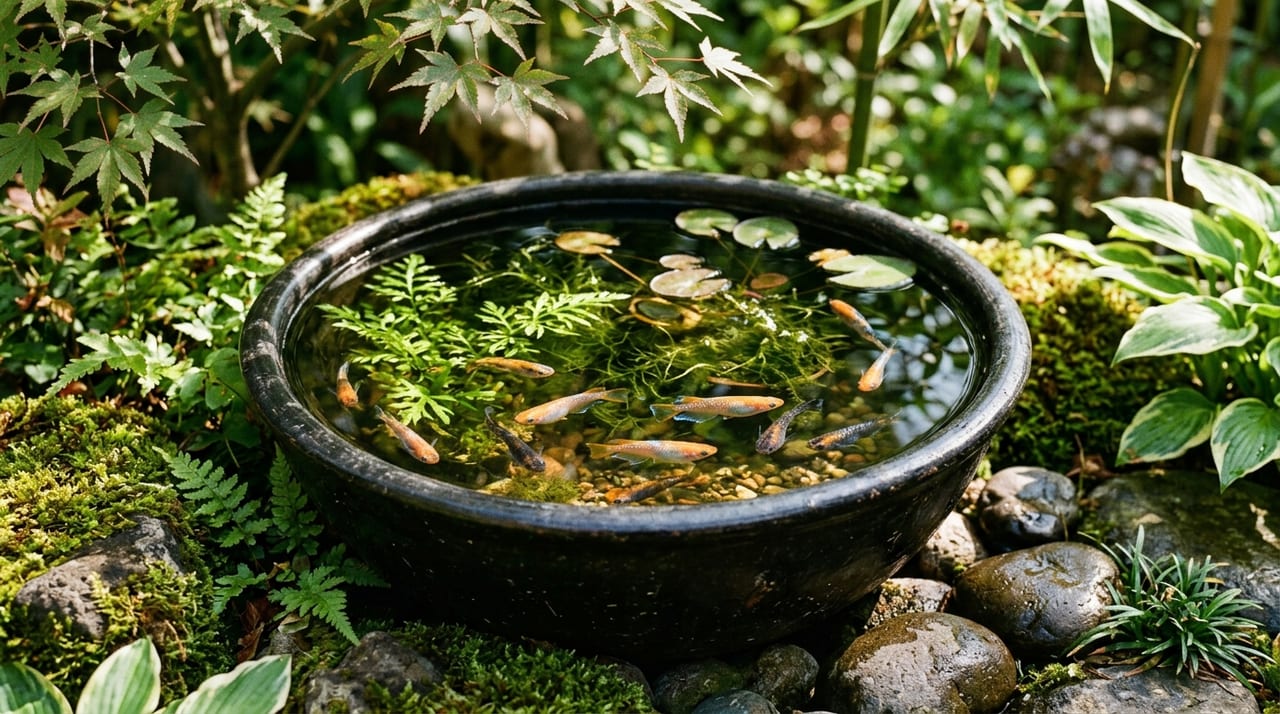
Satan-type medaka are a group of improved medaka varieties characterized by jet-black body color. Named after "Satan (Devil)" for their appearance as a whole body covered in deep black, this variety was developed by Japanese medaka breeders through many generations of careful selection.
While "Orochi" is the most famous black-type medaka, Satan features even more abundant black pigment (melanophores) within the body, and is highly valued by enthusiasts as a variety that combines deep blackness with beautiful body form. Derived varieties have also been created by crossing with other traits, such as "Satan Lame" and "Satan Tricolor," making it particularly popular among black-type improved medaka varieties in the market.
Basic Environment for Care
Care of Satan-type medaka is not difficult if basic medaka husbandry practices are followed. However, bringing out the black body color to its fullest requires some thought in environmental setup.
Recommended Breeding Environment
| Item | Recommended Value |
|---|
| Water Temperature | 18–28°C (Optimal: 22–25°C) |
| pH | 6.5–7.5 |
| Container Color | White to bright colors (color contrast) |
| Substrate | White gravel, white pearl sand (black body color stands out) |
| Water Volume (per adult fish) | 3–5L |
| Filtration | Sponge filter recommended (gentle water flow) |
Care Methods to Maintain Deep Black Body Color
Satan-type black body color exhibits "phenotypic plasticity," changing in intensity depending on the environment. Grasping the key points for maintaining and enhancing blackness is essential to maintaining quality.
Lighting Management
Strong white light can sometimes cause fading in black-bodied medaka.
- Keep lighting time at approximately 12 hours (avoid prolonged exposure)
- Use lighting close to natural light with reduced blue and violet wavelengths
- Adding aquatic plants that create shade (floating plants, water hyacinth, etc.) can prevent fading
- Bright shade (partial shade) rather than direct sunlight tends to stabilize color expression
Selection of Container and Substrate
Black-bodied medaka appear darkest against a white background. This is due to "background adaptation response," where black pigment tends to become more intense in bright environments.
- Recommended containers: White plastic containers, white troughs, white NV boxes
- Substrate: White pearl gravel, white sand, fine sand (light colors)
- Aquatic plants may be added, but overcrowding darkens the interior and reduces color clarity
Nutrition Management
| Food Type | Effect |
|---|
| Commercial improved medaka food | Balanced nutrition maintains stable body form and color |
| Dried daphnia | Protein supplementation, promotes pigment formation |
| Live daphnia and paramecia | Particularly effective for fry color expression |
| Brine shrimp (Artemia) | Growth promotion and color enhancement |
Carotenoid-containing feeds may be unsuitable for Satan types. Orange and red pigments can dilute blackness if mixed in, so select black-specific feed or verify the ingredient list.
Breeding and Selection
Satan-type medaka breeding follows basic medaka breeding methods, but "selection for blackness" is the core of quality maintenance.
Breeding Process
- Selecting breeding stock: Choose individuals with uniformly deep black coloring throughout (exclude partially white individuals)
- Spawning management: Promote spawning at 22–26°C water temperature and 13 hours of lighting
- Egg hatching: Manage in separate container for 10–14 days (add small amount of methylene blue to prevent fungus)
- Fry management: Initial nutrition using paramecia and PSB
- Selection: At 6–8 weeks of age, evaluate body color and separate individuals with insufficient blackness or body form issues
Selection Criteria (Blackness Evaluation)
- Uniformly black throughout the body from head to belly to tail
- No white or transparent areas on scales when viewed from the side
- Straight spine with a thin, firm peduncle
- Black pigment on all fins (the blacker the fins, the higher the evaluation)
Regarding Tankmates
Satan-type medaka are relatively mild-tempered and can be kept with other varieties. However, when housing with tankmates, note the following:
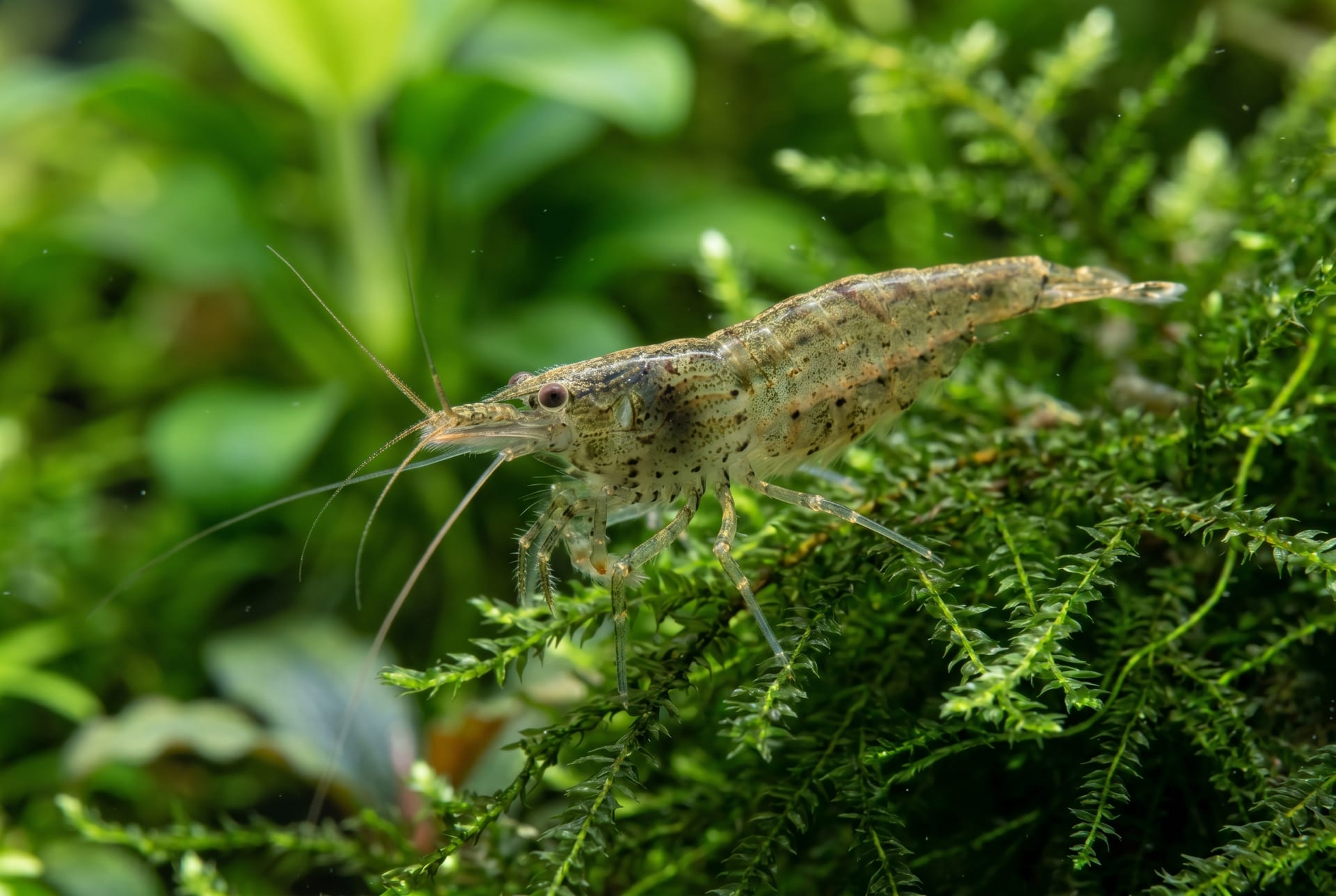
- Compatible tankmates: Other improved medaka varieties (similar body form), Amano shrimp, nerite snails
- Caution with tankmates: Housing with other black-type varieties like Orochi or Kuro-Hyakushiki carries crossbreeding risk (do not house with fixed lines for breeding)
- Incompatible: Goldfish or large fish (predation risk), crayfish (claw damage risk)
Basics of Water Quality Management
The most important aspect of water quality management for medaka is maintaining zero ammonia and nitrite levels. This depends on the biofilter functioning properly.
Water Change Guidelines
- Change 1/3 to 1/4 of water once or twice per week
- Always dechlorinate fresh water and match temperature before adding
- In summer (over 30°C), increase water change frequency and watch for oxygen depletion
- In winter, water changes of once or twice per month are sufficient as medaka remain still at the bottom
Common Problems and Solutions
| Symptom | Cause | Solution |
|---|
| Body color turning gray or pale | Dark substrate, excessive lighting, stress | Switch to white substrate, reduce lighting to 12 hours or less |
| No spawning | Insufficient water temperature or lighting | Ensure water temperature above 22°C and lighting above 13 hours |
| White spots on body side | Ichthyophthirius (white spot disease) | Raise water temperature to 28°C, treat with Green F medicated bath |
| Torn tail fin | Tail rot disease, fin nipping from other fish | Isolate and treat with Green F Gold medicated bath |
| Faint black color in fry | Insufficient selection of breeding stock | Re-select darker individuals as breeding stock |
| Not eating | Low water temperature, illness, stress | Check water temperature, examine for other symptoms |
Summary
The primary appeal of Satan-type medaka lies in their specialized beauty of jet-black body color. By providing white containers and substrate while avoiding excessive lighting, their blackness can be maximized. Since selecting across generations can fix increasingly pure black body color, this variety is particularly rewarding for improved medaka breeders. When purchasing directly from breeders, verifying information about uniform blackness across the body, body form, and husbandry conditions is an important point in obtaining a high-quality individual.
Black Medaka Variety Comparison: Satan vs Orochi
Among black-type improved medaka varieties, Satan and Orochi are particularly often confused. Understanding the differences between them enables appropriate individual selection.
| Comparison Item | Satan | Orochi |
|---|
| Body Color Blackness | Deep black both internally and externally | Black-type body color |
| Characteristics | Abundant internal black pigment, often Hikarini body form | Jet-black body color with unique luster |
| Availability | Somewhat difficult to obtain, mostly breeder stock | Greater availability |
| Selection Difficulty | Difficult to evaluate uniformity of blackness | Relatively easy to evaluate |
Black-Bodied Medaka Contest Standards
Improved medaka contests and shows have judging criteria for black-type varieties. Use these as a reference for breeding and selection goals.
Main Judging Points
- Uniform body color: Is the entire body uniformly jet-black from head to tail?
- Lack of transparency: Are there no transparent areas on scales or white patches?
- Good body form: Straight spine, balanced fins, body symmetry
- Depth of black: Does the body appear black even under outside light (white or blue)?
- Health: Swims actively with no injuries or disease marks
Water Temperature Management and Seasonal Care
Summer Care (July–September)
When water temperature exceeds 30°C, dissolved oxygen decreases and stress on medaka increases. Ideally, maintain below 28°C by combining shading and ventilation. Increasing water change frequency is effective for stabilizing water quality and temperature.
Winter Care (December–February)
Below 10°C, medaka metabolism drops significantly, approaching hibernation. During this period, stop feeding completely and keep water changes to a minimum (about once per month). Overwintering is fine with modest heating to prevent the surface from freezing. With indoor heater management, breeding is possible even in winter.