Aurora Medaka Care Guide | Tank Setup to Bring Out Rainbow Coloration and Breeding/Selection Tips
A detailed guide to Aurora Medaka characteristics and care methods. Covers substrate, lighting, and water quality management to maximize pearl-like iridescent coloration, breeding procedures, and selection criteria for developing vibrant individuals—a practical guide useful for beginners through intermediate keepers.
Key Takeaways
A detailed guide to Aurora Medaka characteristics and care methods. Covers substrate, lighting, and water quality management to maximize pearl-like iridescent coloration, breeding procedures, and selection criteria for developing vibrant individuals—a practical guide useful for beginners through intermediate keepers.
Related Species
What is Aurora Medaka
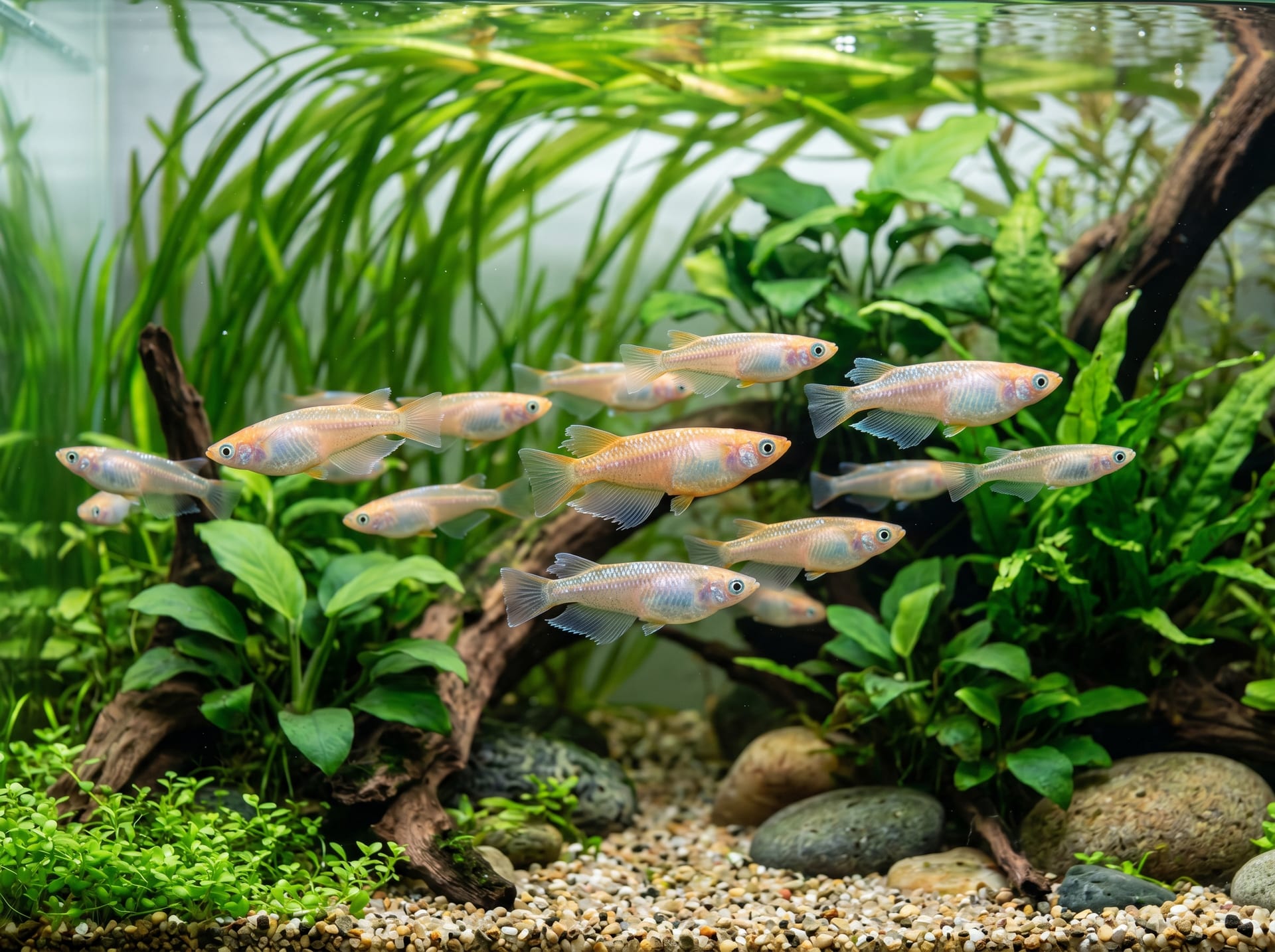
Aurora Medaka are a group of medaka varieties that display pearl-like luster on their bodies, characterized by unique iridescent coloration that shifts between blue, green, purple, and silver depending on the angle of light. Developed through selective breeding by Japanese medaka breeders, they have given rise to many variant strains combining aurora coloration with other traits, including "Aurora Yellow Lame," "Aurora Blue Lame," and "Aurora Tricolor."
While the exact definition varies slightly among breeders, they all share the characteristic of "iridescent interference colors (aurora pigment) appearing on the body's epidermis." Highly appealing as ornamental fish, they attract broad popularity from beginners to advanced keepers and maintain steady demand in direct sales markets.
Basic Husbandry Environment
Aurora Medaka are relatively easy to keep compared to other improved strains and can be maintained long-term by following the basics of medaka care.
Recommended Care Parameters
| Item | Recommended Value |
|---|---|
| Temperature | 64–82°F (68–79°F optimal) |
| pH | 6.5–7.5 |
| Water Hardness | Medium (4–10 dGH) |
| Volume per fish | Minimum 1L+, ideally 3–5L |
| Lighting | Natural light or 12–14 hours LED lighting |
| Filtration | Sponge filter or internal filter (low flow) |
| Substrate | White gravel or white sand recommended |
Medaka dislike strong currents. If using hang-on filters or top filters, cover the outlet with a sponge to reduce flow. Additionally, substrate choice directly affects coloration; see the section below for details.
Choosing Tanks and Containers
Aurora coloration is heavily influenced by light angle and the reflective properties of container materials. Since viewing conditions significantly affect appearance, choosing the right container is crucial for enjoying the coloration.
Tips for Enhancing Coloration
- Substrate should be white or light-colored: White gravel and white sand best showcase aurora luster
- Black containers enhance luster and iridescence through contrast, but aurora pigment is easier to observe against a light substrate
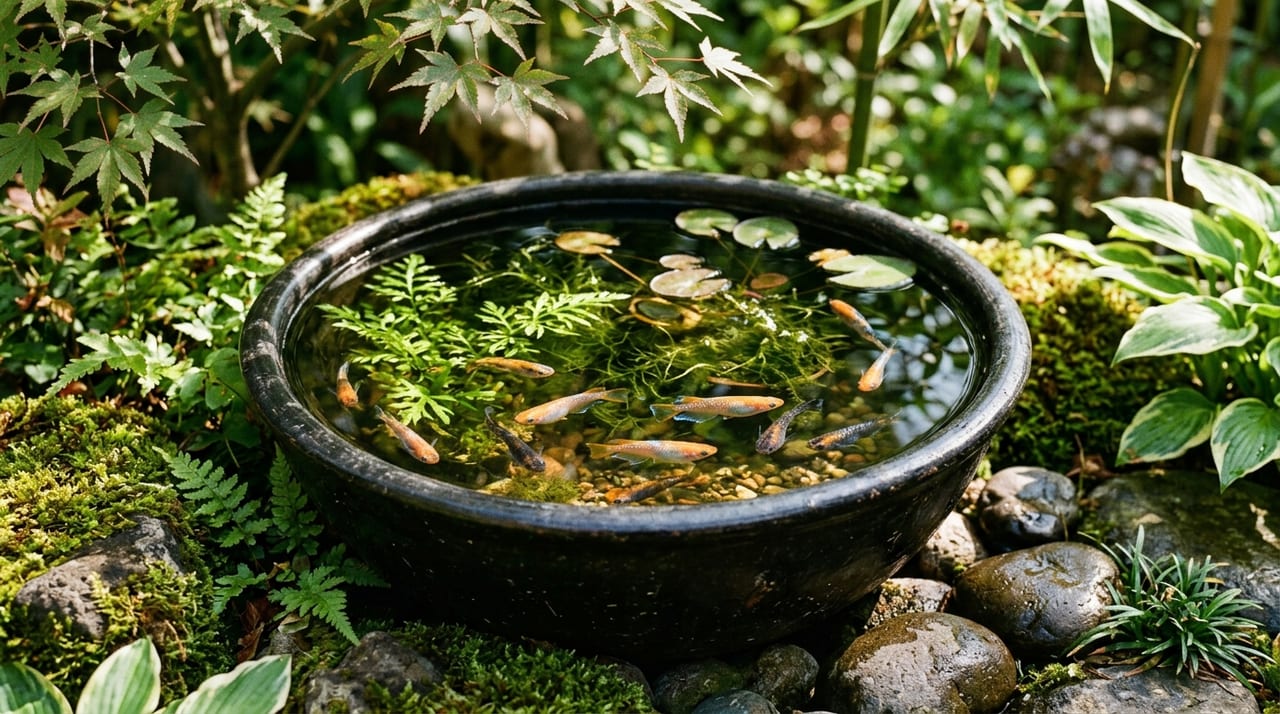
- Top-view containers (trough tanks, plastic containers) are ideal for confirming coloration in natural light
- Side-view aquariums are enhanced by emphasizing blue wavelengths in LED lighting to highlight aurora coloration
- Outdoors in sunlight, 10 a.m. to 2 p.m. on clear days is when coloration is most vibrant
Diet and Feeding Management
While aurora pigmentation is genetic, nutritional status heavily influences color intensity. Providing high-quality food in appropriate amounts is essential for maintaining long-term coloration.
Recommended Food Types
| Food Type | Benefits |
|---|---|
| Commercial medaka specialty pellets | Balanced nutrition; stable aurora coloration |
| Daphnia (live or dried) | Protein-rich; maintains body shape and enhances color |
| Green water (phytoplankton) | Nutrition close to natural environment; strengthens body color |
| PSB (photosynthetic bacteria) | Improves gut health; increases fry survival |
| Paramecia | Especially effective as initial food for fry |
Feed twice daily in amounts that can be consumed in 3–5 minutes. Remove uneaten food immediately, as leftovers degrade water quality.
Breeding and Selection Methods
Aurora Medaka breed relatively easily and spawn naturally in water temperatures of 18°C (64°F) or higher with 13+ hours of light daily.
Basic Breeding Procedure
- Set up spawning substrate: Add willow moss or artificial spawning medium to the tank
- Collect eggs: Check spawning substrate daily in the morning and transfer attached eggs to a separate container (prevents fungus)
- Incubation: Remove unfertilized eggs; hatching occurs in approximately 10–14 days at 25°C (77°F)
- Fry management: Feed PSB and paramecia for the first week after hatching; add powdered food thereafter
- Selection: At 4–6 weeks, separate fry showing aurora coloration from those without it
Selection Tips
Aurora coloration intensifies as fish mature, but quality stock shows early coloration signs. Prioritize fry with obvious luster when viewed from above in natural light. Body symmetry and a straight spine are also important selection criteria.
Water Changes and Water Quality Management
Perform water changes 1–2 times weekly, replacing 1/3 to 1/4 of the water. Abrupt water quality changes cause significant stress to medaka.
Water Change Precautions
- Always dechlorinate new water (use a dechlorinator or let stand 24 hours)
- Keep temperature difference to within 2°C (temperature acclimation required)
- Watch for temperature spikes in summer (above 30°C is dangerous; use shade cloth or netting)
- In winter (below 10°C), feeding is nearly unnecessary; reduce water change frequency
- Test water quality (pH and ammonia) once monthly
Outdoor vs. Indoor Husbandry
Benefits of Outdoor Keeping
- Natural light makes aurora coloration shine at its best
- Green water deepens body color
- Spring through autumn breeding season sees vigorous natural spawning
- No electricity costs
Outdoor Keeping Considerations
- Summer heat management required (shade cloth or netting)
- Monitor water level and prevent escapes during heavy rain and typhoons
- Provide heating or move indoors for winter (below 5°C is dangerous)
Common Issues and Solutions
| Symptom | Cause | Solution |
|---|---|---|
| Pale aurora coloration | Lighting, substrate, or water quality issues | Switch to white substrate; adjust lighting for stronger blue wavelengths |
| Swollen belly, sinking, inactive | Ascites or overfeeding | Salt bath (0.5%); fast for 3 days |
| Tail or dorsal fin deterioration | Fin rot (Columnaris) | Medicate with Malachite Green Gold |
| Spawning stops | Insufficient temperature or light duration | Maintain 20°C+ and 13+ hours of lighting |
| Fry dying in succession | Water quality decline or malnutrition | Add PSB and paramecia; increase water change frequency |
| Curved body | Skeletal deformity (genetic or incubation issue) | Cull from breeding; do not use as broodstock |
Summary
Aurora Medaka are among the most beginner-friendly improved strains thanks to their mystical shimmer and ease of breeding. With thoughtful lighting angles and substrate color choices, genuine aurora coloration can be enjoyed at home. Careful selective breeding from healthy broodstock develops lines with even better coloration, earning high marks in direct breeder markets. The key to long-term success is consistent water quality management, proper feeding, and attentive daily observation.
Environmental Setup Tips: Outdoor vs. Indoor
To enjoy Aurora Medaka at their best, choose locations appropriate for your season and living situation.
Specific Tips for Outdoor Keeping (Spring–Fall)
- Choose white trough tanks or foam containers with 20–30 cm water depth
- Float water hyacinth or lotus on the surface to serve as both spawning substrate and shade
- Use covered containers or place under eaves to prevent sudden water quality changes from heavy rain
- Control summer temperatures above 30°C with shade cloth or 50% shade netting
Specific Tips for Indoor Keeping (Year-Round)
- Glass tanks 30–60 cm offer excellent visibility for observing aurora coloration
- Use aquarium LEDs with adjustable blue and white wavelength balance
- In winter when temperatures drop below 20°C, maintain 22–24°C with a thermostat-controlled heater
- High filtration capacity reduces water change frequency, but avoid excessive flow
How to Select Aurora Medaka When Purchasing
When selecting Aurora Medaka from direct breeders, consider the following points.
- Check top-view photos: Confirm the spread and intensity of aurora coloration from above rather than from the side
- Check water clarity: Confirm that the breeder's husbandry water is clean and clear
- Check body shape and swimming: Ensure straight swimming and no fin deterioration
- Check pedigree information: Breeders who disclose photos of broodstock and generation numbers are more reliable
- Consider season: Purchasing in spring through early summer lets you fully utilize the subsequent breeding season