Mandarin Fish (Synchiropus splendidus) Care Guide | Copepod Feeding, Tank Setup, and Long-term Keeping Tips
A comprehensive guide to keeping Mandarin fish, one of the world's most beautiful aquarium species. This article covers why they're difficult to keep (copepod dependence, feeding challenges), how to utilize live rock and maintain a stable supply of live copepods, recommended tank size and water parameters, observation points for long-term care, and approaches to in-tank breeding.
Key Takeaways
A comprehensive guide to keeping Mandarin fish, one of the world's most beautiful aquarium species. This article covers why they're difficult to keep (copepod dependence, feeding challenges), how to utilize live rock and maintain a stable supply of live copepods, recommended tank size and water parameters, observation points for long-term care, and approaches to in-tank breeding.
Related Species
About Mandarin Fish
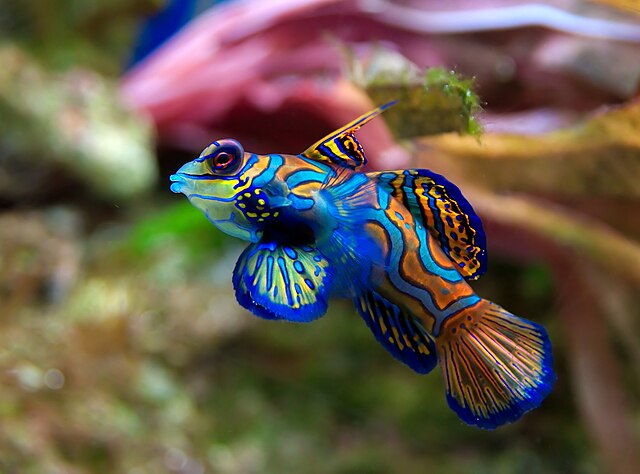
The Mandarin fish (Synchiropus splendidus) is a small marine fish of the family Synchiropodidae that inhabits the Indian and Pacific Oceans. It is characterized by its striking coloration, with intricate combinations of green, blue, orange, and red—so beautiful it's sometimes called "the most beautiful fish in the world." Maximum body length is around 10 cm, and it is distinctive for its characteristic waddling movement along the tank bottom.
Difficulty Level: Advanced Aquarists Only
Despite their beauty, Mandarin fish are known for being extremely difficult to keep. This is primarily due to their difficulty in feeding and the toxicity of their skin mucus.
Ecology and Behavior
| Aspect | Details |
|---|---|
| Distribution | Indian Ocean, Western Pacific, Philippines, Okinawa |
| Body Length | Maximum 10 cm (females typically 6-7 cm) |
| Diet | Carnivorous (small crustaceans such as copepods and amphipods) |
| Activity | Hides in live rock during the day; becomes active at dusk and night |
| Reproduction | After sunset, pairs rise near the water surface to spawn |
| Toxicity | Secretes toxins from skin mucus glands (harmful if injured by other fish) |
Setting Up the Aquarium Environment
Tank Size
A minimum of 100 liters is recommended (preferably 150-200 liters). The reasons are as follows:
- A large amount of live rock is needed as a breeding substrate for copepods
- Each fish requires a large territorial space
- A larger water volume provides greater water quality stability
Live Rock and Sump Tank
For copepods and amphipods to naturally reproduce as food for Mandarin fish, it is essential to place a sufficient quantity of high-quality live rock (approximately 50-80g per liter of tank volume).
Utilizing a sump tank (an auxiliary tank separate from the main display tank): Setting up a dedicated copepod culture tank connected via pipes to the main tank is highly effective for ensuring a stable food supply.
Water Parameters
| Parameter | Recommended |
|---|---|
| Temperature | 24-26°C (75-79°F) |
| Salinity (Specific Gravity) | 1.025 (approximately 35 ppt) |
| pH | 8.1-8.3 |
| Ammonia | 0 |
| Nitrite | 0 |
| Nitrate | 10 mg/L or less |
Considerations for Tank Mates
- Incompatible: Aggressive fish (surgeonfish, wrasses), bottom-dwelling competitors like gobies
- Compatible: Peaceful fish (clownfish, seahorses, blennies, etc.)
- Caution: Other Mandarin fish (especially males) will fight over territory
Reasons for Feeding Difficulty and Solutions
Why Is Feeding Difficult?
In the wild, Mandarin fish feed primarily on live copepods and amphipods. They rarely accept commercial prepared foods, flakes, or frozen brine shrimp, and most specimens from shops do not eat artificial foods.
Methods for Supplying Copepods
1. Abundant Live Rock Placement (Basic Method)
Mature live rock naturally contains reproducing copepods. The minimum is "100L tank with abundant live rock" per Mandarin fish.
2. Purchasing and Adding Live Copepods
This method involves purchasing live copepods such as "Marine Copepods," "Tisbe sp.," and "Parvicalanus sp." from specialty shops and adding them to the tank 1-2 times per week. This is especially effective when first introducing the fish or when the tank is not yet mature.
3. Transitioning from Frozen Copepods
Some individuals will accept frozen copepods (such as Reef Nutrition Arcti-Pods). This involves mixing them with live food and gradually increasing the proportion of frozen food through training.
4. Training with Prepared Foods (Advanced)
A very small number of individuals can be trained through patience to accept prepared foods such as "PE Mysis," "Hikari Marine A," and "Benepets." Results vary greatly among individuals and are not guaranteed.
Feeding Checklist
- Observe without handling in darkness for 3 days after introduction
- Feed during evening to night hours
- Try adding small amounts of live copepods
- Check for feeding with a flashlight (fish often hide during the day)
Attempting Breeding
Breeding in the aquarium has been reported for Mandarin fish. While difficult, it is possible if a breeding pair can be maintained.
Breeding Requirements
- A mature male and female pair (males have large spines on their dorsal fin)
- Abundant live rock and plentiful food
- Stable water parameters
- Observe at dusk with dimmed lighting and after lights off (spawning typically occurs shortly after sunset)
Larval Rearing
Eggs released during spawning hatch into planktonic larvae. Culturing rotifers and phytoplankton as food for the larvae is necessary, and larval rearing is extremely difficult.
Tips for Long-term Care
- Daily feeding observation: Monitor what they're eating and whether the body shape is healthy or thin
- Weight check: A sunken abdomen is a sign of insufficient food
- Strict water quality management: Maintain nitrate levels at 10 mg/L or below, which also affects copepod survival
- Solo or small group keeping: Avoid overcrowding to prevent food competition
While Mandarin fish are considered "difficult to keep," with proper environmental setup (abundant live rock and stable copepod supply), you can enjoy their exceptional beauty for the long term. We strongly recommend introducing them to a mature aquarium where copepods are already established.