Mariage Medaka Breeding & Care Guide | Management & Selection Methods to Enhance Lame Coloration
Complete guide to Mariage medaka care and breeding methods. Learn how to maximize the contrast between pure white coloration and lame through lighting, tank, and nutritional management, plus the complete breeding flow from egg-laying through fry care and selection, and easy-to-understand disease prevention tips for beginners.
Key Takeaways
Complete guide to Mariage medaka care and breeding methods. Learn how to maximize the contrast between pure white coloration and lame through lighting, tank, and nutritional management, plus the complete breeding flow from egg-laying through fry care and selection, and easy-to-understand disease prevention tips for beginners.
Related Species
What is Mariage Medaka?
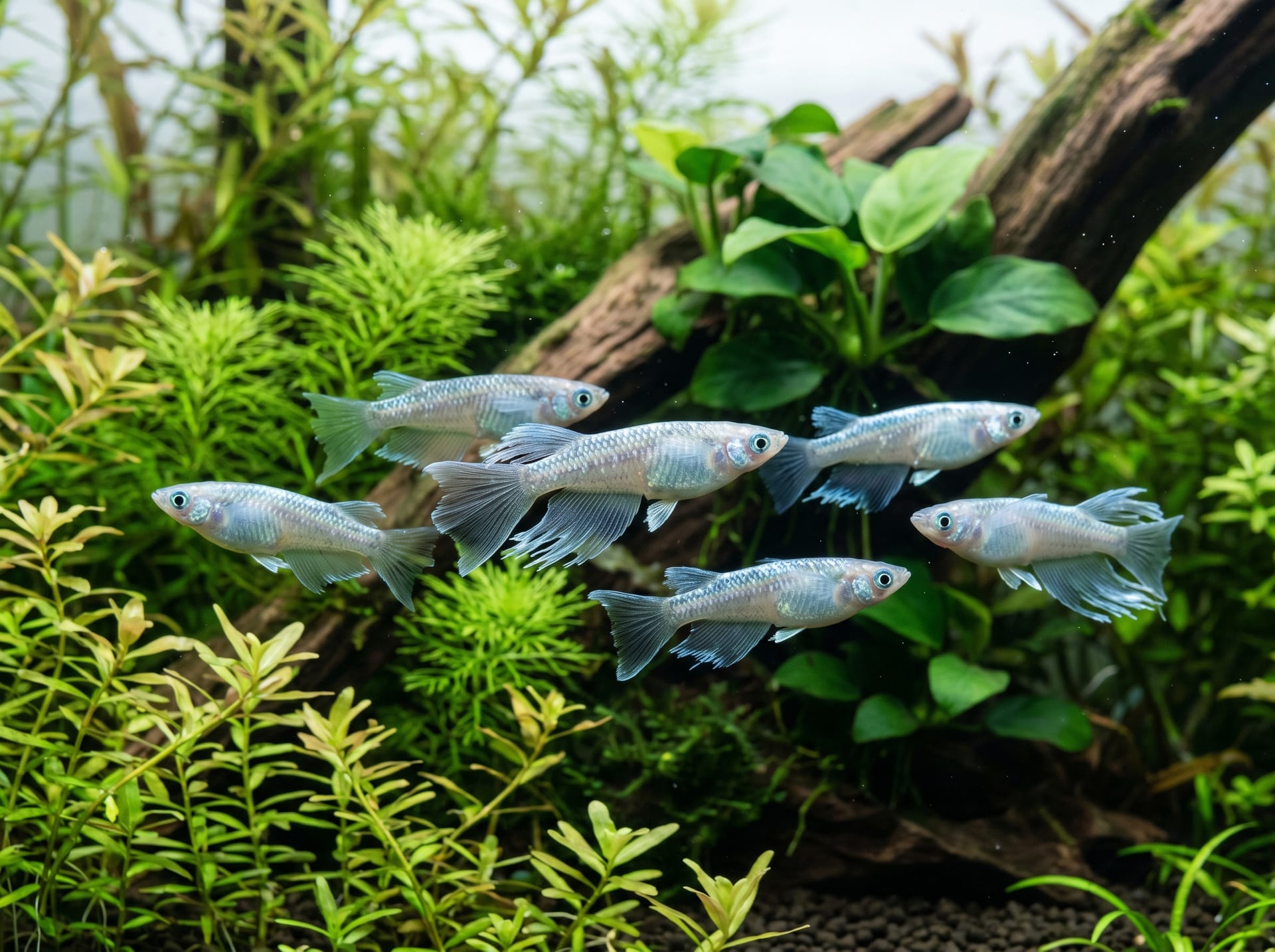
Mariage medaka are a group of improved medaka breeds born from crosses between lame (sparkling granular pigment cells) and body colors. The name derives from the French word meaning "wedding" in Japanese, and is characterized by a pure white body color reminiscent of a bridal dress with gold and silver lame scattered throughout.
Multiple variations exist, including "Mariage Kira-Kira," "Mariage Long Fin," and "Mariage Internal Light," with breeders continuing to develop new strains. The combination of white coloration and abundant lame creates striking sparkle when exposed to light, making it one of the most popular and expensive improved medaka varieties on the market due to its high ornamental value.
Basic Husbandry Requirements
Mariage medaka are moderately challenging to keep. While their white coloration makes it easy to spot early signs of poor water quality or illness, symptoms of ich and columnaris disease are also more visible, requiring careful daily maintenance.
Recommended Husbandry Parameters
| Parameter | Target Value |
|---|---|
| Water Temperature | 20–26°C |
| pH | 6.8–7.5 |
| Ammonia & Nitrite | Undetectable (Zero) |
| Water Volume (per adult) | 3–5L (generous spacing recommended) |
| Stocking Density | Max 10–15 per 45cm tank |
| Filtration | Sponge filter recommended |
Techniques to Maximize Lame Coloration
Lame coloration in Mariage medaka is largely genetic, but can be significantly enhanced through proper environment and nutrition management.
3 Key Points to Enhance Lame Coloration
1. Use Black Tanks
Lame sparkles best with dark background contrast. Black plastic tubs, NV boxes, and black-sided tanks showcase lame most effectively. Dark substrates like black gravel or clay sand also enhance coloration. If the tank bottom is black, transparent sides are fine.
2. Use Natural Sunlight or Blue-Spectrum LED
The iridophores that create lame are activated by UV components in natural light. Raise them outdoors in sunlight if possible, or use aquarium LED lighting with strong blue and violet spectrum indoors. Aim for 12–14 hours of lighting per day.
3. Use Color-Enhancing Foods
| Food Type | Effect on Lame |
|---|---|
| Carotenoid-rich feeds (astaxanthin formulas) | Enhanced overall body coloration |
| Live daphnia | Protein supplementation, enhanced coloration |
| Green water culture | Improved color depth and luster |
| Artemia (brine shrimp) | Especially effective for fry-to-juvenile color development |
Breeding Management & Selection
Breeding Mariage medaka is straightforward if you follow basic medaka principles, but selection is crucial to maintain lame and color quality.
Breeding Flow
- Pair Selection: Prioritize breeders with abundant lame and good body conformation
- Spawning Induction: Use 22–26°C water temperature and 13–14 hours of lighting to trigger natural spawning
- Egg Management: Collect eggs from spawning substrate and keep in separate containers with dilute methylene blue solution
- Incubation & Fry Care: Eggs hatch in 10–14 days at 25°C; start with paramecia and PSB (photosynthetic bacteria)
- Selection Timing: Lame becomes visible around 6–8 weeks of age, allowing body conformation assessment
Mariage Selection Criteria
- Lame Density: Lame distributed widely from back across flanks
- Color Purity: Pure white without yellow or brown tones
- Body Conformation: Straight spine, thin and firm caudal peduncle
- Fins: For long-fin types, all fins well-extended with good luster
- Symmetry: Both eyes and fins symmetrical with no deformities
Water Quality Management & Disease Prevention
The white coloration of Mariage medaka makes it easy to spot early disease symptoms—consistent daily observation is key to long-term health.
Routine Maintenance Schedule
| Frequency | Task |
|---|---|
| Daily | Check fish behavior, appetite, and body condition |
| 1–2× per week | Partial water change (1/3–1/4), filter cleaning |
| Monthly | Substrate cleaning, water testing (pH, nitrite) |
Common Diseases & Treatment
| Disease | Symptoms | Treatment |
|---|---|---|
| Ich (White Spot) | Multiple white spots on body | Raise temperature to 28°C, treat with Green F |
| Fin Rot | Ragged fin edges | Treat with Green F Gold, 0.5% salt bath |
| Water Mold | White cotton-like growth on body | Methylene blue treatment, isolate infected fish |
| Egg Binding | Abnormally swollen abdomen | Provide spawning substrate, pair with males |
Outdoor vs. Indoor Husbandry
Mariage medaka can be kept indoors or outdoors, each with seasonal and management considerations.
Benefits of Outdoor Husbandry
- Natural light makes lame sparkle maximally
- Green water deepens body coloration
- Natural spawning is vigorous during spring–fall breeding season
Benefits of Indoor Husbandry
- Year-round temperature control enables winter breeding
- Easy disease detection (white coloration)
- Enjoy aesthetic aquascaping
Winter Care
Below 15°C, medaka become sluggish; below 10°C, stop feeding. Outdoor tanks need basic insulation (foam boxes, black plastic wrap) to prevent ice formation. Indoor heated tanks allow winter breeding.
Conclusion
Mariage medaka rank among the finest ornamental medaka varieties, combining bridal-white coloration with sparkling lame. Through consistent water quality management, proper lighting, and selective breeding, you can enhance lame density and color quality across generations. When purchasing from breeders, verify lame density, body conformation, and parent information to select premium specimens. Meticulous selection records are the key to developing superior Mariage strains.
Sexing & Selecting Breeding Pairs
To successfully breed Mariage medaka, accurately sexing them is essential.
Male vs. Female Characteristics
| Feature | Male | Female |
|---|---|---|
| Dorsal Fin | Notched/jagged edges | Rounded/smooth |
| Anal Fin | Large, parallelogram-shaped | Small, triangular |
| Body Shape | Streamlined, compact | Rounded belly |
| Ovipositor | Absent | Present (visible during spawning) |
Selecting Breeding Pairs
- Select the lame-richest individuals from each sex
- Prioritize straight-spined fish with symmetrical body shape
- Choose pure white coloration without yellowing or transparency
- Fish aged 6 months–1.5 years are in peak spawning condition with highest egg quality
Long-Fin Variety Care Notes
Long-fin Mariage varieties require special care due to fin fragility.
- Strong water flow causes fin bending; maintain gentle flow
- Aggressive tankmates will nip fins; keep with peaceful species only
- Long fins create drag; weak swimmers benefit from dedicated tanks
- Use floating food; sinking pellets may be difficult to retrieve
- Eggs easily tangle in long fins; collect eggs carefully each morning
Shipping & Packing for Sale
Proper packing is critical to shipping success and customer satisfaction when selling Mariage medaka.
- Use heavy-duty double plastic bags
- Use foam boxes and thermal packs to minimize temperature fluctuation
- Use ice packs in summer, hand warmers in winter (keep away from direct contact)
- Fill bag 1/3 with water, the rest with oxygen or air
- Fast fish for 24 hours before shipping to minimize waste