Medaka and Plants in Symbiosis: Building a Circular Aquaponics Farming System
This guide explains how to build and operate an aquaponics system that uses medaka fish waste as a nutrient source for plants.
Key Takeaways
This guide explains how to build and operate an aquaponics system that uses medaka fish waste as a nutrient source for plants.
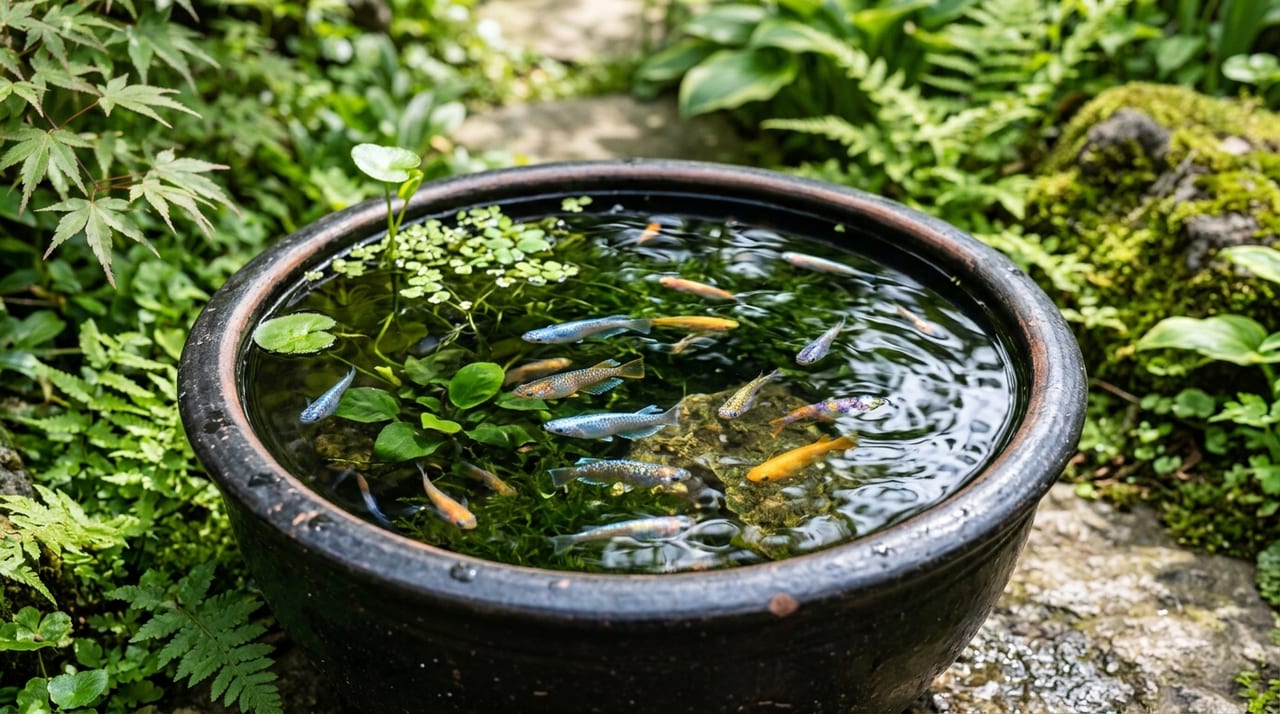
Aquaponics combines aquaculture (fish farming) and hydroponics (soilless plant cultivation) into a circular farming and breeding system where fish and plants coexist in symbiosis. Fish waste is broken down by bacteria to become plant nutrients, while plants purify the water, keeping the fish tank clean. Japanese medaka are exceptionally well-suited to this system, and even on a household scale, you can create a beautiful and functional aquaponics setup. As of 2026, interest among enthusiasts continues to grow as a sustainable method that delivers both food production and ornamental enjoyment.
Basic Principles of Aquaponics
When fish (in this case, medaka) consume food, they excrete ammonia. While ammonia is toxic to fish at high concentrations, bacteria of the genus Nitrosomonas convert it to nitrite, and bacteria of the genus Nitrobacter further convert it to nitrate. These nitrates serve as an excellent nitrogen source for plants and are absorbed through the roots. After plants extract nutrients from the water, the purified water flows back to the fish tank.
Stabilizing this cycle requires balancing fish density, feeding amount, plant quantity, and bacterial population. In the initial setup phase, it takes 4–8 weeks for bacterial colonies to form, so start with fewer fish and be patient.
Why Medaka Are Ideal for Aquaponics
- Temperature Adaptability: Tolerate a wide range of temperatures (15–30°C) and withstand seasonal fluctuations
- Compact and Space-Efficient: Can be kept in relatively small tanks, making them ideal for home use
- Reproductive Capacity: Breed naturally under suitable conditions, making population maintenance easy
- Ornamental Value: Available in diverse varieties (black, white, Yōkihi, Hata no Inazuma, etc.) combining aesthetic beauty with ornamental appeal
- Easy Availability: Readily available from breeders nationwide, including through BreederDirect's medaka category
Types of System Configurations
Media Bed System
The most common home-scale aquaponics setup. Plants are grown directly in containers or seedling trays filled with media such as hydroton (expanded clay pellets) or volcanic rock. The media also supports bacterial colony formation. Its simple structure makes it easy to start on a small scale.
NFT System (Nutrient Film Technique)
In this system, a thin film of water flows along the bottom of sloped, narrow channels, keeping plant roots constantly moist. Ideal for leafy vegetables (lettuce, herbs) with excellent oxygenation and high productivity. Equipment costs are somewhat higher.
DWC System (Deep Water Culture)
Plants are set in holes in a floating board and suspended on the water surface. Since roots are always submerged, aeration is essential for oxygen supply. Characterized by rapid growth, it is well-suited for leafy vegetables.
How to Build a Home Aquaponics System (Media Bed)
Required Equipment
- Fish Tank: 60–90 liter container or aquarium
- Plant Bed: Container with similar capacity to the fish tank
- Submersible Pump: Circulate at approximately 2× tank volume per hour
- Hydroton or Volcanic Rock: pH-neutral varieties
- Timer: For intermittent operation
- Fish: 20–30 medaka (for a 60-liter tank)
Installation Steps
- Place the plant bed above or beside the fish tank
- Create a drain hole in the plant bed and pipe water back to the fish tank
- Connect a hose from the submersible pump to deliver water from the fish tank to the plant bed
- Rinse and fill the plant bed with hydroton
- Fill the system with dechlorinated water
- Set the timer for intermittent operation (approximately 15 minutes per hour)
Introducing Pilot Bacteria
In the initial setup phase, either inoculate with commercial bacterial products (PSB or nitrifying bacteria) or seed the system with a small amount of filter media from an established tank. Add small amounts of ammonia to cycle the system; detecting nitrite and then nitrate in sequence indicates successful establishment.
Choosing Easy-to-Grow Plants
Plants suited to aquaponics can withstand submerged roots and have moderate to high nitrogen requirements.
Beginner-Friendly
- Mint, Basil, Cilantro (fast-growing with enjoyable harvests)
- Leaf Lettuce, Salad Greens (harvest in short timeframes)
- Spinach, Komatsuna (Japanese mustard greens)
Intermediate Level
- Tomato, Eggplant (require stakes but high-yielding)
- Strawberry (rewarding fruiting)
- Bok Choy, Water Spinach
Daily Management Tips
- Daily: Check fish condition, feed (small amounts 1–2 times), verify water circulation
- Weekly: Test water quality (pH, ammonia, nitrite, nitrate), top up evaporated water
- Monthly: Clean pump filters, clean plant beds
Ideally, maintain pH in the 6.8–7.2 range. If pH drops, add small amounts of oyster shells or limestone; if it rises, adjust with pH reducer.
Aquaponics is a system that offers rewards from both fish and plants. The experience of enjoying home-grown vegetables at your table while admiring beautiful medaka creates a connection to nature, even in urban settings. As you understand the genetics of medaka breeding, select your favorite varieties and build your system.