Complete Guide to Outdoor Medaka Breeding|Breeding in Water Lily Pots, Plastic Containers, and Styrofoam Boxes | ブリちょく
Medaka| ✍️ BreederDirect Editorial
Complete Guide to Outdoor Medaka Breeding|Breeding in Water Lily Pots, Plastic Containers, and Styrofoam Boxes
Explains how to choose containers suitable for outdoor medaka breeding (water lily pots, plastic containers, styrofoam boxes) and seasonal management methods. Details summer high water temperature countermeasures, predator protection, and winter survival techniques.
Key Takeaways
Explains how to choose containers suitable for outdoor medaka breeding (water lily pots, plastic containers, styrofoam boxes) and seasonal management methods. Details summer high water temperature countermeasures, predator protection, and winter survival techniques.
Complete Guide to Outdoor Medaka Breeding|Breeding in Water Lily Pots, Plastic Containers, and Styrofoam Boxes
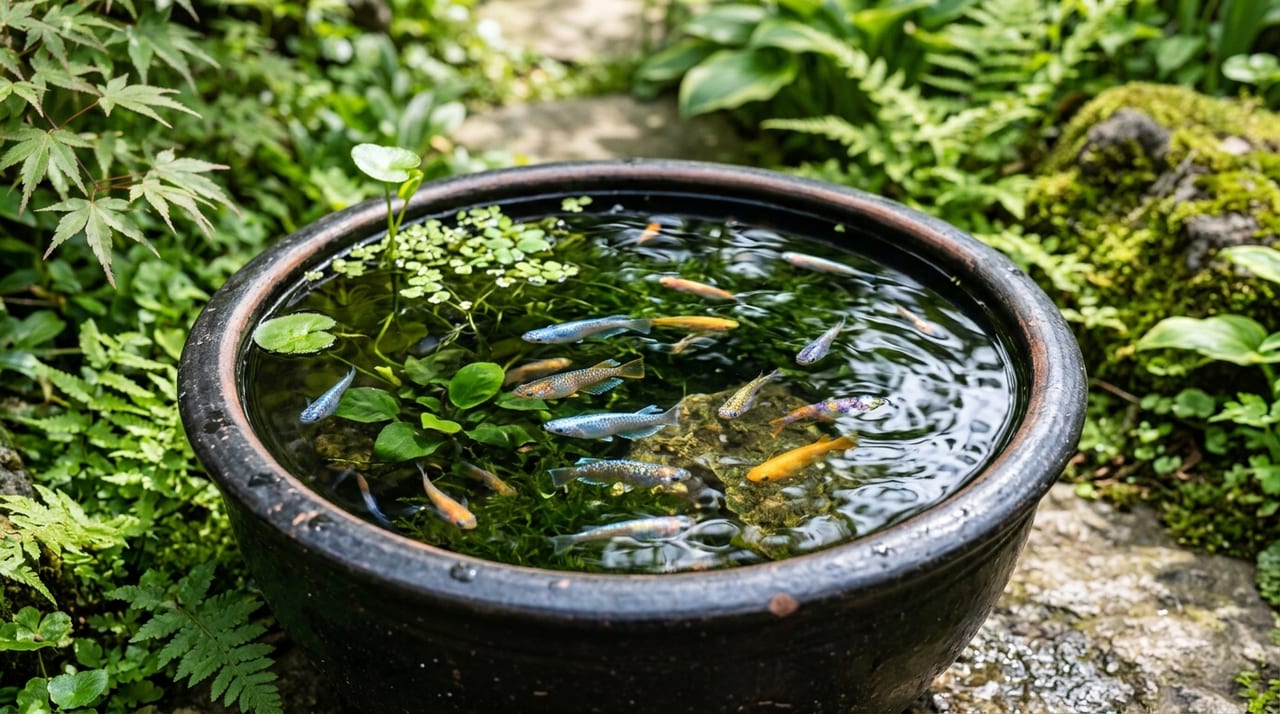
Outdoor medaka breeding is a popular rearing style that allows you to maintain fish in a natural environment while enjoying beautiful landscapes through combinations with plants. However, unlike indoor breeding, it requires management adapted to sunlight, predators, and water quality changes. This article explains everything from container selection for outdoor breeding to seasonal management methods.
✍️
BreederDirect Editorial
The BreederDirect editorial team specializes in care information for animals, covering veterinary care and breeding to deliver beginner-friendly guides.
Find Medaka on BreederDirect
Buy directly from verified breeders
Browse Related Listings
Find Medaka listings related to this article on BreederDirect. Buy directly from verified breeders.
Temperature fluctuations: Requires management of summer heat and winter cold
Predator risk: Water birds, dragonfly nymphs (yago), frogs, cats, etc.
Evaporation and water quality changes: Particularly in summer, water volume decreases
Leaf and debris accumulation: Requires regular removal
Winter management: Water may freeze depending on region
Container Types and Selection
Water Lily Pot
A traditional container with Japanese charm that beautifully harmonizes with garden designs.
Features:
- Available in ceramic, terracotta, or plastic
- High heat retention (ceramic)
- Beautiful aesthetic suited to Japanese landscapes
Size guidelines:
- Small (diameter 30-40cm): approximately 5-10 medaka
- Medium (diameter 50-60cm): approximately 10-20 medaka
- Large (diameter 70cm+): approximately 20-50 medaka
Precautions:
- Ceramic is heavy and difficult to move
- Inexpensive plastic versions degrade over time (cracking, discoloration)
Plastic Container (Plastic Box)
A simple agricultural-use container that is extremely popular among medaka enthusiasts.
Features:
- Very inexpensive (100L+ from ¥200)
- Lightweight and easy to handle
- Large water volume capacity (40-200L)
- Easy breed-specific management by arranging multiple containers
Recommended sizes:
- 40L: Optimal for single breed propagation and maintenance
- 80L: Multi-specimen and multiple breed maintenance
- 120-200L: Large-scale propagation and display
Styrofoam Box
Styrofoam boxes used for fish transportation are also suitable for medaka breeding.
Features:
- Excellent heat retention (beneficial in both winter and summer)
- Lightweight and inexpensive
- Can be covered (insulation and predator protection)
Directly under large trees with heavy leaf/pollen drop
Locations easily accessible to predators (birds, etc.)
Seasonal Management Methods
Spring (March-May): Season Start
Spring is a critical period when medaka activity begins.
Management points:
- Begin feeding when water temperature reaches 15°C or higher
- Clean and change water in overwintered containers
- Add water plants like water sprite
- Set up spawning materials (prepare for spawning to begin)
Temperature management: Early morning and evening temperature differences are large during this season. Watch for sudden changes.
Summer (June-September): Most Attention Required Season
Japanese summers are the greatest challenge for outdoor breeding.
Water temperature control (Most important):
- Water temperature above 35°C is dangerous (lethal at 40°C)
- Install shade netting (50-70% shade rate) over the container
- Cover container sides and bottom with white or silver sheets (reflection reduces temperature rise)
- Maintain larger water volume (smaller containers experience larger temperature fluctuations)
- Direct fan air at water surface (evaporative cooling)
Evaporation management:
- Check water level daily
- Add dechlorinated water to replace loss
- Large volume replacements cause abrupt water quality changes, so add in small amounts
Oxygen deficiency prevention:
- High water temperature lowers dissolved oxygen
- Consider adding aeration (air pump)
- Water plants like water sprite supply oxygen through photosynthesis, but overly dense planting causes counterproductive effects at night
Autumn (October-November): Winter Preparation
Management points:
- When water temperature drops below 15°C, activity slows and feeding should be reduced
- Stop feeding when water temperature drops below 10°C
- Protect from fallen leaves with netting
- Select healthy individuals for overwintering in separate containers for next year's breeding
Overwintering tips:
- Use containers 20-30cm+ deep (deep enough that bottom doesn't freeze)
- Wrap container with styrofoam and bubble wrap for insulation
- If water surface freezes thinly but bottom doesn't, medaka will survive
- Don't break ice; allow it to melt naturally (prevents shock to fish)
Predator Prevention
Main Predators and Countermeasures
Predator
Damage
Countermeasure
Gray heron, white heron
Direct predation of medaka
Top netting, transparent cover
Yago (dragonfly nymphs)
Predation from inside
Netting during spawning season, egg removal
Cats
Tipping containers, direct predation
Top netting, elevated placement
Frogs
Jump in and feed
Netting
Netting-based protection
General
Japanese container-specific nets
Summary
Outdoor medaka breeding requires different management than indoor breeding, but the beautiful coloration from natural light, active breeding, and rich landscape beauty from combinations with plants offer unique charm found only in outdoor breeding.
Summer water temperature control and predator protection are essential, and having shade netting and top netting prepared in advance prevents many problems. With proper seasonal management, enjoy outdoor medaka breeding for years to come.