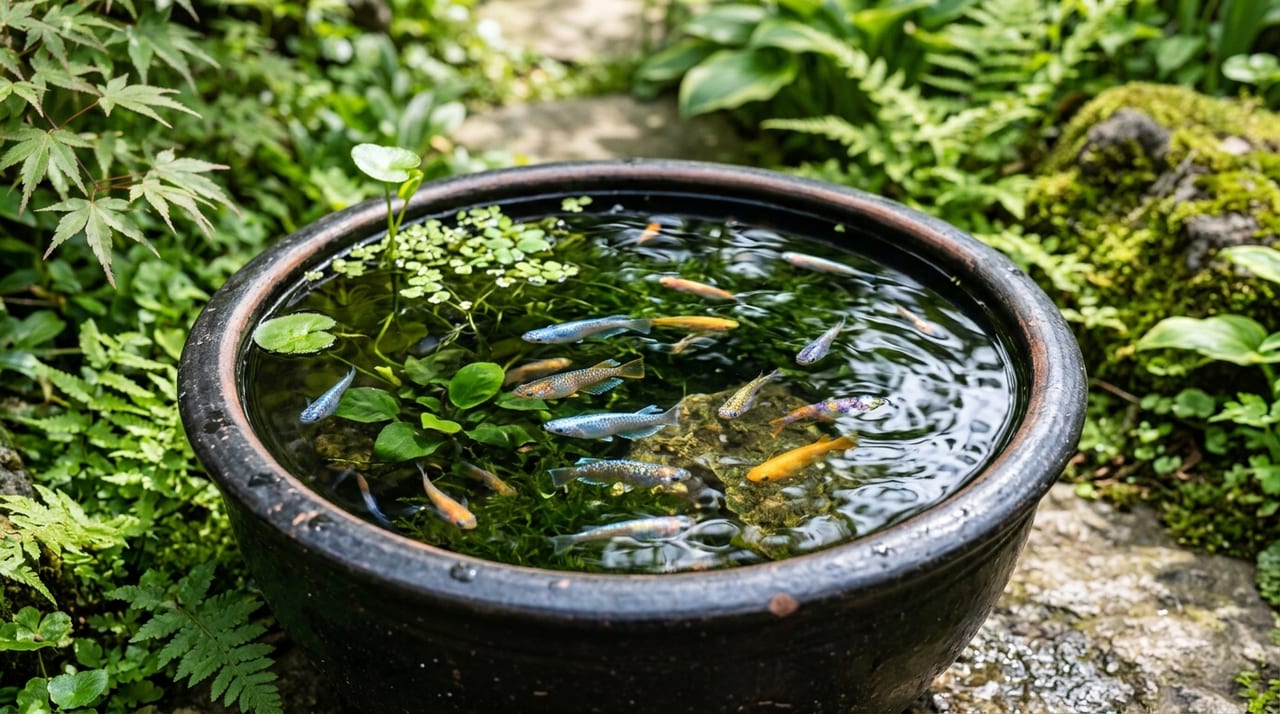
Fry Rearing: The Most Challenging Stage of Medaka Breeding
While medaka breeding itself is relatively easy, raising hatchlings (called "needle fish" at the fry stage) to adult size is actually the most difficult process. Mortality rates at the needle fish stage are high, and many aquarists struggle with the problem of eggs hatching daily but fry failing to grow.
Fry rearing failures boil down to three main causes: insufficient feeding, water quality deterioration, and predation by parent fish or larger individuals. With careful management of these three points, most hatchlings can be raised into healthy fish. Management during the needle fish period (hatching to 1 week) is especially critical for survival rates. Conversely, once you get through this initial period, fry rearing becomes much more stable.
Growth Stages of Medaka Fry and Size Benchmarks
Guidelines for size and management by age since hatching (at water temperature 25-28°C with adequate feeding).
| Stage | Age Guide | Body Length | Management Tips |
|---|
| Needle fish | Hatching to 1 week | 2-3mm | Powder feed/PSB/green water · minimize water changes |
| Fry | 1-2 weeks | 4-5mm | Transition to finer feed · feed 3-4 times daily |
| Late fry | 2-3 weeks | 7-10mm | Less than 10 fry per liter · start size-based culling |
| Juvenile | About 1 month | 1-1.5cm | Consider transition to normal rearing |
| Transfer to adult tank | 1.5cm or larger | 1.5cm+ | Below 1.5cm risk being eaten by adults |
The answer to "how large at 1 month?" is body length of 1-1.5cm. They can be moved to the same tank as adults only after reaching 1.5cm.
Egg Management and Hatching Container Preparation
Eggs should be collected daily from the aquatic plants or spawning substrates where they are laid and transferred to a dedicated hatching container. Leaving eggs in the parent tank results in a high likelihood of the parents eating them. Simply making egg collection a habit dramatically improves hatch rates.
A 100-500ml small container (plastic case, cut plastic bottle, etc.) is sufficient for a hatching container. The key is to use tap water (with chlorine) as-is. Chlorine has bactericidal properties and can suppress water mold that commonly develops on eggs. Before hatching, avoid water changes and rely on the chlorine. This is standard practice.
A water temperature of 25-28°C is optimal; eggs hatch in 10-14 days within this range. Higher water temperatures speed up hatching, while temperatures below 22°C significantly extend the incubation period. Adding methylene blue to a very light blue color (guideline: 1-2 drops per liter) is effective as a water mold preventative. Observe eggs daily and promptly remove white, cloudy infertile or dead eggs. Leaving them causes mold to spread to neighboring fertile eggs.
Post-Hatching Care (Needle Fish Period: Hatching to 1 Week)
Newly hatched fry are 2-3mm long and called "needle fish." At this stage, their mouths are extremely small, and commercial medaka food cannot be eaten as-is. Starvation is the biggest cause of fry death during the needle fish period. When fry die despite feeding, it's almost always because you're giving them food that's too large to fit in their mouths.
Feeding: Give PSB (photosynthetic bacteria), infusoria, or powder-form fry-specific food 3-5 times daily in small amounts. Most effective is rearing in green water (water rich in phytoplankton). With microorganisms constantly floating in the environment, fry can eat continuously at their own pace, dramatically improving survival rates. Green water forms naturally by placing water in a sunny location, but commercial PSB or phytoplankton liquid additives speed up establishment.
Water Changes: During the needle fish period, water changes require extreme care. Sudden water quality changes are fatal for fragile fry. Avoid complete water changes; limit to removing bottom sediment with a dropper. If a partial water change is necessary, use only a small amount of same-temperature water (about 1/5 of the container volume). Once per week is the guideline.
Sunlight and Water Temperature: Sunlight is beneficial for maintaining green water, fry skeletal development, and appetite stimulation. However, water temperature can spike dangerously in summer; manage temperature below 30°C with shade cloths or moving the container to shade.
Growth Period Management (1 Week to 1 Month)
After 1 week, body length reaches 4-5mm, and finely crushed standard medaka food becomes edible. Gradually transition from powder to slightly larger granule sizes to promote growth.
Container Expansion: After 2-3 weeks, move to a 500ml to 2-liter container. Overcrowding directly causes water quality deterioration and poor growth. The guideline is no more than 10 fry per liter. While containers are small, keep numbers low and adjust stocking density as they grow.
Feeding Frequency: Continue 3-4 times daily. The appropriate amount is what can be eaten within 5 minutes. Remove uneaten food with a dropper—leftover food degrades water quality. Overfeeding is detrimental, but insufficient food during the growth period also stunts development. Use the roundness of the fry's abdomen as a guide.
Size-Based Separation: Even fry hatched on the same day show size variation after 2-3 weeks, and larger individuals may eat smaller ones (cannibalism). Sort by 1cm and 1.5cm size markers and separate into different containers—this is a critical point for improving survival rates. When culling, avoid stressing fry; transfer water along with the container rather than using a net.
Common Pitfalls and Solutions
"Water turns cloudy and fry die one after another": Overcrowding, overfeeding causing ammonia poisoning, or excessive bacterial growth are the causes. Immediately enlarge the container, reduce feeding by half, and perform daily partial water changes (1/3 volume of same-temperature water). Adding bacterial cultures is also effective.
"Fry are fed but become thin and die": Likely you're giving food too large for their mouth size. Further crush the food with your fingertips or use PSB and green water concurrently. During the needle fish period, judge by "whether the abdomen is round" rather than "whether they appear to be eating."
"Numbers suddenly drop after 1 month": A combination of cannibalism in overcrowded conditions and water quality deterioration. Separate containers, increase water change frequency, and review feeding amounts.
"Fry die immediately after hatching (complete die-off within 1-2 days)": The hatching container water temperature may be unstable (fluctuating), or there's a large water quality gap when transferring from the parent tank. Bring the temperature and water quality of the hatching container and rearing tank closer together before moving fry.
Transition After 1 Month and Path to Adulthood
About 1 month after hatching, fry reach approximately 1-1.5cm body length. At this point, you can consider transitioning to a normal rearing environment (parent fish tank, outdoor pond, etc.). However, while body length remains below 1.5cm, there's risk of being eaten by adults, so it's safer to move them to the adult tank only after confirming they've reached 1.5cm or larger.
When transitioning, perform acclimation carefully. Gradually add small amounts of water from the parent tank to the fry container, taking 30 minutes to 1 hour to equalize water quality before moving them. Sudden water quality changes can damage fry even at this stage.
The careful management from the needle fish period through 1 month lays the foundation for raising beautiful, hardy adult medaka. Fry that survive the first 1-2 months become noticeably stronger, and growth to adulthood accelerates rapidly. Without rushing, continuing daily observation and feeding is the greatest secret to successful fry rearing.