Tiger Barb Care Guide | Active Schooling Fish Management and Considerations for Keeping Multiple Species
Tiger Barbs are popular tropical fish known for their vibrant striped pattern and active swimming. While they have semi-aggressive tendencies, making tankmate selection important, beginners can enjoy keeping them with proper care conditions and schooling composition. This guide covers care, breeding, and multi-species tank management in detail.
Key Takeaways
Tiger Barbs are popular tropical fish known for their vibrant striped pattern and active swimming. While they have semi-aggressive tendencies, making tankmate selection important, beginners can enjoy keeping them with proper care conditions and schooling composition. This guide covers care, breeding, and multi-species tank management in detail.
What Are Tiger Barbs?
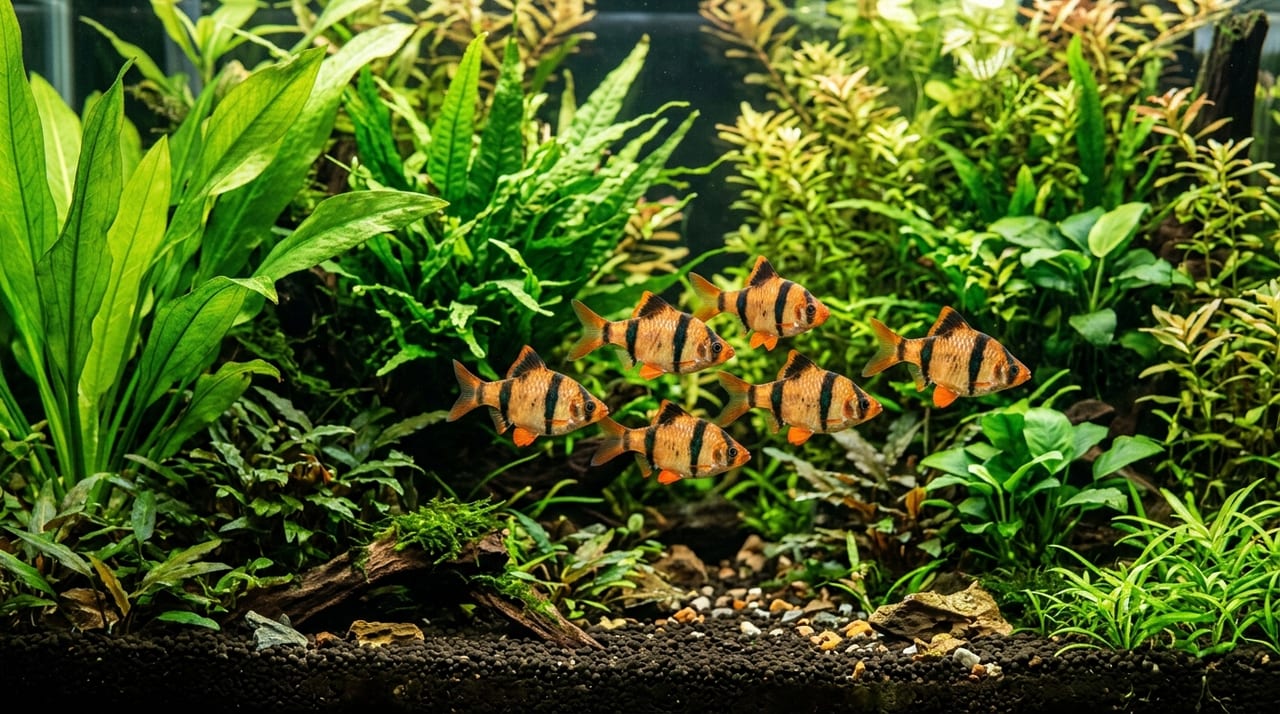
Tiger Barbs (Puntigrus tetrazona) are tropical fish from the order Cypriniformes, family Cyprinidae, native to Indonesia's Sumatra and Kalimantan islands. Growing 5-7 cm in length, they get their name from their striking appearance—an orange-yellow body with four distinctive black vertical stripes. While they were previously classified under the scientific name Barbus tetrazone, they have since been reclassified to the genus Puntigrus.
✍️
BreederDirect Editorial
The BreederDirect editorial team specializes in care information for animals, covering veterinary care and breeding to deliver beginner-friendly guides.
Find Tropical Fish on BreederDirect
Buy directly from verified breeders
Browse Related Listings
Find Tropical Fish listings related to this article on BreederDirect. Buy directly from verified breeders.
Popular color variations include Albino Tiger Barbs (cream-colored body with red eyes), Green Tiger Barbs (deep green coloration), and Platinum Tiger Barbs.
Setting Up the Aquarium Environment
Tank Size Selection
Tiger Barbs are active swimmers. When kept in schools, individual aggression is dispersed among the group, making adequate space essential.
Minimum: 60 cm tank (essential for schooling)
Recommended: 90 cm or larger (when keeping 8-10 or more individuals)
Width and depth are more important than height (to ensure adequate horizontal swimming space)
Water Parameters
Parameter
Ideal Range
Water Temperature
22-28°C (optimal around 25°C)
pH
6.0-7.5
Hardness (GH)
5-15 dGH
Nitrate (NO₃)
Below 40 ppm
Ammonia and Nitrite
Zero
They prefer slightly acidic to neutral water conditions. While they are hardy fish with good adaptability to water parameters, avoid alkaline water above pH 7.5.
Substrate and Aquascaping
Substrate: Fine sand or small gravel (black sand enhances their coloration)
Aquatic plants: Amazon Sword, Microsorum, Anubias, and similar hardy-leaved species
Driftwood and rocks: Provide hiding spots and help reduce territorial behavior
Open swimming area: Maintain ample open space in the front of the tank for swimming
Fine-leaved stem plants are easily damaged by fin-nipping, so hardy plants are best suited for Tiger Barb tanks.
Feeding
Tiger Barbs are omnivorous and eat most foods.
Suitable Food Types
Processed food (flakes and pellets): Easily digestible and well-balanced
Frozen food: Frozen bloodworms and frozen brine shrimp (effective for color enhancement)
Live food: Live brine shrimp and daphnia (also effective for breeding conditioning)
Dried food: Dried bloodworms and dried gammarus
Feeding Precautions
Feed 2-3 times daily, only as much as they can consume in 3-5 minutes
Remove uneaten food promptly as it causes water quality deterioration
Rotating diverse foods maintains nutritional balance and enhances coloration
Considerations for Community Tanks
The most critical consideration in Tiger Barb care is community tank compatibility. Tiger Barbs are known for fin-nipping behavior toward both their own species and other fish.
Compatible Tank Mates
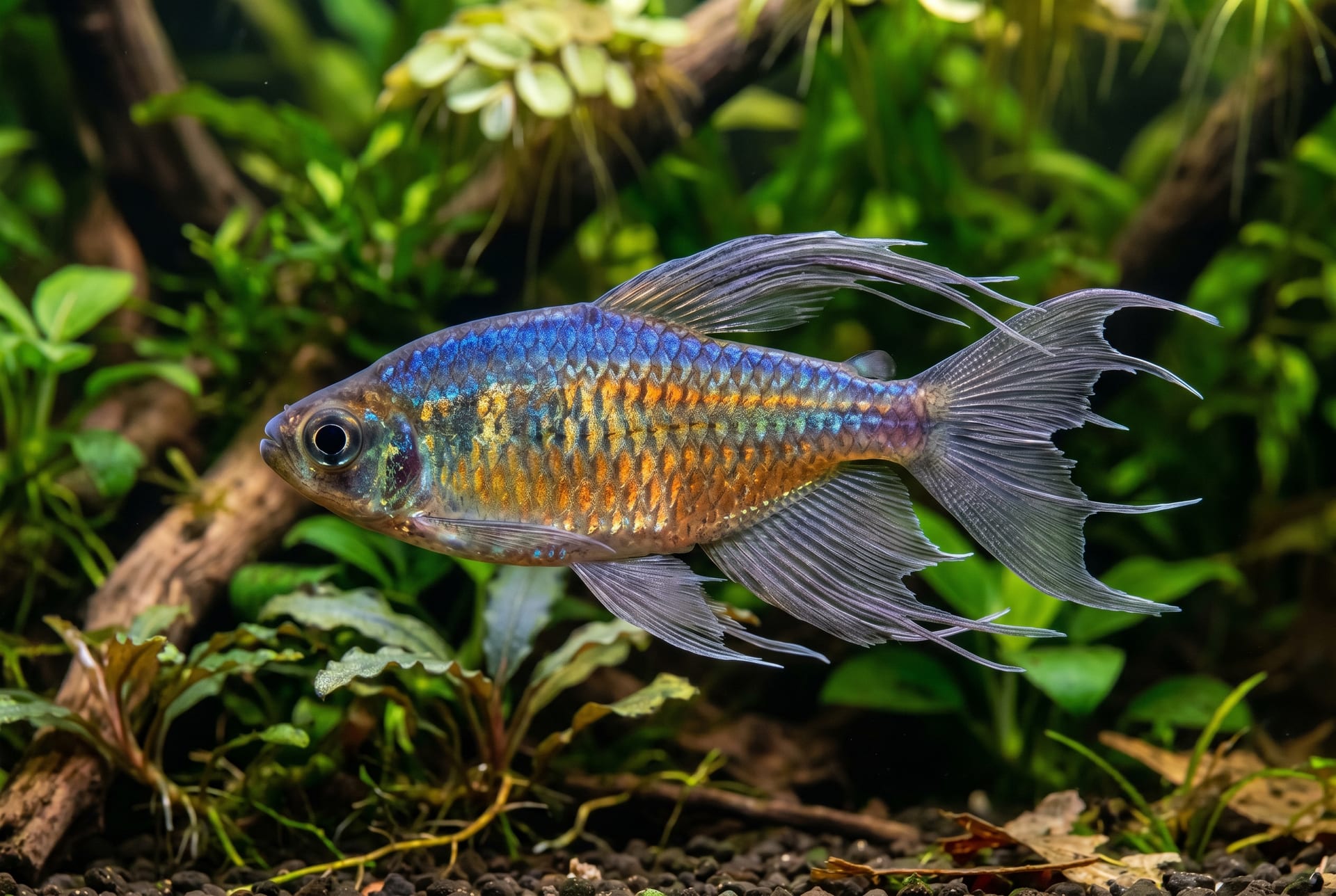
Similarly-sized active fish: Medium-sized tetras such as Congo Tetras and Serpae Tetras
Medium-sized cyprinids: Denison Barbs and Rosy Barbs
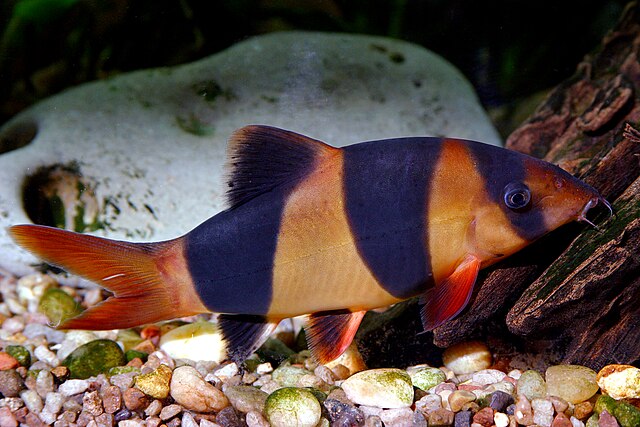
Loaches: Yoyo Loaches and Cobalt Dwarf Loaches (with territorial separation at the bottom layer)
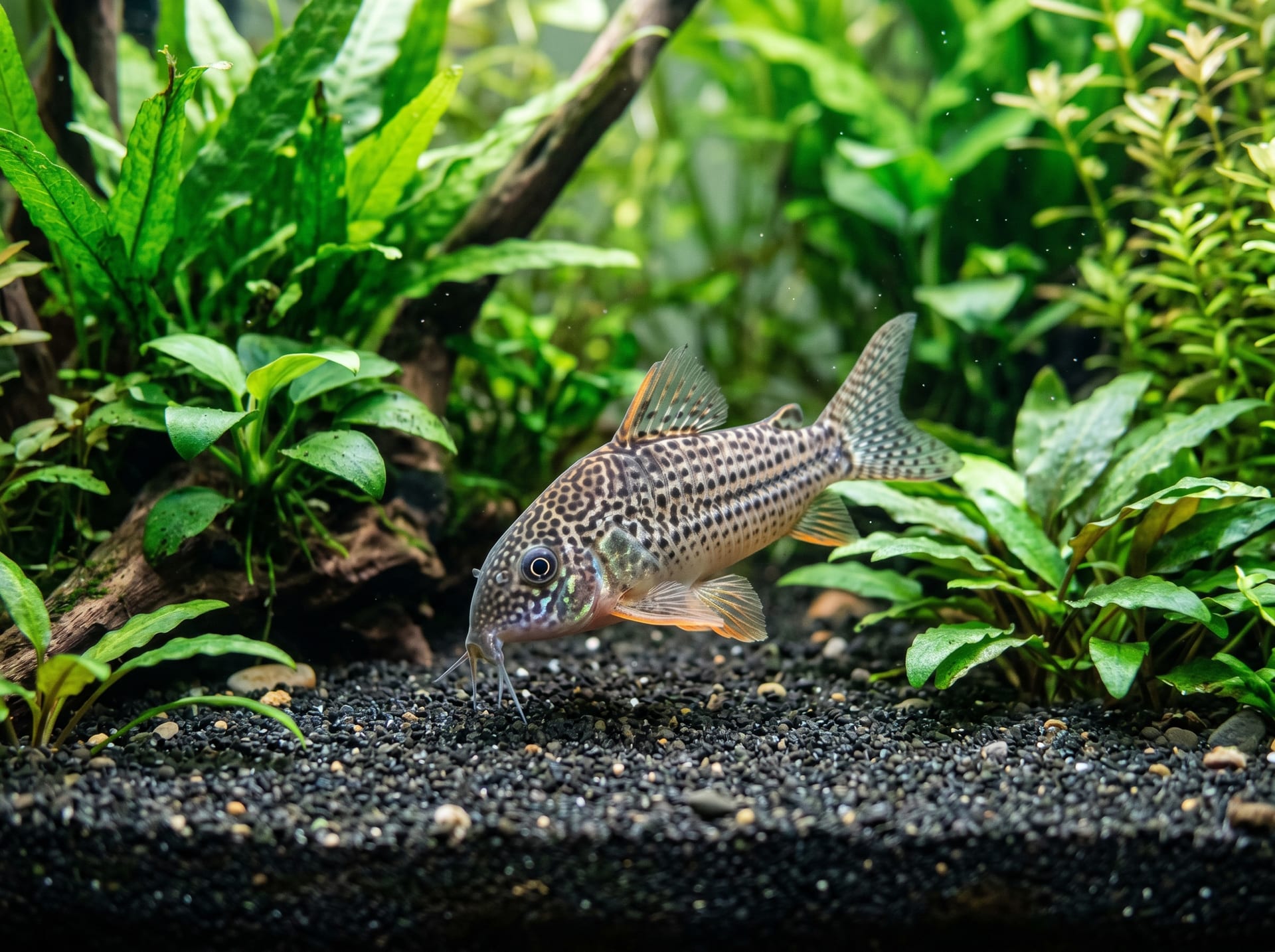
Large, hardy Corydoras: Julie Catfish and Panda Corydoras (short fins less prone to nipping)
Incompatible Fish
Bettas and gouramis: Long fins that are easily targeted for nipping
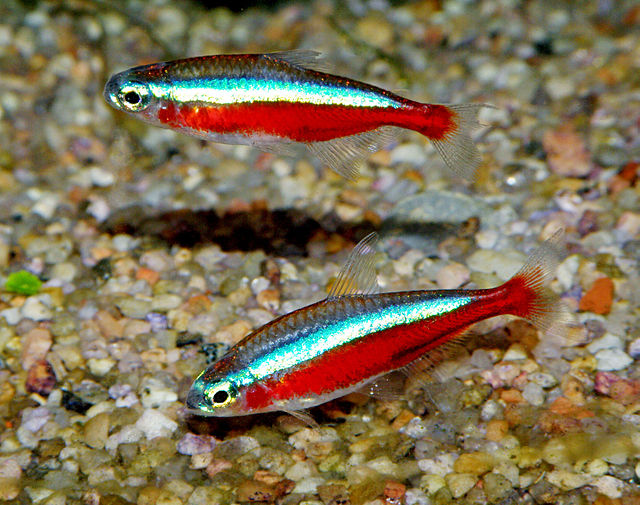
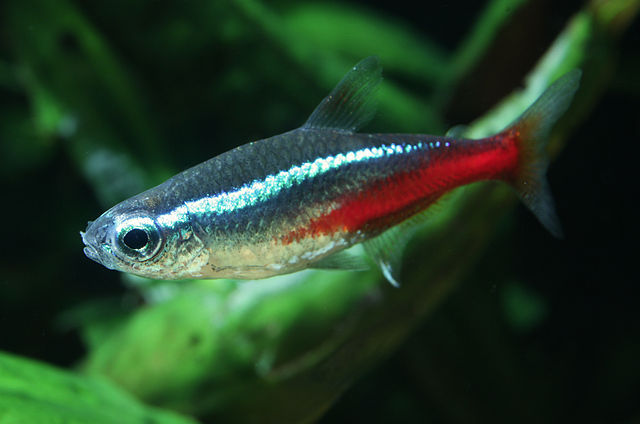
Small tetras: Neon Tetras and Cardinal Tetras are easily chased and harassed
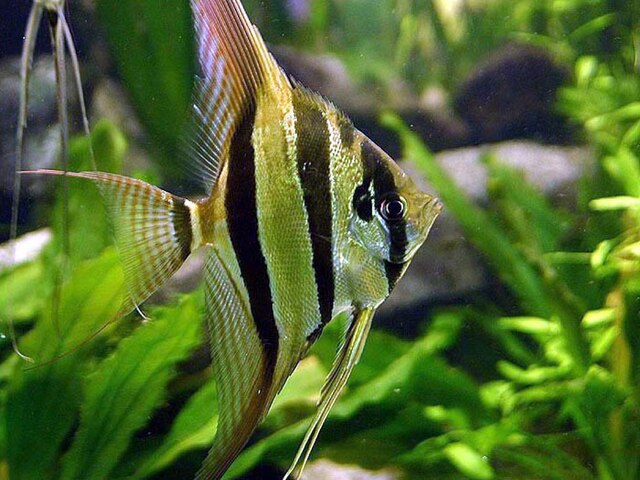
Angelfish: Long pectoral and ventral fins become targets
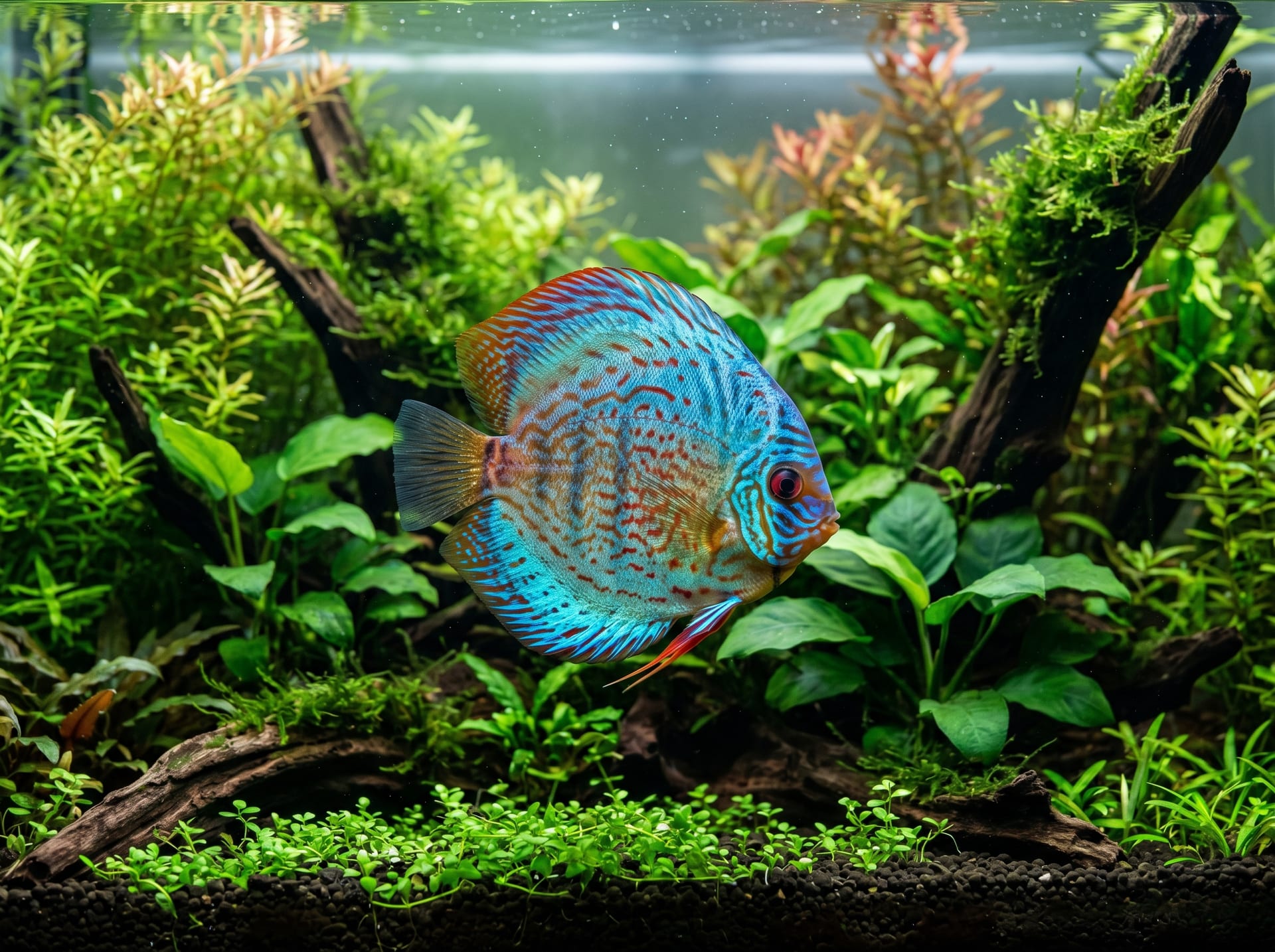
Discus and scalare: For the same reason, incompatible
Reducing Aggression Through Schooling
When keeping 6 or more Tiger Barbs as a school, dominance hierarchies form among them, significantly reducing fin-nipping toward other fish. Conversely, keeping only a few (1-3 individuals) tends to increase aggression toward other tank mates.
Breeding
Tiger Barbs are egg-scatterers and breed relatively easily with proper setup.
Preparing for Spawning
Breeding tank: Set up a 30-45 cm tank with spawning mops or pea gravel on the bottom
Water conditions: Slightly acidic (pH 6.0-6.5) and soft water (GH 5 or below)
Pairing: Select a gravid female with a well-colored male
Spawning and Fry Rearing
Spawn induction: Slightly raise temperature (27-28°C) and provide abundant live food
Remove parents after spawning (they will eat the eggs)
Eggs hatch in 24-48 hours
Initial fry stage: Feed infusoria or ultra-fine powdered food
After one week: Transition to newly-hatched brine shrimp nauplii
Summary
Tiger Barbs are popular tropical fish that bring vibrant colors and active movement to your aquarium. With attention to their fin-nipping tendency and proper management through keeping 6 or more as a school with compatible tank mates, beginners can enjoy them thoroughly. Schooling tanks featuring multiple color variations, including albino and green forms, are particularly striking and rewarding to maintain.