Source: Wikimedia Commons
Cardinal Tetra
BeginnerParacheirodon axelrodi
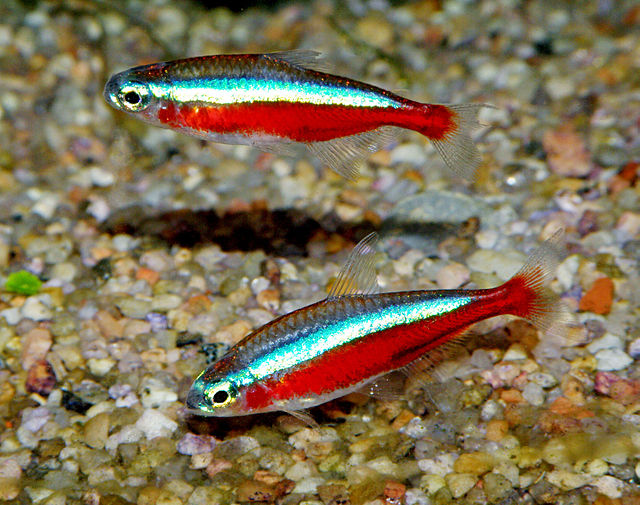
Similar to neon tetra but red band extends full length for more vibrant color. Stunning in large groups. Prefers soft water.
Difficulty
Beginner
Temperature
24〜28℃
Lifespan
3-5 years
Size
3-5cm
Diet
Pellets, frozen food
About
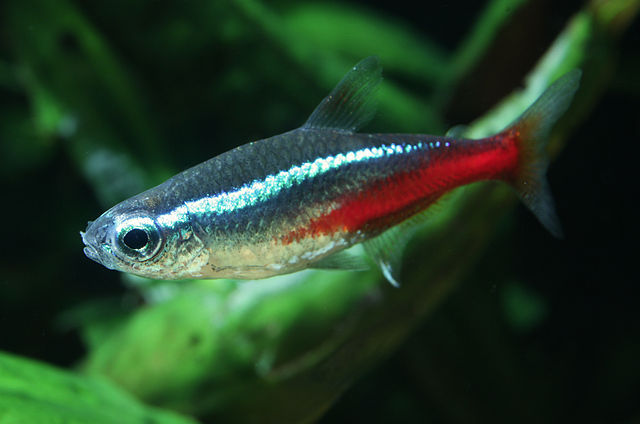
The cardinal tetra (Paracheirodon axelrodi) is a small characin native to the blackwater rivers of the upper Orinoco and Negro River basins in South America. Often confused with its close relative the neon tetra, it is distinguished by the vivid red band extending along the entire length of the belly — from the tip of the snout to the base of the tail — producing a more intensely colored appearance. Growing to 3–5 cm, cardinal tetras originate from highly acidic, mineral-poor blackwater environments rich in tannins and humic acids, making slightly acidic to acidic water (pH 5.0–6.5) with low hardness their ideal conditions. They are more sensitive to water quality changes than neon tetras. A school of 20 or more creates a breathtaking display of moving red and blue. Peaceful and compatible with most small fish, they accept fine granules, frozen daphnia, and bloodworms. While most available specimens are wild-caught, captive-bred individuals are increasingly available.
Source: Wikipedia (CC BY-SA 4.0)
Lifespan of the Cardinal Tetra
The Cardinal Tetra lives 3-5 years.
Size of the Cardinal Tetra
The Cardinal Tetra grows to 3-5cm.
Temperature & humidity for the Cardinal Tetra
The ideal temperature for the Cardinal Tetra is 24〜28℃.
Water temperature of 22–28°C and subdued lighting suit them best.
Basic Info
Origin
the upper Orinoco and Negro Rivers in South America
Care Specifications
- pH
- 4–6
- Hardness (GH)
- 5–12 dGH
- Water Temp.
- 24–28℃
PeacefulGroupBreeding: Moderate
Sources: FishBase / Seriously Fish
References & Sources
Edited & verified by: BreederDirect editorial team
The taxonomic, regulatory, and husbandry data on this page are compiled and verified against the authoritative primary sources below.
Taxonomy & Authority
Regulations & Conservation Status
Not CITES-listed
Sources: FishBase / Seriously Fish / CITES Appendices (Checklist)
Regulations may change. Always verify the latest information with the relevant authorities.
Cardinal Tetra Listings
Loading latest listingsFind listings for this species