Source: Wikimedia Commons
Clown Loach
IntermediateChromobotia macracanthus
Beautiful bottom-dweller with orange and black bands. Sleeps on its side — unique behavior. Very active in groups.
Difficulty
Intermediate
Temperature
22〜28℃
Lifespan
15-25 years
Size
15-30cm
Diet
Sinking tablets, frozen bloodworms
About
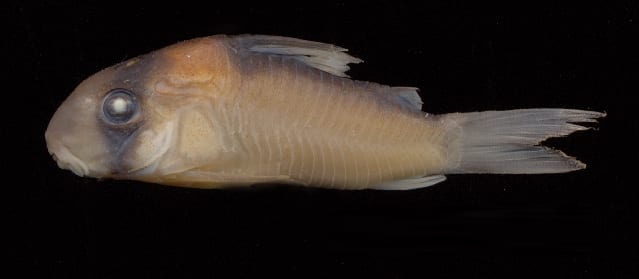
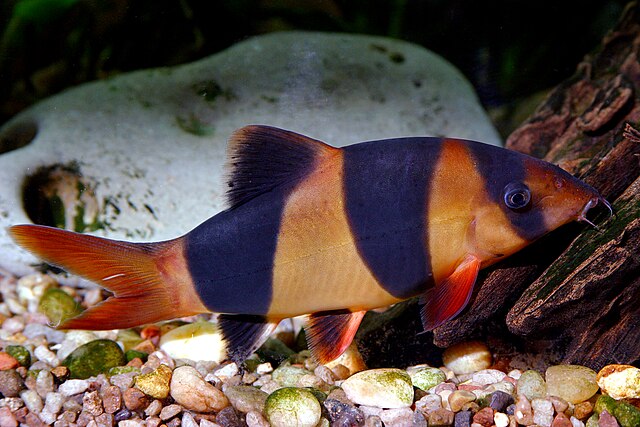
The clown loach (Chromobotia macracanthus) is a vibrantly colored botiid loach native to the river systems of Sumatra and Borneo in Indonesia. Its signature coloration — brilliant orange-yellow body crossed by three bold black bands, with vivid red-orange fins — immediately evokes the appearance of a circus clown. While juveniles are commonly sold at 5–7 cm, adults grow to over 30 cm, eventually requiring a very large aquarium. Clown loaches are highly social and should be kept in groups of five or more; solitary individuals become stressed and withdrawn. A renowned natural snail predator, they are effective at controlling unwanted snail populations. Their behavior is endearingly quirky — they are known to sleep on their sides, which can alarm uninitiated owners. Fine substrate accommodates their digging behavior. Diet is omnivorous: quality sinking pellets, frozen bloodworms, and vegetables. Commercial breeding requires hormonal induction and is rarely achieved in home aquariums.
Source: Wikipedia (CC BY-SA 4.0)
Lifespan of the Clown Loach
The Clown Loach lives 15-25 years.
Size of the Clown Loach
The Clown Loach grows to 15-30cm.
Temperature & humidity for the Clown Loach
The ideal water temperature for the Clown Loach is 25〜30℃.
They prefer warmer water (25–30°C) with slightly acidic to neutral chemistry (pH 6.0–7.5).
Basic Info
Origin
inland waters in Indonesia on the islands of Sumatra and Borneo
Care Specifications
- pH
- 5–8
- Hardness (GH)
- 5–12 dGH
- Water Temp.
- 25–30℃
- Min. Tank
- 648 L
PeacefulGroupBreeding: Very hard
Sources: FishBase / Seriously Fish
References & Sources
Edited & verified by: BreederDirect editorial team
The taxonomic, regulatory, and husbandry data on this page are compiled and verified against the authoritative primary sources below.
Taxonomy & Authority
Regulations & Conservation Status
Not CITES-listed
Sources: FishBase / Seriously Fish / CITES Appendices (Checklist)
Regulations may change. Always verify the latest information with the relevant authorities.
Clown Loach Listings
Loading latest listingsFind listings for this species