Clownfish Pairing and Spawning Guide | Reproducing the Natural Breeding Cycle in Aquariums
Clownfish are relatively easy to breed in aquariums among marine fish. This guide covers the hermaphroditic sex-change mechanism, identifying pair formation, setting up spawning sites, post-hatching fry management, and combining with live rock and sea anemones—explained practically for breeders.
Key Takeaways
Clownfish are relatively easy to breed in aquariums among marine fish. This guide covers the hermaphroditic sex-change mechanism, identifying pair formation, setting up spawning sites, post-hatching fry management, and combining with live rock and sea anemones—explained practically for breeders.
Related Species
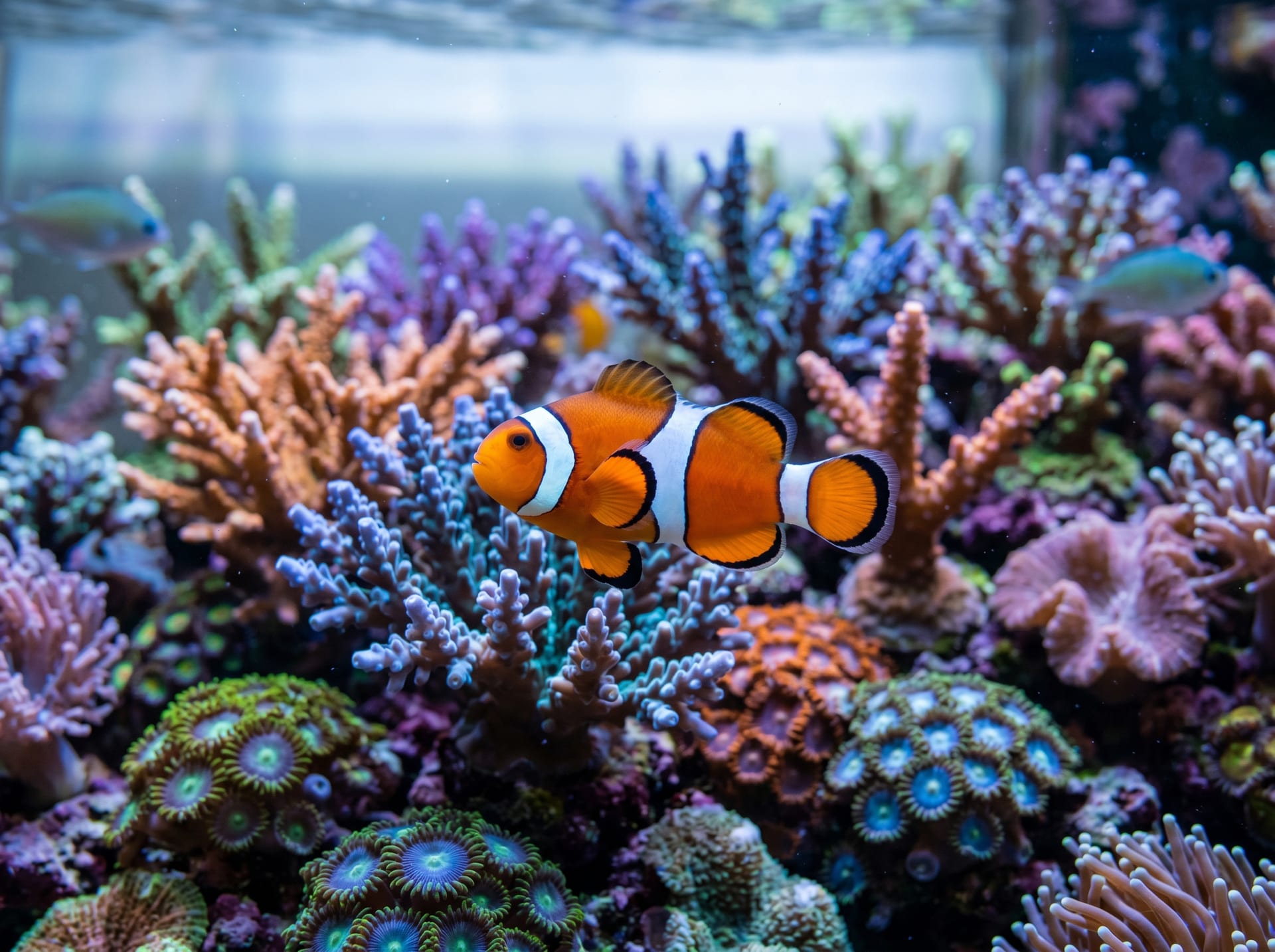
Clownfish (such as Ocellaris Clownfish and Tomato Clownfish), famous from Disney films, are popular marine fish and are relatively easy to breed in aquariums. While marine fish breeding has a reputation for being difficult, clownfish are species that spawn regularly and can be raised from fry if the environment is properly maintained.
Clownfish Sex Change Mechanism
Understanding clownfish requires grasping their unique sex change (tandem hermaphrodite) mechanism.
All Individuals Are Born Male
Clownfish are born neutral (male-like) without exception. The largest individual in the group transforms into a female, while the second-largest becomes the breeding male. Other individuals remain as non-breeding males, with their growth suppressed.
This system maintains a social structure where, if the female dies, the breeding male transforms into a female and the next individual is promoted to breeding male.
When Keeping a Pair
When two clownfish are placed in the same tank, the larger one transforms into a female while the smaller one becomes the breeding male. Raising two juveniles of similar size from the beginning forms the most natural pair.
A mature female (the larger one) is noticeably larger in body than the male (the smaller one) and develops a rounded abdomen. Once mature, she spawns regularly.
Designing an Environment Suitable for Breeding
Water Quality Management
Stable water quality is most important for clownfish breeding.
- Temperature: 25–28°C (breeding activity peaks around 26–27°C)
- Specific gravity (salinity): 1.020–1.025
- pH: 8.1–8.3
- Ammonia and nitrite: 0 mg/L (zero essential)
- Nitrate: 10 mg/L or less is ideal
Sudden changes in water quality lead to interrupted spawning and egg abandonment. Continue regular water changes (15–20% once per week) to maintain stable water quality.
Controlling the Light Cycle
In nature, clownfish adjust their breeding cycle in response to light quantity and duration. In aquariums, intentionally managing the light cycle promotes breeding.
- Light period: 12–14 hours (14 hours if you want to increase breeding activity)
- Dark period: 10–12 hours
- Maintaining the same light cycle daily with a timer is important
Setting Up Spawning Sites
Clownfish deposit eggs on flat surfaces of anemones or rock. Providing the following in the tank promotes spawning.
Ceramic Spawning Plate
This involves placing a dedicated ceramic plate or unglazed dish (such as the base of an inexpensive terracotta pot) in the tank. Once the clownfish become familiar with a spawning location, they spawn in the same spot each time. The key is placing it in a somewhat sheltered location, such as in the shade of live rock.
Symbiosis with Sea Anemones
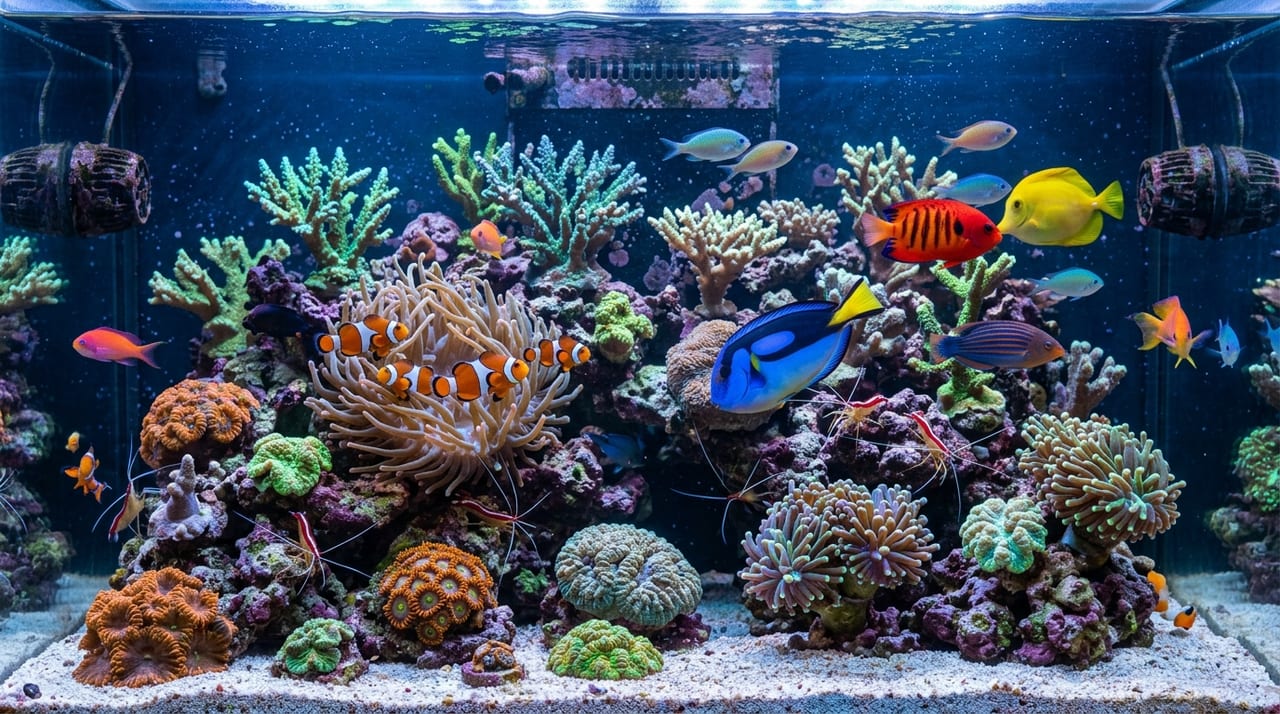
If you can maintain sea anemones such as Bubble-tip Anemones or Long-tentacle Anemones, clownfish naturally tend to spawn near the base of the anemone. However, anemone care requires strong lighting and high water quality, increasing management difficulty.
Management from Spawning to Hatching
Observing Spawning
Spawning mainly activates during periods with long daylight hours (spring to summer), but under proper management can occur year-round.
Spawning indicators:
- The pair meticulously clean the designated spawning area (picking up debris with their mouths and scrubbing with their bodies)
- The male frequently cleans the area around the spawning site
- The female's abdomen becomes noticeably round
Spawning takes several hours. Eggs appear as orange to reddish-orange clusters on the spawning site (approximately 200–500 eggs).
Parental Care Until Hatching
After spawning, the parents (mainly the male) care for the eggs.
- Fanning the eggs with the tail fin to supply fresh water (oxygen supply)
- Removing infertile eggs (whitish, cloudy eggs) with the mouth
- Protecting eggs from predators (other fish)
The time to hatching varies with temperature, but at 25–28°C eggs hatch in 6–8 days. Just before hatching (2–3 days prior), the eggs appear to shimmer silver (the fry's eyes becoming visible through the egg).
Transferring Fry to a Separate Tank
Fry begin swimming immediately after hatching and risk being sucked into the filter in the main tank. The safest approach is to transfer the spawning site with eggs to a separate rearing tank just before hatching.
Rearing tank setup:
- Capacity: 20–30 L (smaller at first is easier to manage)
- Weak aeration only (filter with foam screen to prevent suction, or set to low flow)
- Shade: Keep dimly lit before and after hatching to calm the fry
Raising Fry
Initial Feeding
Newly hatched fry are extremely small (3–4 mm) and cannot eat standard commercial food. The initial diet is based on rotifers (Rotifer).
- Days 1–14 post-hatching: Feed small-sized rotifers (Brachionus rotundiformis) daily
- Week 2 onward: Gradually transition to Artemia nauplii
- Weeks 3–4: Acclimate to marine snow (powdered food) and fine-particle artificial food
Rotifers must be cultured in a separate container. Commercial rotifer culture kits (with chlorella solution and culture vessels) are available.
Managing the Metamorphosis Period
Fry undergo metamorphosis in weeks 2–3, transitioning from a pelagic to a benthic (bottom-dwelling) stage. During this period they are stress-sensitive; sudden water quality changes, strong currents, and overcrowding increase mortality risk.
After metamorphosis, the characteristic orange and white coloring of clownfish appears, and they settle near the bottom and hiding places.
Summary
Clownfish breeding is ideal as an introduction to marine fish breeding. By establishing basic conditions—stable water quality, proper light cycles, and spawning sites—many pairs naturally enter a breeding cycle. With fry, initial feed preparation is key, and having a rotifer culture system ready beforehand greatly influences success rates. Once you succeed in your first breeding, that experience leads to rewarding breeding records and a fulfilling breeding life ahead.