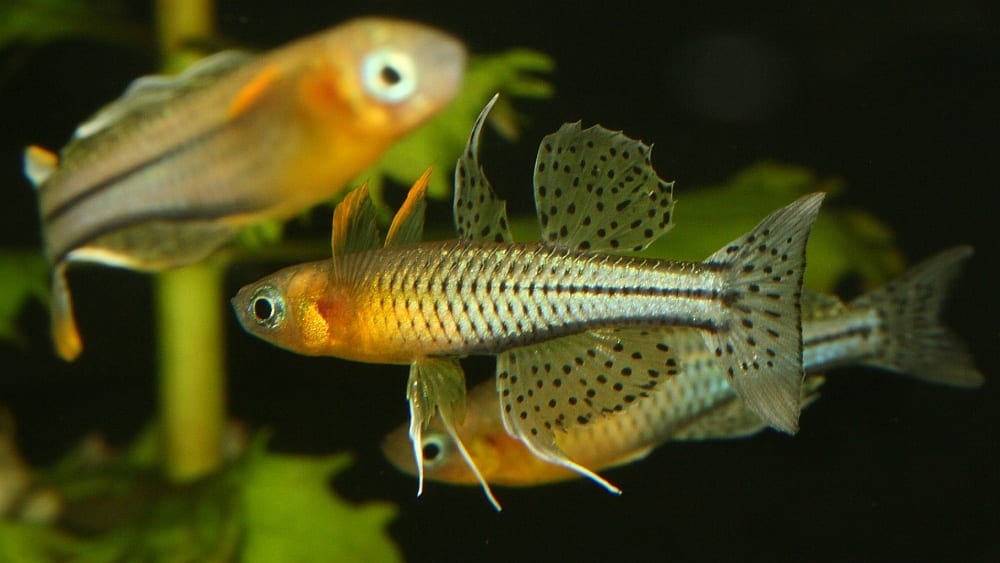
Phoenix Rasbora
IntermediateSundadanio axelrodi
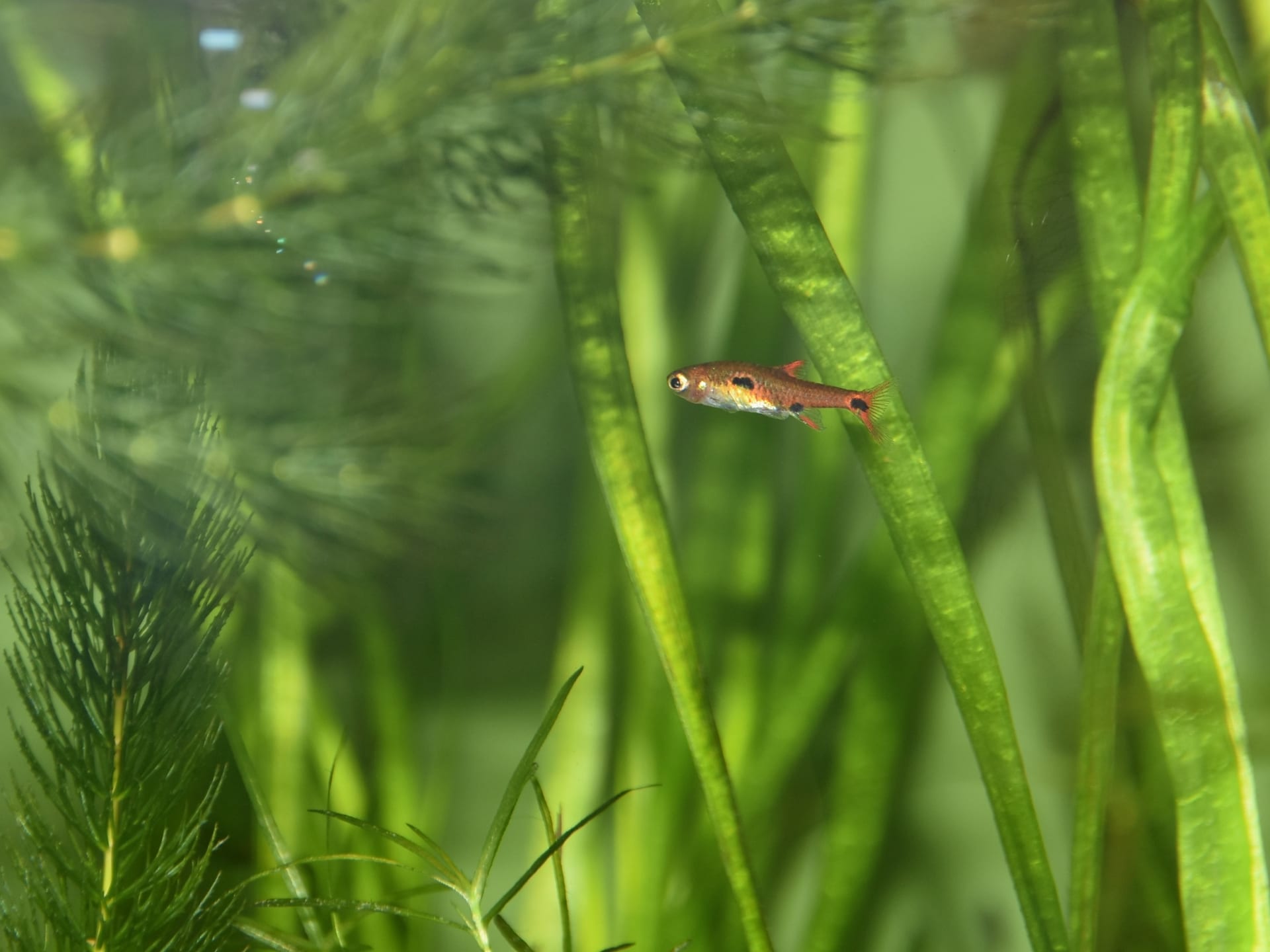
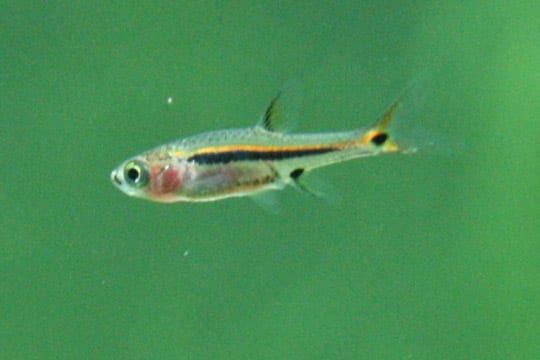
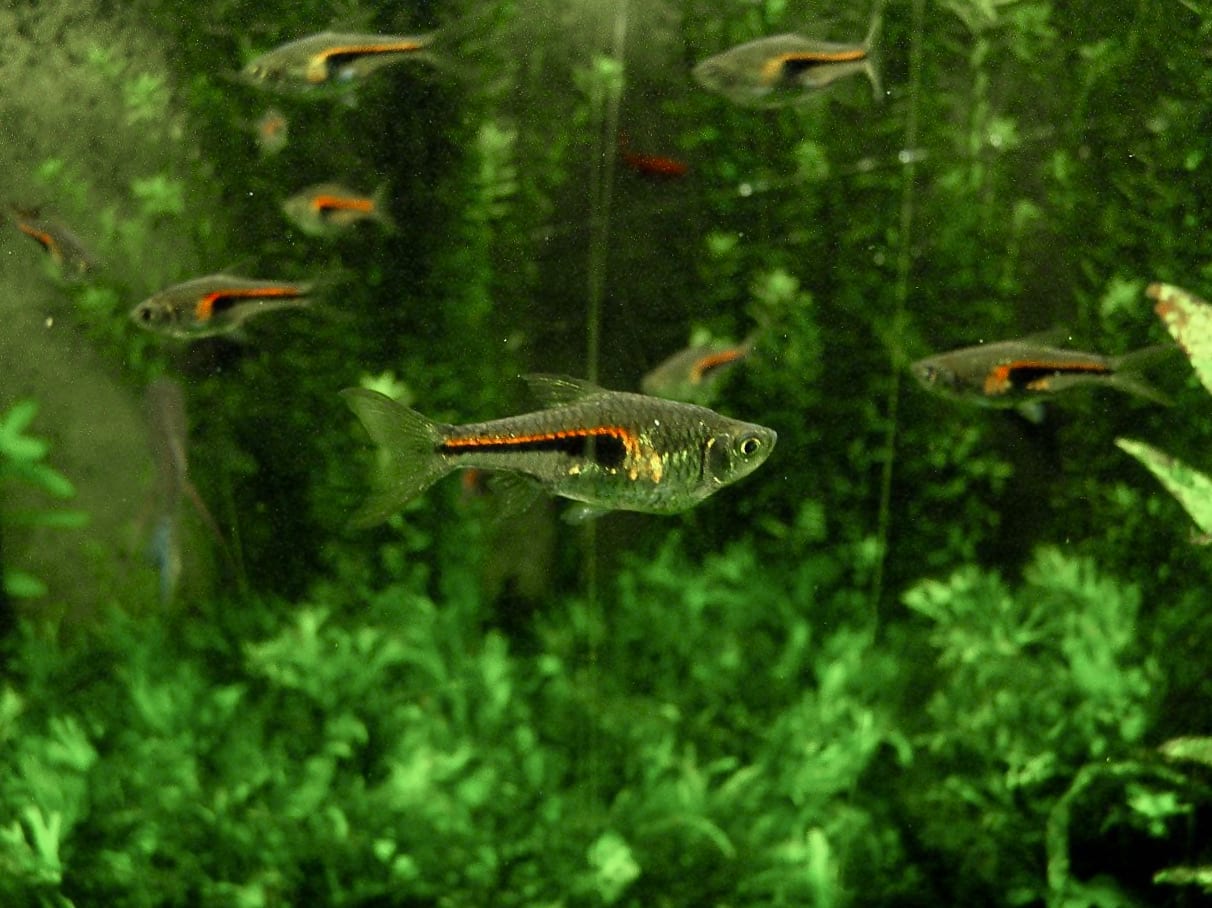
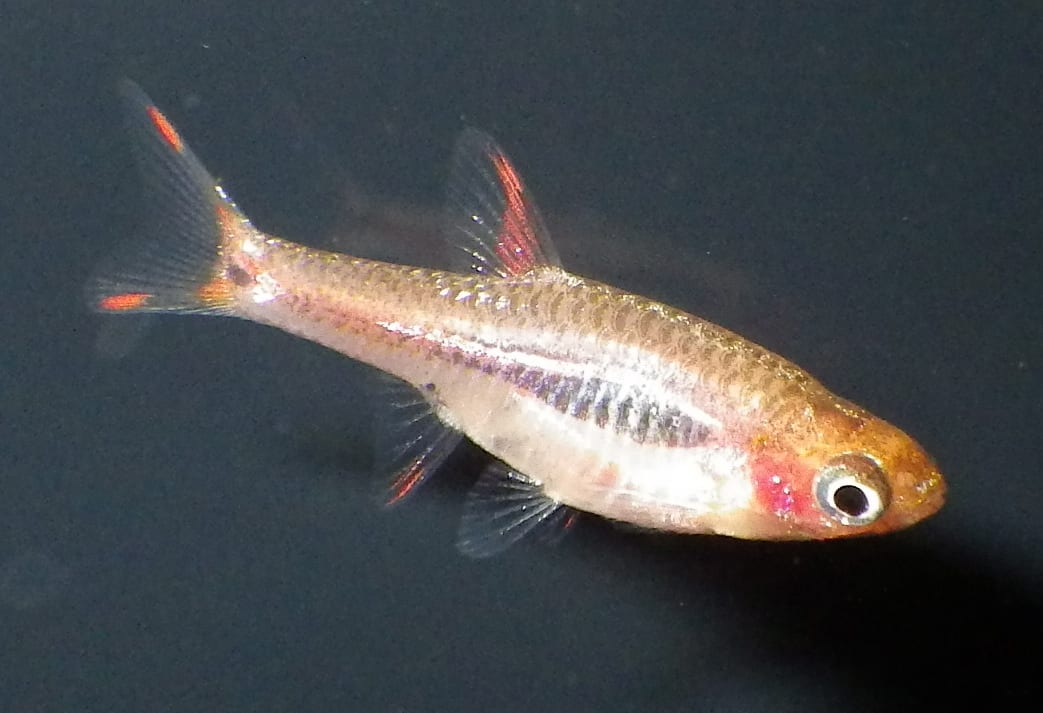
A tiny cyprinid barely 2cm long with a glowing neon blue stripe along the flank. It lives in the blackwater of peat swamp forest in Borneo and nearby islands and needs very soft water. Timid, it suits a species tank or equally small companions.
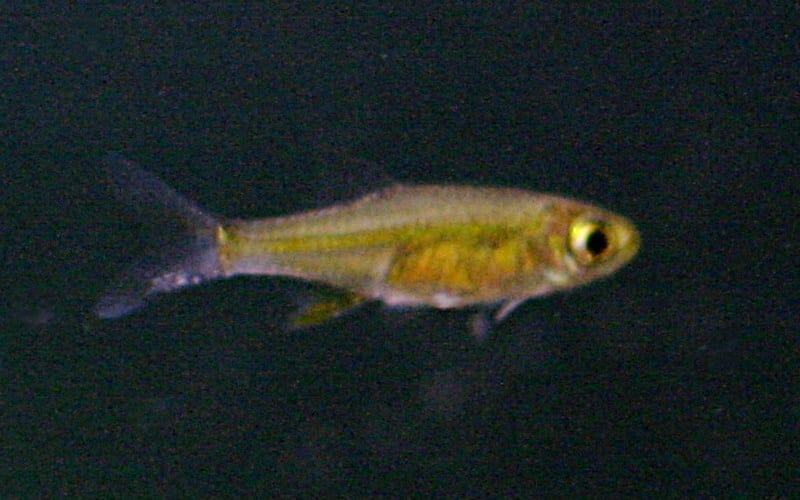
Sundadanio axelrodi is a tiny cyprinid of the blackwater streams of peat swamp forest in Borneo, Sumatra and Bangka. FishBase records a maximum of 2.3cm SL and 23-26C. Seriously Fish gives 2.2cm SL, 23-26C, 0-5 dGH and a 30 x 20cm base, listing pH as not recorded. Originally described as Rasbora axelrodi, it was moved to the new genus Sundadanio in 1999. Blue and red colour forms are known and are usually sold separately by colour. It is extremely peaceful but small and timid, so it does not suit a general community tank. It can refuse dried food, making live or frozen Artemia nauplii and similar fare necessary. It dislikes fluctuating conditions and has rarely been bred in captivity. With its peat swamp habitat disappearing, the IUCN rates it Vulnerable. It is not covered by CITES.
Source: Wikipedia (CC BY-SA 4.0)
The Neon Blue Rasbora grows to Up to 2.3cm SL.
The ideal temperature for the Neon Blue Rasbora is 23〜26℃.
Origin
Indonesia (Borneo, Sumatra and Bangka)
Size
Up to 2.3cm SL
Temperature
23〜26℃
Live or frozen Artemia nauplii, daphnia, grindal worm and chopped bloodworm
Edited & verified by: BreederDirect editorial team
The taxonomic, regulatory, and husbandry data on this page are compiled and verified against the authoritative primary sources below.
Accepted name: Sundadanio axelrodi (Brittan, 1976)
Synonyms: Rasbora axelrodi
Authority databases: FishBase
Nomenclature follows global taxonomic authority databases.
Sources: CITES Appendices (species not listed) / IUCN Red List
Regulations may change. Always verify the latest information with the relevant authorities.
Find listings for this species
Seriously Fish suggests a 30 x 20cm base. A densely planted tank with floating plants and driftwood roots to diffuse the light suits it. It comes from sluggish water, so keep filter flow gentle.
Seriously Fish gives 23-26C and 0-5 dGH but lists pH as not recorded, and FishBase records only 23-26C. What is certain is that it comes from peat swamp blackwater and needs very soft water.
Peaceful but small and timid, so it is unsuited to a general community. Keep it in a species tank or with equally small fish that share its water preferences, such as Boraras, Eirmotus and Trigonostigma.
In nature it presumably eats small crustaceans, worms and zooplankton. Some individuals refuse dried food, so offer live or frozen Artemia nauplii, daphnia, grindal worm and chopped bloodworm regularly.
It has not often been bred in the hobby, largely because it dislikes fluctuating conditions, which makes separate spawning and rearing tanks hard to arrange. Reports nonetheless exist.
It reacts badly to sudden changes, so acclimatise it slowly. Very soft water is a precondition, which means treating hard tap water in many areas. Habitat loss has led the IUCN to rate it Vulnerable.
Advanced. This is an advanced-level species. It requires specialized equipment and advanced husbandry skills with precise environmental control.
The ideal temperature for Neon Blue Rasbora is 23〜26℃. Avoid sudden temperature changes and maintain a stable environment.
Neon Blue Rasbora typically reaches Up to 2.3cm SL as an adult. Size may vary depending on care conditions and individual genetics.
Neon Blue Rasbora feeds on: Live or frozen Artemia nauplii, daphnia, grindal worm and chopped bloodworm. Aim for a balanced diet with appropriate feeding frequency.
The price of Neon Blue Rasbora varies significantly depending on morph, size, and lineage. Check our market price page for the latest pricing information.
Last updated: September 16, 2026