Source: Wikimedia Commons
Dwarf Rasbora
IntermediateBoraras maculatus
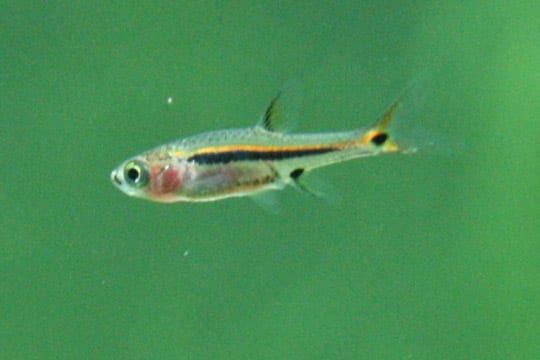
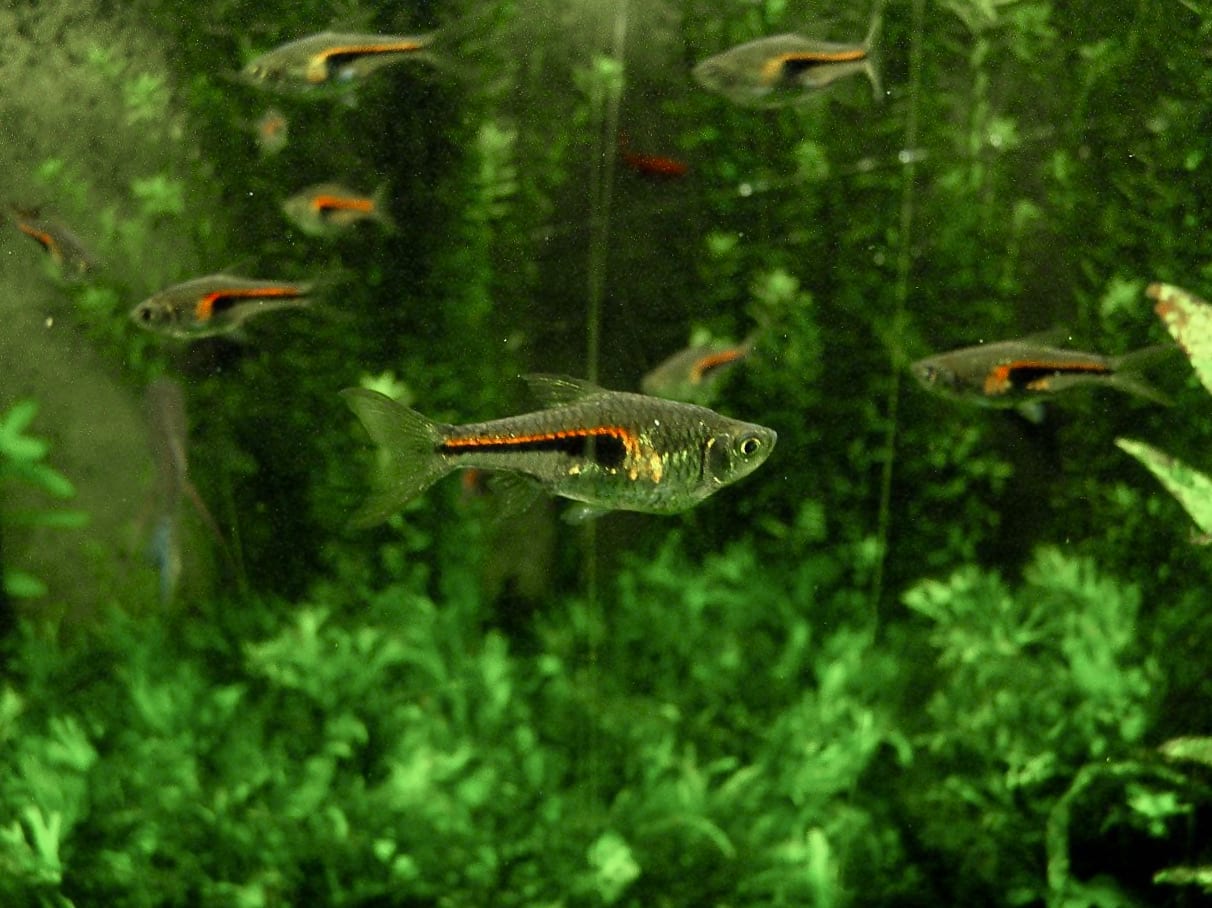
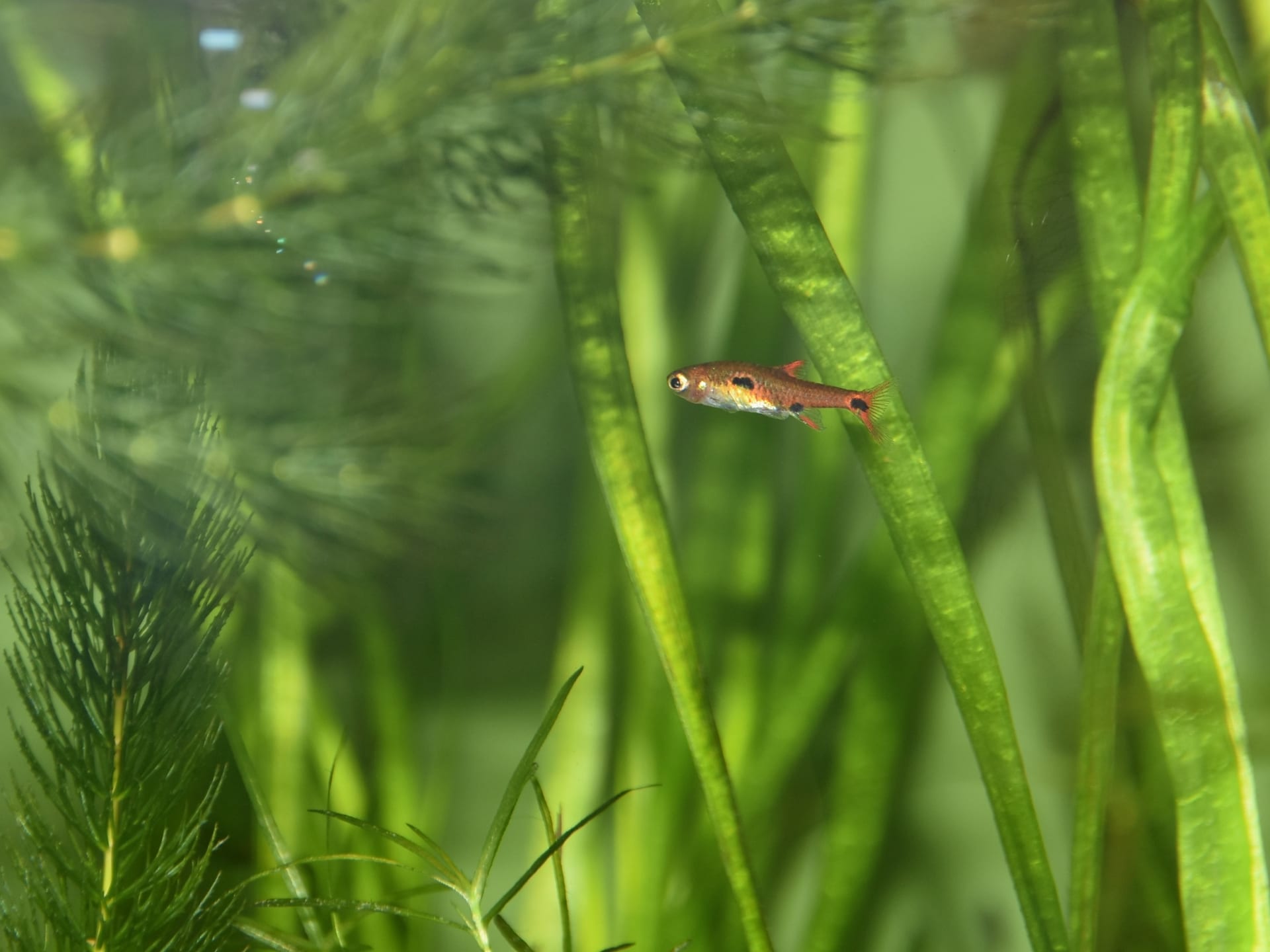
A tiny cyprinid with three large round black blotches over a red-orange body, one of the world's smallest cyprinids. It lives in forest streams from the Malay Peninsula to Sumatra, likes strongly acidic soft water and colours up in a shoal.
Difficulty
Intermediate
Temperature
20〜28℃
Size
Up to 2.5cm SL
Diet
Fine dried foods and live or frozen Artemia nauplii and daphnia
About
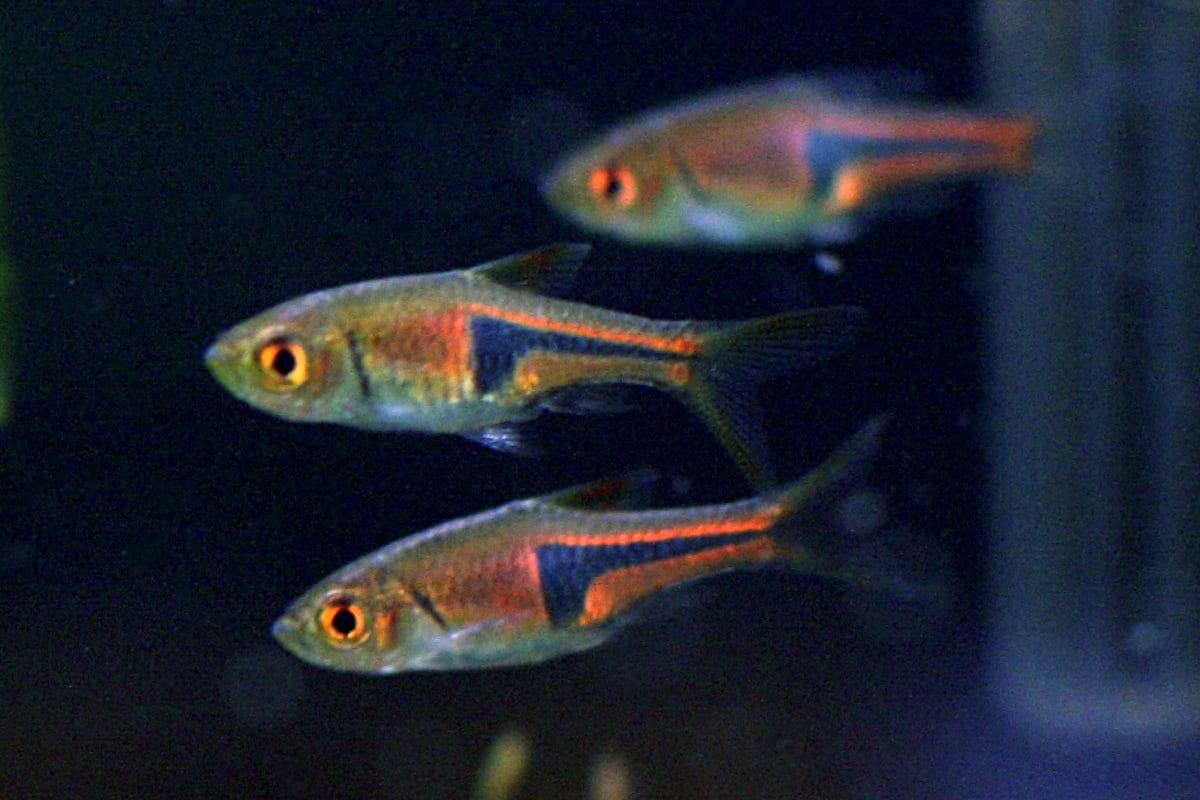
Boraras maculatus lives in quiet, acidic forest streams from the Malay Peninsula to Sumatra. FishBase records a maximum of 2.5cm SL, pH 5.0-6.0, 5-12 dH and 24-26C, notes that it feeds on worms and small crustaceans, and calls it one of the world's smallest cyprinid species. Seriously Fish gives 20-28C, pH 4.0-6.5, 1-5 dGH and a 45 x 30cm base. Large round black blotches sit over a red-orange body; the closely similar B. naevus is separated by the red not extending into the head, as it does here. Extremely peaceful but small and timid, it is unsuited to a general community tank. It is a continuous spawner without parental care, laying a few eggs each day when in condition. The IUCN rates it Least Concern and it is not covered by CITES.
Source: Wikipedia (CC BY-SA 4.0)
Size of the Dwarf Rasbora
The Dwarf Rasbora grows to Up to 2.5cm SL.
Temperature & humidity for the Dwarf Rasbora
The ideal temperature for the Dwarf Rasbora is 20〜28℃.
Basic Info
Origin
Malay Peninsula to Sumatra, Indonesia
Size
Up to 2.5cm SL
Temperature
20〜28℃
Diet
Fine dried foods and live or frozen Artemia nauplii and daphnia
Care Specifications
- pH
- 4–6.5
- Hardness (GH)
- 1–5 dGH
- Water Temp.
- 20–28℃
PeacefulGroupBreeding: Moderate
Sources: FishBase / Seriously Fish
References & Sources
Edited & verified by: BreederDirect editorial team
The taxonomic, regulatory, and husbandry data on this page are compiled and verified against the authoritative primary sources below.
Taxonomy & Authority
Accepted name: Boraras maculatus (Duncker, 1904)
Synonyms: Rasbora maculata
Authority databases: FishBase
Nomenclature follows global taxonomic authority databases.
Regulations & Conservation Status
Not CITES-listedIUCN LC · Least Concern
Sources: CITES Appendices (species not listed) / IUCN Red List
Regulations may change. Always verify the latest information with the relevant authorities.
Dwarf Rasbora Listings
Loading latest listingsFind listings for this species