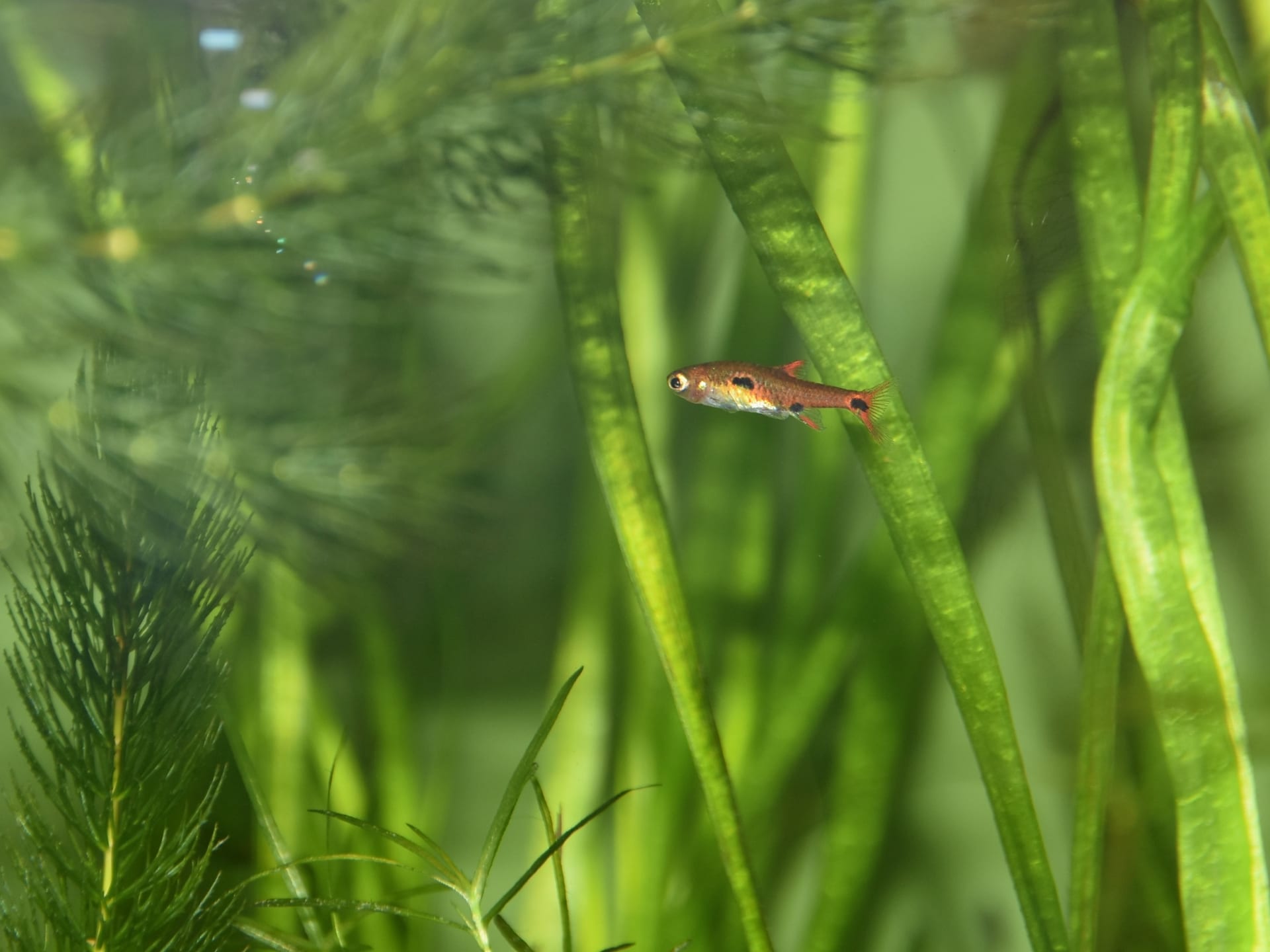
 © NasserHalaweh / CC BY-SA 4.0
Dwarf Rasbora
The dwarf rasbora is one of the smallest cyprinids in the aquarium hobby, rarely growing past 2.5 cm even as an adult. Its coral-orange body carries three bold black spots, a pattern that gives the species its charm. In the wild, these fish inhabit small forest streams across the Malay Peninsula and Sumatra, favoring soft, strongly acidic water. They're calm, peaceful fish that show their best color when kept in a group, making them a favorite for planted nano tanks. Because they're sensitive to water quality, they're generally considered better suited to fishkeepers with some prior experience.
View Dwarf Rasbora encyclopedia →0% commission on your first sales!Register by September 30, 2026 and your first 2 sales are commission-free!
Breeder Wanted!
List on BreederDirect and sell directly to customers nationwide!
Our 6 Transparency Commitments
All Tropical Fish listings include water quality, temperament, and tank size information from verified Breeder.
- Origin Disclosed
- Real Photos
- Water Quality Disclosed
- Recommended Tank Size
- Temperament Disclosed
- Breed Line Disclosed
Browse all 301 breeds
Water Type
Care Level
Verified breeders wanted for Tropical Fish
Breeders are signing up now ahead of launch. Subscribe to be notified when new listings go live.
Getting alerts is free with a member account. When new listings match your saved search, we'll notify you by email and in-app.
Browse other categories
Verified breeders (preview)
Are you raising tropical fish?
Register as a breeder and connect with buyers directly.
Apply as a breederAbout Dwarf Rasbora
The dwarf rasbora is a tiny cyprinid reaching about 2.5 cm, with a coral-orange body marked by three black spots. Best kept in groups in soft, acidic water; recommended for intermediate keepers.
7 things to know before welcoming a Dwarf Rasbora
1Prefers Soft, Acidic Water
In the wild, dwarf rasboras live in soft, strongly acidic forest streams, and they do best in similar water at home. They're sensitive to sudden water changes, so take your time acclimating new arrivals.
2Best Kept in a Group
Dwarf rasboras show their brightest colors and calmest behavior when kept together as a group rather than alone. Even a small tank can house a decent number of these tiny fish.
3Peaceful but Vulnerable Tankmates
They're calm, peaceful fish, but their small size makes them easy targets for larger or fast-moving tankmates that outcompete them for food. Choose similarly small, gentle species to keep alongside them.
4Needs Very Small Food
Their mouths are tiny, so standard flakes or pellets are often too large to eat. Powdered food or finely crushed micro pellets work best.
5Add Only to a Mature Tank
Dwarf rasboras can struggle in a newly set-up tank where water parameters haven't stabilized yet. Wait until the tank has fully cycled before introducing them.
6Thrives in a Planted Tank
A densely planted layout with plenty of hiding spots helps them feel secure. This lets them relax and display their natural schooling behavior more readily.
7Keep the Tank Covered
Like many small fish, dwarf rasboras can startle and jump out of the water. A tight-fitting lid helps prevent them from escaping through gaps.
Frequently asked questions about Dwarf Rasbora
- Q.What fish can live with dwarf rasboras?
- A.Choose similarly small, peaceful species as tankmates. Larger or more aggressive fish tend to outcompete them for food or stress them out.
- Q.How many should be kept together?
- A.Keeping them in a group brings out their best coloring and natural behavior. Aim for as many as your tank size can comfortably support.
- Q.Are dwarf rasboras good for beginners?
- A.They require a bit more attention to water quality, so they're generally considered better suited to intermediate keepers. Prior experience with small fish species is helpful.
- Q.What size tank do they need?
- A.Because they're so small, they can be kept in a nano tank. If you're keeping a group, choose a tank with enough water volume to stay stable as the number of fish increases.
- Q.Can they be bred at home?
- A.Breeding is possible under the right conditions, but adults often eat their own eggs. A separate breeding tank helps protect the eggs and fry.
Useful tools for Dwarf Rasbora care
Learn more about Dwarf Rasbora in the encyclopedia
View Dwarf Rasbora encyclopedia entry →
Care difficulty, lifespan, size and diet — all basics covered.
Dwarf Rasbora related articles
See more Dwarf Rasbora articles →More in this category
Can't find the one you're looking for?
Post your wishes for free and breeders with matching animals will contact you with introductions.