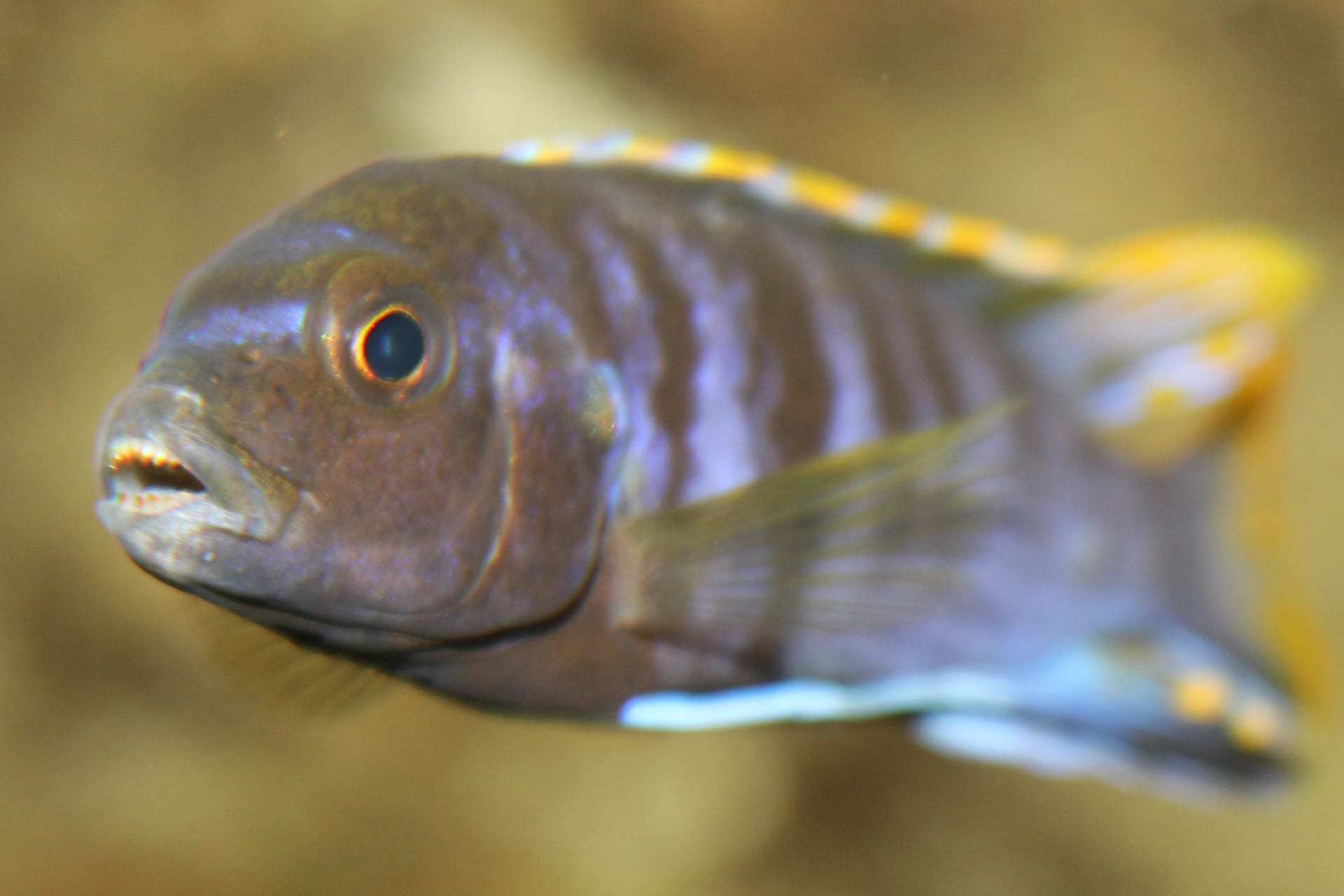
 © Emőke Dénes / CC BY-SA 4.0
Demasoni Cichlid
Demasoni cichlid is a small mbuna species native to Lake Malawi in Africa, prized for its striking deep navy body marked with pale blue horizontal stripes. Adults typically reach 6 to 8 cm, making them a compact addition to an aquarium, but they are notorious for intense aggression toward their own kind. Keeping just one or a pair often results in a single fish being singled out and relentlessly harassed, so the standard approach is to introduce a larger group together, spreading aggressive behavior across many individuals rather than concentrating it on one target. Considered suitable for intermediate keepers, Demasoni cichlids reward the effort with a lively, colorful shoal that brings constant motion to a Malawi-themed tank.
View Demasoni Cichlid encyclopedia →0% commission on your first sales!Register by September 30, 2026 and your first 2 sales are commission-free!
Breeder Wanted!
List on BreederDirect and sell directly to customers nationwide!
Our 6 Transparency Commitments
All Tropical Fish listings include water quality, temperament, and tank size information from verified Breeder.
- Origin Disclosed
- Real Photos
- Water Quality Disclosed
- Recommended Tank Size
- Temperament Disclosed
- Breed Line Disclosed
Browse all 301 breeds
Water Type
Care Level
Verified breeders wanted for Tropical Fish
Breeders are signing up now ahead of launch. Subscribe to be notified when new listings go live.
Getting alerts is free with a member account. When new listings match your saved search, we'll notify you by email and in-app.
Browse other categories
Verified breeders (preview)
Are you raising tropical fish?
Register as a breeder and connect with buyers directly.
Apply as a breederDemasoni Cichlid key facts
- Care level
- Intermediate
- Lifespan
- 8-12 years
- Size
- 6-8cm
- Temperature
- 24〜28℃
- Diet
- Spirulina-based prepared foods, frozen foods
- Tank
- 120 x 45cm (about 205 litres) or larger. Pack in rockwork to divide territories finely and provide many escape routes.
- Water Temperature & Quality
- 24-28C, pH 7.6-8.8, 10-25 dGH. Keep hard alkaline conditions stable.
- Tank Mates
- Not for peaceful tank mates. It can work with robust mbuna of different patterning. Avoid keeping only a few, which invites bullying among conspecifics.
- Diet & Feeding
- Feed mainly vegetable matter such as spirulina flake and blanched greens. Never feed beefheart or other red meat, which damages digestion.
- Breeding & Spawning
- A mouthbrooder; the female carries the brood for about three weeks. Even the fry fight fiercely among themselves from an early age.
- Health & Notes
- Sexing is difficult, and a skewed sex ratio concentrates aggression on one fish. Remove harassed individuals promptly.
About Demasoni Cichlid
Demasoni cichlid is a small, vividly striped Lake Malawi mbuna reaching 6-8 cm as an adult. Known for strong aggression toward its own kind, it's best kept in large groups and suits intermediate aquarists.
7 things to know before welcoming a Demasoni Cichlid
1Avoid keeping just one or two
Demasoni cichlids display intense aggression toward their own species, and keeping only a few often means one fish becomes the target of repeated attacks. Introducing a larger group at once helps spread that aggression across many individuals instead of concentrating it on one.
2Provide plenty of hiding spots
Arranging rockwork and shelters throughout the tank breaks up sightlines and territories, which helps ease aggression. A layout with multiple hiding places also gives weaker individuals somewhere to retreat.
3Prefers alkaline water
As a Lake Malawi native, this species does best in hard, slightly alkaline water. Try to keep temperature and water chemistry stable during water changes, since sudden shifts can be stressful.
4Choose tankmates carefully
Because of their strong aggression, Demasoni cichlids don't mix well with calm or small fish. Other similarly robust Lake Malawi cichlids tend to be a better match when planning a community tank.
5Size the tank for a group
Adults reach about 6 to 8 cm, but since this species is typically kept in numbers, the tank needs enough capacity for the whole group rather than just a single fish. Overcrowding can actually intensify aggressive behavior.
6Watch for color changes
Coloration can shift somewhat between juveniles and adults, or with an individual's condition. Paying attention to day-to-day changes in color and pattern is one useful way to keep an eye on overall health.
7Suited to intermediate keepers
Managing aggression and maintaining stable water chemistry both call for some prior cichlid-keeping experience, which is why this species is generally considered suitable for intermediate aquarists. Planning your layout and group size in advance before bringing them home is recommended.
Frequently asked questions about Demasoni Cichlid
- Q.Why do these fish need to be kept in groups?
- A.Demasoni cichlids are extremely aggressive toward their own species, and in small numbers that aggression tends to concentrate on one individual. Introducing a larger group at once spreads the aggression across many fish, reducing stress and injury to any single individual.
- Q.Can they be kept with other fish species?
- A.Because of their strong aggression, they don't mix well with calm or small tankmates. Other robust Lake Malawi cichlids of similar temperament tend to make better companions.
- Q.How large do they grow?
- A.Adults typically reach about 6 to 8 cm. That's fairly compact for a cichlid, but because they're kept in groups, the tank still needs enough overall capacity for the whole shoal.
- Q.Are they suitable for beginners?
- A.This species is generally considered suitable for intermediate keepers. Managing aggression and maintaining stable water chemistry both benefit from some prior cichlid-keeping experience.
- Q.Are Demasoni cichlids subject to CITES?
- A.No, Demasoni cichlids are not subject to CITES.
Useful tools for Demasoni Cichlid care
Learn more about Demasoni Cichlid in the encyclopedia
View Demasoni Cichlid encyclopedia entry →
Care difficulty, lifespan, size and diet — all basics covered.
More in this category
Can't find the one you're looking for?
Post your wishes for free and breeders with matching animals will contact you with introductions.