 © Deadlyballistics at English Wikipedia / Public domain
Head-and-tail Light Tetra
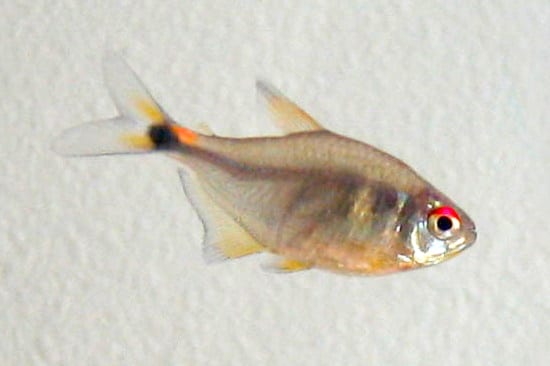
A small tetra with a silvery body accented by reddish-gold spots above the eyes and at the base of the tail — the two glowing marks that give the Head-and-tail Light Tetra its name. Calm and social by nature, it gets along well with similarly sized tankmates and moves comfortably in groups. Hardy and tolerant of everyday fluctuations in water conditions, it's a forgiving choice for anyone keeping tropical fish for the first time. Kept in a group, its natural schooling behavior really comes into its own, making for a lively, eye-catching display.
View Head-and-tail Light Tetra encyclopedia →0% commission on your first sales!Register by September 30, 2026 and your first 2 sales are commission-free!
Breeder Wanted!
List on BreederDirect and sell directly to customers nationwide!
Our 6 Transparency Commitments
All Tropical Fish listings include water quality, temperament, and tank size information from verified Breeder.
- Origin Disclosed
- Real Photos
- Water Quality Disclosed
- Recommended Tank Size
- Temperament Disclosed
- Breed Line Disclosed
Browse all 301 breeds
Water Type
Care Level
Verified breeders wanted for Tropical Fish
Breeders are signing up now ahead of launch. Subscribe to be notified when new listings go live.
Getting alerts is free with a member account. When new listings match your saved search, we'll notify you by email and in-app.
Browse other categories
Verified breeders (preview)
Are you raising tropical fish?
Register as a breeder and connect with buyers directly.
Apply as a breederHead-and-tail Light Tetra key facts
- Care level
- Beginner-friendly
- Lifespan
- 5-8 years
- Size
- About 4.5-4.9cm
- Temperature
- 24〜28℃
- Diet
- Dried foods, frozen bloodworm, Daphnia, brine shrimp
- Tank
- Seriously Fish suggests a base of at least 60 by 38cm, about 68 litres. An ordinary planted community tank is fine, and a dark substrate with wood and floating plants makes the reflective marks stand out.
- Water Temperature & Quality
- Seriously Fish gives 24-28C, pH 5.5-7.5 and 5-20 dGH; FishBase gives pH 6.0-8.0, 5-19 dH and 22-26C. Farmed fish are adaptable and untroubled by anything short of extremes.
- Tank Mates
- One of the easiest tetras for a general community, mixing with livebearers, danios, rasboras, other tetras, Corydoras, small loricariids, gouramis and dwarf cichlids. Avoid anything big enough to eat it.
- Diet & Feeding
- FishBase records worms, small insects, crustaceans and plant matter in the wild. It eats almost anything offered, and frozen bloodworm, Daphnia and brine shrimp alongside dried food improve the colour.
- Breeding & Spawning
- FishBase calls it very prolific and easy to breed in the aquarium, with eggs hatching quickly at 26C. Spawn them in a dimly lit separate tank with fine-leaved plants or a mesh base and take the adults out afterwards.
- Health & Notes
- FishBase lists it as IUCN Least Concern, not on the CITES appendices and harmless to people. A population lacking the red caudal mark has been treated as the subspecies H. ocellifer falsus, but its validity is questioned.
About Head-and-tail Light Tetra
A hardy, peaceful small tetra with reddish-gold highlights on its head and tail, well suited to schooling in a beginner-friendly aquarium.
7 things to know before welcoming a Head-and-tail Light Tetra
1Keep in a Group
This species settles in and shows its natural behavior best when kept in a decent-sized group. Kept alone or in very small numbers, it tends to stay hidden.
2Peaceful Tankmate
Calm by nature, it gets along well with similarly sized, peaceful fish and rarely causes conflict. Avoid pairing it with aggressive species.
3Hardy and Beginner-Friendly
It tolerates everyday fluctuations in water conditions fairly well, making it a forgiving choice for newcomers. Even so, sudden changes should be avoided and acclimation should be done gradually.
4Signature Glowing Spots
Reddish-gold spots above the eyes and at the base of the tail catch the light like tiny lamps. These markings are the source of its name.
5Adult Size
Adults reach roughly 4.5 to 4.9 cm in length. Being a small species, it doesn't take up much tank space even when kept in a school.
6Breeding Potential
This is a hardy species that's also relatively easy to breed. Once you're comfortable with its care, breeding in pairs or groups is an approachable next step.
7Tank Setup Before Arrival
Since it's a schooling fish, prepare a tank with enough open swimming space. Getting water quality and temperature stable beforehand helps it settle in calmly.
Frequently asked questions about Head-and-tail Light Tetra
- Q.How many should I keep together?
- A.Since it's a schooling species, keeping a decent-sized group lets it display its natural behavior. Choose a number that suits your tank size without overcrowding it.
- Q.Can it be kept with other fish?
- A.Its calm temperament makes it easy to house with similarly sized, peaceful tankmates. Aggressive or much larger fish are best avoided.
- Q.Is it suitable for beginners?
- A.Yes — it's hardy and tolerates everyday changes in water conditions fairly well, which is why it's considered a beginner-friendly species. Keeping up with basic water quality care is usually enough to keep it thriving.
- Q.Where does its name come from?
- A.The reddish-gold spots above its eyes and at the base of its tail catch the light like two small lamps. These two glowing points are the "head" and "tail" in its name.
- Q.How large does it grow?
- A.Adults typically reach about 4.5 to 4.9 cm in length. As a small tetra, it suits even compact tanks when kept in a group.
Useful tools for Head-and-tail Light Tetra care
Learn more about Head-and-tail Light Tetra in the encyclopedia
View Head-and-tail Light Tetra encyclopedia entry →
Care difficulty, lifespan, size and diet — all basics covered.
More in this category
Can't find the one you're looking for?
Post your wishes for free and breeders with matching animals will contact you with introductions.