Red Neon Blue-eye
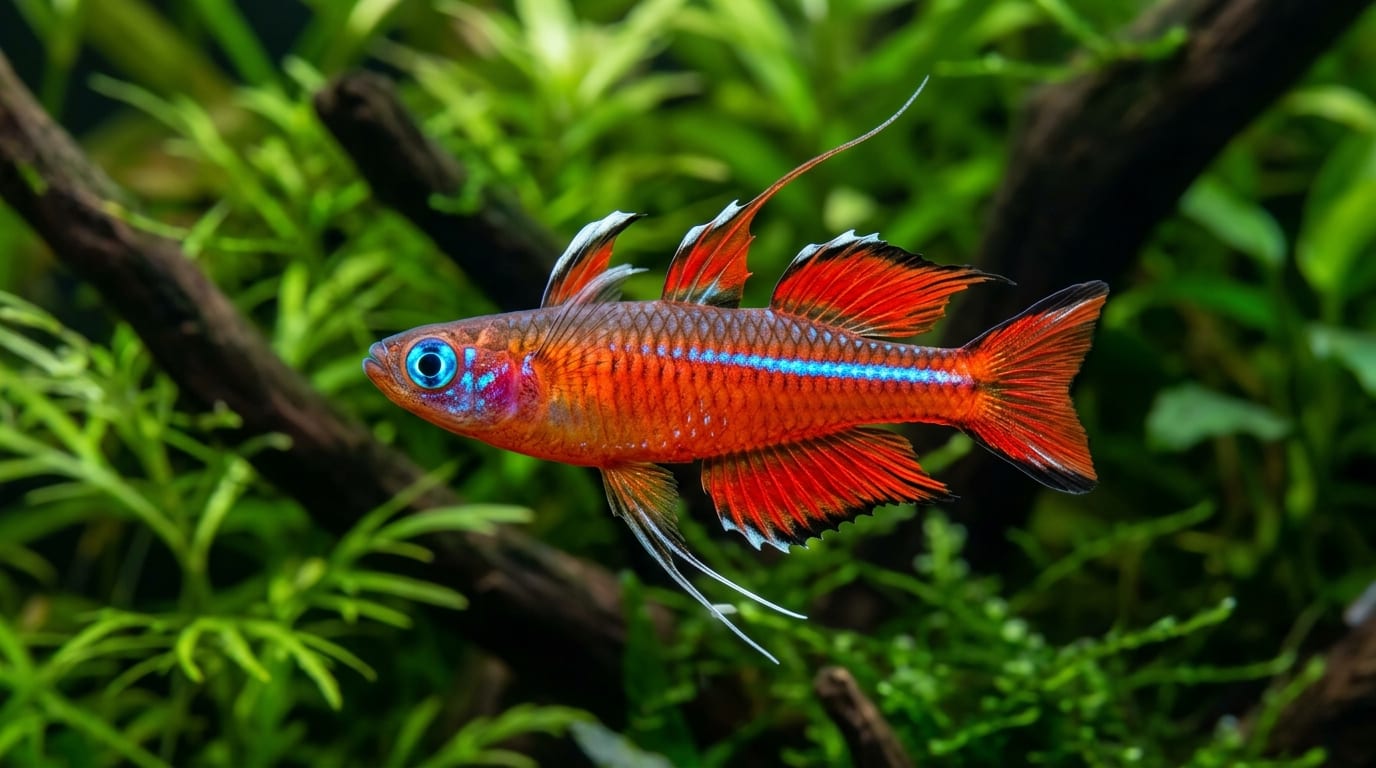
The Red Neon Blue-eye is an ultra-tiny blue-eye fish known only from wetlands around Timika in Indonesia's Papua province, with adults reaching just about 1.9 cm in standard length. Mature males turn a striking red-orange with a glowing neon-blue stripe along the flank during their breeding display. Males also develop a thread-like elongated second dorsal spine and first pelvic fin ray that trail delicately as they swim. Lively and unafraid when kept in a group, this species is nonetheless small and sensitive to water changes, so it's best suited to intermediate keepers who can maintain steady conditions.
View Red Neon Blue-eye encyclopedia →0% commission on your first sales!Register by September 30, 2026 and your first 2 sales are commission-free!
Breeder Wanted!
List on BreederDirect and sell directly to customers nationwide!
Our 6 Transparency Commitments
All Tropical Fish listings include water quality, temperament, and tank size information from verified Breeder.
- Origin Disclosed
- Real Photos
- Water Quality Disclosed
- Recommended Tank Size
- Temperament Disclosed
- Breed Line Disclosed
Browse all 301 breeds
Water Type
Care Level
Verified breeders wanted for Tropical Fish
Breeders are signing up now ahead of launch. Subscribe to be notified when new listings go live.
Getting alerts is free with a member account. When new listings match your saved search, we'll notify you by email and in-app.
Browse other categories
Verified breeders (preview)
Are you raising tropical fish?
Register as a breeder and connect with buyers directly.
Apply as a breederRed Neon Blue-eye key facts
- Care level
- Intermediate
- Lifespan
- 4-6 years
- Size
- Up to 1.9cm SL
- Diet
- Fine dried foods and live or frozen brine shrimp and daphnia
- Tank
- At under 2cm SL a group can be kept in a small tank. Plant densely to break up sightlines while leaving open water for male display.
- Water Temperature & Quality
- A tropical fish of lowland swamps, it needs a heated tank, and temperature and water chemistry should be changed only gradually through small water changes.
- Tank Mates
- Under 2cm and timid, it belongs in a species tank or with equally small, very peaceful fish. It is mouth-sized prey for anything medium or larger, which must be excluded.
- Diet & Feeding
- Its mouth is extremely small, so use the finest dried foods. Newly hatched brine shrimp and daphnia, live or frozen, improve colour. Feed small amounts several times a day.
- Breeding & Spawning
- Breeding accounts specific to this species are scarce. Blue-eyes of the genus are egg scatterers without parental care that attach eggs to plants or spawning mops.
- Health & Notes
- Its range is extremely restricted and the IUCN lists it as Endangered. Because it was long traded as Pseudomugil paskai, labels and the actual species do not always agree. It is not covered by CITES.
About Red Neon Blue-eye
The Red Neon Blue-eye is a tiny blue-eye fish found only in wetlands of Indonesia's Papua province. Males display a striking red-orange and neon-blue breeding color; here's what intermediate keepers should know.
7 things to know before welcoming a Red Neon Blue-eye
1Thrives in Nano Tanks
Adults reach only about 1.9 cm in standard length, so this species suits even small nano tanks. Because of its tiny size, choose tankmates carefully and keep the tank well covered, since it can easily be startled by larger fish or slip through gaps.
2Vivid Color in Males Only
The striking red-orange body with a glowing neon-blue stripe is a male trait. Females are far more subdued in color, so the two sexes look quite different at a glance.
3Males Grow Filament Fins
Males develop an elongated second dorsal spine and a thread-like first pelvic fin ray. Watching these delicate filaments trail as the fish swims is one of the joys of keeping this species.
4From a Single Wetland Range
This species is known only from wetlands around Timika in Indonesia's Papua province. Having adapted to that specific environment, it tends to be sensitive to sudden changes in water quality or temperature.
5Best for Intermediate Keepers
This species is rated as suitable for intermediate keepers. Its small size makes it sensitive to environmental swings, so consistently maintaining stable water quality and temperature is important.
6Best Kept in a Group
Keeping several individuals together lets you see their natural, settled schooling behavior and the color displays males show off to one another. Consider bringing home a small group rather than a single fish.
7Acclimate Slowly at Arrival
Because this fish is small and delicate, avoid sudden shifts in temperature or water chemistry when introducing it, and give it a slow, gradual acclimation to help prevent stress. Keep a close eye on it during the first days after arrival.
Frequently asked questions about Red Neon Blue-eye
- Q.How big does the Red Neon Blue-eye grow?
- A.Adults reach only about 1.9 cm in standard length, making this one of the smallest blue-eye species. This compact size makes it easy to keep even in a small tank.
- Q.Can beginners keep this fish?
- A.This species is considered suitable for intermediate keepers rather than complete beginners. Because of its small size and sensitivity to water quality changes, it's best introduced once you're comfortable with basic aquarium maintenance.
- Q.How can I tell males from females?
- A.Males show a red-orange body with a neon-blue stripe along the flank, while females are much plainer. Males also develop a filamentous second dorsal spine and first pelvic fin ray, making the difference easy to spot.
- Q.How many should I keep together?
- A.This species does best when kept in a group rather than alone. Bringing home several individuals together makes it easier to observe their natural schooling behavior and the color displays between males.
- Q.Are there any import or CITES regulations for this fish?
- A.It is not listed under CITES.
Useful tools for Red Neon Blue-eye care
Learn more about Red Neon Blue-eye in the encyclopedia
View Red Neon Blue-eye encyclopedia entry →
Care difficulty, lifespan, size and diet — all basics covered.
More in this category
Can't find the one you're looking for?
Post your wishes for free and breeders with matching animals will contact you with introductions.