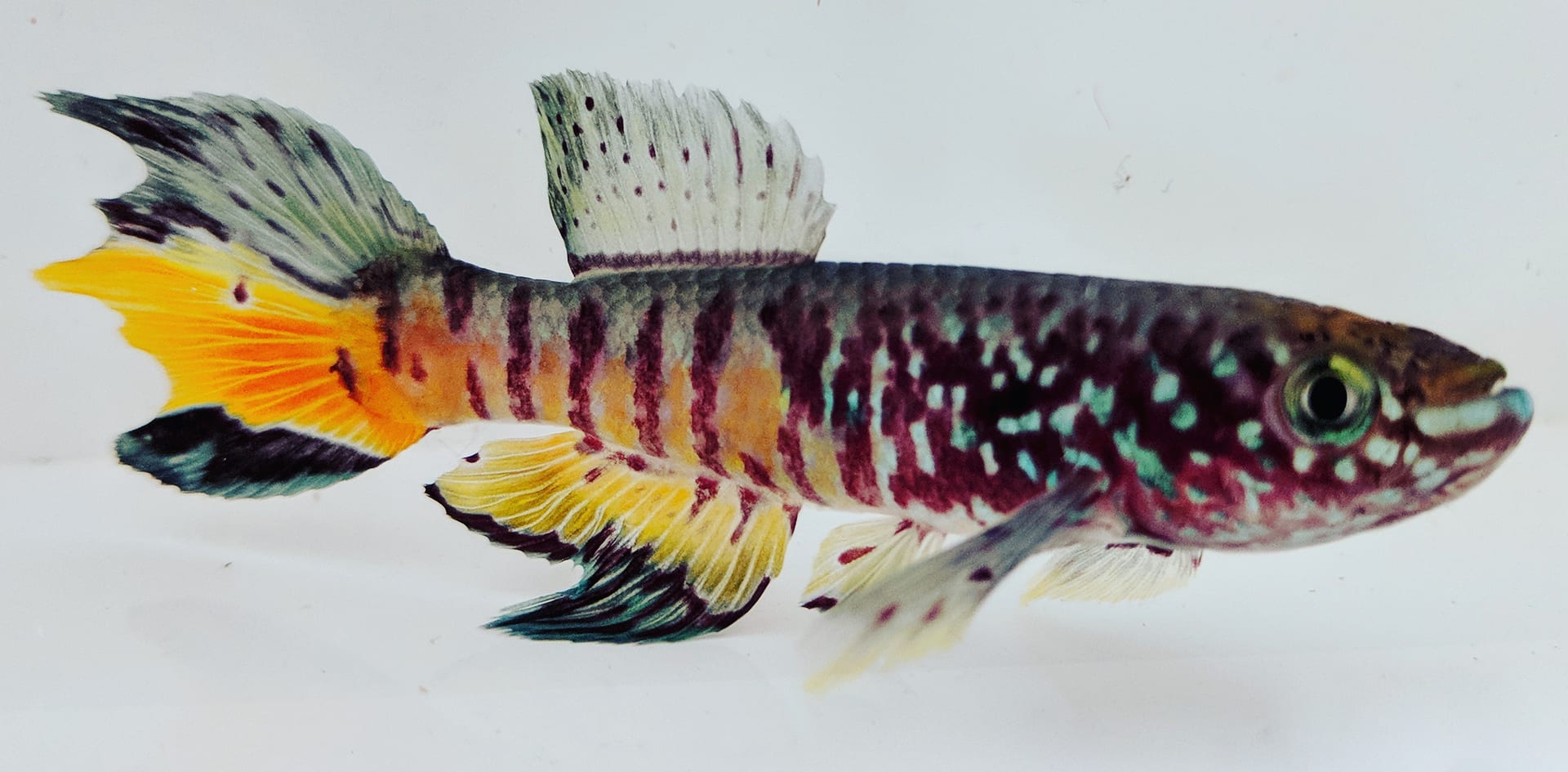
 © Andrewbogott / CC BY-SA 4.0
Blue Gularis
The Blue Gularis is a large egg-laying killifish native to West Africa, growing to about 12–13 cm in length. Males display a striking blue-green body dotted with red markings, along with a distinctive trident-shaped tail fin. They tend to be aggressive, and males will fight fiercely if kept together, so care is needed when combining tankmates or keeping more than one male. With their bold coloration and powerful swimming style, Blue Gularis have long been popular among tropical fish enthusiasts, making them a rewarding choice for intermediate-level keepers ready to give them dedicated attention.
View Blue Gularis encyclopedia →0% commission on your first sales!Register by September 30, 2026 and your first 2 sales are commission-free!
Breeder Wanted!
List on BreederDirect and sell directly to customers nationwide!
Our 6 Transparency Commitments
All Tropical Fish listings include water quality, temperament, and tank size information from verified Breeder.
- Origin Disclosed
- Real Photos
- Water Quality Disclosed
- Recommended Tank Size
- Temperament Disclosed
- Breed Line Disclosed
Browse all 301 breeds
Water Type
Care Level
Verified breeders wanted for Tropical Fish
Breeders are signing up now ahead of launch. Subscribe to be notified when new listings go live.
Getting alerts is free with a member account. When new listings match your saved search, we'll notify you by email and in-app.
Browse other categories
Verified breeders (preview)
Are you raising tropical fish?
Register as a breeder and connect with buyers directly.
Apply as a breederBlue Gularis key facts
- Care level
- Intermediate
- Lifespan
- 3-5 years
- Size
- 12-13cm
- Temperature
- 23〜26℃
- Diet
- Frozen bloodworm, Artemia, prepared foods
- Tank
- A 90 x 30cm base of about 81 litres is the minimum. Break up sight lines with wood and plants to ease male fighting, and fit a lid because it jumps.
- Water Temperature & Quality
- 23-26C, pH 6.0-8.0 and 5-20dGH. FishBase records essentially the same wild range of pH 6.0-8.0 and 5-19dH.
- Tank Mates
- It can share a tank with peaceful fish too large to be eaten. Males are aggressive to one another; keep two or three females per male.
- Diet & Feeding
- Strongly carnivorous. Base the diet on frozen bloodworm and Artemia in rations matched to its size.
- Breeding & Spawning
- A substrate spawner. Spawn it in soft, acidic water around pH 6.5. A small sponge filter is enough.
- Health & Notes
- Assessed Endangered by the IUCN Red List on the basis of its restricted range. Guard against escapes, as it jumps.
About Blue Gularis
Blue Gularis is a large 12–13 cm killifish, with males showing vivid blue-green and red coloring and a trident-shaped tail. Known for their assertive temperament, they're best suited to intermediate-level keepers.
7 things to know before welcoming a Blue Gularis
1Grows Large
Blue Gularis reach about 12–13 cm at maturity, making them one of the larger killifish in the hobby. Give them a tank with enough length and depth to match their size.
2Males Can Be Aggressive
Male Blue Gularis fight fiercely with one another and can seriously injure a rival if housed together. If you plan to keep more than one male, provide plenty of hiding spots and visual breaks.
3Vivid Male Coloration
Males show a striking blue-green body patterned with red markings, along with a tail fin that splits into three points. Females are far more subdued in color, making the sexes easy to tell apart.
4Best for Intermediate Keepers
This species is generally recommended for intermediate-level keepers rather than complete beginners. Comfort with water quality management and an awareness of its temperament will help it thrive.
5An Egg-Laying Killifish
Blue Gularis are egg-laying killifish, a group that reproduces differently from many common aquarium fish. Anyone interested in breeding should learn about spawning mops and substrate before getting started.
6A Tight-Fitting Lid Is a Must
Like many killifish, Blue Gularis are strong jumpers and can leap out of an open tank. Use a secure, gap-free lid to keep them safely inside.
7Prepare the Tank in Advance
Given their assertive temperament, set up plants and décor that create hiding spots before bringing your fish home. Decide in advance whether you'll keep a single fish or a pair so the tank can be arranged accordingly.
Frequently asked questions about Blue Gularis
- Q.How big does a Blue Gularis get?
- A.Blue Gularis is a large egg-laying killifish that reaches about 12–13 cm in length as an adult. Make sure to house it in a tank large enough for its size.
- Q.Can multiple males be kept together?
- A.Males fight fiercely with one another, so keeping multiple males in the same tank isn't recommended. If you do keep more than one, provide plenty of hiding spots to reduce conflict.
- Q.Is this a good fish for beginners?
- A.Blue Gularis is generally considered suited to intermediate-level keepers rather than complete beginners. If you're new to the hobby, it may be better to gain experience with easier species first.
- Q.Are there any regulations on Blue Gularis?
- A.Blue Gularis is not subject to CITES.
- Q.Does the tank need any special setup?
- A.Since they're strong jumpers, a tightly fitting lid is essential. Their assertive temperament also means it helps to add plants or décor to create hiding spots.
Useful tools for Blue Gularis care
Learn more about Blue Gularis in the encyclopedia
View Blue Gularis encyclopedia entry →
Care difficulty, lifespan, size and diet — all basics covered.
More in this category
Can't find the one you're looking for?
Post your wishes for free and breeders with matching animals will contact you with introductions.