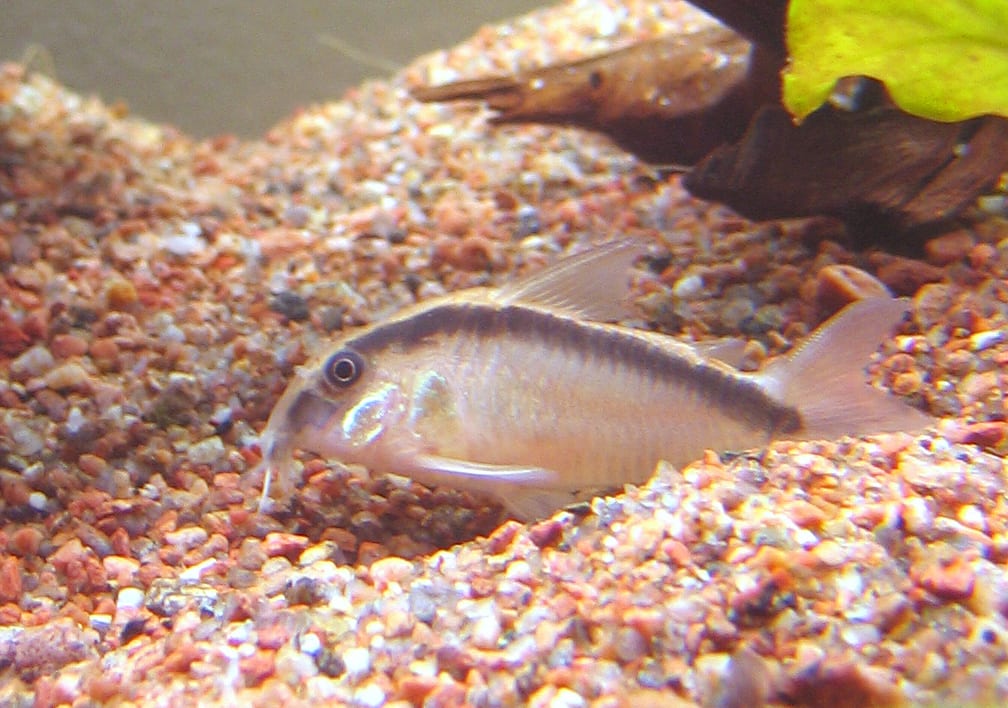
 © Pia Helminen / CC BY 2.5
Skunk Corydoras
The Skunk Corydoras (Corydoras arcuatus) is a mid-sized catfish named for the single black stripe that arcs from its snout across its back to the base of its tail — the source of both its Japanese and English names. Hardy and easygoing, it makes a great choice for beginners. Kept in a group, these corydoras forage together along the substrate, using their sensitive barbels to sift for food — a natural, engaging behavior to watch. A fine, soft sand substrate helps protect those barbels from wear.
View Skunk Corydoras encyclopedia →0% commission on your first sales!Register by September 30, 2026 and your first 2 sales are commission-free!
Breeder Wanted!
List on BreederDirect and sell directly to customers nationwide!
Our 6 Transparency Commitments
All Tropical Fish listings include water quality, temperament, and tank size information from verified Breeder.
- Origin Disclosed
- Real Photos
- Water Quality Disclosed
- Recommended Tank Size
- Temperament Disclosed
- Breed Line Disclosed
Browse all 341 breeds
Water Type
Care Level
Verified breeders wanted for Tropical Fish
Breeders are signing up now ahead of launch. Subscribe to be notified when new listings go live.
Getting alerts is free with a member account. When new listings match your saved search, we'll notify you by email and in-app.
Browse other categories
Verified breeders (preview)
Are you raising tropical fish?
Register as a breeder and connect with buyers directly.
Apply as a breederSkunk Corydoras key facts
- Care level
- Beginner-friendly
- Lifespan
- 8-12 years
- Size
- 4.8-5.5cm
- Temperature
- 20〜28℃
- Diet
- Sinking dried foods, frozen bloodworm, Tubifex
- Tank
- Match the footprint used for corydoras of similar length. Use fine rounded sand.
- Water Temperature & Quality
- 20-28C, pH 5.0-7.5 and 2-12dGH. Tolerance is broad but it dislikes sudden swings.
- Tank Mates
- Peaceful and gregarious; keep at least 4-6 with similarly sized peaceful species.
- Diet & Feeding
- A foraging omnivore. Base the diet on sinking dried food with frozen bloodworm and Tubifex. Do not treat it as a clean-up crew.
- Breeding & Spawning
- Large cool water changes are the usual trigger in the genus, but no established procedure is published for it.
- Health & Notes
- Dirty substrate wears the barbels down. Clean the bottom regularly and avoid sharp-grained sand. IUCN status is Least Concern.
About Skunk Corydoras
Skunk Corydoras (Corydoras arcuatus) is a hardy, easygoing mid-sized catfish marked by a bold black stripe. Beginner-friendly and best kept in groups on fine sand to protect its sensitive barbels.
7 things to know before welcoming a Skunk Corydoras
1Use Fine, Soft Sand
Corydoras sift the substrate with their barbels to find food, so coarse gravel can wear them down. A bed of fine, rounded sand lets them forage comfortably and safely.
2Keep Them in Groups
Skunk Corydoras are naturally social and do best in groups rather than alone. Group settings encourage their natural foraging behavior and reduce shy, hiding tendencies.
3Peaceful, Community-Friendly
This species is calm and rarely aggressive toward tankmates. It pairs well with other peaceful mid-water fish, rounding out the bottom layer of a community tank.
4Feed Sinking Foods
Their downward-facing mouth isn't suited to catching food at the surface. Offer sinking tablets or pellets, and make sure enough reaches the bottom before other fish eat it all.
5Avoid Sudden Water Changes
Though hardy, this species can be sensitive to sudden shifts in temperature or water chemistry during water changes. Adding new water gradually and matching temperature closely helps keep them stable.
6Watch the Barbels for Health Cues
Shortened or discolored barbels can signal issues with substrate quality or water conditions. Checking barbel condition alongside the substrate is a good habit for spotting problems early.
7Acclimate Slowly at Arrival
New arrivals are more sensitive to environmental change, so take time to match bag temperature first, then gradually mix in tank water before release. Providing hiding spots also helps them settle into their new home.
Frequently asked questions about Skunk Corydoras
- Q.Is this fish suitable for beginners?
- A.Yes, the Skunk Corydoras is hardy and easygoing, making it a good choice for beginner aquarists. With basic water quality maintenance, it's easy to keep without major issues.
- Q.What tankmates work well with it?
- A.Thanks to its calm temperament, it pairs well with other peaceful, mid-water tropical fish. It's best to avoid aggressive species or very small tankmates.
- Q.How many should I keep together?
- A.Since this species is naturally social, keeping several together lets you observe their group behavior more easily than keeping one alone. Add as many as your tank size comfortably allows.
- Q.How big does it grow?
- A.Adults typically reach about 4.8 to 5.5 cm, making it a moderately sized corydoras. Its manageable size makes it relatively easy to accommodate.
- Q.Are there legal restrictions on keeping or importing it?
- A.The Skunk Corydoras is not subject to CITES. There's no need to worry about CITES-related procedures for this species.
Useful tools for Skunk Corydoras care
Learn more about Skunk Corydoras in the encyclopedia
View Skunk Corydoras encyclopedia entry →
Care difficulty, lifespan, size and diet — all basics covered.
More in this category
Can't find the one you're looking for?
Post your wishes for free and breeders with matching animals will contact you with introductions.