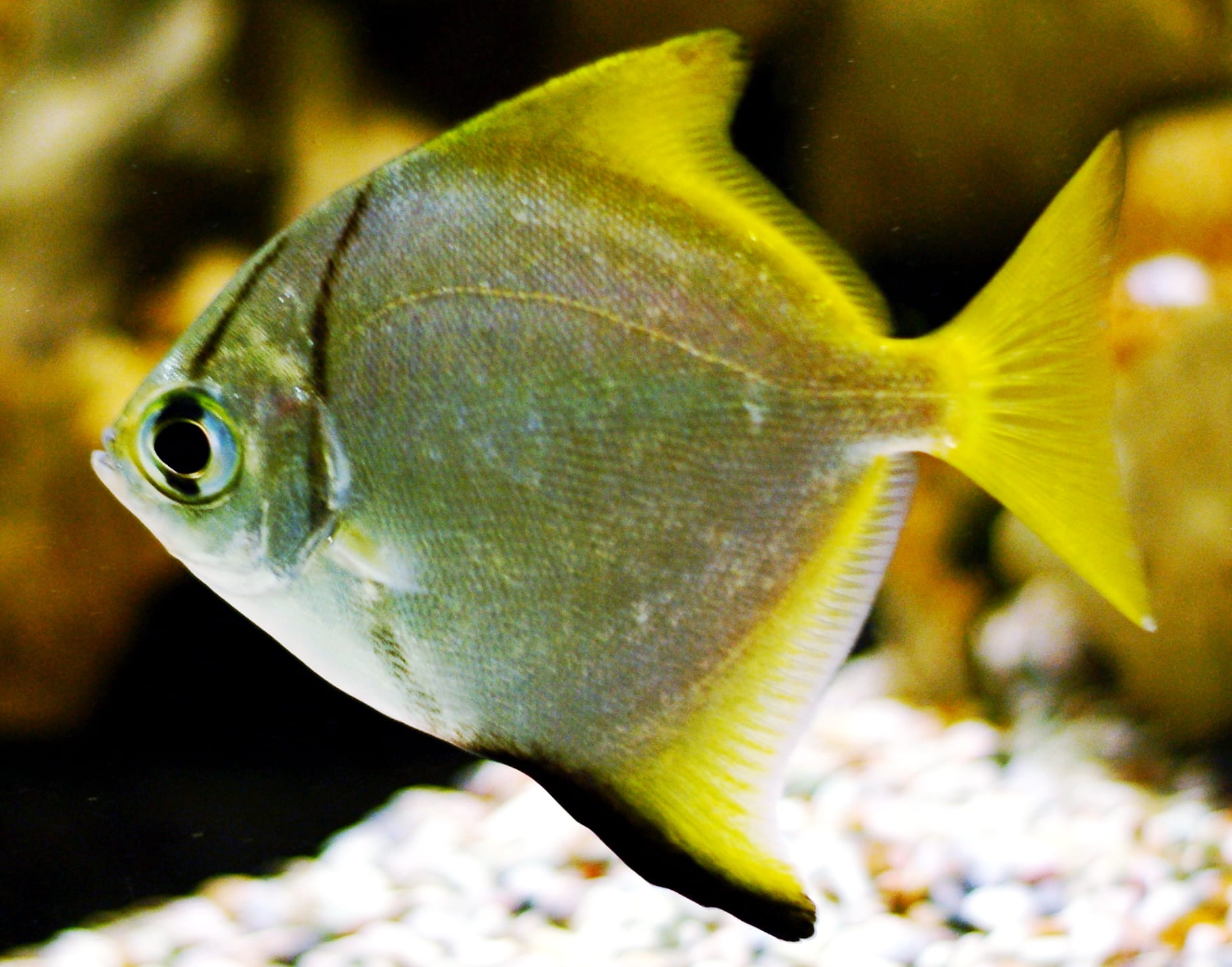
 © 22Kartika / CC BY-SA 4.0
Mono
The mono, or Monodactylus, is a brackish-water fish native to estuaries and mangrove habitats across the Indo-West Pacific, easily recognized by its silvery, diamond-shaped body and two bold black bars crossing the eye and gill cover. It's a schooling species, and keeping several together really brings out its natural charm as they move through the water in unison. Growing up to 27cm, it needs plenty of swimming room as it matures, but its active, hardy nature and captivating group behavior have made it a longtime favorite among enthusiasts. Classified as suited to intermediate keepers, it's a good match for those already comfortable managing brackish conditions.
View Mono encyclopedia →0% commission on your first sales!Register by September 30, 2026 and your first 2 sales are commission-free!
Breeder Wanted!
List on BreederDirect and sell directly to customers nationwide!
Our 6 Transparency Commitments
All Tropical Fish listings include water quality, temperament, and tank size information from verified Breeder.
- Origin Disclosed
- Real Photos
- Water Quality Disclosed
- Recommended Tank Size
- Temperament Disclosed
- Breed Line Disclosed
Browse all 301 breeds
Water Type
Care Level
Verified breeders wanted for Tropical Fish
Breeders are signing up now ahead of launch. Subscribe to be notified when new listings go live.
Getting alerts is free with a member account. When new listings match your saved search, we'll notify you by email and in-app.
Browse other categories
Verified breeders (preview)
Are you raising tropical fish?
Register as a breeder and connect with buyers directly.
Apply as a breederMono key facts
- Care level
- Intermediate
- Lifespan
- 5-8 years
- Size
- 12-27cm
- Temperature
- 22〜26℃
- Diet
- Prepared foods with both animal and vegetable content, frozen foods
- Tank
- LiveAquaria gives a 492 litre (130 gallon) minimum. It is a strong swimmer, so choose a long tank and leave plenty of open water.
- Water Temperature & Quality
- LiveAquaria gives 22-26C (72-78F), pH 8.1-8.4 and 8-12dKH; FishBase records 24-28C in the wild. It tolerates a wide salinity range from brackish to marine, but long-term keeping calls for a stable salinity and a high, steady pH.
- Tank Mates
- LiveAquaria rates it semi-aggressive, and it is known to show territorial behaviour, though it may stay solitary or school. Pair it with robust brackish fishes of similar size.
- Diet & Feeding
- An omnivore feeding on detritus and plankton in the wild. Offer prepared foods containing both animal and vegetable matter, supplemented with frozen foods.
- Breeding & Spawning
- Home-aquarium breeding is rarely recorded, so the focus of keeping is long-term care in stable brackish to marine water.
- Health & Notes
- This is a brackish to marine fish and should not be kept permanently in fresh water. Juveniles handle salinity changes well, but any change should still be made gradually.
About Mono
The mono is a brackish-water fish with a silvery, diamond-shaped body and two black bars. It schools beautifully and grows up to 27cm, suited to intermediate keepers.
7 things to know before welcoming a Mono
1Requires Brackish Water
Monos come from estuaries and mangrove habitats, so they aren't suited to long-term life in plain freshwater. Use a hydrometer to monitor salinity and avoid sudden changes in water chemistry.
2Best Kept in Groups
Their natural beauty really shows when several are kept together rather than alone. A solitary mono can seem restless, so it's worth considering introducing multiple individuals if space allows.
3Plan for Adult Size
Adults range from 12 to 27cm, so if you're keeping a group, it's important to plan for a larger tank down the line. Even if they're small when you bring them home, plan your setup with their eventual size in mind.
4Active Swimmers
Monos are highly active swimmers that move around the tank energetically. Unlike species that prefer to hide, they favor open space, so it's best to design the layout with plenty of clear swimming area.
5Choosing Tankmates
Tankmates need to be species that can also thrive in brackish conditions. Before adding companions, check whether they can comfortably tolerate the same brackish setup.
6Stable Water Quality Matters
They can be sensitive to abrupt shifts in water quality or salinity. Regular water changes paired with routine salinity checks help maintain the stable environment they need to stay healthy.
7Prepare Equipment in Advance
Having marine salt mix and a hydrometer ready in advance makes setup much smoother. Establishing the brackish environment from the tank cycling stage helps avoid a scramble once your monos arrive.
Frequently asked questions about Mono
- Q.Can monos be kept in freshwater?
- A.Monos are naturally found in estuaries and mangrove habitats, so they should be kept in brackish water as a rule. Long-term keeping in plain freshwater isn't recommended, and salinity needs to be managed.
- Q.How many should be kept together?
- A.They show their natural, beautiful schooling behavior best when kept in groups rather than alone. Be sure to plan tank space for their adult size based on how many you keep.
- Q.How big do monos eventually get?
- A.Adults range from 12 to 27cm, varying by individual and rearing conditions. It's important to choose a tank with their eventual size in mind.
- Q.How difficult are monos to keep?
- A.Monos are classified as suited to intermediate keepers. Some prior experience managing brackish conditions helps achieve more stable, consistent care.
- Q.Is this species subject to any regulation?
- A.The mono is not subject to CITES.
Useful tools for Mono care
Learn more about Mono in the encyclopedia
View Mono encyclopedia entry →
Care difficulty, lifespan, size and diet — all basics covered.
Mono related articles
Complete Guide to Setting Up a Brackish Water Aquarium | Salinity and Care for Bumble Bee Goby and Monodactylus
How to care for Bumble Bee Gobies, Monodactylus, and other fish that live in brackish (intermediate between freshwater and saltwater) environments. Detailed explanation of salinity settings, suitable fish species, and water quality management methods.
Peacock Bass (Cichlid) Care Guide | Species, Equipment, Legal Regulations, Breeding
A comprehensive guide to caring for Peacock Bass (Cichla genus), large carnivorous cichlids native to South America. Compare key species including Monoculus, Temensis, and Ocellaris; understand Japan's legal regulations (release strictly prohibited); set up large aquariums (150cm+); learn feeding transitions to artificial diets; manage mixed-species tanks with large fish; and explore breeding highlights where you can observe spawning bed construction. A complete guide for responsible keeping.
More in this category
Can't find the one you're looking for?
Post your wishes for free and breeders with matching animals will contact you with introductions.