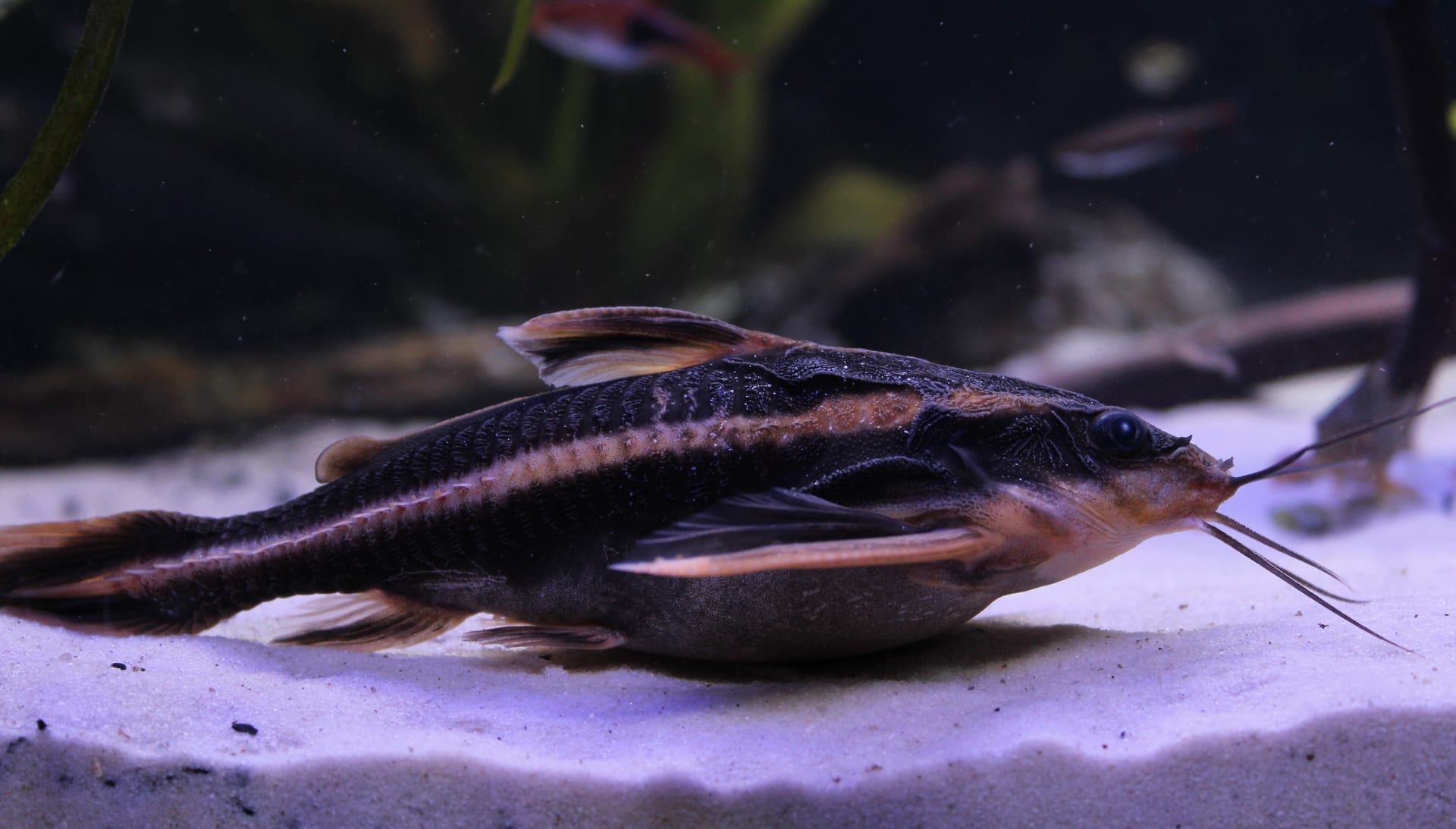
 © Kacper Aleksander / CC BY-SA 4.0
Striped Raphael Catfish
A large South American catfish known for the bold white stripes running along its body and its coarse, bony-plated skin. Generally calm and unlikely to pick fights, it has a quiet charm as it rests tucked away in the shade. One notable trait is its ability to make a rasping, creaking sound by rubbing its pectoral fin spines together, especially when startled, a quirky habit that keeps keepers entertained. Because it grows to 24 to 43 cm as an adult, prospective owners should plan for a tank sized for its eventual bulk and avoid housing it with small fish that could become prey. Considered a fish for intermediate keepers, a working knowledge of water quality management goes a long way toward a long, healthy partnership.
View Striped Raphael Catfish encyclopedia →0% commission on your first sales!Register by September 30, 2026 and your first 2 sales are commission-free!
Breeder Wanted!
List on BreederDirect and sell directly to customers nationwide!
Our 6 Transparency Commitments
All Tropical Fish listings include water quality, temperament, and tank size information from verified Breeder.
- Origin Disclosed
- Real Photos
- Water Quality Disclosed
- Recommended Tank Size
- Temperament Disclosed
- Breed Line Disclosed
Browse all 301 breeds
Water Type
Care Level
Verified breeders wanted for Tropical Fish
Breeders are signing up now ahead of launch. Subscribe to be notified when new listings go live.
Getting alerts is free with a member account. When new listings match your saved search, we'll notify you by email and in-app.
Browse other categories
Verified breeders (preview)
Are you raising tropical fish?
Register as a breeder and connect with buyers directly.
Apply as a breederStriped Raphael Catfish key facts
- Care level
- Intermediate
- Lifespan
- 8-12 years
- Size
- 24-43cm
- Temperature
- 24〜30℃
- Diet
- Sinking tablets and pellets, frozen bloodworm, earthworms
- Tank
- 120 x 30cm (about 108 litres) or larger. Provide driftwood or pipework as daytime cover over a smooth sand substrate. It grows large, so a bigger tank will be needed in the long run.
- Water Temperature & Quality
- 24-30C, pH 5.8-7.5, 2-20 dGH. Uneaten food collects on the bottom, so keep up regular water changes and substrate cleaning.
- Tank Mates
- Not aggressive, but it eats fish small enough to fit in its mouth. It tolerates its own kind; pair it with deep-bodied medium or larger species.
- Diet & Feeding
- Base the diet on quality sinking tablets and pellets, supplemented with frozen bloodworm and earthworms. Feeding just before lights-out works best.
- Breeding & Spawning
- There are no reports of breeding in the hobby. In nature it is said to spawn among surface vegetation.
- Health & Notes
- The pectoral and dorsal spines tangle in nets and can pierce skin. Move the fish in a container of water rather than netting it.
About Striped Raphael Catfish
Learn about the Striped Raphael Catfish, a large South American catfish with bold white stripes and a rasping sound-making habit. This guide covers its temperament, adult size, and tank mate considerations for prospective keepers.
7 things to know before welcoming a Striped Raphael Catfish
1Grows larger than expected
As an adult, this catfish reaches 24 to 43 cm in length. Even if it arrives small, plan ahead with a tank and filtration sized for its eventual full-grown bulk.
2Avoid keeping with small fish
Although generally calm, it may eat any fish small enough to fit in its mouth. When choosing tank mates, pick fish of a similar size or larger.
3A unique sound-making habit
When startled or handled, it may rub its pectoral fin spines together to produce a rasping, creaking sound. This is a natural warning signal, not a sign of distress.
4Tends to hide during the day
It prefers shaded spots and often stays out of sight during the day. Providing a hiding spot, such as a pipe or piece of driftwood, helps it feel secure.
5Handle the rough skin with care
Its skin is covered in rough, bony plates that can easily catch in a net. Moving it with a container rather than a net is a safer option.
6Suited to intermediate keepers
This species is generally recommended for intermediate keepers with basic water quality management skills. First-time large-fish owners should research care requirements beforehand.
7Plan for a long-term commitment
Because it grows substantially and is hard to rehome later, check in advance that you can provide adequate space and tank size for its entire life before bringing one home.
Frequently asked questions about Striped Raphael Catfish
- Q.How big does it get as an adult?
- A.As an adult, it typically reaches about 24 to 43 cm. Choose a tank sized for its eventual adult bulk, not just the size it arrives at.
- Q.Can it be kept with other fish?
- A.It is generally calm and not aggressive, but any fish small enough to fit in its mouth may be eaten. Pair it with tank mates of a similar size or larger.
- Q.Does it really make a creaking sound?
- A.Yes, it can produce a rasping sound by rubbing its pectoral fin spines together. This is a natural behavior seen when it is startled or handled.
- Q.Is it suitable for beginners?
- A.It is generally considered suitable for intermediate keepers with basic water quality management knowledge. Complete beginners should research its care needs first.
- Q.Does it stay hidden during the day?
- A.It tends to prefer shaded areas and often stays hidden during daylight hours. Providing a shelter it can fully tuck into helps it feel at ease.
Useful tools for Striped Raphael Catfish care
Learn more about Striped Raphael Catfish in the encyclopedia
View Striped Raphael Catfish encyclopedia entry →
Care difficulty, lifespan, size and diet — all basics covered.
More in this category
Can't find the one you're looking for?
Post your wishes for free and breeders with matching animals will contact you with introductions.