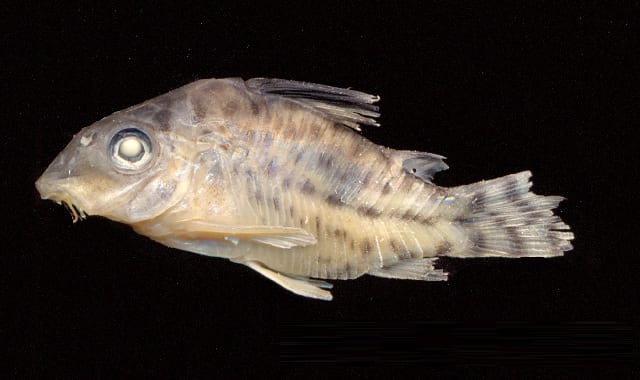
 © Claudio de Oliveira, Laboratório de Biologia e Genética de Peixes - UNESP - Botucatu / CC BY 3.0
Agassiz's Corydoras
Agassiz's Corydoras is a charming small catfish with a pale body and rows of small brown speckles. Only the front rays of its dorsal fin are dark, while the rest fade to a pale, almost translucent white, giving it a distinctive accent as it swims. Native to the middle Amazon near the Peru-Brazil border, it belongs to a group known for being tricky to tell apart from close relatives, giving it some appeal for more experienced hobbyists too. Calm and unflappable by nature, it is considered easy enough for beginners to keep, and its busy little movements along the substrate make it a delightfully soothing fish to watch.
View Agassiz's Corydoras encyclopedia →0% commission on your first sales!Register by September 30, 2026 and your first 2 sales are commission-free!
Breeder Wanted!
List on BreederDirect and sell directly to customers nationwide!
Our 6 Transparency Commitments
All Tropical Fish listings include water quality, temperament, and tank size information from verified Breeder.
- Origin Disclosed
- Real Photos
- Water Quality Disclosed
- Recommended Tank Size
- Temperament Disclosed
- Breed Line Disclosed
Browse all 301 breeds
Water Type
Care Level
Verified breeders wanted for Tropical Fish
Breeders are signing up now ahead of launch. Subscribe to be notified when new listings go live.
Getting alerts is free with a member account. When new listings match your saved search, we'll notify you by email and in-app.
Browse other categories
Verified breeders (preview)
Are you raising tropical fish?
Register as a breeder and connect with buyers directly.
Apply as a breederAgassiz's Corydoras key facts
- Care level
- Beginner-friendly
- Lifespan
- 5-8 years
- Size
- 5.2-7cm
- Temperature
- 22〜27℃
- Diet
- Sinking dried foods, frozen bloodworm, Tubifex
- Tank
- Use fine rounded sand, keep it scrupulously clean, and never block access to the water surface.
- Water Temperature & Quality
- 22-27C, pH 6.0-8.0, 2-12dGH. FishBase records 22-26C, pH 6.0-8.0 and 2-25dH in the wild.
- Tank Mates
- Peaceful and gregarious; keep at least four to six. It mixes well with peaceful small and medium-sized fishes.
- Diet & Feeding
- A foraging omnivore. Offer sinking dried food plus frozen bloodworm and Tubifex. It must never be expected to live on leftovers or to clean the tank.
- Breeding & Spawning
- Use two males per female. Once females are gravid, make a 50-70 percent water change with cooler water and raise oxygenation and flow. Eggs are laid on glass, fine-leaved plants or spawning mops.
- Health & Notes
- Assessed Least Concern by the IUCN Red List. The name is commonly misapplied to similar-looking fishes, so a fish sold under it may not be this species. It is still traded under its former name Corydoras agassizii, so search under both scientific names. Apistogramma agassizii, a dwarf cichlid, is an entirely different fish.
About Agassiz's Corydoras
A small Corydoras from the middle Amazon, with a pale, spotted body and a black-tipped dorsal fin. Calm and easy to keep, it's a great choice for beginner aquarists.
7 things to know before welcoming a Agassiz's Corydoras
1Rows of spots, dark dorsal fin
Its defining feature is rows of small brown spots on a pale body. Only the front three dorsal fin rays are black while the rest stay whitish, giving it a striking look in motion.
2Easily confused with relatives
Several closely related species look very similar, and this group is known for being genuinely hard to tell apart even for experts. Checking photos and labeling before purchase helps avoid confusion.
3Best kept in a group
Corydoras naturally form loose schools, so keeping several together tends to help them settle in and feel secure. Adding multiple individuals is preferable to a single fish.
4Choose soft, rounded substrate
It forages along the bottom using its barbels, so a fine, rounded substrate such as smooth sand helps prevent irritation or damage to them.
5Peaceful and community-friendly
Its calm temperament means it rarely bothers tankmates, making it well suited to a peaceful community tank. It spends most of its time in the lower zone of the aquarium.
6Ease into water changes gradually
While generally hardy and easy to keep, it can be sensitive to sudden shifts in temperature or water chemistry. Take time with drip acclimation when introducing it to a new tank.
7Cycle the tank before arrival
Introducing it into a freshly set up tank can be stressful, so it's best to let the filter cycle and water parameters stabilize before bringing one home.
Frequently asked questions about Agassiz's Corydoras
- Q.How big does it grow as an adult?
- A.It reaches roughly 5.2 to 7 cm as an adult, a fairly typical small size for Corydoras that suits small to medium-sized tanks.
- Q.Is it suitable for beginners?
- A.It's classified as beginner-friendly. As long as basic water quality care is maintained, it's manageable even for those new to the hobby.
- Q.Can it be kept alone?
- A.Keeping a single fish is possible, but since Corydoras prefer company, keeping several together generally helps them feel more settled.
- Q.Can it live with other fish?
- A.Yes, its peaceful temperament makes it compatible with other calm, similarly sized tropical fish, and it mostly stays near the bottom, which reduces overlap with other tankmates.
- Q.Are there any legal restrictions on keeping it?
- A.Agassiz's Corydoras is not listed under CITES, the international agreement regulating trade in endangered species.
Useful tools for Agassiz's Corydoras care
Learn more about Agassiz's Corydoras in the encyclopedia
View Agassiz's Corydoras encyclopedia entry →
Care difficulty, lifespan, size and diet — all basics covered.
More in this category
Can't find the one you're looking for?
Post your wishes for free and breeders with matching animals will contact you with introductions.