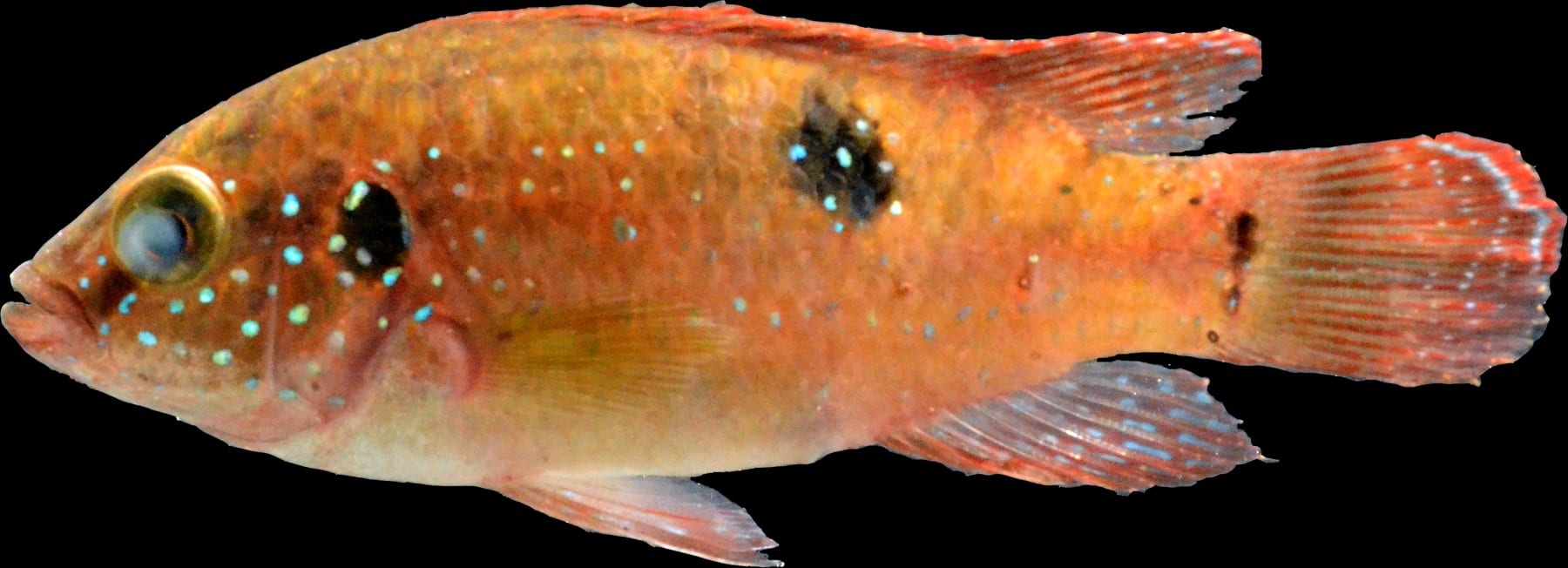
 © Jonathan Armbruster / CC BY-SA 2.0
Jewel Cichlid
The Jewel Cichlid is a small, hardy cichlid native to West Africa, prized for the glittering blue-white spots scattered across its body that give the fish its gemstone name. During breeding season, both males and females flush an even deeper red, making them one of the most eye-catching fish in a freshwater tank. They're considered a good choice for beginners thanks to their toughness and adaptability, though their protective parenting instincts mean they can turn territorial and aggressive once they've laid eggs on a flat surface, so tankmates need to be chosen carefully. Adults typically reach a standard length of up to about 13.6 cm (roughly 5.4 in).
View Jewel Cichlid encyclopedia →0% commission on your first sales!Register by September 30, 2026 and your first 2 sales are commission-free!
Breeder Wanted!
List on BreederDirect and sell directly to customers nationwide!
BreederDirect's 6 Transparency Commitments
All Tropical Fish listings include water quality, temperament, and tank size information from verified Breeder.
- Origin Disclosed
- Real Photos
- Water Quality Disclosed
- Recommended Tank Size
- Temperament Disclosed
- Breed Line Disclosed
Browse all 341 breeds
Water Type
Care Level
Verified breeders wanted for Tropical Fish
Breeders are signing up now ahead of launch. Subscribe to be notified when new listings go live.
Getting alerts is free with a member account. When new listings match your saved search, we'll notify you by email and in-app.
Browse other categories
Verified breeders (preview)
Are you raising tropical fish?
Register as a breeder and connect with buyers directly.
Apply as a breederJewel Cichlid key facts
- Care level
- Beginner-friendly
- Lifespan
- 5-10 years
- Size
- Up to about 13.6cm standard length
- Temperature
- 22〜28℃
- Diet
- Prepared foods, live and frozen foods, plus vegetable matter such as spirulina flake
- Tank
- A base of 120x30cm, about 108 litres, is the minimum. Break up lines of sight with rocks and driftwood, and include a flat stone as a spawning site.
- Water Temperature & Quality
- 22-28C, pH 6.0-7.8 and 4-18 dGH. The species is adaptable and does well in anything but extremely soft or hard water.
- Tank Mates
- Strongly territorial and incredibly aggressive when spawning. Larger tetras, Synodontis, loricariids and other African cichlids can work in a sufficiently large tank; otherwise keep it as a pair.
- Diet & Feeding
- It takes most foods, and live foods bring out the colour. Include vegetable matter such as spirulina flake or blanched spinach.
- Breeding & Spawning
- A substrate spawner that lays on flat stones, with up to 600 eggs hatching in about 48 hours and fry free-swimming after 72. Both parents guard them for about a month; the surest way to obtain a pair is to grow on a group of juveniles.
- Health & Notes
- Many fish sold as jewel cichlids are reported to be a closely related species, so check the scientific name when buying. Tank mates can be injured by aggression during spawning.
About Jewel Cichlid
Jewel Cichlid: a hardy West African cichlid with glittering blue-white spots that flush a vivid red during breeding, making it an eye-catching yet beginner-friendly freshwater fish.
7 things to know before welcoming a Jewel Cichlid
1Aggression Spikes When Breeding
Jewel Cichlids are substrate spawners that guard their eggs and fry fiercely once they pair up and start breeding. Even normally calm individuals can turn territorial and chase other fish away during this period, so plan tankmates accordingly.
2Choose Tankmates Carefully
Because they can become territorial during breeding, tankmates should be similarly sized and equally robust fish. Many keepers find it easiest to house a breeding pair alone or in a species-only tank to avoid conflict.
3Easy to Breed on Flat Surfaces
This species spawns on flat rocks or the substrate rather than in open water, a habit that makes breeding relatively achievable once a compatible pair forms. Both parents typically take turns guarding the eggs and fry, which makes for interesting behavior to watch.
4Color Deepens at Breeding Time
Jewel Cichlids normally show a reddish body color, but both the male and female intensify to a deeper red when ready to breed, making the blue-white spots stand out even more. This color shift is a useful visual cue that breeding behavior may be starting.
5Hardy and Beginner-Friendly
This species is generally considered suitable for beginners and tolerates some fluctuation in water conditions. Even so, sudden swings in water quality or temperature are stressful, so make water changes gradually and consistently.
6Plan for Their Adult Size
Adults reach a standard length of up to about 13.6 cm (roughly 5.4 inches). Since they start out small, it helps to plan tank size and layout around their eventual size and territorial behavior from the beginning.
7Provide Rocks and Hiding Spots
Rockwork and driftwood give this territorial fish a sense of security and double as potential spawning sites. Hiding spots are especially valuable during breeding, helping reduce stress for the parent fish.
Frequently asked questions about Jewel Cichlid
- Q.Is the Jewel Cichlid suitable for beginners?
- A.Yes, it's generally considered a beginner-friendly species. It's hardy and adaptable to varying water conditions, making it approachable even for those new to keeping cichlids.
- Q.Can it live with other fish?
- A.It's usually calm, but becomes territorial and can attack other fish once it starts breeding. If you keep tankmates, choose similarly sized, robust fish and watch their interactions closely.
- Q.How large does it grow?
- A.Adults reach a standard length of up to about 13.6 cm (roughly 5.4 inches). It helps to plan your tank size around this adult size rather than how small they look when you bring them home.
- Q.Is breeding difficult?
- A.They're substrate spawners that lay eggs on flat surfaces, which makes breeding relatively achievable once you have a compatible pair. Keep in mind that both parents become more aggressive while guarding eggs and fry.
- Q.What happens to their color during breeding?
- A.Both the male and female intensify to a deeper red during breeding season, which makes the blue-white spots across their body stand out even more. It's a clear visual cue that's easy to notice compared to their normal coloration.
Useful tools for Jewel Cichlid care
Learn more about Jewel Cichlid in the encyclopedia
View Jewel Cichlid encyclopedia entry →
Care difficulty, lifespan, size and diet — all basics covered.
Jewel Cichlid related articles
See more Jewel Cichlid articles →More in this category
Can't find the one you're looking for?
Post your wishes for free and breeders with matching animals will contact you with introductions.