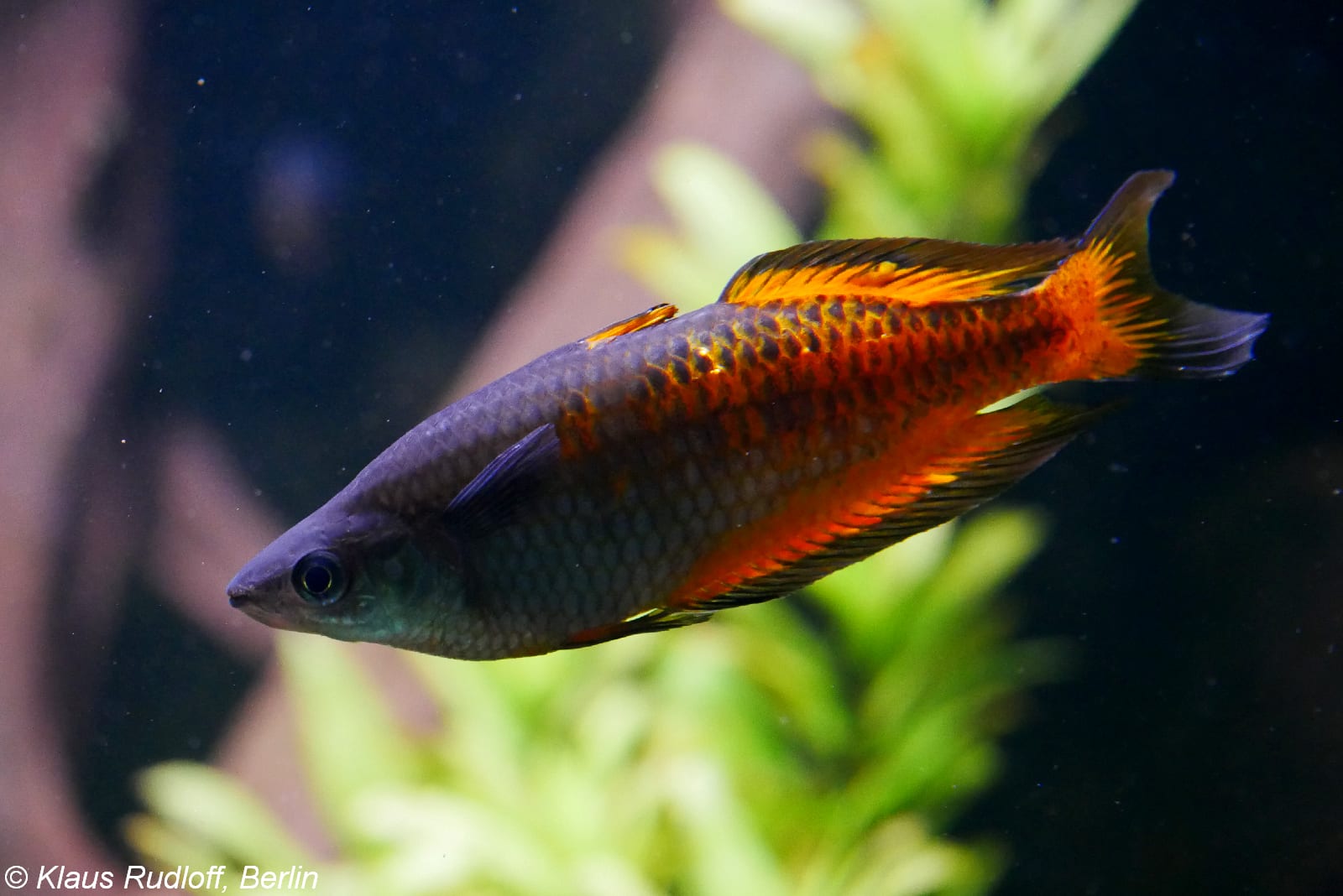
 © Klaus Rudloff / CC BY-SA 4.0
Parkinson's Rainbowfish
Parkinson's Rainbowfish is a strikingly colored freshwater fish native to Papua New Guinea, prized for the gradient running through its body — a soft lavender-gray foreparts blending into a glowing golden-orange rear half. The contrast shifts beautifully depending on the angle of light. Males develop a deeper body profile and trailing dorsal and anal fins as they mature, giving them a more dramatic silhouette than females. Calm and peaceful by nature, they get along well with other mid-water swimmers and their own kind. They thrive in hard, slightly alkaline water, so some attention to water chemistry is needed, and keeping them in a group is said to bring out their color more vividly. This makes them a good choice for aquarists with some prior experience.
View Parkinson's Rainbowfish encyclopedia →Breeder Wanted!
List on BreederDirect and sell directly to customers nationwide!
BreederDirect's 6 Transparency Commitments
All Tropical Fish listings include water quality, temperament, and tank size information from verified Breeder.
- Origin Disclosed
- Real Photos
- Water Quality Disclosed
- Recommended Tank Size
- Temperament Disclosed
- Breed Line Disclosed
Browse all 341 breeds
Water Type
Care Level
Verified breeders wanted for Tropical Fish
Breeders are signing up now ahead of launch. Subscribe to be notified when new listings go live.
Getting alerts is free with a member account. When new listings match your saved search, we'll notify you by email and in-app.
Browse other categories
Verified breeders (preview)
Are you raising tropical fish?
Register as a breeder and connect with buyers directly.
Apply as a breederParkinson's Rainbowfish key facts
- Care level
- Intermediate
- Lifespan
- 5-8 years
- Size
- Up to 11cm SL (male)
- Temperature
- 26〜30℃
- Diet
- Dried, frozen and live foods
- Tank
- An active medium-sized rainbowfish, so choose a long tank and separate densely planted areas from open swimming space.
- Water Temperature & Quality
- FishBase records pH 7.5-7.8, hardness from 8 dH and 26-30C. It prefers slightly alkaline, moderately hard water and does not suit soft, acidic conditions. Coming from lowland rainforest streams, it likes the warmer end of the range for the genus.
- Tank Mates
- Peaceful but quick enough to unsettle small or slow fish. Similar-sized rainbowfish, characins, danios, barbs and Corydoras suit it, and a group of six or more reduces its shyness.
- Diet & Feeding
- Unfussy, taking dried, frozen and live foods. Regular frozen and live feeds deepen the golden-orange of the rear body.
- Breeding & Spawning
- FishBase notes distinct pairing at spawning. Like its congeners it is an egg scatterer, attaching eggs to java moss or spawning mops. The fry are small and need suitable first foods.
- Health & Notes
- Young fish on sale show little colour; the golden-orange appears with maturity. Its limited range has earned a Near Threatened listing from the IUCN. Published husbandry is thin, so follow general Melanotaenia practice and observe closely. It is not covered by CITES.
About Parkinson's Rainbowfish
A Papua New Guinea native rainbowfish with a lavender-to-gold gradient body. Males show taller profiles and flowing fins. Prefers hard, alkaline water and is best suited to aquarists with some experience.
7 things to know before welcoming a Parkinson's Rainbowfish
1Needs Hard, Alkaline Water
Parkinson's Rainbowfish prefers water on the hard, slightly alkaline side. In soft or acidic water it tends to lose condition, so set up your water chemistry before bringing them home.
2Colors Pop in a Group
Keeping several individuals together is said to bring out brighter coloration as they interact with one another. Plan your tank size around a small group rather than a single fish.
3Males Show Off Fins and Height
Males develop a taller body and flowing dorsal and anal fins as they mature. Females stay more modest in shape, so the sexes offer two distinct looks.
4Grows Up to 11cm
Males can reach up to about 11cm in length. Choose a tank with enough swimming room to comfortably accommodate their adult size.
5Peaceful and Mixes Well
They're calm by nature and get along with other gentle mid-water fish. Conflicts within their own species are also uncommon.
6Best for Intermediate Keepers
This species is generally considered suited to intermediate aquarists. Some experience with water quality management and routine water changes will help you keep them stable long-term.
7Lighting and Décor Enhance Color
The gradient across their body shifts in appearance depending on the light. Muted substrate and lighting choices help the lavender-gray and golden-orange contrast stand out.
Frequently asked questions about Parkinson's Rainbowfish
- Q.What kind of tank setup suits this fish?
- A.They do best in hard, slightly alkaline water, so a setup where you can maintain that chemistry works well. A tank roomy enough to house a small group also helps keep their coloration consistent.
- Q.Is this fish suitable for beginners?
- A.This species is generally considered suited to intermediate keepers. Building some experience with water changes and water quality management first will help you keep them successfully.
- Q.Can it be kept with other fish?
- A.Its calm temperament makes it a good match for other peaceful mid-water fish. Keeping several of its own kind together also tends to go smoothly.
- Q.How can I tell males from females?
- A.Males develop a taller body and flowing dorsal and anal fins as they mature. Females have a more modest shape and less pronounced fins.
- Q.How large does it grow?
- A.Males can reach up to about 11cm. It's a good idea to plan for a tank with enough room to accommodate that adult size.
Useful tools for Parkinson's Rainbowfish care
Learn more about Parkinson's Rainbowfish in the encyclopedia
View Parkinson's Rainbowfish encyclopedia entry →
Care difficulty, lifespan, size and diet — all basics covered.
More in this category
Can't find the one you're looking for?
Post your wishes for free and breeders with matching animals will contact you with introductions.