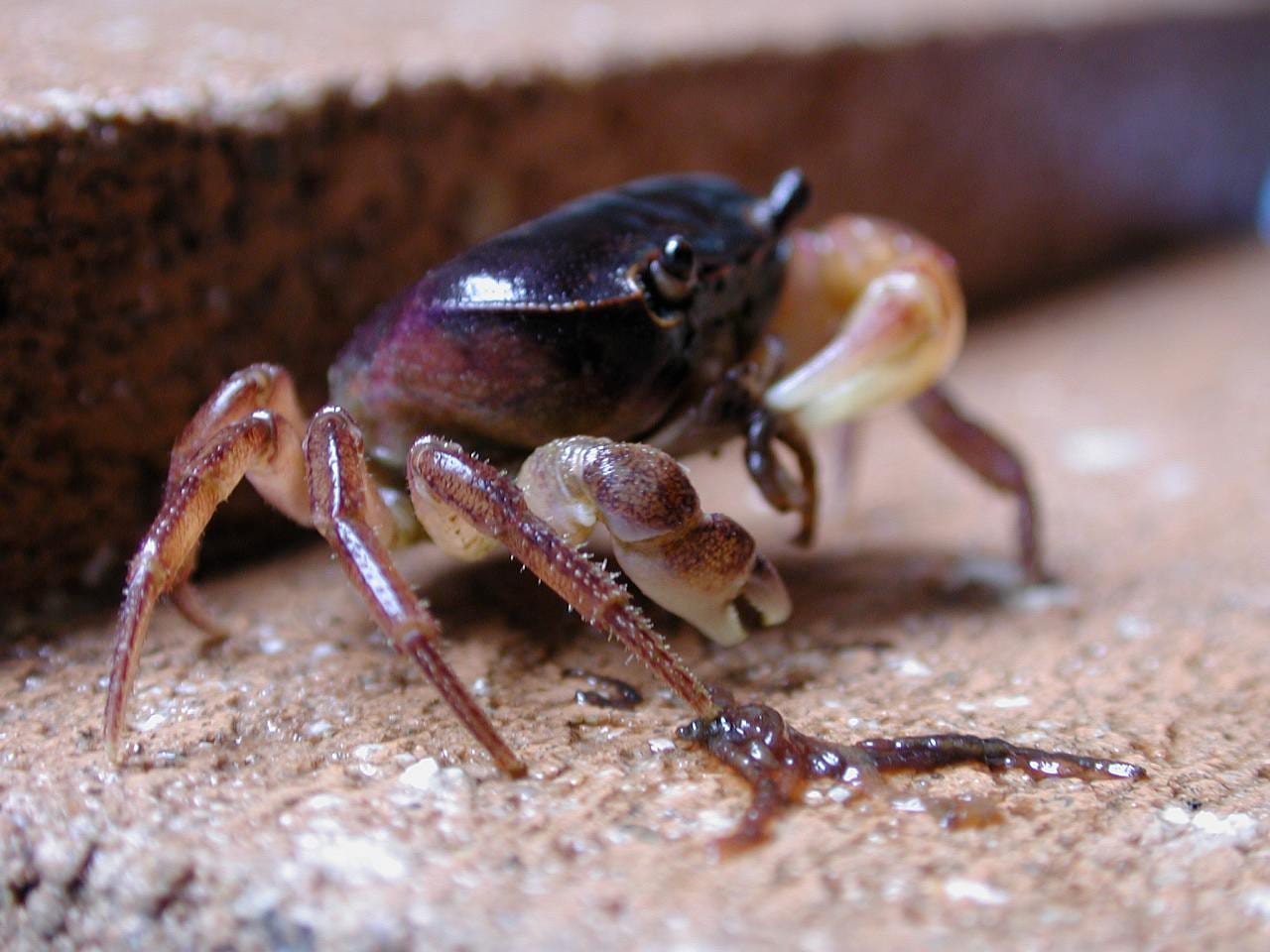
 © osaMu / CC BY 2.0
Japanese Freshwater Crab
The Japanese freshwater crab (sawagani) is a small crab native to Japan, found in mountain streams and rural waterways. Unlike many crabs, it completes its entire life cycle in fresh water, with a carapace width of about 20 to 30mm at maturity. Most individuals have a dark brown carapace and strikingly vermilion legs, giving them a rustic yet charming appearance. They are sensitive enough to water conditions to serve as an indicator species for Water Quality Class I, Japan's cleanest water grade, and thrive best in cool, pristine water. They hide under stones during the day and become active at night, and because they are territorial, it is important to provide hiding places where they can settle in. With a lifespan ranging from several years up to about a decade, they can be a long-term companion, and with the right setup, they are approachable even for first-time keepers.
View Japanese Freshwater Crab encyclopedia →Breeder Wanted!
List on BreederDirect and sell directly to customers nationwide!
BreederDirect's 6 Transparency Commitments
All Tropical Fish listings include water quality, temperament, and tank size information from verified Breeder.
- Origin Disclosed
- Real Photos
- Water Quality Disclosed
- Recommended Tank Size
- Temperament Disclosed
- Breed Line Disclosed
Browse all 341 breeds
Water Type
Care Level
Verified breeders wanted for Tropical Fish
Breeders are signing up now ahead of launch. Subscribe to be notified when new listings go live.
Getting alerts is free with a member account. When new listings match your saved search, we'll notify you by email and in-app.
Browse other categories
Verified breeders (preview)
Are you raising tropical fish?
Register as a breeder and connect with buyers directly.
Apply as a breederJapanese Freshwater Crab key facts
- Care level
- Beginner-friendly
- Lifespan
- Several years up to about 10
- Size
- 20-30mm carapace width
- Diet
- Algae, aquatic and terrestrial insects, worms and vegetables
- Tank
- Use a sand substrate with rocks and a dry area the crab can climb out onto. It hides under stones by day, so it needs spaces to creep into. It is territorial, so provide more refuges than crabs, and fit a lid because it escapes.
- Water Temperature & Quality
- It lives in clean upper-stream water and indexes the cleanest water class. It is considered fairly easy to keep provided the water stays cool and clean.
- Tank Mates
- Territorial, and squabbles are common when several are kept together. Freshly moulted individuals are at risk of cannibalism, so provide ample cover. Being omnivorous it will catch small fish and shrimp, so it is not a community animal.
- Diet & Feeding
- An omnivore taking algae, aquatic and terrestrial insects, snails and worms. In captivity worms and cabbage suit it well. Remove anything uneaten, which quickly fouls the water.
- Breeding & Spawning
- Mating runs from spring into early summer, and the female carries several dozen unusually large eggs of about 2mm on her pleopods, far fewer than other crabs lay. The larvae metamorphose inside the egg and hatch as crabs, and the young shelter under the mother for a while.
- Health & Notes
- It is an intermediate host for dangerous parasites including lung flukes, so it must be thoroughly cooked if eaten, and hands should be washed after handling. Local populations are genetically distinct, so never release collected crabs anywhere but where they were found.
About Japanese Freshwater Crab
A care guide for the sawagani (Japanese freshwater crab), a small native species with a 20–30mm carapace, dark brown shell, and vermilion legs. It favors clean, cool water and suits first-time keepers.
7 things to know before welcoming a Japanese Freshwater Crab
1Clean Water Is Essential
Sawagani are sensitive enough to serve as an indicator species for Japan's cleanest water grade, Water Quality Class I. They're easily affected by ammonia and other pollutants, so frequent water changes and reliable filtration are essential. Poor water quality can quickly affect their health.
2Keep Water Cool
As natives of mountain streams and rural waterways, sawagani need cool water and cleanliness to thrive. Be especially careful of temperature spikes in summer, and place the tank somewhere cool and out of direct sunlight.
3Secure the Lid Well
Crabs are strong climbers and can escape by scaling tank walls or squeezing through gaps around equipment. Use a tightly fitting lid and seal any gaps around cords or filter tubing to keep them safely inside.
4Provide a Land Area
Sawagani spend a good deal of time out of the water, not just submerged. Arrange driftwood or rocks so they can climb completely out of the water onto dry land.
5They Grow by Molting
As crustaceans, sawagani grow by repeatedly molting their shells. Right after molting, their new shell is soft and they're vulnerable, so provide hiding spots and keep them separated from other individuals during this time.
6Best Kept Solitary
Sawagani are territorial, and housing multiple crabs together can lead to fighting, with weaker individuals sometimes attacked. If keeping several, provide plenty of hiding spots, or ideally house them individually.
7Easy Omnivorous Diet
Sawagani are omnivores that will eat everything from prepared pellets to vegetable scraps and protein-rich foods. Leftover food can foul the water, so offer small amounts they can finish quickly.
Frequently asked questions about Japanese Freshwater Crab
- Q.Does a sawagani ever need salt water?
- A.No, the sawagani is a Japan-native species that spends its entire life in fresh water. You can keep it in a freshwater setup only, with no need for salt water at any stage.
- Q.How big does a sawagani get?
- A.Even as an adult, it stays small, with a carapace width of about 20 to 30mm — small enough to fit in the palm of your hand. This compact size makes it easy to keep in a limited amount of space.
- Q.Can it be kept with fish or shrimp?
- A.Not well. Sawagani are omnivores and will catch and eat small fish or shrimp, so they are not suited to community tanks. It is best to keep them separate from fish and shrimp.
- Q.Can it escape from the tank?
- A.Yes, crabs are capable climbers and can escape by scaling the tank walls or wiring. A tightly fitting, gap-free lid is the best way to prevent this.
- Q.How long do sawagani live?
- A.Their lifespan ranges from several years up to about a decade, making them a relatively long-term companion. Maintaining proper water quality and temperature is key to helping them live a full life.
Useful tools for Japanese Freshwater Crab care
Learn more about Japanese Freshwater Crab in the encyclopedia
View Japanese Freshwater Crab encyclopedia entry →
Care difficulty, lifespan, size and diet — all basics covered.
More in this category
Can't find the one you're looking for?
Post your wishes for free and breeders with matching animals will contact you with introductions.