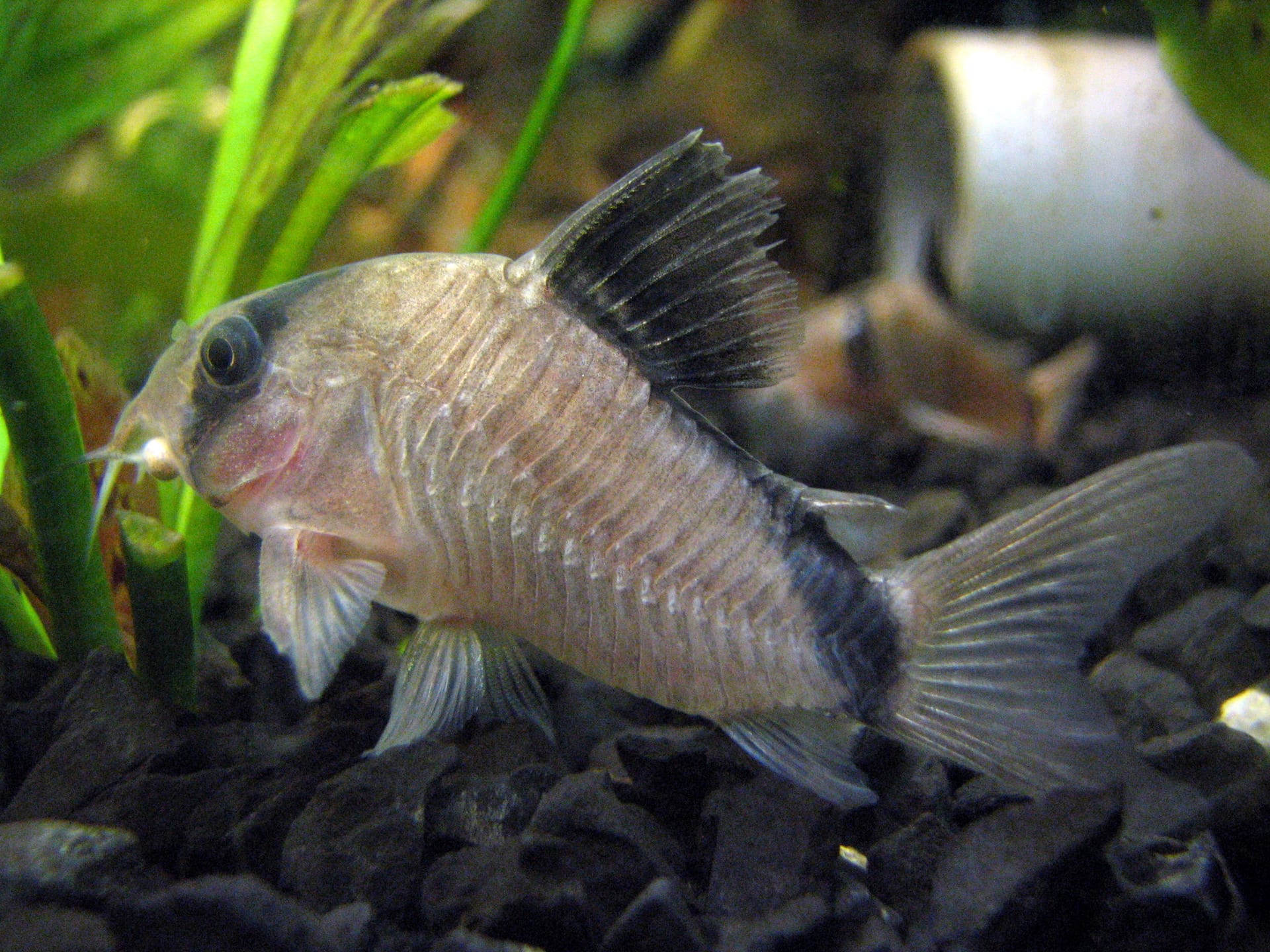
 © Gonzalo Valenzuela / CC BY-SA 2.0
Masked Corydoras
Masked Corydoras are small catfish known for the black mask-like marking across their eyes and a dark diagonal band running from the back toward the base of the tail fin. The band stops short of the tail and never splits into two. Endemic solely to the Meta River basin in Colombia, this species has the classic rounded Corydoras body shape and an endearing habit of foraging along the substrate. They are peaceful fish that won't bother tankmates and look their best kept in a small group. Considered beginner-friendly, they make a great choice for anyone new to keeping Corydoras.
View Masked Corydoras encyclopedia →0% commission on your first sales!Register by September 30, 2026 and your first 2 sales are commission-free!
Breeder Wanted!
List on BreederDirect and sell directly to customers nationwide!
Our 6 Transparency Commitments
All Tropical Fish listings include water quality, temperament, and tank size information from verified Breeder.
- Origin Disclosed
- Real Photos
- Water Quality Disclosed
- Recommended Tank Size
- Temperament Disclosed
- Breed Line Disclosed
Browse all 301 breeds
Water Type
Care Level
Verified breeders wanted for Tropical Fish
Breeders are signing up now ahead of launch. Subscribe to be notified when new listings go live.
Getting alerts is free with a member account. When new listings match your saved search, we'll notify you by email and in-app.
Browse other categories
Verified breeders (preview)
Are you raising tropical fish?
Register as a breeder and connect with buyers directly.
Apply as a breederMasked Corydoras key facts
- Care level
- Beginner-friendly
- Lifespan
- 3-5 years
- Size
- 4.8-5cm
- Temperature
- 20〜26℃
- Diet
- Sinking dried foods, frozen bloodworm, Tubifex
- Tank
- An 80 x 30cm base, about 72 litres, is the guide. Use fine rounded sand, keep it scrupulously clean, and never block access to the water surface.
- Water Temperature & Quality
- 20-26C, pH 6.0-7.5, 5-12dGH. FishBase records 22-26C, pH 6.0-8.0 and 2-25dH in the wild.
- Tank Mates
- Peaceful and gregarious; keep at least four to six. It mixes well with peaceful small and medium-sized fishes.
- Diet & Feeding
- A foraging omnivore. Offer sinking dried food plus frozen bloodworm and Tubifex. It must never be expected to live on leftovers or to clean the tank.
- Breeding & Spawning
- Use two males per female. Once females are gravid, make a 50-70 percent water change with cooler water and raise oxygenation and flow. Eggs are laid on glass, fine-leaved plants or spawning mops.
- Health & Notes
- Assessed Vulnerable by the IUCN Red List, on the basis of its range being confined to the Meta River basin together with continuing decline in habitat and numbers. Captive-bred fish are preferable.
About Masked Corydoras
Masked Corydoras is a small catfish with a black eye mask and diagonal dark band, native to Colombia's Meta River basin — peaceful and beginner-friendly.
7 things to know before welcoming a Masked Corydoras
1Keep in groups with same or similar species
Corydoras are naturally social and behave more naturally when kept in a group rather than alone. Combining them with the same species or other peaceful Corydoras works well. Since they show almost no aggression, they also mix easily with other calm, small fish.
2A soft sand substrate is best
Since Masked Corydoras forage along the bottom using their barbels, a fine, rounded sand substrate helps prevent injury to the barbels and belly. It's best to avoid coarse gravel.
3Avoid sudden water changes
Corydoras species tend to be sensitive to abrupt changes in water quality. Doing frequent small water changes rather than large infrequent ones reduces stress, and new arrivals should be acclimated slowly.
4Watch for confusion with similar species
Several Corydoras species share a similar diagonal band pattern, which can lead to misidentification. A key feature of the Masked Corydoras is that its band stops before reaching the tail fin and never forks. It's worth checking this marking carefully before purchase.
5Watch for signs of oxygen shortage
Corydoras can breathe air by gulping at the surface, a normal behavior related to intestinal respiration. However, a sudden increase in how often this happens can be a sign to check water quality and oxygen levels.
6Provide hiding spots in the tank
Having driftwood, plants, or other shaded spots helps them settle in comfortably. Right after introduction especially, they often retreat to hiding spots until they adjust, so including some in the layout is reassuring.
7Cycle the tank before bringing them home
Because Masked Corydoras are sensitive to water conditions, it's best to introduce them into a tank with established, stable filtration rather than a freshly set-up one. Allow enough time for the filter to cycle before bringing them home.
Frequently asked questions about Masked Corydoras
- Q.Can beginners keep Masked Corydoras?
- A.Yes, they're considered beginner-friendly and suitable for first-time Corydoras keepers. That said, they're sensitive to sudden water changes, so doing small, frequent water changes is important.
- Q.How big do they get as adults?
- A.They're a small species, reaching about 4.8 to 5 cm as adults. Being compact even among Corydoras, they're manageable in relatively modest tank sizes.
- Q.Are there species that look similar to Masked Corydoras?
- A.Other Corydoras species also have diagonal dark bands and can look similar at a glance. Masked Corydoras can be distinguished by their band stopping short of the tail fin and never splitting into two.
- Q.Can they be kept with other fish?
- A.They're peaceful with almost no aggression, making them suitable tankmates for other calm, small fish. Since Corydoras are naturally social, keeping several together is recommended.
- Q.Are Masked Corydoras subject to CITES?
- A.Masked Corydoras are not subject to CITES.
Useful tools for Masked Corydoras care
Learn more about Masked Corydoras in the encyclopedia
View Masked Corydoras encyclopedia entry →
Care difficulty, lifespan, size and diet — all basics covered.
More in this category
Can't find the one you're looking for?
Post your wishes for free and breeders with matching animals will contact you with introductions.